

Why Is the Hollow Board Gaining Popularity?
2025-10-31
The hollow board, a versatile engineered panel widely adopted in packaging, construction, signage, and exhibition stands, is now taking centre stage due to its combination of lightweight structure, cost-efficiency and performance versatility. This article explores what a hollow board is, why it is becoming increasingly important in global supply-chains and how manufacturers and end-users can make optimal use of this technology. It also provides detailed technical parameters, examines the key advantages and potential drawbacks, and looks forward to future trends shaping the hollow board market.
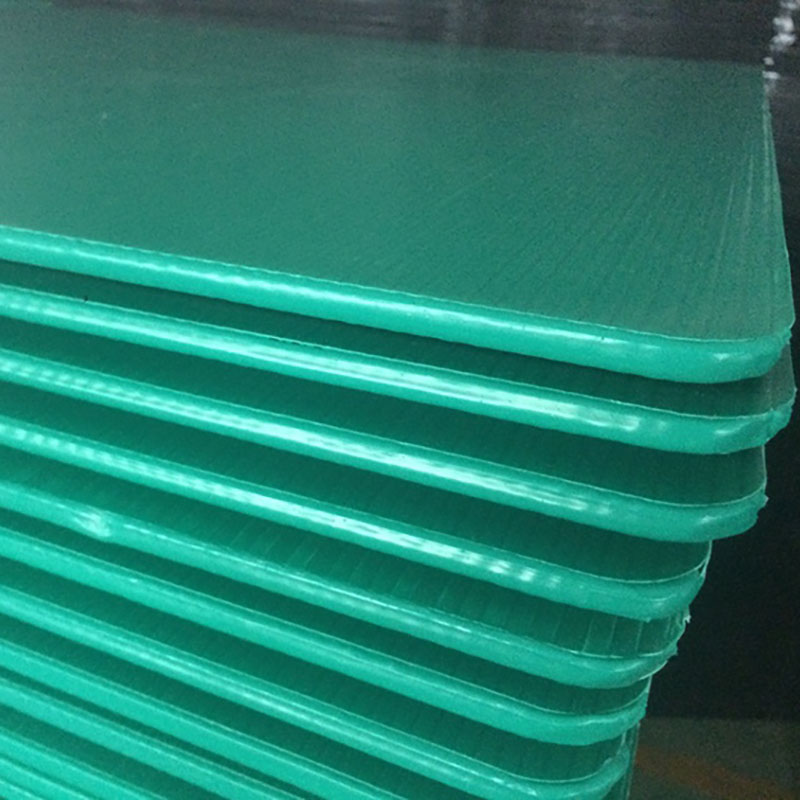
What is a Hollow Board and What Are Its Key Specifications?
A hollow board is a sheet-type panel with internal voids or “honey-comb” or ribbed structure, typically made from polypropylene (PP), polyethylene (PE), or composite materials. The hollow structure reduces weight and material usage while retaining sufficient strength for many applications.
Key Parameters
Here is a representative specification table for a generic hollow board product:
| Parameter | Typical Value | Notes |
|---|---|---|
| Material | Polypropylene (PP) hollow sheet | Durable thermoplastic core |
| Board thickness | 4 mm – 12 mm | Thickness varies by application |
| Panel size | 1200 mm × 2400 mm (typical) | Custom sizes available |
| Internal structure | Honey-comb or ribbed voids | Provides strength with less material |
| Density | ~0.6 – 0.9 g/cm³ (lighter than solid) | Reduced weight for handling |
| Impact resistance | Elevated due to structure | For packaging, signage uses |
| Weather / moisture tolerance | Good when properly managed | End-caps required for water ingress |
These parameters reflect the product category’s typical attributes. In specific industrial usages the values can vary further. For example: the internal structure might be ribbed rather than full honey-comb, and material blends may include recycled content.
Understanding these parameters helps end-users evaluate suitability: weight constraints, installation effort, moisture exposure, expected load, and lifespan all interplay.
Why Are Hollow Boards Gaining Momentum?
Several factors drive the growth of hollow board usage across industries:
Lightweight and ease of handling
The hollow core design significantly reduces material weight: in one report a hollow composite board was up to ~32 % lighter than a comparable solid board.This allows for easier transport, installation and retrofitting, especially important for packaging logistics, exhibition build-outs or retrofit decking.
Material and cost efficiency
Because less raw material is used in the core, hollow board manufacturing can realize cost savings, which in turn can be passed to the buyer.For businesses managing margins tightly, this is compelling.
Suitable strength-to-weight ratio
Contrary to some misconceptions, a well-designed hollow board can provide structural strength comparable to a solid board thanks to internal arches or ribbing supporting load.For many applications (non-heavy structural loads) this is “good enough” while delivering savings.
Versatility across sectors
Hollow boards are used in packaging (boxes, fruit crates), signage, construction (temporary partitions, exhibition panels) and decking (in composite form) — which broadens market demand. For example, the core honey-comb design provides shock absorption and thermal insulation benefits.
Future-oriented material trends
With increasing pressure on sustainability, lighter weight panels with less raw polymer usage align with environmental goals. The hollow boards’ reduced material footprint is therefore a strategic advantage.
How Should Hollow Boards Be Selected, Installed and Maintained?
Understanding how to select and utilise hollow boards is crucial to achieving performance and longevity. Below are key considerations:
Selection criteria
-
Material compatibility with environment: For outdoor or humid applications, choose boards with good moisture resistance and proper end-caps to avoid water ingress. Hollow boards can trap water in their voids if unsealed, which may accelerate degradation.
-
Load and span requirements: Even though hollow boards can match strength for many uses, they are typically less impact-resistant than solid boards. For heavy foot-traffic or high-load zones, evaluate carefully.
-
Dimensional stability: Thermal expansion and contraction can be greater in lightweight boards — spacing, fixation and installation method must accommodate this.
-
Installation environment: Retrofitting older structures may benefit from lighter boards to reduce added load; new builds may have different constraints. Hollow boards were described as especially beneficial for retrofitting older decks.
Installation best-practices
-
Ensure end-caps or fascia closure to prevent debris or water entering voids.
-
Use proper fastener systems and spacing, considering manufacturer guidelines for span and support.
-
Leave expansion gaps as recommended by manufacturer based on ambient temperature at installation time.
-
If exposing to outdoor elements, consider UV-resistant coatings or protective treatments.
-
Regularly inspect for signs of sagging, moisture infiltration or end-cap damage.
Maintenance & longevity
-
Clean surface periodically to remove debris accumulation.
-
Monitor void ends for water ingress or insect entry.
-
For outdoor applications, treat or reseal as required by manufacturer.
-
While hollow boards require less maintenance than many solid-wood alternatives, they are not maintenance-free; moisture entrapment is a documented risk.
Common Questions (FAQ)
Q1: What is the difference between a hollow board and a solid board?
A1: A hollow board features internal voids (honey-comb or ribbed) whereas a solid board is completely filled material. The hollow design reduces weight and material usage, but may offer lower impact resistance and require end-cap protection to prevent moisture ingress.
Q2: Can hollow boards be used for heavy-load or outdoor structural applications?
A2: They can be used for moderate load applications, but for heavy loads (e.g., commercial decks, high-foot-traffic zones) a solid board may be more appropriate. Hollow boards may be more susceptible to impact damage or moisture issues. Proper support, span, material quality and installation matter significantly.
What Are the Future Trends and Strategic Implications for Hollow Board Usage?
Looking ahead, several trends are likely to shape how hollow boards evolve and how users and manufacturers respond:
Sustainability and recycled content
The drive toward circular economy means materials that use less virgin polymer, are recyclable, or incorporate post-consumer content will be favoured. Hollow board’s reduced material consumption gives it an advantage.
Advanced formulations and performance improvement
Expect innovations in core architectures (e.g., more efficient ribbing, nano-additives for strength or fire-resistance) to close the gap between hollow and solid boards in terms of durability. As one supplier notes, the honey-comb pattern centre confers flexibility and shock absorption.
Increased automation and manufacturing efficiencies
As demand grows, manufacturing processes for hollow boards will scale, reducing costs further and enabling higher volumes for varied applications (packaging, construction, signage). The fact that hollow boards are less widely manufactured than solid composite boards today suggests a growth opportunity.
Broader sector adoption
Applications previously reserved for solid boards (for example upgraded decking, architectural cladding, high-end packaging) may gradually adopt hollow boards as performance improves. Markets such as display systems, lightweight partitions, modular building elements will find hollow boards attractive.
Digital supply-chain and customisation
With increased digital fabrication (CNC routing, laser cutting), hollow board sheets designed for custom shapes or rapid assembly will gain popularity, especially in displays and retail environments. The lightweight nature supports logistics optimisation for global shipping.
Risk-Mitigation Strategies
Users must balance the lightweight cost-savings with rigorous specification and installation protocols. Moisture ingress and long-term durability remain concerns. Selecting reputable manufacturers and third-party tested products will differentiate premium hollow board solutions. Market fragmentation means buyer diligence is important.
Strategic Implication for Suppliers
Companies that can deliver hollow boards with enhanced properties (moisture-resistance, higher impact strength, fire-resistance), backed by quality assurance and supply reliability, will capture share. Branding on technical performance (not just cost-effectiveness) will be essential.
Strategic Implication for Buyers
Procurement teams should build long-term specifications that include performance benchmarks (span, moisture ingress control, expansion allowances) rather than simply lowest-cost per square metre. Lifecycle cost (maintenance, replacement) must be considered.
Conclusion
The hollow board represents a compelling evolution in engineered panel technology: combining lightweight construction, material-efficiency, and design versatility. When selected, installed and maintained correctly, it offers excellent value for a wide range of applications from packaging and signage to construction and exhibits. As market demands shift toward sustainability, customisation, and global logistics optimisation, hollow boards are poised to play an increasingly strategic role.
At this juncture, leading manufacturers such as Zhongshan Jinmai Plastic Packaging Co., Ltd. are actively developing hollow board solutions that meet these market demands, offering tailored options across thicknesses, sizes and material blends. For further information, product samples, technical support or sourcing-partnerships, please contact us and our team will be delighted to assist.