
Why Is Hook and Loop Better Than Zippers for Some Applications
2026-09-23
When designers and engineers evaluate fastening systems, Hook and Loop often emerges as the smarter choice over traditional zippers in a surprising number of scenarios. At Derusen, we have spent years manufacturing Hook and Loop solutions for industries ranging from medical textiles to automotive interiors, and the question we hear most often is simple: why would anyone choose Hook and Loop when zippers have been the default for decades? The answer lies in performance, adaptability, and total cost of ownership.
Key Advantages of Hook and Loop Over Zippers
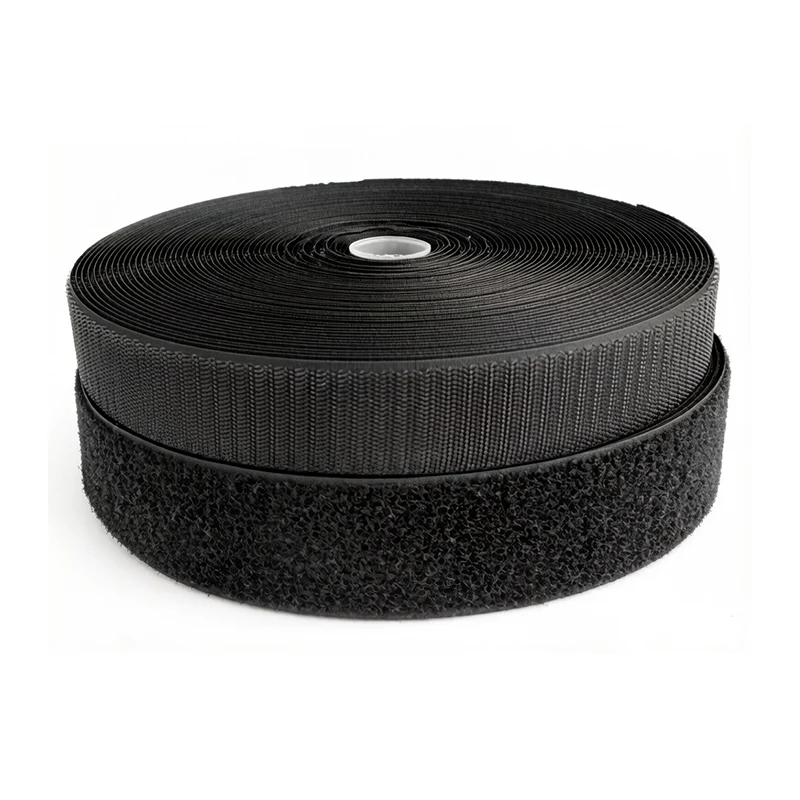
Hook and Loop fasteners consist of two woven strips: one covered in tiny hooks, the other in soft loops. When pressed together, they form a secure, adjustable bond that can be opened and closed thousands of times. Zippers rely on interlocking teeth and a slider mechanism, which introduces several mechanical vulnerabilities.
| Feature | Hook and Loop | Zippers |
|---|---|---|
| Adjustment | Infinite, millimeter-level | Fixed intervals |
| Failure mode | Gradual loss of peel strength | Jammed slider or missing teeth |
| Washing durability | Withstands repeated laundering | Slider corrosion, tape shrinkage |
| Installation | Sewn, glued, or heat-bonded | Requires precise alignment |
| Weight | Lightweight, low profile | Heavier hardware |
| Cost per unit | Lower at scale | Higher due to metal/plastic parts |
| Noise | Silent operation | Audible zipping |
| Safety | No sharp edges | Metal teeth can snag skin |
1. Adjustability and Fit
Hook and Loop allows continuous adjustment, which is critical for medical braces, compression garments, and adjustable straps. A zipper only closes at predetermined points, limiting fit precision.
2. Durability Under Repeated Use
A quality Hook and Loop closure from Derusen can endure over 10,000 open-close cycles with minimal loss of holding force. Zippers often fail earlier due to slider wear, tooth misalignment, or fabric distortion near the tape.
3. Maintenance and Cleaning
Hook and Loop can be washed, dried, and reused without special care. Zippers trap lint and debris in the teeth, and metal components may corrode after repeated exposure to moisture.
4. Design Flexibility
Hook and Loop can be cut to any length, curved, or shaped around corners. Zippers require straight or gently curved seams, restricting creative design in footwear, bags, and protective gear.
5. Cost Efficiency
For high-volume production, Hook and Loop eliminates the need for metal sliders, pulls, and top/bottom stops. Derusen supplies Hook and Loop in rolls, die-cut shapes, and adhesive-backed formats, reducing assembly time and inventory complexity.
Common Hook and Loop FAQ
Q: How much weight can Hook and Loop hold?
A: Standard Hook and Loop can support 5 to 15 pounds per square inch in shear, while heavy-duty Derusen variants reach 20 pounds or more with proper surface contact.
Q: Does Hook and Loop lose its grip after washing?
A: No, quality Hook and Loop retains 80 to 90 percent of its original peel strength after 50 wash cycles when cared for properly.
Q: Can Hook and Loop replace zippers in outdoor gear?
A: Yes, Hook and Loop performs well in cold and wet conditions, though zippers may still suit waterproof enclosures requiring a sealed seam.
When Zippers Still Make Sense
Zippers excel in applications demanding a continuous, low-profile seal, such as wetsuits or airtight sleeping bags. However, for adjustable, repairable, and cost-sensitive designs, Hook and Loop from Derusen consistently outperforms.
Contact Us
Ready to upgrade your fastening system? Contact Derusen today for custom Hook and Loop samples, technical data sheets, and volume pricing tailored to your application.