

Article Summary: Rubber product performance depends heavily on the quality of the mixing process. Uneven filler dispersion, inconsistent compound temperature, inaccurate ingredient dosing, and inadequate mixing can lead to weak products, unstable processing, and costly production waste. A rubber mixing machine helps manufacturers combine raw elastomers with fillers, oils, pigments, and other additives to produce a uniform, workable compound. This guide explains how rubber mixing machines work, compares common machine types, identifies the factors that influence mixing quality, and provides practical advice on equipment selection, maintenance, and operational safety. Whether you manufacture tires, seals, hoses, conveyor belts, or molded rubber components, understanding these factors can help you improve production consistency and make more informed equipment purchasing decisions.
Who should read this guide? Rubber manufacturers, production engineers, plant managers, equipment buyers, maintenance teams, and businesses planning to upgrade their rubber processing operations.
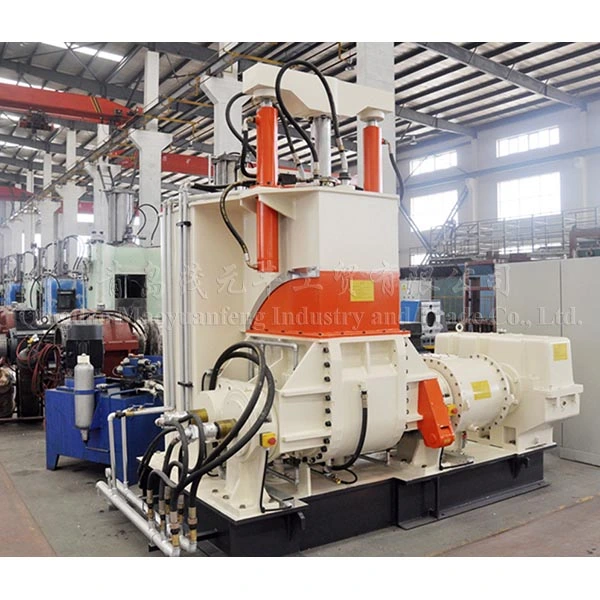
1. Why Rubber Mixing Matters in Manufacturing
Rubber is rarely used in its raw form when manufacturing finished industrial products. To achieve the required hardness, elasticity, abrasion resistance, flexibility, and aging performance, manufacturers combine raw rubber with carefully selected ingredients. These may include carbon black, silica, processing oils, pigments, antioxidants, accelerators, and vulcanizing agents.
The challenge is ensuring that these ingredients are distributed throughout the rubber compound at the appropriate concentration. Simply combining materials is not enough. The mixing process must generate sufficient mechanical action to disperse fillers and incorporate additives without exposing the compound to excessive heat or unnecessary processing time.
A rubber mixing machine provides the mechanical energy needed for this operation. Depending on the machine design, it uses rotating rolls, internal rotors, or kneading blades to work the material into a consistent compound suitable for subsequent extrusion, calendering, molding, or vulcanization.
More Consistent Compounds
Controlled mixing helps distribute ingredients more uniformly, supporting repeatable material properties between production batches.
Fewer Processing Defects
Appropriate mixing conditions can reduce problems associated with poorly dispersed fillers, uneven coloration, and inconsistent material behavior.
Improved Production Efficiency
Suitable equipment and repeatable operating procedures help manufacturers manage batch times and reduce unnecessary rework.
Better Process Control
Monitoring temperature, mixing time, rotor speed, and ingredient quantities helps operators maintain stable production conditions.
For example, a rubber seal may require consistent hardness and compression performance, while a conveyor belt cover may need good abrasion resistance. If fillers are poorly dispersed or the compound is processed incorrectly, the final product may not meet its intended specifications.
Mixing equipment alone cannot guarantee product quality. Formulation design, ingredient quality, weighing accuracy, operator training, and downstream curing conditions also influence the finished result. However, reliable mixing is one of the foundations of a controlled rubber manufacturing process.
2. How a Rubber Mixing Machine Works
Although different machines use different mechanisms, most rubber mixing operations rely on mechanical shear, compression, folding, and kneading. These actions help break down filler agglomerates, distribute ingredients, and develop the required compound consistency.
Step 1: Prepare and Weigh the Ingredients
Before mixing begins, operators prepare the raw rubber and additives according to the approved formulation. Accurate weighing is essential because incorrect ingredient quantities can affect hardness, curing behavior, strength, and other material properties.
Materials should also be checked for contamination, moisture where relevant, and storage-related changes. The correct feeding sequence depends on the compound formulation and the machine being used.
Step 2: Load the Rubber and Additives
The materials are introduced into the mixing system. An open mill receives rubber between two rotating rolls, while an internal mixer generally loads ingredients into an enclosed chamber. A kneader uses rotating blades or rotors inside a mixing trough or chamber.
Each design establishes different material-flow patterns and requires appropriate operating procedures.
Step 3: Apply Mechanical Shear and Kneading
Rotating components repeatedly stretch, compress, fold, and redistribute the compound. These forces help incorporate fillers and other ingredients into the rubber matrix.
In an open two-roll mill, the difference in roll speeds generates shear as material passes through the nip. In an internal mixer, rotor geometry, rotor speed, chamber design, and ram pressure influence the movement and deformation of the compound.
Step 4: Control Temperature and Mixing Time
Mechanical energy generates heat during mixing. Some heat is necessary to help process the material, but excessive temperature can degrade the compound or cause premature curing when sensitive curing ingredients are present.
Operators therefore need to follow a validated mixing procedure and monitor relevant process parameters. Temperature limits and mixing times should be established for the particular formulation and machine rather than copied from an unrelated application.
Step 5: Discharge and Prepare the Compound
Once the required mixing conditions have been achieved, the compound is discharged. Depending on the production line, it may then pass through a mixing mill, sheeting equipment, a cooling section, an extruder, or another downstream process.
Some formulations require a separate final mixing stage for heat-sensitive ingredients. The process sequence must be determined by the compound recipe and its curing characteristics.
3. Common Types of Rubber Mixing Machines
Different rubber mixing machines are designed around different production needs. The appropriate option depends on batch size, formulation, mixing intensity, temperature sensitivity, available labor, and the required degree of process automation.
3.1 Open Rubber Mixing Mill
An open mixing mill uses two horizontally arranged rolls rotating toward each other. The rolls usually operate at different speeds, creating the shear needed to work and blend the rubber compound.
Operators can observe the material directly and make adjustments during the process. Open mills are commonly used for rubber warming, mixing, sheeting, refining, and laboratory work. They can also serve as a finishing stage after an internal mixer.
The main considerations are operator skill, manual material handling, exposure to moving rolls, and the need for suitable guarding and emergency stopping systems.
3.2 Internal Rubber Mixer
An internal mixer processes rubber and additives inside an enclosed chamber. Rotors generate mechanical shear and kneading action, while a loading ram helps maintain contact between the material and the working components.
Internal mixers are widely used for medium- and large-scale compounding because they can process substantial batches with relatively limited direct material handling. Temperature, rotor speed, mixing time, and other operating conditions can be monitored or controlled according to the machine configuration.
Internal mixers generally require more investment and may be more complex to clean than open mills. Their enclosed construction also makes proper access control and safe maintenance procedures particularly important.
3.3 Rubber Kneader
A rubber kneader uses rotating blades or rotors to mix and work materials inside a chamber. Depending on the design, kneaders can handle viscous compounds and specialty formulations that require controlled kneading action.
They may be used in rubber compounding, silicone processing, masterbatch preparation, and other applications where the machine's mixing characteristics suit the material. Actual suitability depends on the formulation, chamber design, temperature-control capability, and required throughput.
| Comparison Factor | Open Mixing Mill | Internal Mixer | Rubber Kneader |
|---|---|---|---|
| Mixing mechanism | Two-roll shear and folding | Rotor shear and compression in an enclosed chamber | Blade or rotor kneading in a chamber |
| Material visibility | Direct visibility | Limited during operation | Depends on the design |
| Typical production role | Small batches, refining, sheeting, and finishing | High-throughput primary compounding | Specialty mixing and suitable high-viscosity materials |
| Labor requirements | Often higher operator involvement | Potentially lower direct handling per batch | Depends on feeding and discharge arrangements |
| Key consideration | Operator skill and roll safety | Temperature control, cleaning, and safe chamber access | Material compatibility and kneading conditions |
These machine categories are not interchangeable in every situation. Some production lines combine an internal mixer with an open mill to benefit from the strengths of both technologies.
4. Key Benefits for Rubber Manufacturers
Improved Ingredient Dispersion
Fillers such as carbon black and silica can form agglomerates that must be broken down and distributed during mixing. Appropriate mechanical action helps achieve the required dispersion, which supports more consistent processing and material performance.
More Repeatable Batch Quality
When ingredient weights, mixing conditions, and discharge criteria are controlled, manufacturers can reduce batch-to-batch variation. Repeatability is particularly important for products with strict hardness, tensile, elongation, or abrasion requirements.
Greater Control Over Processing Conditions
Modern production systems may provide monitoring or control of temperature, rotor speed, mixing time, motor load, and other process variables. These functions can help operators identify abnormal conditions and reproduce approved mixing procedures.
Potential Reduction in Material Waste
Inadequate mixing may result in rejected batches, additional processing, or defects discovered only after molding and curing. Improving process consistency can reduce these avoidable losses, although actual savings depend on the starting process, equipment, and compound requirements.
Better Integration with Production Lines
A suitable mixing machine can be integrated with weighing systems, conveyors, mills, cooling equipment, and downstream forming machinery. Coordinating these stages helps manufacturers reduce bottlenecks and organize material flow more effectively.
5. Factors Affecting Rubber Mixing Quality
When a compound fails to meet its specification, the cause may lie in the formulation, the raw materials, the machine settings, or the handling procedure. Reviewing the main variables helps production teams identify the underlying issue rather than relying on guesswork.
Ingredient Weighing and Feeding Sequence
Incorrect weighing can change the compound's properties even if the mixing machine operates correctly. Feeding sequence also matters because the rubber must incorporate ingredients under appropriate conditions. Follow the approved formulation and process instructions for each compound.
Temperature Management
Temperature influences rubber viscosity, ingredient incorporation, and curing behavior. Excessive heat may cause degradation or premature curing, while unsuitable temperature conditions may reduce mixing effectiveness. Cooling capacity, material loading, rotor speed, and cycle duration should be considered together.
Rotor Speed and Mechanical Energy
Mixing speed influences shear, heat generation, and power demand. Increasing speed without considering the formulation may cause overheating or excessive energy consumption. The appropriate operating range depends on the machine design and the material being processed.
Batch Size and Chamber Fill
Overloading a mixer may prevent proper material circulation, while an unsuitable underfilled batch can reduce the effectiveness of the mixing action. Use the manufacturer's recommended working capacity and confirm that the intended batch size is suitable for the specific compound.
Mixing Time and Discharge Conditions
Insufficient mixing may leave poorly dispersed ingredients, but excessive mixing can increase temperature and energy consumption. A repeatable endpoint should be established using appropriate process data and compound testing.
- Verify ingredient quantities and the approved formulation.
- Follow the specified material feeding sequence.
- Monitor compound temperature and relevant machine parameters.
- Keep batch weights within the recommended operating range.
- Check mixing time and discharge conditions for consistency.
- Test finished compounds using suitable laboratory methods.
6. How to Choose the Right Rubber Mixing Machine
Purchasing a rubber mixing machine is a long-term production decision. A machine that is too small may create bottlenecks, while an oversized system can increase capital costs, energy demand, and operating complexity. A structured evaluation helps buyers match equipment to current and future manufacturing requirements.
Step 1: Define the Rubber Formulation
Identify the rubber type, filler loading, additives, viscosity, temperature sensitivity, and required final properties. Natural rubber, SBR, NBR, EPDM, and silicone compounds can have different processing requirements, so a machine suitable for one formulation may not be ideal for another.
Step 2: Calculate Batch Size and Production Demand
Estimate the required batch weight, number of batches per shift, working hours, and target output. Consider the time needed for loading, mixing, discharge, cleaning, and downstream handling rather than comparing mixing cycle time alone.
Step 3: Match the Machine Type to the Process
Consider whether an open mill, internal mixer, kneader, or combined arrangement offers the best balance of mixing performance, operator involvement, and production flexibility.
Step 4: Evaluate Temperature Control
Review the heating and cooling arrangement, available temperature monitoring, and the supplier's guidance for the intended formulation. Confirm whether the system can maintain the required process window under realistic production conditions.
Step 5: Check Drive Power and Operating Costs
Motor power should be appropriate for the machine's working capacity and the resistance created by the compound. Ask about energy consumption, expected maintenance needs, spare parts, and the availability of technical support.
Step 6: Review Safety and Maintenance Access
Inspect the proposed guarding, emergency stops, interlocks, access points, discharge arrangements, and maintenance procedures. For enclosed mixers, confirm that hazardous movement and stored energy can be isolated before personnel access the chamber.
| Purchasing Consideration | Questions for the Supplier |
|---|---|
| Capacity | What working batch size and production rate are suitable for my formulation? |
| Mixing performance | What process conditions and testing methods support the proposed application? |
| Temperature control | What cooling or heating arrangements are available? |
| Automation | Which operating parameters can be monitored or controlled? |
| Safety | What guarding, interlocks, and isolation provisions are included? |
| After-sales support | What spare parts, documentation, maintenance guidance, and technical support are available? |
7. Industrial Applications of Rubber Mixing Machines
Tire Manufacturing
Tire compounds must meet demanding requirements for wear resistance, traction, heat generation, and durability. Controlled mixing supports the consistent dispersion of fillers and additives used in different tire components.
Automotive Rubber Components
Seals, hoses, bushings, vibration isolators, and other automotive rubber components depend on formulation-specific properties. Mixing consistency helps manufacturers maintain repeatable processing and product performance.
Conveyor Belts and Industrial Hoses
These products may require resistance to abrasion, pressure, flexing, oils, or environmental exposure. Appropriate compound preparation is important for achieving the material characteristics specified for the intended service conditions.
Seals and Gaskets
Rubber seals and gaskets often require controlled hardness, resilience, compression behavior, and resistance to aging. Consistent ingredient dispersion and appropriate curing conditions help support these requirements.
Footwear and Consumer Products
Rubber mixing machines are also used to prepare compounds for shoe soles, mats, and other molded products. Color consistency, flexibility, wear resistance, and production efficiency may be important considerations.
Silicone and Specialty Rubber Products
Specialty formulations can have distinctive viscosity and temperature requirements. Equipment selection should account for the specific material behavior, processing method, and cleanliness requirements of the application.
8. Common Rubber Mixing Problems and Solutions
Production issues should be investigated systematically. Changes in material batches, ingredient weighing, cooling performance, equipment condition, and operator procedures can all affect the final compound.
| Observed Problem | Possible Cause | Practical Response |
|---|---|---|
| Uneven filler dispersion | Unsuitable mixing conditions, incorrect loading, or ingredient agglomeration. | Review the formulation, feeding sequence, mixing procedure, and compound test results. |
| Compound temperature too high | Excessive mechanical energy, inadequate cooling, or an unsuitable cycle. | Check cooling performance and review the approved speed and mixing-time settings. |
| Inconsistent hardness | Ingredient variation, poor dispersion, inconsistent curing, or testing differences. | Verify weighing records, mixing data, curing conditions, and test procedures. |
| Excessive mixing time | Incorrect batch size, inadequate machine capacity, or unsuitable process settings. | Review the equipment specification and identify the actual production bottleneck. |
| Unusual machine noise or vibration | Mechanical wear, loose components, misalignment, or drive problems. | Stop the equipment safely and arrange a qualified mechanical inspection. |
| Frequent unplanned downtime | Inadequate preventive maintenance, worn parts, or poor operating practices. | Review maintenance records, spare parts availability, and operator training. |
Record batch information and process parameters whenever a quality problem occurs. Comparing good and defective batches can help identify meaningful differences and reduce reliance on trial-and-error adjustments.
9. Maintenance and Operational Safety
Regular maintenance helps protect equipment availability, mixing consistency, and operator safety. Maintenance tasks and inspection intervals should follow the manufacturer's documentation, the operating environment, and the machine's duty cycle.
Preventive Maintenance Checklist
- Inspect guards, emergency stops, and safety interlocks before operation.
- Check for unusual noise, vibration, leakage, and signs of overheating.
- Inspect lubrication systems and service components according to the prescribed schedule.
- Monitor cooling-water flow and check the condition of relevant hoses and connections.
- Inspect rolls, rotors, seals, bearings, and other wear components as specified.
- Keep electrical panels, sensors, and control systems in suitable condition.
- Maintain records of breakdowns, replacement parts, and maintenance activities.
Protect Operators from Mechanical Hazards
Rubber mixing machinery can expose workers to rotating parts, nip points, high temperatures, heavy materials, and unexpected machine movement. Appropriate guarding, emergency stopping devices, training, and safe operating procedures are essential.
Follow Safe Isolation Procedures
Before cleaning, clearing a blockage, or carrying out maintenance, isolate the machine from its energy sources and follow the site's lockout and verification procedures. Electrical, hydraulic, pneumatic, gravitational, and mechanical stored energy must be addressed as applicable. Never rely solely on a stopped motor or an open control switch as proof that the equipment is safe to access.
Manage Rubber Additives and Workplace Exposure
Some powders, oils, and processing chemicals may create inhalation, skin-contact, or other exposure risks. Use suitable local exhaust ventilation, material handling procedures, personal protective equipment, and safety data sheet guidance for the ingredients being processed.
Safe equipment design and disciplined maintenance protect workers while helping manufacturers maintain reliable production over the service life of the machine.
10. Selecting Equipment with Qingdao Maoyuanfeng Industry
Choosing suitable rubber processing equipment begins with a clear understanding of the compound, production targets, factory layout, and required product properties. Manufacturers should evaluate these requirements before deciding on machine capacity, configuration, and control options.
Qingdao Maoyuanfeng Industry can be included in your supplier evaluation when researching equipment options for rubber processing. When making an inquiry, provide practical details about your application so that the equipment requirements can be discussed more clearly.
Information to Prepare Before Requesting a Quotation
- The type of rubber or elastomer being processed.
- The main ingredients and any special formulation requirements.
- The desired batch weight and production output.
- The preferred mixing method, if already established.
- Required temperature control and monitoring functions.
- Available factory space and upstream or downstream equipment.
- Electrical supply, installation conditions, and safety requirements.
- Expected delivery schedule, maintenance needs, and budget range.
Before purchasing, request detailed specifications and confirm the machine's working capacity, motor power, operating range, safety provisions, installation requirements, and maintenance recommendations. Where possible, evaluate the proposed equipment against your actual compound and production conditions.
For a long-term equipment investment, the most useful supplier relationship is based on clear technical communication, realistic performance expectations, and an agreed understanding of the production requirements.
11. Frequently Asked Questions
1. What is a rubber mixing machine used for?
A rubber mixing machine combines raw rubber with fillers, oils, pigments, and other compounding ingredients. It uses mechanical shear and kneading to produce a more uniform compound for subsequent processing, such as extrusion, molding, and vulcanization.
2. Why is uniform mixing important in rubber manufacturing?
Uniform mixing helps distribute ingredients throughout the compound and supports consistent material properties. Poor dispersion or incorrect ingredient proportions can contribute to variations in hardness, strength, processing behavior, and finished-product quality.
3. What is the difference between an open mill and an internal mixer?
An open mill uses two rotating rolls and allows direct observation of the material. An internal mixer processes the compound inside an enclosed chamber using rotors. Open mills are useful for certain smaller-scale, finishing, and sheeting tasks, while internal mixers are commonly used for higher-throughput compounding.
4. How do I select the right machine capacity?
Consider batch weight, required output per shift, formulation viscosity, mixing cycle, loading and discharge time, and downstream production capacity. Confirm the recommended working capacity with the equipment supplier rather than choosing solely by nominal chamber volume.
5. Why is temperature control important during rubber mixing?
Mixing generates heat, which influences compound viscosity and processing behavior. Excessive temperature can damage sensitive ingredients or cause premature curing. Appropriate cooling and validated process settings help maintain the required mixing conditions.
6. Can one rubber mixing machine process different formulations?
Many machines can process multiple formulations if their capacity, material compatibility, temperature range, and cleaning arrangements are suitable. Changeover procedures should address contamination, formulation-specific requirements, and the risk of mixing incompatible materials.
7. How often should a rubber mixing machine be maintained?
Maintenance frequency depends on the machine design, operating hours, material characteristics, and working environment. Follow the manufacturer's maintenance schedule and perform appropriate routine checks on safety devices, lubrication, cooling, drive components, and wear parts.
8. What causes poor dispersion in a rubber compound?
Possible causes include incorrect ingredient weighing, unsuitable feeding sequence, inadequate mixing conditions, unsuitable batch size, and raw materials with difficult dispersion characteristics. Review batch records, machine settings, and appropriate compound tests to identify the cause.
9. What safety features should buyers check?
Depending on the machine design, buyers should evaluate guarding, emergency stops, interlocks, safe access arrangements, energy isolation provisions, and appropriate electrical and mechanical protections. The complete installation should comply with applicable local safety requirements.
10. What information should I provide when contacting Qingdao Maoyuanfeng Industry?
Provide your rubber type, application, target batch size, required production output, operating conditions, preferred machine configuration, installation constraints, and special safety requirements. These details help establish a clear basis for discussing suitable equipment and technical specifications.
Conclusion: Build a More Consistent Rubber Production Process
A rubber mixing machine plays a central role in transforming raw elastomers and compounding ingredients into materials suitable for industrial products. Appropriate mixing equipment helps manufacturers manage ingredient dispersion, temperature, processing time, and batch consistency.
However, reliable results depend on the complete process rather than the machine alone. Accurate weighing, suitable operating conditions, trained personnel, preventive maintenance, and effective safety procedures are all necessary for stable production.
By evaluating machine type, working capacity, control functions, maintenance requirements, and actual formulation needs, manufacturers can make more informed purchasing decisions and establish a stronger foundation for long-term production performance.
Looking for a Rubber Mixing Machine for Your Production Line?
Choosing the right equipment can help you improve compound consistency, organize your production workflow, and manage maintenance requirements more effectively. Start by defining your rubber formulation, batch size, target output, and operating conditions.
Qingdao Maoyuanfeng Industry can be part of your equipment sourcing research. Prepare your technical requirements and discuss the machine specifications, configuration, and production needs relevant to your project.
Ready to explore your equipment options? Contact us to discuss your rubber processing requirements and take the next step toward a more efficient manufacturing process.