

Why Are More Engineers Switching to Acrylic Tube for Clear and Durable Builds?
2025-12-16
I used to treat clear tubing as a “nice-to-have” until projects started failing for the same boring reasons over and over minor cracking, yellowing after UV exposure, messy machining, and inconsistent sizing that ruined assemblies. That’s when I began sourcing better material and working with suppliers like KINGSIGN the kind of manufacturer that doesn’t just ship “clear plastic,” but consistently delivers tubes I can actually design around. In this article, I’ll break down how I choose the right Acrylic Tube, what pitfalls to avoid, and where it genuinely outperforms other options in real production.
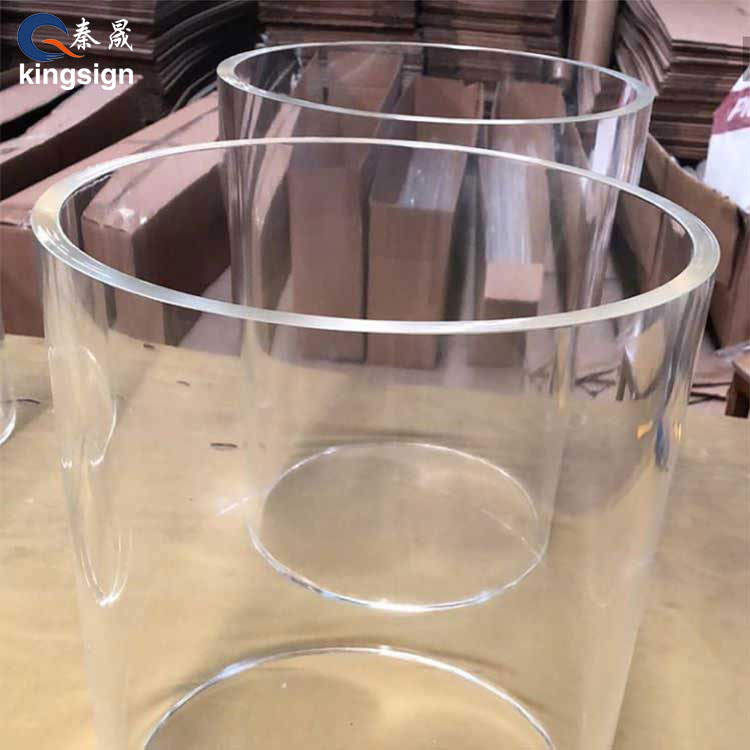
What problems do buyers usually face when choosing a Acrylic Tube?
If you’re buying tubing for display, lighting, lab setups, retail fixtures, or industrial covers, the pain points tend to repeat. Here’s what I watch for because these are the issues that cost time and money later:
- Cracking during cutting or drilling due to brittle material or poor processing
- Haze, bubbles, or flow lines that make “clear” look cheap under light
- Dimensional inconsistency that causes leaks, wobble, or bad fit with caps and connectors
- Yellowing when the tube sits under sunlight, LEDs, or outdoor conditions
- Low scratch resistance for public-facing installations
A properly made Acrylic Tube is meant to solve these, not create new ones. The trick is matching the tube type and finish to your application instead of buying on “looks clear in a photo.”
How do I decide between cast and extruded Acrylic Tube for my project?
This is the question that saves the most rework. I decide based on how the tube will be used, how it will be machined, and what matters most optical clarity or tight tolerances.
| Decision Factor | Cast Tube Tends to Be Better When | Extruded Tube Tends to Be Better When |
|---|---|---|
| Optical clarity | You need premium clarity for displays, showcases, lighting effects | You need clean clarity for general use and cost efficiency |
| Machining and fabrication | You’ll drill, mill, polish edges, or do complex fabrication | You’ll do simple cutting or standard assembly |
| Dimensional needs | You can tolerate slightly wider tolerance but want better finishing | You want more consistent sizing for mass assembly |
| Budget sensitivity | Performance and appearance matter more than lowest cost | Price and throughput matter more than premium finishing |
When I’m unsure, I ask for samples and test the actual workflow cutting, drilling, bonding, and checking how the tube looks under the real lighting it will live in. It’s the fastest way to confirm the right Acrylic Tube choice.
Which specs matter most when ordering a Acrylic Tube?
Many buyers focus only on outer diameter, but I’ve learned that several details drive success in assembly and long-term performance:
- OD and ID accuracy because fittings and inserts care about both, not just one
- Wall thickness which controls rigidity, impact behavior, and how it handles drilling
- Length tolerance and straightness especially for long lighting or display columns
- Surface finish glossy, polished, or specialty finish depending on your design goals
- UV stability for outdoor use, sun exposure, or bright continuous lighting
For projects where appearance is part of the product, I treat the tube surface like a “visual component,” not raw material. That’s where a stable supplier such as KINGSIGN makes a difference because consistency is what keeps your final product consistent.
How can a Acrylic Tube improve my product design compared with glass or polycarbonate?
I don’t think of materials as “good” or “bad.” I think in tradeoffs. But in many commercial and industrial builds, Acrylic Tube hits a sweet spot between appearance, weight, and fabrication:
- Cleaner visual clarity for displays and lighting where transparency is the feature
- Lighter weight which reduces shipping cost and makes installation easier
- Easier fabrication because cutting and finishing can be done efficiently with the right method
- Corrosion resistance for many indoor environments where glass is fragile and metal is reactive
- Better design flexibility when you need custom sizes, finishes, and consistent repeat orders
Glass still wins on scratch resistance and heat tolerance, and polycarbonate wins on impact toughness. But if your priority is high clarity and a professional presentation without glass’s fragility, Acrylic Tube is often the more practical choice.
What are the most common applications of Acrylic Tube that actually perform well?
I see strong results when the tube is chosen for what acrylic does best clarity, aesthetics, and stable, repeatable manufacturing. Here are use cases that consistently make sense:
- Retail displays, product pedestals, and luxury packaging components
- LED lighting diffusers, light columns, and decorative architectural features
- Protective sleeves, transparent covers, and equipment guards
- Point-of-sale fixtures and branded installation elements
- Educational models, demonstrations, and visual flow displays
In these applications, a well-made Acrylic Tube keeps the focus on what you’re trying to showcase instead of distracting people with haze, bubbles, or uneven surfaces.
How do I avoid cracking and stress marks when cutting or drilling a Acrylic Tube?
This is where many “material complaints” are really process problems. Here’s what I do to reduce cracking and ugly stress whitening:
- Use sharp tooling and the right blade profile for plastics, not generic blades
- Keep feed rates consistent and avoid forcing the cut
- Support the tube properly to prevent vibration and flex during drilling
- Start with smaller pilot holes and step up gradually for larger diameters
- Deburr and finish edges to reduce stress concentration points
If your fabrication process is aggressive, I recommend choosing a tube type and wall thickness that suits machining, not just appearance. That’s a practical way to keep your Acrylic Tube looking clean and performing reliably.
What should I ask a supplier before placing a bulk order for Acrylic Tube?
When I’m placing repeat orders, I ask questions that reveal whether the supplier can support production, not just ship one batch:
- Can you provide consistent OD and ID tolerance across repeat orders?
- What surface quality standards do you follow for clarity and finish?
- Do you support custom lengths, packaging protection, and safe transport?
- Can you provide samples that match the same production method as the bulk order?
- What recommendations do you have for the intended use case?
Good suppliers will answer clearly and help you avoid mismatched expectations. With KINGSIGN, I look for that practical communication because it reduces the chance of surprises once the shipment arrives.
How do I choose the right Acrylic Tube fast if I’m on a deadline?
If you need to move quickly, here’s my simple workflow:
- Define the real priority clarity, strength, tolerance, or cost
- Confirm OD, ID, wall thickness, and length requirements for assembly
- Decide whether the tube will be machined or mostly installed as-is
- Request samples that match the same production method as your final order
- Run one quick fit and finish test in your actual environment lighting matters
This approach is why I can order Acrylic Tube with fewer mistakes, even when timelines are tight.
Ready to source a reliable Acrylic Tube that fits your project requirements?
If you’re planning a display build, lighting installation, protective cover, or any product that depends on clean transparency and stable sizing, I’d treat tubing as a design-critical component. If you want help selecting the right Acrylic Tube specifications or you need a quote for bulk supply, reach out to KINGSIGN and contact us with your OD, ID, wall thickness, length, and application details. The faster you share the real use case, the faster you’ll get a tube that performs the way your design expects.