

Which PEEK ESD Precision Parts Meet Industrial Requirements?
2026-11-13
In electronics manufacturing, semiconductor processing, automation, and other sensitive industrial environments, controlling electrostatic discharge is essential. Even a small static discharge can damage electronic components, interrupt production, or reduce product reliability. At the same time, precision components must maintain dimensional accuracy, mechanical strength, and consistent performance under demanding operating conditions.
PEEK ESD precision parts combine the advantages of high-performance polyether ether ketone (PEEK) with electrostatic dissipative properties. When correctly formulated, machined, and tested, these components can help manage static electricity while supporting demanding engineering requirements. This guide explores their material characteristics, applications, manufacturing considerations, and selection criteria.
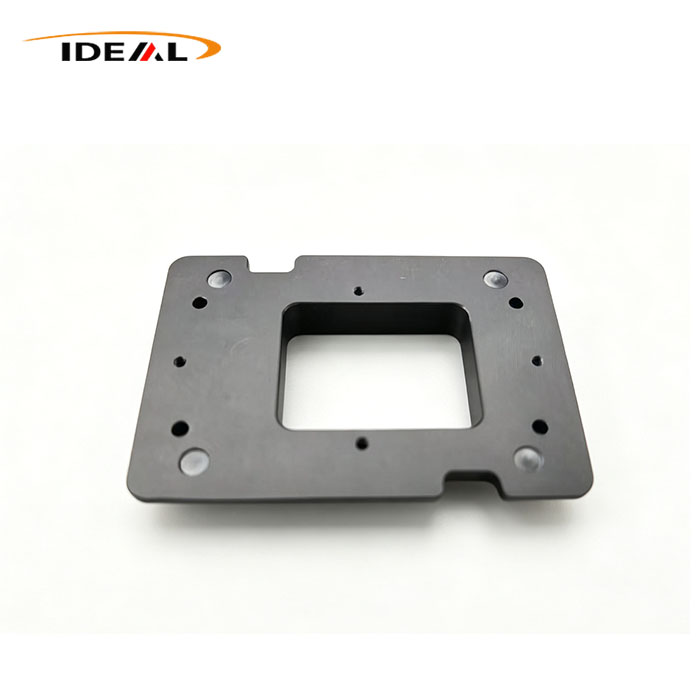
1. Understanding PEEK ESD Precision Parts
PEEK ESD precision parts are engineered components manufactured from electrostatic dissipative PEEK materials. PEEK, short for polyether ether ketone, is a high-performance thermoplastic known for its excellent mechanical strength, thermal resistance, chemical stability, and dimensional performance.
To provide electrostatic dissipative behavior, specially selected conductive or dissipative additives are incorporated into the base polymer. Depending on the formulation, these additives may modify the electrical properties of the material while maintaining many of the advantages associated with PEEK.
These materials are then processed into precision-engineered components such as fixtures, insulating supports, semiconductor handling parts, machine guides, holders, and custom structural elements.
What Makes These Components Different?
Conventional plastic components can accumulate static electricity through friction, separation, or contact with other materials. In sensitive environments, uncontrolled static charges may create sudden electrostatic discharge events.
PEEK ESD materials are designed to dissipate accumulated electrical charges in a more controlled manner. This helps reduce the risk associated with uncontrolled static buildup.
Electrostatic dissipative materials are not necessarily electrical insulators or highly conductive materials. Their electrical resistance must be specified and verified according to the intended application and applicable testing standards.
Typical Forms of Precision Components
- Custom-machined PEEK ESD plates and blocks.
- Precision positioning fixtures and support brackets.
- Semiconductor wafer handling components.
- Electronic assembly jigs and tooling parts.
- Robotic grippers and automation accessories.
- Custom bushings, spacers, and mechanical guides.
2. Why Electrostatic Dissipation Matters in Industrial Manufacturing
Electrostatic discharge is a common but often underestimated risk in electronics and semiconductor manufacturing. Static charges can develop when two materials come into contact and separate, when components move across surfaces, or when operators handle equipment without appropriate static-control measures.
Protecting Sensitive Electronic Components
Modern electronic devices contain increasingly compact and sensitive circuits. Some components can be damaged by electrostatic events that are difficult to detect during normal production.
Such damage may cause immediate component failure or latent defects that only appear after the product has been delivered to the customer.
Using suitable ESD materials in production fixtures, trays, supports, and handling systems helps reduce one potential source of electrostatic risk.
Reducing Static-Related Production Problems
Uncontrolled static electricity can attract dust and other airborne particles. In clean manufacturing environments, contamination can affect product quality, equipment performance, and process consistency.
Appropriate static-dissipative materials can help control charge accumulation and support a more stable production environment.
Supporting Reliable Automated Equipment
Automated production systems rely on repeatable movements and accurate component positioning. Static-related contamination, unwanted attraction, or electrical discharge can interfere with sensitive manufacturing processes.
PEEK ESD precision parts can be incorporated into selected machine interfaces and tooling systems where both mechanical performance and electrostatic control are required.
3. Key Material Properties and Advantages of PEEK ESD Precision Parts
Material selection is important because an ESD component must perform more than one function. It may need to dissipate static charges, withstand mechanical loads, resist chemicals, and maintain its shape during continuous operation.
3.1 Controlled Electrostatic Dissipation
The primary characteristic of PEEK ESD materials is their ability to dissipate electrostatic charges through a controlled electrical resistance range.
This property makes them suitable for selected applications involving sensitive electronic components and static-sensitive production processes.
However, not all PEEK ESD formulations have identical electrical characteristics. Buyers should request material-specific surface resistance or volume resistivity data rather than relying solely on a general ESD designation.
3.2 High Mechanical Strength
PEEK is valued for its strong mechanical properties. Properly formulated PEEK ESD grades can be used for components exposed to mechanical stress, vibration, repeated handling, and continuous equipment operation.
The actual strength, stiffness, impact resistance, and wear characteristics depend on the specific formulation, reinforcement, component geometry, and manufacturing process.
3.3 Excellent Thermal Performance
PEEK is a high-temperature engineering thermoplastic. Its thermal performance makes it suitable for demanding industrial environments where many conventional plastics may soften or lose mechanical stability.
For ESD-modified grades, the usable temperature range should be confirmed using the supplier's technical data sheet. Additives may influence certain material properties.
3.4 Chemical Resistance
PEEK generally offers good resistance to many industrial chemicals, oils, fuels, and solvents. This is valuable in semiconductor processing, chemical equipment, and precision manufacturing environments.
Nevertheless, chemical compatibility should always be evaluated against the exact chemical concentration, temperature, exposure duration, and ESD formulation.
3.5 Dimensional Stability and Precision
Precision components often require tight dimensional tolerances, accurate hole positioning, flatness, and consistent surface finishes.
PEEK offers useful dimensional stability when properly selected and processed. However, achieving reliable precision requires attention to machining parameters, internal stresses, thermal expansion, and inspection procedures.
Key Advantages at a Glance
| Property | Engineering Benefit | Typical Application Value |
|---|---|---|
| Electrostatic dissipation | Helps control accumulated static charges | ESD-sensitive production equipment |
| Mechanical strength | Supports demanding component designs | Fixtures and machine parts |
| Thermal resistance | Maintains performance in elevated-temperature environments | Industrial and semiconductor equipment |
| Chemical resistance | Provides compatibility with many industrial media | Chemical processing equipment |
| Dimensional stability | Supports accurate component geometry | Precision positioning systems |
| Machinability | Allows custom shapes and complex geometries | OEM components and specialized tooling |
4. PEEK ESD vs. Standard PEEK and Other Engineering Plastics
Choosing the right material requires understanding how different engineering plastics perform under specific operating conditions. A material that works well for a general mechanical application may not provide the electrical characteristics required in an ESD-controlled environment.
| Material | ESD Characteristics | Mechanical and Thermal Performance | Common Uses |
|---|---|---|---|
| Standard PEEK | Not inherently ESD-dissipative | High mechanical and thermal performance | Precision industrial components |
| PEEK ESD | Formulated for controlled charge dissipation | High-performance properties depend on grade | ESD-sensitive equipment and fixtures |
| ESD POM | Available in dissipative formulations | Good machinability and dimensional performance | General automation components |
| ESD Nylon | Available in modified formulations | Good toughness; moisture absorption requires consideration | Industrial handling components |
| ESD PTFE | Special formulations are available | Excellent chemical resistance and low friction | Specialized chemical and sliding applications |
The best choice depends on the operating temperature, mechanical load, chemical exposure, electrical resistance requirements, manufacturing tolerances, and total component cost.
PEEK ESD is particularly attractive when an application requires a combination of electrostatic dissipation and high-performance engineering plastic properties. However, it may not be necessary for every ESD-related component. Lower-cost materials can be more economical when operating conditions are less demanding.
5. Common Industrial Applications of PEEK ESD Precision Parts
PEEK ESD precision components are used in specialized environments where material performance, accurate dimensions, and electrostatic control must work together.
5.1 Semiconductor Manufacturing
Semiconductor manufacturing involves sensitive processes and strict contamination-control requirements. Components used in wafer handling, positioning systems, and equipment fixtures must meet carefully defined mechanical and electrical specifications.
PEEK ESD may be considered for selected holders, brackets, supports, and custom-machined equipment components where its material properties match the process requirements.
5.2 Electronics Assembly
Electronic assembly lines frequently use fixtures, positioning tools, and workholding components to support repeatable manufacturing operations.
ESD-compatible PEEK parts can be designed for specialized jigs, component holders, and equipment interfaces that require accurate positioning and controlled static dissipation.
5.3 Industrial Automation and Robotics
Robotic production systems require components that can withstand repeated motion and maintain consistent geometry. PEEK ESD parts may be used in selected grippers, guides, positioning elements, and mechanical supports.
For moving applications, engineers should also consider friction, wear, lubrication, contact pressure, and the electrical continuity of the complete assembly.
5.4 Medical and Laboratory Equipment
Specialized laboratory instruments and selected medical equipment may require precision plastic components with stable mechanical and chemical performance.
PEEK is used in certain demanding equipment designs, but an ESD-modified grade must be evaluated for its exact chemical, cleanliness, biocompatibility, and regulatory requirements. Medical suitability should never be assumed from the base PEEK material alone.
5.5 Precision Industrial Equipment
Other potential applications include testing instruments, measurement fixtures, specialized production tooling, and custom mechanical assemblies.
In these environments, PEEK ESD can provide a practical material option when standard plastics cannot satisfy all the required operating conditions.
6. Precision Machining Considerations for PEEK ESD Parts
Even a high-performance raw material cannot guarantee a reliable finished component without proper machining. Precision PEEK ESD parts require careful control throughout material preparation, machining, finishing, and inspection.
6.1 Material Grade Verification
Before machining begins, manufacturers should verify the material grade and batch information. Different ESD formulations may have different resistance values, mechanical properties, and processing characteristics.
Using an unsuitable material grade can result in electrical performance outside the required range or unexpected mechanical behavior.
6.2 Tool Selection and Cutting Parameters
Machining PEEK requires appropriate cutting tools, feeds, speeds, and cooling strategies. Improper machining conditions can create excessive heat, surface damage, dimensional variation, or internal stress.
For ESD-modified grades, machining procedures should also consider the potential influence of additives on tool wear and surface quality.
6.3 Dimensional Tolerance Control
Complex components may contain precision holes, narrow slots, thin walls, flat surfaces, and multiple reference features.
Manufacturers should establish clear machining datums and inspection methods to maintain consistency between individual parts and production batches.
6.4 Burr Removal and Surface Finishing
Burrs and rough surfaces can affect assembly accuracy, contact behavior, and component cleanliness. Appropriate deburring and finishing processes help achieve the required surface quality.
For ESD-sensitive applications, finishing processes should not introduce contamination or alter critical surface characteristics.
6.5 Stress and Thermal Management
Plastic components can experience dimensional changes due to machining heat and residual stress. This becomes especially important for parts with thin walls, asymmetric structures, or demanding tolerances.
Suitable machining sequences, stress-relief procedures where appropriate, and controlled inspection conditions can improve dimensional consistency.
| Machining Stage | Potential Problem | Recommended Control |
|---|---|---|
| Material preparation | Incorrect material grade | Verify grade and batch documentation |
| Rough machining | Excessive heat and stress | Optimize cutting parameters |
| Finish machining | Dimensional deviation | Use controlled finishing operations |
| Deburring | Surface damage or contamination | Apply suitable finishing procedures |
| Final inspection | Unverified dimensions or resistance | Perform documented quality checks |
7. How to Select the Right PEEK ESD Precision Components
Choosing the right component involves more than specifying the material name. Procurement teams and engineering departments should communicate detailed operating requirements to the manufacturer before requesting a quotation.
Step 1: Define the Electrical Resistance Requirement
Determine whether the application requires a static-dissipative, conductive, or insulating material. Specify the required surface resistance or volume resistivity range and the applicable test method.
Do not assume that every product labeled PEEK ESD has the same electrical performance.
Step 2: Confirm Operating Temperature
Identify the normal operating temperature, peak temperature, heating cycles, and potential temperature fluctuations. Compare these conditions with the technical data for the proposed ESD grade.
Step 3: Evaluate Mechanical Requirements
Provide information about loads, pressure, vibration, impact, sliding contact, and expected service life.
For components with thin sections or complex geometries, structural design and machining feasibility should be reviewed together.
Step 4: Specify Dimensions and Tolerances
Provide detailed engineering drawings containing dimensions, tolerances, hole positions, surface requirements, and critical inspection points.
It is also helpful to identify which dimensions directly affect assembly or equipment performance.
Step 5: Review Chemical and Environmental Conditions
List all chemicals, cleaning agents, solvents, and environmental conditions that the component may encounter.
This helps the manufacturer assess material compatibility and potential performance changes over time.
Step 6: Consider Production Quantity and Customization
Prototype quantities, small batches, and mass production may require different manufacturing arrangements. Discuss expected annual demand, delivery schedules, material availability, and repeat-order requirements.
- Material: PEEK ESD and the required grade, if known.
- 2D drawings or 3D CAD files.
- Required electrical resistance range and test method.
- Critical dimensions and tolerances.
- Operating temperature and chemical exposure.
- Surface finish and cleanliness requirements.
- Prototype quantity and estimated production volume.
8. Quality Control and Performance Testing
Quality assurance is essential for precision-machined PEEK ESD components. A part may look correct while failing to meet its electrical or dimensional requirements.
Dimensional Inspection
Coordinate measuring machines (CMMs), optical measurement systems, micrometers, and other calibrated instruments can be used to verify critical dimensions.
Inspection procedures should be based on the drawing specifications and the actual functional requirements of the component.
Surface Resistance and Volume Resistivity Testing
Electrical testing confirms whether the material meets the specified electrostatic performance range.
Surface resistance and volume resistivity are different measurements. They should not be treated as interchangeable. Test methods, electrode configurations, environmental conditioning, and reporting units should be clearly identified.
For example, ASTM D257 and IEC 61340-2-3 provide relevant methods for evaluating electrical resistance or resistivity of materials. The appropriate standard depends on the material, test objective, and customer specification.
Material Documentation
Reliable suppliers should be able to provide relevant material information, inspection records, and batch traceability where required.
For demanding industrial applications, buyers may also request material certificates, dimensional inspection reports, and electrical test results.
Visual and Surface Inspection
Visual inspection helps identify scratches, chips, burrs, cracks, machining marks, and other visible defects that may affect assembly or product quality.
9. Common Purchasing Challenges and Practical Solutions
Industrial buyers often encounter several challenges when sourcing customized PEEK ESD precision components. Understanding these issues before ordering can reduce delays, improve communication, and prevent costly quality problems.
Challenge 1: Inconsistent Electrical Performance
Different suppliers may use different formulations under similar material descriptions.
Solution: Define the exact resistance range, testing method, and acceptance criteria in the purchase specification. Request supporting test documentation.
Challenge 2: Dimensional Problems During Assembly
Plastic components may experience dimensional changes related to temperature, stress, or machining conditions.
Solution: Identify critical dimensions, communicate actual operating conditions, and establish an inspection plan before production.
Challenge 3: Long Lead Times for Custom Parts
Special material grades, complex machining operations, and low-volume production can influence delivery schedules.
Solution: Provide complete technical drawings early, confirm raw material availability, and discuss production capacity before placing the order.
Challenge 4: Unclear Material Specifications
A quotation that only states PEEK ESD may not provide enough information to evaluate whether the component is suitable.
Solution: Request the material grade, relevant technical data, electrical properties, and applicable quality documentation.
Challenge 5: Poor Communication Between Buyer and Manufacturer
Incomplete drawings or unclear requirements can lead to repeated revisions and unnecessary production costs.
Solution: Use detailed CAD drawings, mark critical dimensions, provide application information, and confirm all technical requirements before manufacturing begins.
10. Frequently Asked Questions About PEEK ESD Precision Parts
Q1. What are PEEK ESD precision parts?
PEEK ESD precision parts are custom-engineered components made from electrostatic dissipative PEEK materials. They are designed to combine controlled static charge dissipation with the mechanical, thermal, and chemical performance associated with PEEK.
Q2. What is the difference between standard PEEK and PEEK ESD?
Standard PEEK is not inherently electrostatic dissipative. PEEK ESD contains specialized additives that modify its electrical properties to help dissipate static charges. Their mechanical and thermal properties may also differ depending on the formulation.
Q3. Are PEEK ESD parts suitable for semiconductor manufacturing?
They can be suitable for selected semiconductor equipment components, fixtures, and handling applications. However, the electrical resistance, cleanliness, chemical compatibility, outgassing, and process requirements must be verified for each application.
Q4. Can PEEK ESD materials be CNC machined?
Yes. PEEK ESD materials can be machined into customized components using suitable CNC machining processes. Tool selection, cutting parameters, heat management, and dimensional inspection are important for achieving consistent results.
Q5. What electrical resistance should PEEK ESD parts have?
There is no single resistance value suitable for every application. The required range depends on the ESD protection strategy, component function, and applicable standards. Buyers should specify the target surface resistance or volume resistivity and the test method.
Q6. Can PEEK ESD precision parts withstand high temperatures?
PEEK offers excellent thermal performance compared with many conventional engineering plastics. However, the continuous operating temperature and short-term temperature limits of ESD-modified grades should be confirmed using the manufacturer's technical data.
Q7. Can manufacturers produce custom PEEK ESD components?
Yes. Custom components can be manufactured according to customer drawings, CAD models, dimensions, tolerances, and application requirements. Customized fixtures, brackets, holders, spacers, and other precision parts are common examples.
Q8. What information is needed for a PEEK ESD quotation?
Buyers should ideally provide material requirements, 2D drawings or 3D models, critical tolerances, electrical resistance specifications, operating conditions, surface finish requirements, and order quantities.
Q9. How can buyers verify the quality of PEEK ESD parts?
Quality can be evaluated through dimensional inspection, electrical resistance or resistivity testing, visual inspection, material documentation, and batch traceability where applicable. Acceptance criteria should be agreed upon before production.
Q10. Are PEEK ESD components more expensive than standard PEEK parts?
They may cost more because of specialized material formulations and additional testing requirements. However, the final price also depends on component geometry, machining complexity, tolerances, order quantity, and quality documentation.
11. Final Thoughts: Choosing Reliable PEEK ESD Precision Parts
PEEK ESD precision parts offer an engineering solution for applications that require controlled electrostatic dissipation alongside reliable mechanical performance and dimensional accuracy. Their potential applications span semiconductor manufacturing, electronics assembly, industrial automation, laboratory equipment, and specialized production systems.
However, selecting the right component requires careful evaluation of material formulation, electrical resistance, operating temperature, mechanical loading, chemical compatibility, and machining quality. A clear technical specification and a capable manufacturing partner are essential to achieving consistent results.
For OEM manufacturers, equipment designers, and industrial procurement teams, working with an experienced precision plastic manufacturer can simplify material selection, custom machining, and quality control.
Looking for Custom PEEK ESD Precision Parts?
Guangzhou Ideal Plastic Technology co.,Ltd provides precision plastic machining solutions for industrial customers. Whether you need custom PEEK ESD components, complex CNC-machined plastic parts, or precision-engineered products based on your drawings, our team can help evaluate your requirements and manufacturing needs.
Send us your drawings, technical specifications, and quantity requirements to discuss a suitable solution for your application.
Contact Us