

Which Open Mixing Mill Delivers Consistent Rubber Processing and Reliable Production Performance?
2026-11-17
An Open Mixing Mill is an essential piece of equipment in rubber processing, widely used for plasticizing, mixing, refining, and sheeting rubber compounds. Featuring two horizontally arranged rolls that rotate in opposite directions, the machine applies mechanical shear and compression to blend raw rubber with fillers, oils, pigments, and other compounding ingredients.
However, selecting the right open mixing mill involves more than comparing machine dimensions or motor power. Roll diameter, working length, speed ratio, roll gap adjustment, temperature control, batch capacity, and safety systems all influence production efficiency and finished compound quality. This guide explores the working principles, major components, industrial applications, selection criteria, maintenance practices, and common operating challenges of open mixing mills to help manufacturers make informed equipment purchasing decisions.
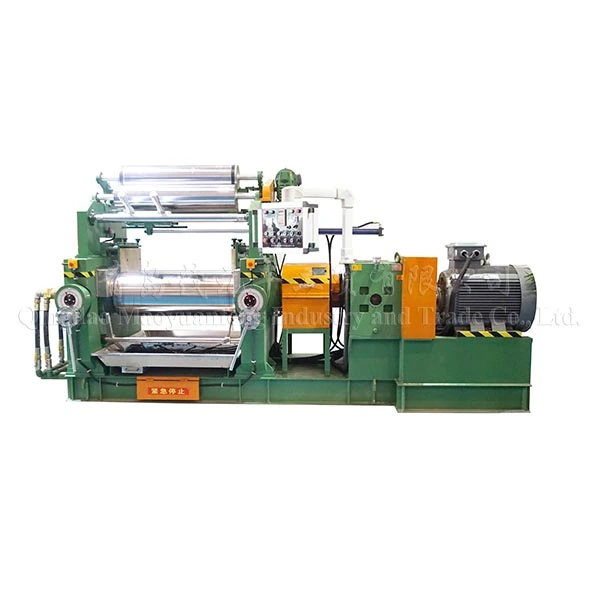
1. What Is an Open Mixing Mill?
An Open Mixing Mill, also commonly called a two-roll mill or open rubber mixing mill, is a mechanical processing machine designed to mix and refine rubber and other suitable polymer materials. It consists primarily of two parallel cylindrical rolls mounted horizontally on a rigid machine frame.
The two rolls rotate inward toward each other, usually at different surface speeds. When raw rubber enters the narrow gap between them, it experiences compression, stretching, and shear forces. These mechanical actions help soften the material and distribute compounding ingredients throughout the rubber matrix.
Unlike an internal mixer, which processes materials inside an enclosed chamber, an open mixing mill provides direct access to the working rolls. Operators can observe the compound during processing, add ingredients at different stages, and control the mixing operation according to the material's behavior.
What Materials Can an Open Mixing Mill Process?
Depending on the machine configuration and processing conditions, open mixing mills can be used for:
- Natural rubber (NR).
- Styrene-butadiene rubber (SBR).
- Nitrile butadiene rubber (NBR).
- Ethylene propylene diene monomer rubber (EPDM).
- Silicone rubber compounds.
- Other compatible synthetic rubber materials.
- Selected thermoplastic and polymer compounds.
Typical processing operations include raw rubber mastication, filler incorporation, compound homogenization, color blending, warming, and sheet formation.
2. How Does an Open Mixing Mill Work?
The working principle of an open mixing mill is based on the mechanical shear and compression generated by two counter-rotating rolls. The difference between the roll surface speeds creates additional shear, helping disperse ingredients and improve compound uniformity.
Step 1: Material Feeding
Raw rubber or a pre-mixed rubber compound is introduced into the space between the two rolls. The rotating rolls draw the material into the nip, where it is compressed and begins to soften.
Step 2: Mastication and Plasticization
During repeated passes through the roll gap, the rubber experiences mechanical deformation. Mastication helps reduce the viscosity of certain raw rubber materials and improves their processability for subsequent compounding operations.
Step 3: Adding Compounding Ingredients
Fillers, processing oils, pigments, antioxidants, and other formulation ingredients are introduced according to the approved mixing recipe. The operator or an automated feeding system distributes these materials into the rubber compound.
Step 4: Shearing and Homogenization
The compound passes repeatedly through the gap between the rolls. The speed difference creates shear forces that help break down ingredient agglomerates and distribute the additives more uniformly throughout the rubber.
Step 5: Cutting, Folding, and Refeeding
In conventional open-mill processing, the rubber band is cut and folded according to the mixing procedure. Repeated feeding and folding improve material distribution and help achieve the required compound consistency.
Step 6: Sheet Formation and Discharge
After mixing is completed, the rubber compound is removed from the rolls and processed into sheets. These sheets may be transferred to cooling, storage, testing, or subsequent manufacturing operations.
3. Main Components of an Open Mixing Mill and Their Functions
Understanding the major machine components helps buyers evaluate equipment construction, production capabilities, and long-term maintenance requirements.
| Component | Main Function | Important Considerations |
|---|---|---|
| Working Rolls | Apply compression and shear to rubber materials. | Material, hardness, diameter, length, and surface finish. |
| Roll Gap Adjustment | Controls the distance between the two rolls. | Adjustment accuracy and operating stability. |
| Drive Motor | Provides mechanical power to rotate the rolls. | Power rating, efficiency, and starting performance. |
| Transmission System | Transfers power and establishes the required roll speeds. | Gear quality, friction ratio, and transmission reliability. |
| Temperature Control System | Regulates roll temperature during processing. | Heating and cooling capacity and temperature stability. |
| Bearings | Support the rolls and maintain rotational accuracy. | Load capacity, lubrication, and service life. |
| Machine Frame | Supports the main assemblies and absorbs working forces. | Structural strength and dimensional stability. |
| Safety Devices | Reduce risks associated with rotating rolls and moving components. | Emergency stopping, guarding, and braking performance. |
The Importance of Roll Quality
The rolls are the central working components of an open mixing mill. Their surface condition, hardness, alignment, and temperature distribution directly influence the processing result.
Wear, scratches, or uneven roll temperatures can contribute to inconsistent material thickness, uneven processing, and difficulties maintaining stable production conditions. Buyers should therefore pay close attention to roll material specifications and manufacturing quality.
4. Key Advantages of Open Mixing Mills
Despite the development of automated internal mixing equipment, open mixing mills remain important in many rubber processing operations because of their accessible construction and flexible processing capabilities.
The open structure allows operators to observe material behavior and monitor the mixing process.
Ingredients can be introduced in controlled stages according to the approved compound recipe.
Roll spacing can be changed to support different material processing and sheeting requirements.
Temperature-controlled rolls help manage processing heat and maintain suitable material conditions.
Suitable for mastication, compounding, refining, warming, and rubber sheet preparation.
The accessible construction can simplify inspection and servicing of working components.
These advantages make open mixing mills useful for rubber factories, product development laboratories, small-batch production facilities, and manufacturing operations requiring flexible compound preparation.
5. Industrial Applications of Open Mixing Mills
Open mixing mills serve different functions throughout the rubber manufacturing industry. Their applications depend on the required compound properties, production volume, and downstream processing methods.
5.1 Tire Manufacturing
Rubber compounds used in tire production require controlled ingredient dispersion and consistent material properties. Open mixing mills may be used for laboratory formulation development, compound finishing, warming, and other supplementary processing operations.
5.2 Rubber Seals and Gaskets
Industrial seals and gaskets often require specific characteristics such as elasticity, compression resistance, chemical compatibility, and durability. Consistent rubber compounding helps manufacturers maintain the required material performance.
5.3 Rubber Hoses and Tubing
Rubber hose production requires compounds with suitable flexibility, strength, and resistance to the intended working environment. An open mixing mill can help prepare and refine rubber materials before extrusion and vulcanization.
5.4 Rubber Mats and Flooring
Rubber mats and flooring products may contain different rubber polymers, fillers, pigments, and processing additives. Proper mixing helps achieve consistent color, texture, and physical properties.
5.5 Footwear and Rubber Components
Manufacturers of rubber soles, footwear components, and molded products use mixing equipment to prepare compounds with suitable flexibility, abrasion resistance, and processing characteristics.
5.6 Silicone Rubber Processing
Specially configured open mills are also used for processing compatible silicone rubber compounds. Temperature control and contamination prevention are especially important when working with specialized formulations.
6. Important Technical Specifications of an Open Mixing Mill
Technical parameters determine whether an open mixing mill can meet the production requirements of a particular factory. Buyers should compare the complete machine configuration rather than focusing on a single specification.
| Specification | What It Describes | Why It Matters |
|---|---|---|
| Roll Diameter | Diameter of the two working rolls. | Affects machine geometry and processing characteristics. |
| Working Length | Usable axial length of the rolls. | Influences the available working area. |
| Roll Speed | Rotational or surface speed of each roll. | Affects processing intensity and production conditions. |
| Friction Ratio | Ratio of the two roll surface speeds. | Influences shear and material dispersion. |
| Roll Gap | Distance between the two working rolls. | Determines the processing gap and sheet thickness. |
| Motor Power | Rated power of the drive motor. | Must match the working load and production requirements. |
| Batch Capacity | Recommended material quantity per batch. | Helps determine production efficiency. |
| Temperature Control | Roll heating and cooling arrangement. | Helps maintain suitable material processing conditions. |
| Safety Configuration | Emergency stops, braking, guards, and interlocks. | Essential for operator protection and safe operation. |
Why Roll Diameter and Working Length Matter
Roll diameter and working length influence the available processing surface and machine configuration. Larger rolls may be suitable for higher-capacity production requirements, while smaller machines are often used in laboratories, pilot plants, and small-batch manufacturing.
However, machine size alone does not determine actual output. Rubber formulation, batch weight, roll speed, temperature, mixing time, and operator procedures all affect production performance.
Understanding Batch Capacity
Batch capacity should be evaluated according to the material density, formulation, processing method, and manufacturer's recommended loading range. Overloading can increase mechanical stress, create uneven mixing, and reduce process stability.
7. How to Choose the Right Open Mixing Mill
Selecting an open mixing mill requires an understanding of the factory's actual production requirements. The following factors can help purchasing managers and production engineers evaluate suitable equipment.
7.1 Define the Material Type
Different rubber materials have different viscosity, elasticity, processing temperatures, and mixing characteristics. Identify the polymer types and compound formulations before selecting the machine.
7.2 Determine the Required Production Capacity
Estimate the batch weight and expected production volume. A laboratory mill may be sufficient for formulation testing, while a production facility may require a larger machine with a longer working roll surface and higher drive capacity.
7.3 Evaluate Roll Specifications
Review roll diameter, working length, material, hardness, surface finish, and allowable operating conditions. These specifications should correspond to the intended application.
7.4 Check Roll Speed and Friction Ratio
The relationship between the two roll speeds affects shear generation and mixing behavior. A suitable speed ratio should be determined according to the material and process requirements rather than selected solely by comparing numerical values.
7.5 Consider Temperature Control
Rubber mixing generates heat through mechanical working. An appropriate roll temperature control system helps prevent excessive temperature rise and supports consistent compound processing.
7.6 Review Safety Systems
Because the inward-running nip between the rolls creates a serious entanglement hazard, safety protection must be a major purchasing consideration. Review emergency stop bars or cables, braking performance, roll separation or reversal functions where applicable, guarding, and control system design.
7.7 Consider Future Production Requirements
Factories may expand production capacity or introduce additional rubber formulations. Selecting a machine with suitable adjustment options and maintainable components can improve long-term equipment flexibility.
8. Temperature Control and Mixing Quality
Temperature management is one of the most important factors affecting open mixing mill performance. Rubber compounds can become excessively hot during repeated mechanical working, which may change viscosity and processing behavior.
Why Temperature Control Is Necessary
- Protect compound quality: Excessive heat can damage heat-sensitive ingredients or affect the intended properties of the compound.
- Reduce premature curing risks: Certain rubber formulations contain curing agents that require careful temperature management to prevent premature vulcanization.
- Maintain stable viscosity: Temperature changes can influence the material's flow and deformation behavior.
- Improve process repeatability: Consistent temperature conditions help reduce variation between production batches.
Common Temperature Control Methods
Many industrial open mixing mills use internal roll passages through which cooling water, hot water, steam, or another suitable temperature-control medium circulates. The specific arrangement depends on the machine design and intended processing application.
Some machines allow the front and rear rolls to be controlled independently. This can provide greater flexibility when different roll temperatures are required by a particular processing procedure.
How to Improve Mixing Consistency
- Follow the approved rubber formulation and ingredient weighing procedure.
- Set the roll gap according to the processing stage.
- Confirm that roll temperatures are within the specified process range.
- Control the addition sequence of fillers, oils, and other ingredients.
- Maintain consistent cutting, folding, and feeding procedures.
- Monitor compound temperature and mixing time.
- Inspect the finished compound for visible defects and consistency.
Actual temperature settings and mixing times should be established through formulation trials and validated process instructions. There is no single operating temperature suitable for every rubber compound.
9. Open Mixing Mill vs. Internal Mixer
Open mixing mills and internal mixers are both widely used in rubber compounding, but their structures and processing methods are different. Understanding these differences helps manufacturers select equipment that matches their production objectives.
| Comparison | Open Mixing Mill | Internal Mixer |
|---|---|---|
| Structure | Two exposed horizontal rolls. | Enclosed mixing chamber with internal rotors. |
| Mixing Method | Compression, shear, rolling, and folding. | Rotor-driven shear and intensive mixing. |
| Material Visibility | Direct observation during processing. | Material is processed inside an enclosed chamber. |
| Ingredient Addition | Can be introduced in stages through the open working area. | Typically fed through a charging system. |
| Batch Processing | Suitable for laboratory, small-batch, and selected production applications. | Often preferred for larger industrial batch operations. |
| Operator Involvement | May require considerable operator supervision. | Can support more automated batch control. |
| Maintenance Access | Working rolls are accessible for inspection. | Internal components require chamber access procedures. |
| Typical Uses | Compounding, warming, refining, and sheeting. | Intensive batch mixing and large-scale compounding. |
Neither machine is universally better. Open mixing mills provide direct material visibility and flexible processing, while internal mixers can offer higher levels of automation and intensive mixing for suitable production requirements.
Many rubber factories use both machines as complementary equipment. An internal mixer may perform the primary mixing operation, while an open mill is used for subsequent processing, temperature management, final ingredient incorporation, or sheeting.
10. Maintenance and Operating Best Practices
Regular maintenance helps maintain equipment performance, reduce unexpected downtime, and extend the service life of critical components. A structured maintenance plan should cover mechanical, electrical, hydraulic, and temperature control systems where fitted.
Daily Inspection
- Inspect the working rolls for scratches, unusual wear, or visible damage.
- Check for abnormal noise and vibration during operation.
- Confirm that the temperature control system operates correctly.
- Check lubrication points and visible oil leakage.
- Inspect emergency stop devices and safety systems according to the approved procedure.
- Keep the machine surroundings clean and free from unnecessary materials.
Periodic Maintenance
- Inspect bearings and lubrication systems.
- Check gearboxes, transmission components, and motor connections.
- Verify roll alignment and roll gap adjustment accuracy.
- Inspect cooling or heating passages for possible blockages or leakage.
- Check electrical wiring, control components, and protective devices.
- Inspect braking systems and verify stopping performance.
Long-Term Maintenance
Long-term maintenance should include detailed inspections of the rolls, frame, transmission system, bearings, and electrical components. Worn or damaged parts should be repaired or replaced according to the manufacturer's recommendations.
Maintenance records should include inspection dates, component replacements, operating abnormalities, and corrective actions. This information helps maintenance teams identify recurring issues and plan preventive servicing.
11. Common Open Mixing Mill Problems and Troubleshooting
Understanding common operating problems helps production teams reduce downtime and maintain consistent compound quality.
| Problem | Possible Cause | Recommended Action |
|---|---|---|
| Uneven Mixing | Incorrect ingredient addition, unsuitable roll gap, or insufficient mixing. | Review the formulation and validated mixing procedure. |
| Excessive Material Temperature | Insufficient cooling, excessive shear, or prolonged processing. | Inspect temperature control and adjust the process under approved instructions. |
| Abnormal Machine Noise | Bearing wear, gear damage, or mechanical misalignment. | Stop the machine safely and inspect the transmission system. |
| Uneven Sheet Thickness | Incorrect roll gap or roll alignment. | Check adjustment accuracy and roll condition. |
| Motor Overheating | Excessive load, electrical problems, or inadequate ventilation. | Check load conditions and electrical components. |
| Excessive Vibration | Imbalance, worn bearings, or loose mechanical connections. | Inspect the machine foundation and rotating assemblies. |
| Reduced Mixing Efficiency | Roll wear, unsuitable friction ratio, or incorrect processing conditions. | Review roll specifications and process settings. |
When a machine develops an abnormal operating condition, operators should follow the approved shutdown procedure and report the problem to maintenance personnel. Safety systems must never be bypassed to continue production.
12. What Should Buyers Consider Before Purchasing an Open Mixing Mill?
For rubber manufacturers, distributors, and industrial equipment buyers, purchasing an open mixing mill is a long-term production investment. Evaluating the supplier's technical capabilities and equipment quality is essential.
Manufacturer Experience
Consider the manufacturer's experience in rubber processing machinery, product range, manufacturing capabilities, and ability to understand different production requirements.
Technical Specifications
Request detailed information about roll diameter, working length, roll speed, friction ratio, motor power, batch capacity, roll gap adjustment, and temperature control.
Machine Construction and Component Quality
Evaluate the frame structure, working roll materials, transmission system, bearings, and electrical components. These elements affect machine stability and long-term reliability.
Safety Configuration
Review the machine's guarding, emergency stopping devices, braking performance, interlocks, and other protective systems. Confirm that the machine can meet the safety requirements of the destination market.
Customization and After-Sales Support
Different factories may have different production capacities, power supply conditions, floor layouts, and rubber formulations. Confirm whether the manufacturer can provide suitable machine configurations, spare parts, technical documentation, and after-sales assistance.
Pre-Purchase Checklist
- Confirm the type of rubber or polymer to be processed.
- Define the required batch capacity and production volume.
- Check roll diameter and working length.
- Confirm roll speed and friction ratio.
- Review motor power and transmission configuration.
- Check roll gap adjustment and temperature control.
- Verify safety devices and applicable compliance requirements.
- Request technical drawings and machine specifications.
- Confirm installation, commissioning, spare parts, and warranty arrangements.
13. Frequently Asked Questions
Q1. What is an Open Mixing Mill used for?
An open mixing mill is mainly used for processing rubber and compatible polymer compounds. Common operations include mastication, ingredient mixing, refining, warming, homogenization, and sheet formation.
Q2. What is the working principle of an open mixing mill?
It uses two counter-rotating rolls that generate compression and shear forces. The speed difference between the rolls helps distribute compounding ingredients and improve rubber compound uniformity.
Q3. What is the difference between an open mixing mill and a two-roll mill?
These terms generally refer to the same type of equipment. Open mixing mill, open mill, and two-roll mill are commonly used names for machines featuring two horizontal working rolls.
Q4. What materials can an open mixing mill process?
Depending on its design and processing conditions, it can handle natural rubber, SBR, NBR, EPDM, silicone rubber, and other compatible polymer compounds.
Q5. Why do the two rolls rotate at different speeds?
The difference in surface speeds creates shear forces between the rolls. This mechanical action helps soften the rubber and disperse fillers and other additives throughout the compound.
Q6. What is the friction ratio of an open mixing mill?
The friction ratio is the ratio of the surface speeds of the two rolls. It affects the shear conditions during mixing. The appropriate value depends on the material, formulation, roll geometry, and production process.
Q7. Why is temperature control important in rubber mixing?
Temperature affects rubber viscosity, processing behavior, and compound stability. Proper temperature management helps reduce overheating and the risk of premature curing in formulations containing curing agents.
Q8. How do I choose the right open mixing mill capacity?
Consider the required batch weight, rubber formulation, production volume, roll dimensions, and processing cycle. Consult the manufacturer for a suitable machine configuration based on your actual material and production requirements.
Q9. Can an open mixing mill be used for laboratory testing?
Yes. Laboratory-scale two-roll mills are widely used for rubber formulation development, sample preparation, compound evaluation, and process testing before larger-scale production.
Q10. What safety devices should an open mixing mill have?
Appropriate safety systems include accessible emergency stop bars or cables, effective braking arrangements, nip-point safeguards, guards for auxiliary moving components, and suitable control system interlocks. The exact requirements depend on the machine design and applicable safety regulations.
Q11. How often should an open mixing mill be maintained?
Daily inspections should cover visible machine conditions, lubrication, abnormal noise, and safety devices. More detailed maintenance should follow the manufacturer's recommended intervals and actual operating conditions.
Q12. What information is needed to request a quotation?
Provide the material type, required batch capacity, production volume, roll dimensions, desired roll speed, power supply, temperature control requirements, and any special safety or customization requirements.
Conclusion: Improving Rubber Processing with the Right Open Mixing Mill
An Open Mixing Mill remains an important piece of equipment in modern rubber manufacturing. Its two-roll structure provides mechanical shear, compression, and controlled processing conditions for rubber mastication, ingredient dispersion, compound refining, and sheet formation.
Choosing the right machine requires careful consideration of roll dimensions, friction ratio, drive power, batch capacity, temperature control, machine construction, and safety systems. These factors work together to determine processing efficiency, compound consistency, and long-term operating performance.
For rubber product manufacturers, laboratories, industrial distributors, and equipment buyers, working with an experienced machinery supplier can make equipment selection more efficient and help ensure that the machine configuration meets actual production needs.
Looking for a Reliable Open Mixing Mill Manufacturer?
Qingdao Maoyuanfeng Industry & Trade Co., Ltd. provides industrial machinery solutions for customers with different rubber processing and manufacturing requirements.
Whether you are planning to upgrade your rubber mixing equipment, establish a new production line, or source an open mixing mill for industrial applications, selecting the right machine configuration is essential for stable and efficient production.
Need product specifications, technical details, or a quotation? Contact us to discuss your material requirements, batch capacity, and production objectives. Qingdao Maoyuanfeng Industry & Trade Co., Ltd. looks forward to exploring suitable equipment solutions for your business.
Contact Us for More Information