

Which Materials Make Heat-Resistant Steam Oven Plastic Parts Reliable in High-Temperature Applications?
2026-11-16
Steam ovens operate under demanding thermal and moisture conditions. Unlike conventional ovens, they expose internal components to hot steam, repeated condensation, temperature fluctuations, and frequent cleaning. These conditions create special requirements for the plastic parts used in their construction. A material that performs well in an ordinary household appliance may gradually deform, crack, lose its mechanical strength, or deteriorate when exposed to continuous steam.
For appliance manufacturers and product developers, selecting suitable Heat-resistant steam oven plastic parts is therefore an important engineering decision. The right material must maintain its shape, mechanical properties, and functional reliability throughout the expected service life of the appliance. At the same time, the component design and injection molding process must support consistent quality and efficient production.
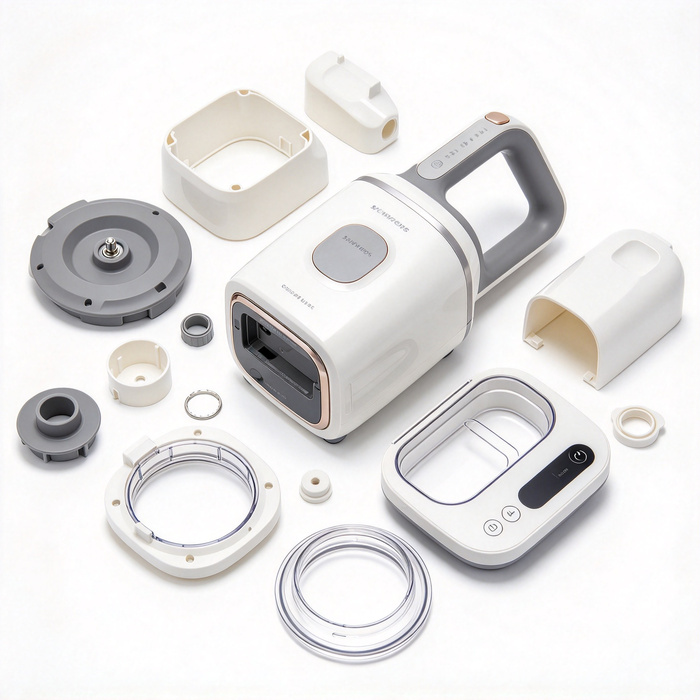
1. Understanding Heat-Resistant Steam Oven Plastic Parts
Heat-resistant steam oven plastic parts are specially engineered components designed to function in appliances that use high-temperature steam for cooking. Depending on the oven structure, these parts may be located inside the cooking chamber, around the steam generation system, within the water circulation assembly, or in external housing areas.
Unlike ordinary plastic components, steam oven parts must withstand a combination of heat, moisture, pressure differences, and repeated temperature changes. Some components may also encounter food residues, cooking oils, detergents, and cleaning chemicals.
Common Components Used in Steam Ovens
- Steam-guiding components: Direct steam toward the cooking chamber and help maintain an appropriate flow path.
- Internal support brackets: Hold trays, racks, sensors, or other functional assemblies in their correct positions.
- Water tank components: Support water storage, connections, and related structural functions.
- Control and electrical housings: Protect internal electronic components from heat and environmental exposure.
- Sealing components: Help prevent unwanted steam leakage around doors, joints, and connecting sections.
- External handles and covers: Provide safe operation, protection, and an attractive appliance appearance.
Each component has a different operating environment. A plastic bracket located near a heating element may require high thermal stability, while a seal exposed to steam needs flexibility and resistance to repeated compression. Therefore, material specifications should always reflect the actual location and function of the part.
2. Why Material Selection Matters for Steam Oven Components
Material selection directly affects product durability, manufacturing consistency, and the overall reliability of a steam oven. Choosing a resin based only on its advertised heat resistance can create problems because temperature is only one part of the operating environment.
2.1 Resistance to High Temperature
Plastic components may experience elevated temperatures for extended periods. If the selected resin cannot maintain adequate stiffness and dimensional stability, the part may bend, soften, or lose its original shape. This can affect assembly accuracy and the operation of connected components.
Manufacturers should evaluate the actual temperature at the component location rather than relying exclusively on the maximum temperature of the oven chamber.
2.2 Resistance to Steam and Moisture
Hot water and steam can affect polymer properties through moisture absorption, hydrolysis, and repeated thermal exposure. Certain materials may become brittle or lose mechanical strength after prolonged exposure to hot, humid environments.
For components inside the cooking chamber, resistance to repeated steam cycles is particularly important. The material should be evaluated under conditions that represent the intended application.
2.3 Dimensional Stability
Steam oven assemblies often contain connecting clips, mounting holes, sliding structures, and precise fitting surfaces. Even small dimensional changes can create loose connections, assembly difficulties, or abnormal operating noise.
2.4 Chemical and Cleaning Resistance
Components may come into contact with cooking oils, food residues, cleaning solutions, and descaling agents. Chemical compatibility helps reduce surface degradation, discoloration, stress cracking, and premature failure.
A high-temperature rating does not automatically guarantee long-term steam resistance. Buyers should evaluate temperature, exposure duration, moisture, mechanical stress, chemical contact, and cleaning conditions together.
3. Which Plastic Materials Are Suitable for Heat-Resistant Steam Oven Plastic Parts?
Different engineering plastics offer different combinations of heat resistance, toughness, chemical stability, processability, and cost. The most suitable choice depends on the component's operating conditions and performance requirements.
3.1 PPS – Polyphenylene Sulfide
PPS is a high-performance engineering plastic known for its thermal stability, chemical resistance, and dimensional consistency. Glass-fiber-reinforced PPS can provide additional stiffness and strength for structural components.
Potential applications include mounting brackets, support structures, and certain steam-guiding components. However, the exact grade must be assessed for moisture exposure, impact requirements, fiber orientation, and food-contact suitability where applicable.
3.2 PPSU – Polyphenylsulfone
PPSU is widely recognized for its toughness and resistance to hot water and repeated steam exposure. It is a strong candidate for demanding applications that require both thermal performance and impact resistance.
Depending on the approved grade, PPSU may be considered for water-related assemblies, internal supports, and components that undergo frequent cleaning or thermal cycling. Its relatively high material cost and demanding molding requirements should be considered during project planning.
3.3 PESU and PSU – Sulfone-Based Engineering Plastics
Polyethersulfone (PESU) and polysulfone (PSU) offer useful combinations of heat resistance, stiffness, and dimensional stability. Certain grades also provide good resistance to hot water and steam.
These materials may be suitable for selected housings, structural parts, and functional components. However, their suitability depends on the specific resin grade, mechanical loading, and exposure conditions.
3.4 PEEK – Polyether Ether Ketone
PEEK is a premium engineering thermoplastic designed for demanding environments. It offers excellent mechanical strength, thermal stability, and chemical resistance.
It may be considered for highly demanding precision components or commercial equipment applications where its performance advantages justify the higher material cost. It is not automatically necessary for every steam oven component, and long-term hot-steam exposure still requires application-specific validation.
3.5 High-Temperature Silicone Rubber
Liquid silicone rubber (LSR) is particularly useful for flexible components such as seals, gaskets, cushioning elements, and insulating interfaces. Its flexibility helps maintain sealing performance during repeated heating and cooling cycles.
For food-related applications, the exact formulation, curing process, and applicable food-contact documentation should be verified.
Material Comparison for Engineering Evaluation
| Material | Main Advantages | Potential Applications | Important Considerations |
|---|---|---|---|
| PPS | Thermal stability, chemical resistance, stiffness | Structural supports and brackets | Impact strength, fiber orientation, and steam-cycle validation |
| PPSU | Toughness and hot-water resistance | Water-related and steam-exposed components | Material cost, drying, and molding conditions |
| PESU | Heat resistance and dimensional stability | Selected housings and functional parts | Grade-specific hydrolysis and chemical resistance |
| PSU | Stiffness and thermal performance | Selected structural and housing applications | Impact and repeated steam exposure requirements |
| PEEK | High mechanical and thermal performance | Specialized precision components | High material and processing costs |
| LSR Silicone | Flexibility and sealing performance | Gaskets and cushioning elements | Curing, bonding, and food-contact compliance |
Note: The comparison is intended for preliminary material evaluation. Actual temperature limits and performance depend on the commercial resin grade, testing method, component geometry, applied load, and exposure duration. No material should be approved solely from a generic polymer-family rating.
4. Essential Performance Requirements for Reliable Components
High-quality steam oven plastic parts must satisfy several requirements simultaneously. A component that performs well during initial assembly may still fail after repeated cooking and cleaning cycles if its long-term operating conditions are not properly considered.
4.1 Mechanical Strength and Load-Bearing Capacity
Support brackets, tray holders, and mounting structures must maintain sufficient strength under their intended loads. Engineers should consider static loading, vibration, impact during handling, and long-term deformation at elevated temperatures.
4.2 Thermal Cycling Performance
Steam ovens repeatedly move between heating, cooking, cooling, and cleaning conditions. These changes create expansion and contraction within the material. Repeated cycles can gradually increase internal stress, particularly around sharp corners, thin sections, and connecting points.
4.3 Moisture and Hydrolysis Resistance
Material selection should consider prolonged exposure to hot water and steam. A resin that performs well in dry heat may not maintain the same properties in a humid environment.
4.4 Surface Quality and Hygiene
For parts located near food or steam pathways, smooth surfaces and easy cleaning are important. Deep grooves, narrow gaps, and poorly finished surfaces may collect moisture and food residues.
Food-contact applications also require suitable material documentation and compliance assessment for the target market. Food-grade claims should be verified for the exact resin formulation, additives, colorants, and intended conditions of use.
4.5 Electrical and Flame Performance
Some plastic components are installed near heating systems, wiring, sensors, and electronic controls. In these applications, electrical insulation and flame performance may be important design requirements. The selected material should meet the relevant appliance safety specifications.
5. How Injection Mold Design Affects Product Quality
Even a suitable engineering plastic cannot deliver consistent performance if the mold design is inadequate. High-temperature materials often require careful control of mold temperature, material flow, venting, cooling, and ejection.
5.1 Uniform Wall Thickness
Consistent wall thickness helps reduce uneven cooling, shrinkage differences, and internal stress. Thick sections should be reviewed during design and may require coring to improve cooling consistency and reduce material accumulation.
5.2 Proper Rib and Corner Design
Ribs improve structural stiffness without requiring unnecessarily thick walls. However, poorly designed ribs can cause sink marks, stress concentration, and uneven material flow.
Rounded corners and smooth transitions help reduce stress concentration, particularly in parts exposed to repeated heat and moisture cycles.
5.3 Gate Position and Weld-Line Control
Gate location influences filling behavior, fiber orientation, surface appearance, and weld-line position. For load-bearing or steam-exposed components, weld lines should be carefully evaluated because they may become weak areas under combined thermal and mechanical stress.
5.4 Mold Venting
Proper venting allows trapped air and gases to escape during injection. Insufficient venting may result in burn marks, incomplete filling, surface defects, or weak weld-line regions.
5.5 Mold Temperature and Cooling Balance
High-performance plastics may require elevated and accurately controlled mold temperatures. Uneven temperature distribution can lead to inconsistent shrinkage, warpage, and dimensional variation.
Cooling and heating channels should be designed according to the selected resin, part geometry, and production process rather than relying on one standard mold configuration.
5.6 Ejection and Surface Protection
Appropriate ejector positions and balanced ejection forces help prevent deformation, scratches, and localized stress. This is particularly important for components with thin walls, precision fittings, or visible surfaces.
Review material selection and mold design together at the beginning of an OEM project. Early design-for-manufacturing evaluation can reduce tooling modifications, improve moldability, and help avoid expensive changes after mass production begins.
6. Common Manufacturing Challenges and Practical Solutions
Producing heat-resistant steam oven plastic parts requires more than using a high-performance resin. Material handling, mold construction, process settings, and inspection all influence the final product.
Challenge 1: Warpage and Dimensional Deviation
Possible causes: Uneven cooling, non-uniform wall thickness, fiber orientation, and residual molding stress.
Practical solutions: Optimize the part structure, balance the gating system, improve mold temperature uniformity, and verify shrinkage behavior through trial production.
Challenge 2: Cracking After Steam Exposure
Possible causes: Unsuitable resin grades, hydrolysis, residual stress, sharp corners, and chemical exposure.
Practical solutions: Select a resin with verified hot-water and steam resistance, improve structural transitions, and perform repeated steam-cycle testing on finished components.
Challenge 3: Weak Weld Lines
Possible causes: Poor gate positioning, insufficient melt temperature, inadequate venting, and unfavorable flow patterns.
Practical solutions: Evaluate gate positions, optimize filling conditions, improve venting, and use mold-flow analysis when part geometry requires it.
Challenge 4: Poor Surface Appearance
Possible causes: Moisture in hygroscopic resins, trapped gases, contamination, and unstable processing conditions.
Practical solutions: Follow the resin manufacturer's drying recommendations, maintain clean material handling procedures, and control molding parameters.
Challenge 5: High Production Costs
Possible causes: Over-specification of materials, complicated mold structures, high scrap rates, and unnecessary secondary operations.
Practical solutions: Match resin performance to the actual application, simplify part geometry where possible, optimize cavity layouts, and improve process repeatability.
7. Quality Control and Performance Testing
Quality assurance should begin before mass production. A reliable inspection process verifies that the selected material, mold design, and finished component meet the agreed technical requirements.
7.1 Incoming Material Inspection
Manufacturers should verify resin grade identification, supplier documentation, batch traceability, and material storage conditions. Moisture-sensitive materials must be dried according to the resin manufacturer's technical instructions.
7.2 Dimensional Inspection
Critical dimensions such as mounting holes, fitting surfaces, wall thickness, and assembly interfaces should be checked against approved drawings. Measuring equipment and inspection methods should be appropriate for the required tolerances.
7.3 Thermal and Steam-Cycle Testing
Finished components should be tested under representative operating conditions. Testing may include repeated heating and cooling, exposure to hot water or steam, and dimensional checks after conditioning.
7.4 Mechanical and Functional Testing
Depending on the component, quality checks may include tensile or flexural properties, impact resistance, load-bearing performance, assembly fit, sealing performance, and operational durability.
7.5 Appearance and Packaging Inspection
Visual inspection should identify flash, sink marks, scratches, contamination, cracks, and other defects. Packaging should also protect components from deformation, dust, moisture, and transportation damage.
| Inspection Item | Purpose | Recommended Verification |
|---|---|---|
| Material identification | Confirm the approved resin | Grade documents and batch records |
| Dimensional accuracy | Ensure correct assembly | Drawing-based measurement |
| Thermal resistance | Evaluate heat-related deformation | Application-specific heat conditioning |
| Steam resistance | Assess moisture-related degradation | Repeated steam exposure |
| Mechanical strength | Verify structural performance | Load and functional testing |
| Surface quality | Identify visible defects | Visual inspection |
The testing plan should be agreed upon by the customer and manufacturer before production approval. Acceptance criteria should be based on the actual application, applicable standards, and product specifications.
8. Custom Manufacturing for OEM Steam Oven Projects
OEM appliance manufacturers often require plastic components with specific shapes, dimensions, material properties, colors, and assembly structures. Custom injection molding makes it possible to develop parts according to individual equipment designs.
A well-organized custom manufacturing project generally includes the following stages:
- Requirement confirmation: Define component functions, operating temperatures, steam exposure, mechanical loads, and expected production quantities.
- Drawing and sample evaluation: Review 2D drawings, 3D models, physical samples, and assembly requirements.
- Material recommendation: Evaluate suitable engineering plastics based on the operating environment and cost targets.
- DFM and mold design: Review wall thickness, ribs, gates, parting lines, cooling, and ejection structures.
- Mold manufacturing: Produce the injection mold according to the approved design and tooling specifications.
- Trial molding: Produce initial samples and evaluate dimensions, appearance, and functional performance.
- Sample approval: Confirm that the samples meet the customer's technical and quality requirements.
- Mass production and delivery: Control production consistency, inspection, packaging, and shipment.
Working with a manufacturer that can coordinate mold design, tooling, injection molding, and secondary operations can simplify communication and reduce coordination between multiple suppliers.
9. How to Select a Reliable Manufacturing Partner
Choosing the right injection molding supplier is an important part of developing reliable heat-resistant steam oven plastic components. Buyers should evaluate not only the quoted price but also the supplier's engineering experience and production capabilities.
Key Factors to Consider
- Engineering knowledge: The supplier should understand high-temperature engineering plastics and the effects of steam and moisture on polymer performance.
- Custom mold capability: Check whether the manufacturer can support mold design, tooling production, and injection molding.
- Material sourcing: Confirm whether the supplier can obtain the specified resin grades and provide relevant documentation.
- Quality inspection: Ask about dimensional inspection, appearance checks, sample validation, and batch traceability.
- Communication: A responsive technical team helps resolve design issues and production questions efficiently.
- Production flexibility: Consider whether the supplier can support prototype development, small batches, and future volume requirements.
Custom Plastic Manufacturing by Ningbo P&M Plastic Metal Product Co., Ltd.
Ningbo P&M Plastic Metal Product Co., Ltd. provides custom plastic mold manufacturing and injection molding services for different industrial and consumer product applications.
With experience in mold manufacturing and custom plastic production, the company supports customers throughout the product development process. Its services include CAD design, mold manufacturing, injection molding, plastic product production, assembly, and related customization requirements.
For heat-resistant steam oven plastic parts, project discussions can cover material selection, mold structure, component geometry, production requirements, and sample evaluation. Customers can provide 2D drawings, 3D files, physical samples, or product reference information for an initial technical review.
The company also offers one-stop manufacturing coordination, helping customers manage the transition from product design and mold development to component production, packaging, and transportation.
For OEM buyers seeking customized plastic components, early communication about the operating environment and technical specifications can help establish a more suitable manufacturing solution.
10. Frequently Asked Questions
Q1: What are heat-resistant steam oven plastic parts?
They are plastic components designed to operate in steam ovens under elevated temperatures, high humidity, and repeated heating and cooling conditions. Typical examples include internal brackets, steam-guiding parts, housings, supports, and sealing components.
Q2: Which plastic is suitable for components exposed to hot steam?
PPSU, selected PPS grades, PESU, and other high-performance engineering plastics may be suitable depending on the application. The correct selection should consider the exact resin grade, exposure duration, temperature, mechanical loading, and relevant compliance requirements.
Q3: Can ordinary ABS plastic be used in a steam oven?
Standard ABS is generally not the preferred choice for components exposed directly to high-temperature steam. Its heat and moisture resistance may not satisfy demanding operating conditions. A more suitable material should be selected according to the component's actual environment.
Q4: Why do plastic parts crack after repeated steam exposure?
Possible causes include hydrolysis, thermal cycling, residual molding stress, chemical exposure, poor structural design, and unsuitable resin selection. Proper material evaluation and finished-part testing can help identify and reduce these risks.
Q5: Are food-grade materials always required for steam oven plastic components?
Not every plastic component directly contacts food. However, components that contact food or may affect food-contact conditions must be evaluated against the applicable regulations and requirements of the target market. Documentation should cover the exact resin grade and formulation.
Q6: What information is needed for a custom plastic molding quotation?
Useful information includes 2D drawings, 3D files, product samples, dimensions, material requirements, operating temperature, steam exposure conditions, estimated order quantity, and any special surface or assembly requirements.
Q7: Can a manufacturer help develop a plastic part without a 3D drawing?
Yes. Depending on the project, a manufacturer may be able to evaluate a physical sample, reference images, or dimensioned drawings and assist with CAD development. The available information will determine the accuracy and speed of the initial design process.
Q8: Why is mold design important for heat-resistant plastic components?
Mold design affects filling, shrinkage, weld-line strength, dimensional accuracy, surface quality, and internal stress. Proper gate positioning, venting, cooling, and ejection design are important for consistent production quality.
Q9: How can buyers verify the quality of custom steam oven plastic parts?
Buyers can establish an inspection plan covering material identification, dimensional measurements, visual inspection, thermal conditioning, steam-cycle testing, and functional evaluation. The acceptance criteria should be agreed upon before mass production.
Q10: Can Ningbo P&M Plastic Metal Product Co., Ltd. provide one-stop custom manufacturing?
Yes. Ningbo P&M Plastic Metal Product Co., Ltd. offers services covering product design, mold manufacturing, injection molding, plastic part production, assembly, packaging, and transportation coordination. Project details can be discussed according to individual customer requirements.
Conclusion
Reliable Heat-resistant steam oven plastic parts depend on the right combination of material selection, product structure, injection mold design, manufacturing control, and application-specific testing. High-temperature performance alone is not enough. Resistance to steam, moisture, mechanical stress, cleaning chemicals, and repeated thermal cycling must also be considered.
For appliance manufacturers and OEM buyers, involving an experienced custom molding partner early in the development process can help identify technical risks, improve component manufacturability, and support stable production quality.
Ningbo P&M Plastic Metal Product Co., Ltd. is ready to discuss customized plastic mold and injection molding projects based on your product drawings, samples, and technical requirements.
Looking for a Custom Steam Oven Plastic Parts Manufacturer?
Need reliable heat-resistant plastic components for your next steam oven project? Contact Ningbo P&M Plastic Metal Product Co., Ltd. to discuss your material requirements, custom mold design, injection molding solutions, and OEM production needs.
Send us your drawings, samples, or project specifications. Our team is ready to help you move from product concept to customized manufacturing.
Contact Us