

What Should You Look for When Buying Tear-Resistant Stretch Film
2026-10-28
When sourcing Tear-Resistant Stretch Film for industrial or commercial packaging, the decisions you make directly affect load stability, material costs, and operational uptime. As a manufacturer with years of experience supplying protective packaging solutions, Yuhong has compiled the essential evaluation criteria that procurement teams and packaging engineers should consider before finalizing a purchase.
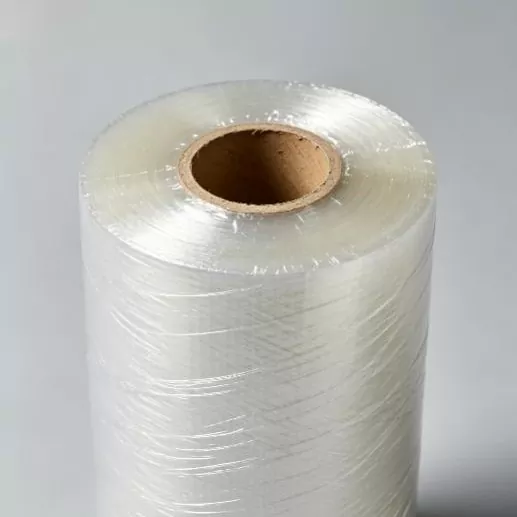
Key Performance Indicators to Evaluate
Before comparing suppliers, establish a clear technical checklist. The following criteria separate genuinely Tear-Resistant Stretch Film from products that merely carry the label:
-
Tear propagation resistance — measured in grams (ASTM D1922, Elmendorf tear test); higher values indicate greater resistance to punctures and edge tears
-
Puncture resistance — critical for loads with sharp corners or irregular shapes
-
Clarity and opacity options — clear film for load identification, opaque for UV protection
-
Pre-stretch capability — machine film with high pre-stretch ratios reduces material consumption per pallet
-
Cling performance — both single-sided and double-sided cling options affect wrap integrity
Comparative Selection Guide
The table below summarizes how different specifications serve different operational needs:
| Specification | Recommended Range | Best Suited For | Key Consideration |
|---|---|---|---|
| Thickness | 12–35 microns | Light to heavy loads | Thicker film does not always mean stronger tear resistance |
| Tear resistance (MD/TD) | 150–400 g | Sharp-edged or irregular loads | Balance with elongation to avoid brittleness |
| Pre-stretch ratio | 150%–300% | High-volume machine wrapping | Higher ratios lower cost per pallet |
| Cling type | Single or double-sided | Manual vs. automatic wrapping | Double-sided cling improves layer adhesion |
| Core size | 2" or 3" | Hand or machine application | Match to your dispenser equipment |
Supplier and Quality Verification
Technical specs alone do not guarantee performance. Verify that your supplier provides batch-level test reports, consistent resin formulation, and traceable production records. Yuhong maintains documented quality control at every production stage, from raw material inspection to final roll dimensional checks, so buyers receive Tear-Resistant Stretch Film that performs consistently across shipments. Request samples and run trial wraps under your actual load conditions before committing to volume orders.
Frequently Asked Questions
Q: Does thicker Tear-Resistant Stretch Film always provide better tear resistance?
A: Not necessarily. Tear resistance depends on resin formulation, molecular orientation, and multilayer structure as much as thickness. A well-engineered 17-micron Tear-Resistant Stretch Film can outperform a poorly formulated 23-micron film. Always evaluate tear strength test data alongside gauge.
Q: How do I determine the right pre-stretch ratio for my wrapping equipment?
A: Start with the manufacturer's recommended range for your machine model, typically 150%–250%, then test at incremental settings while monitoring load stability and film breakage. Higher ratios reduce cost per pallet but require consistent film quality; Yuhong provides technical guidance to help calibrate settings for optimal yield.
Q: What is the difference between machine-grade and hand-grade Tear-Resistant Stretch Film?
A: Machine-grade film is engineered for high pre-stretch ratios, consistent unwinding, and longer roll lengths, while hand-grade film prioritizes manageable roll weight and reliable cling for manual application. Using machine film for hand wrapping wastes material, and hand film on automatic equipment causes tension failures.
Contact Us
Ready to evaluate Tear-Resistant Stretch Film for your operation? Contact Yuhong today to request samples, technical data sheets, and a tailored quotation for your load profiles and wrapping equipment.