

What Factors Influence the Pressure Drop Across a Rectangular Fan Rubber Soft Connection
2026-04-02
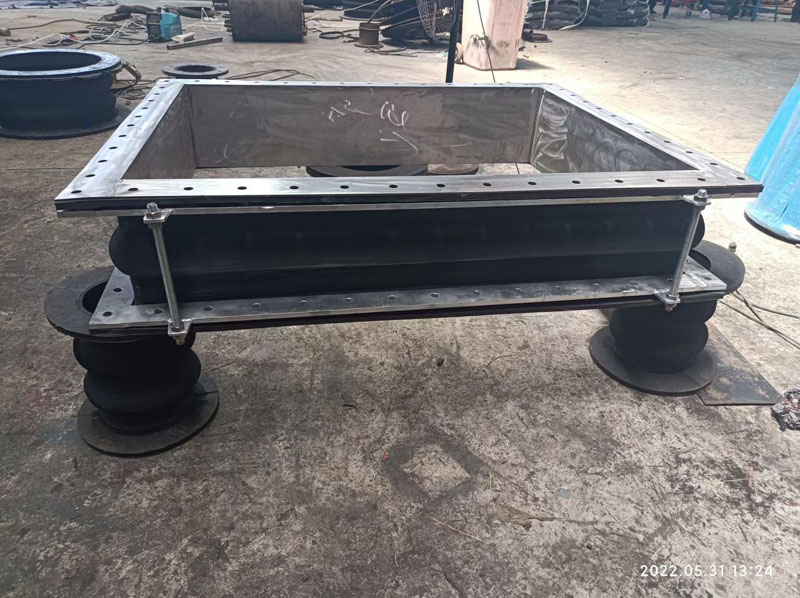
When designing or maintaining air handling and ventilation systems, engineers must carefully evaluate every component that affects system efficiency. One critical yet often overlooked element is the Rectangular Fan Rubber Soft Connection. At Fushuo, we have observed that pressure drop across this flexible connector directly influences fan energy consumption, noise levels, and overall system stability. Understanding the key factors behind pressure drop helps professionals optimize duct design and avoid costly operational inefficiencies.
Primary Factors Affecting Pressure Drop
Several physical and geometric characteristics of the Rectangular Fan Rubber Soft Connection determine the resistance to airflow. Below is a structured analysis of the most influential variables.
| Factor | Effect on Pressure Drop | Typical Range or Observation |
|---|---|---|
| Internal cross-sectional area | Inverse relationship | 10-20% area reduction can increase pressure drop by 25-40% |
| Length of the soft connection | Direct relationship | Longer units create more frictional loss |
| Material surface roughness | Moderate direct relationship | Rubber vs. smooth elastomers: 5-15% difference |
| Operating airflow velocity | Exponential relationship | Doubling velocity quadruples pressure drop |
| Inlet/outlet geometry mismatch | High direct relationship | Misalignment over 5° increases drop significantly |
| Internal support rib presence | Variable | Poorly designed ribs add 8-12% loss |
Beyond these static factors, dynamic conditions such as temperature and static pressure also play a role. Fushuo engineers recommend calculating pressure drop using manufacturer-specific loss coefficients rather than generic duct formulas, because the Rectangular Fan Rubber Soft Connection behaves differently than rigid metal ducts.
Common FAQ About Rectangular Fan Rubber Soft Connection Pressure Drop
Question 1: How can I accurately measure the pressure drop across a Rectangular Fan Rubber Soft Connection in an installed system
Answer: Use two calibrated pressure taps installed exactly at the inlet and outlet flanges of the Rectangular Fan Rubber Soft Connection. Connect a differential pressure manometer with an accuracy of ±1 Pa. Take measurements at three different fan operating points (low, medium, high flow) while keeping downstream conditions stable. Average the readings over 5 minutes to account for minor fluctuations. Compare your field data against the manufacturer’s published curve from Fushuo to detect anomalies such as internal deformation or partial blockage.
Question 2: Does the compression or extension of the Rectangular Fan Rubber Soft Connection during installation change its pressure drop characteristics
Answer: Yes, significantly. If the Rectangular Fan Rubber Soft Connection is compressed more than 15% of its free length, the internal cross-section reduces non-uniformly, creating localized turbulence and increasing pressure drop by up to 30%. Conversely, excessive stretching beyond 5% of design length can thin the walls and cause localized bulging or flutter, which also raises pressure drop. Fushuo recommends installing with the connector at its neutral length and allowing no more than ±10 mm of axial misalignment per meter of duct width.
Question 3: What is an acceptable pressure drop range for a Rectangular Fan Rubber Soft Connection in a standard HVAC application
Answer: For most commercial HVAC systems with air velocities between 8 and 15 m/s, an acceptable pressure drop across a well-designed Rectangular Fan Rubber Soft Connection is between 15 and 45 Pa. High-performance systems should target below 30 Pa. If pressure drop exceeds 60 Pa, system efficiency drops noticeably, and fan energy costs rise by approximately 8-12%. Fushuo provides application-specific loss charts that help engineers set realistic thresholds based on duct dimensions and operating temperature.
Optimizing Design to Minimize Pressure Drop
Engineers can reduce pressure drop by selecting a Rectangular Fan Rubber Soft Connection with smooth internal transitions, adequate cross-sectional area, and minimal length. Fushuo integrates aerodynamic ribs only when necessary, and our standard design maintains at least 95% of the connected duct’s free area. Additionally, avoiding sharp bends immediately upstream or downstream of the connector prevents turbulence from amplifying pressure losses.
Contact us today for a detailed pressure drop simulation on your Rectangular Fan Rubber Soft Connection application. Fushuo engineers are ready to provide custom sizing, material selection advice, and performance verification to keep your fan systems efficient and reliable.