

What Are the Most Common Failure Signs of a Stretch Blow Moulding Screw Barrel
2026-06-04
For manufacturers relying on Stretch Blow Moulding Screw Barrel systems, early failure detection is critical. E.J.S has spent over two decades helping plants reduce unplanned downtime by identifying these warning signs before production is compromised.
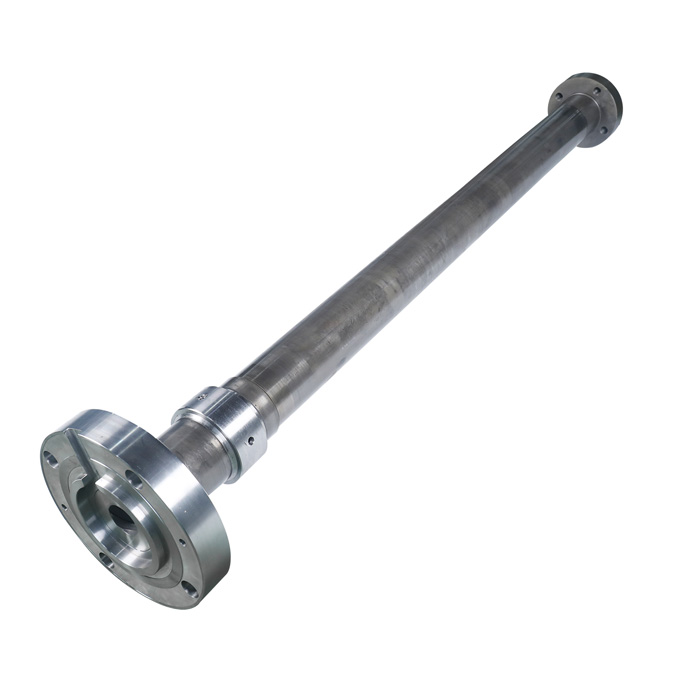
Most Common Failure Signs
| Failure Sign | Observable Symptom | Root Cause |
|---|---|---|
| Reduced Output Rate | Cycle time increases >15% without screw speed change | Worn flight clearance reduces conveying efficiency |
| Melt Temperature Fluctuations | Unstable parison formation, surging at die head | Damaged mixing section or blocked barrel grooves |
| Surface Grooves or Scoring | Visible longitudinal marks on removed screw | Contaminated regrind (metal, glass) eroding base metal |
| Black Specks / Streaks in Preform | Carbonized particles appear randomly in sidewall | Material degradation from localized hotspots due to worn clearance |
Three Critical Questions About Stretch Blow Moulding Screw Barrel Failure
Q: How can I tell if my Stretch Blow Moulding Screw Barrel has worn beyond acceptable limits without removing it?
A: Measure the specific energy consumption (kWh/kg). When a Stretch Blow Moulding Screw Barrel wears, the extruder draws 12–18% higher current to maintain the same screw RPM. Simultaneously, monitor melt temperature stability: if temperature varies ±3°C or more at constant heater settings, clearance has likely exceeded 0.6% of screw diameter. E.J.S recommends recording these parameters weekly.
Q: What is the typical service life of a Stretch Blow Moulding Screw Barrel processing recycled PET?
A: For post-consumer PET containing up to 3% impurities (labels, adhesives, trace metals), a standard nitrided Stretch Blow Moulding Screw Barrel typically lasts 8,000–10,000 hours. A E.J.S bimetallic barrel extends this to 20,000–25,000 hours under identical conditions. Once output drops below 85% of original rated capacity, replacement is more economical than continued operation.
Q: Why do I see intermittent shark-skin or haze on preform inner walls even with new molds?
A: This indicates unstable melt delivery from a Stretch Blow Moulding Screw Barrel with worn compression zone geometry. As flight lands wear unevenly, shear heat generation becomes inconsistent. The melt alternately over-shears (causing degradation haze) and under-shears (causing poor homogenization). E.J.S recommends a screw pull and inspection if this defect appears on >5% of preforms over an 8-hour shift.
Preventive Action
Regular vibration analysis and output-per-RPM tracking identify Stretch Blow Moulding Screw Barrel degradation 300–400 operating hours before visible part defects appear. E.J.S provides free wear assessment templates.
Contact us today for a customized wear evaluation of your Stretch Blow Moulding Screw Barrel. Reach E.J.S via our website contact form or request a callback for an on-site screw pull inspection schedule.