
What Are the Critical Considerations When Machining Glass Fiber Filled PEEK Rods
2026-03-20
When precision engineering demands materials that can withstand extreme environments, Glass Fiber Filled PEEK Rods often emerge as the material of choice. However, the very properties that make this composite exceptional—high strength, thermal stability, and chemical resistance—also present unique challenges during fabrication. At GuangZhou Ideal, we have spent years refining the machining processes for advanced polymers. Understanding the nuanced behavior of Glass Fiber Filled PEEK Rods is essential to achieving tight tolerances and a flawless surface finish. Whether you are prototyping for aerospace or scaling production for medical devices, adhering to best practices in machining is non-negotiable for part integrity and performance.
The Impact of Abrasive Fibers on Tooling
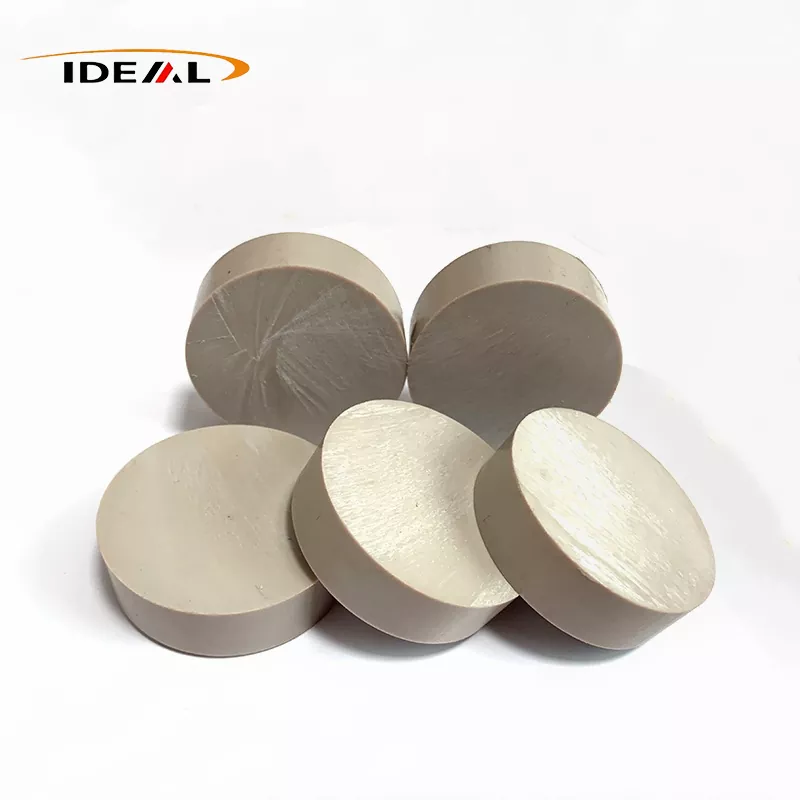
The most significant difference between machining standard polymers and Glass Fiber Filled PEEK Rods is the abrasive nature of the glass reinforcement. These fibers dramatically increase the material's stiffness but act like sandpaper on cutting tools. Standard high-speed steel (HSS) tools will dull rapidly, leading to friction, heat buildup, and poor dimensional accuracy.
To mitigate these issues, the selection of tool geometry and material is critical. The following table outlines the recommended tooling specifications:
| Tool Characteristic | Recommendation | Reason |
|---|---|---|
| Material | Polycrystalline Diamond (PCD) or Carbide | PCD offers extreme wear resistance; Carbide provides a balance of cost and durability for high-volume runs. |
| Coating | AlTiN or Diamond-Like Carbon (DLC) | Reduces friction and prevents the polymer from adhering to the tool face. |
| Geometry | Positive Rake Angle, Sharp Edges | Shears the material cleanly rather than pushing it, minimizing stress whitening and fiber pull-out. |
| Flute Design | Highly Polished Flutes | Ensures efficient chip evacuation, preventing recutting of chips and thermal damage. |
Managing Thermal Expansion and Residual Stress
Glass Fiber Filled PEEK Rods exhibit lower thermal expansion than unfilled PEEK, but heat management remains a primary concern. Unlike metals, polymers do not dissipate heat quickly. If the heat generated during cutting is not controlled, it can cause the rod to expand locally, leading to out-of-tolerance cuts. When the part cools, this can result in residual stresses that cause warping or cracking.
Effective cooling strategies are paramount. A mist of coolant or even compressed air is often sufficient to clear chips and stabilize the temperature. Flood coolant can be used but may introduce thermal shock if the material is cycled between extreme temperatures. For GuangZhou Ideal, maintaining a stable thermal environment during machining is the key to producing components with consistent mechanical properties.
Achieving Optimal Surface Finish
A rough, "hairy" surface is a common defect when machining Glass Fiber Filled PEEK Rods. This occurs when the glass fibers are pulled out of the matrix rather than being cleanly cut, or when the PEEK matrix smears over the surface due to excessive heat.
To achieve a pristine finish, machinists must focus on the relationship between feed rate and spindle speed. High spindle speeds combined with moderate feed rates generally produce the best results. However, the final pass (finishing cut) should be extremely light—typically less than 0.2mm—to ensure the fibers are sheared cleanly by a sharp tool.
Critical Considerations Summary
To summarize the operational parameters that ensure success, refer to the checklist below when setting up your CNC or manual lathe:
-
Tool Inspection: Verify tool sharpness before every critical operation. Dull tools are the primary cause of scrapped parts.
-
Workholding: Use gentle but firm clamping. Excessive pressure can deform the rod, leading to "spring-back" and inaccurate machining.
-
Depth of Cut: For roughing, keep depths moderate. For finishing, use very light cuts to achieve tight tolerances.
-
Speed and Feed: Start with manufacturer recommendations for glass-filled polymers and adjust based on chip color and formation.
-
Deburring: Edges may be sharp due to the glass fibers. Use a fine file or abrasive pad specifically designed for composites.
Frequently Asked Questions
To further clarify the complexities of working with this advanced material, here are answers to the most common technical inquiries received by the engineers at GuangZhou Ideal.
FAQ 1: Can I use standard metalworking speeds and feeds when machining Glass Fiber Filled PEEK Rods?
No, you should not use standard metalworking parameters. While the glass fibers add stiffness, the PEEK matrix is still a polymer with different thermal properties. Using metal speeds often generates too much heat, causing the material to melt or gum up the tool. It is generally advisable to use higher spindle speeds with lower feed rates than you would for steel, but with significantly more aggressive tooling (carbide or PCD) than you would use for standard plastics. The goal is to cut the fibers cleanly before the heat can transfer to the polymer matrix.
FAQ 2: Why do my machined parts from Glass Fiber Filled PEEK Rods sometimes have white marks or lines near the edges?
The white marks you are observing are likely "stress whitening" or micro-fractures. This typically happens when the tool is slightly dull or if the feed rate is too aggressive. Instead of shearing the material cleanly, the tool pushes and tears the surface, causing the glass fibers to separate microscopically from the PEEK binder. This creates light-scattering voids that appear white. To resolve this, ensure your cutting tools are extremely sharp (preferably new) for finishing passes and reduce the depth of the final cut to minimize mechanical stress on the material.
FAQ 3: How do the machining tolerances of Glass Fiber Filled PEEK Rods compare to metals?
Achieving tight tolerances with Glass Fiber Filled PEEK Rods is absolutely possible, but it requires a different approach than metal. Metals are generally isotropic and predictable. With this composite, you must account for its lower thermal conductivity and higher coefficient of thermal expansion (relative to steel). To hold tolerances of +/- 0.025mm or tighter, it is crucial to rough the part first, allow it to sit and normalize to room temperature to release any induced stresses, and then perform the finishing pass. This "rough and finish" technique ensures the material stabilizes before the final dimensions are cut.
Partner with the Experts
Mastering the intricacies of Glass Fiber Filled PEEK Rods requires not only the right machinery but also the technical expertise to apply these principles effectively. At GuangZhou Ideal, we provide high-quality raw materials and the engineering support necessary to ensure your machining success. Do not let material challenges slow down your production.
Contact us today to discuss your specific application requirements or to request a sample for your next critical project