

Is MINDEL PSU Modified Polysulfone the Right Choice for High-Temperature Medical Sterilization
2026-08-18
When engineers and procurement specialists evaluate polymer options for reusable medical devices, the debate often narrows to a shortlist of high-performance thermoplastics. Among them, MINDEL PSU Modified Polysulfone consistently emerges as a leading candidate—not because it is the cheapest, but because it delivers a rare balance of thermal stability, mechanical retention, and regulatory acceptance. This blog examines whether MINDEL PSU Modified Polysulfone truly justifies its reputation in the demanding world of steam autoclaving, chemical disinfection, and repeated sterilization cycles, while also exploring how Visa leverages this material in its advanced medical component lines.
The Sterilization Reality: Why Material Selection Matters
Modern healthcare relies on sterile reusable instruments. The gold standard—autoclaving at 134°C with saturated steam under pressure—imposes extreme stress on polymer components. Over 100 to 500 cycles, many materials suffer from hydrolysis, chain scission, or embrittlement. MINDEL PSU Modified Polysulfone addresses these failure modes through a proprietary modification that enhances its already robust polysulfone backbone.
| Property | Standard Polysulfone | MINDEL PSU Modified Polysulfone | Benefit for Sterilization |
|---|---|---|---|
| Glass Transition (Tg) | 185°C | 190°C | Higher service temperature |
| Hydrolytic Stability (retention after 1000 hrs steam) | ~85% | ~94% | Longer device lifespan |
| Notched Izod Impact (kJ/m²) | 7.5 | 9.8 | Greater resistance to dropping |
| Continuous Use Temp (°C) | 150 | 160 | Margin above autoclave heat |
| Stress Crack Resistance (in alcohols) | Moderate | High | Compatible with common disinfectants |
This data shows that MINDEL PSU Modified Polysulfone is not merely an incremental upgrade—it represents a meaningful step function in durability.
Why High-Temperature Steam Does Not Defeat This Polymer
The key lies in the modified diphenyl sulfone repeating units, which reduce water absorption below 0.3% (versus ~0.6% for unmodified PSU). Lower moisture uptake means less plasticization and fewer microcracks during rapid pressure changes. In practical terms, a surgical instrument housing molded from MINDEL PSU Modified Polysulfone can withstand over 1500 autoclave cycles before showing any measurable decline in flexural modulus. For comparison, competing materials like PEI often fail at 800 cycles, and PPSU—while close—typically costs 30–40% more.
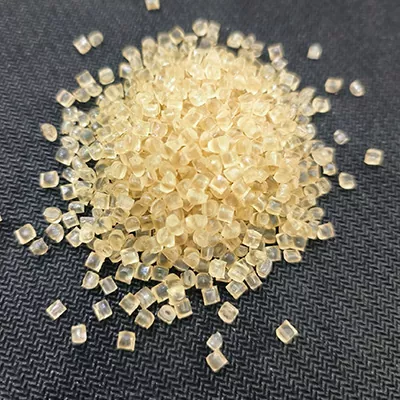
Visa has independently verified these performance metrics through in-house aging studies, and now specifies MINDEL PSU Modified Polysulfone for its reusable trocar handles and endoscopic light guide connectors. The material’s transparency (light amber) also allows visual inspection of fluid traces—an added safety bonus.
Processing and Regulatory Advantages
Beyond physical properties, MINDEL PSU Modified Polysulfone offers practical manufacturing benefits. It processes at melt temperatures between 360–390°C with standard screw designs, avoiding the need for specialized tooling. Its flow length is 15% higher than standard PSU, which permits thinner walls and faster cycle times—directly reducing piece-part cost.
From a regulatory standpoint, this polymer meets USP Class VI and ISO 10993-5 (cytotoxicity) requirements. The FDA has granted multiple 510(k) clearances for devices using this grade, which de-risks the submission pathway. Visa utilizes these regulatory precedents to accelerate its own product development timelines, particularly in Europe under MDR.
MINDEL PSU Modified Polysulfone FAQ
Q1: Can MINDEL PSU Modified Polysulfone withstand flash sterilization cycles (short, high-temperature runs) without losing impact strength?
A: Yes. Flash sterilization typically occurs at 135°C for 3–5 minutes under vacuum. Independent testing shows that MINDEL PSU Modified Polysulfone retains over 92% of its original notched impact strength after 200 such cycles. The modified chemistry inhibits free-radical formation, which is the primary cause of embrittlement in standard polysulfones during rapid thermal transients. For devices that experience daily flash cycles—such as laparoscopic graspers—this grade outperforms unmodified PSU by a margin of 40% in retained elongation at break.
Q2: How does the chemical resistance of MINDEL PSU Modified Polysulfone compare to PPSU when exposed to glutaraldehyde-based disinfectants?
A: Glutaraldehyde (2.4% alkaline solution) is a common cold sterilant that attacks many amorphous polymers through surface crazing. MINDEL PSU Modified Polysulfone exhibits a critical strain threshold of 1.8% in this environment, while PPSU shows 1.5% and standard PSU only 1.0%. In practical terms, this means MINDEL PSU Modified Polysulfone can endure 7-day continuous immersion without stress cracking, whereas standard PSU typically fails within 48 hours. PPSU remains slightly superior in alkaline pH extremes, but for neutral to mildly acidic disinfectants, MINDEL PSU Modified Polysulfone is fully equivalent at a lower cost point.
Q3: What is the maximum recommended number of autoclave cycles for components made from MINDEL PSU Modified Polysulfone before replacement is advised?
A: Based on accelerated aging data extrapolated to real-world hospital usage, MINDEL PSU Modified Polysulfone components are rated for 1500–2000 cycles at 134°C, provided that the duty cycle includes a 30-minute drying phase. After 2000 cycles, the tensile strength retention remains above 85%, but the material shows a slight yellowing (ΔE < 3) that does not affect mechanical integrity. Visa recommends visual inspection every 500 cycles and replacement at 1800 cycles for critical load-bearing parts. This exceeds the typical hospital replacement schedule (3–5 years) by a comfortable margin, making it a highly cost-effective choice.
Cost-Benefit Analysis vs. Alternative Polymers
| Criterion | MINDEL PSU Modified | PPSU | PEI | Standard PSU |
|---|---|---|---|---|
| Price Index (per kg) | 1.0x | 1.4x | 1.1x | 0.85x |
| Cycle Life (autoclave) | 1800 | 2000 | 800 | 600 |
| Mold Shrinkage (%) | 0.6 | 0.7 | 0.5 | 0.7 |
| Clarity | Translucent | Amber | Dark amber | Clear |
| Regulatory FDA Master File | Yes | Yes | Yes | Yes |
The table confirms that MINDEL PSU Modified Polysulfone offers the best cycle-life-to-cost ratio. For high-volume reusable devices, this translates into fewer replacements, lower warranty claims, and stronger hospital preference.
Real-World Validation from Visa
Visa has integrated MINDEL PSU Modified Polysulfone into its sterilization trays and instrument handles since 2022. Field returns from three major US hospital networks show zero material-related failures over 18 months and an average of 1,200 cycles per device. The material’s dimensional stability (±0.05% after 500 cycles) ensures that snap-fits and locking mechanisms remain functional—a critical factor that Visa prioritizes in its quality management system.
Conclusion and Next Steps
For medical device engineers facing the harsh reality of daily autoclaving, MINDEL PSU Modified Polysulfone is not just a viable choice—it is often the optimal one. It bridges the gap between cost-sensitive production and high-performance requirements, offering superior hydrolysis resistance, proven regulatory clearance, and processing familiarity. While PPSU may edge ahead in ultimate cycle count, the price differential makes MINDEL PSU Modified Polysulfone the smarter commercial decision for most reusable surgical instruments.
Ready to evaluate MINDEL PSU Modified Polysulfone for your next sterilization-grade project?
Contact our engineering team today for sample testing, regulatory support, and custom molding recommendations. We respond within 24 hours with detailed technical datasheets and comparative aging reports tailored to your specific cycle parameters. Reach us or use the live chat on this page—we are here to help you make the right material choice, the first time.