

How to Select the Right Wall Thickness for Heavy-Duty Industrial Hoses
2026-08-14
Selecting the correct wall thickness for a Large Diameter Suction Discharge Rubber Hose is one of the most critical engineering decisions in fluid transfer operations. Whether you are handling slurry, dredging materials, or pumping chemicals, the wall thickness directly impacts safety, durability, and total cost of ownership. At Fushuo, we have spent over a decade helping engineers and procurement specialists match the right hose construction to real-world working conditions. Getting this choice wrong leads to premature blowouts, collapse under vacuum, or unnecessarily heavy and expensive assemblies.
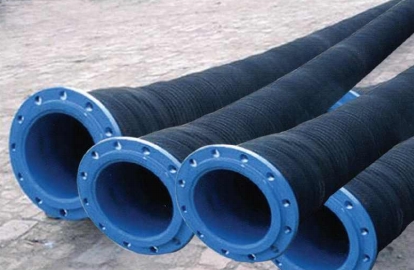
Why Wall Thickness Matters More Than You Think
Many buyers focus solely on inner diameter and length, but the wall thickness of a Large Diameter Suction Discharge Rubber Hose determines four critical performance factors:
-
Vacuum resistance – thicker walls prevent collapse under negative pressure
-
Working pressure capacity – higher burst strength comes from reinforced wall layers
-
Abrasion life – extra rubber compound thickness extends service life in abrasive media
-
Handling flexibility – thicker walls reduce bendability and increase weight
The 5-Step Professional Selection Process
| Step | Evaluation Factor | Key Consideration |
|---|---|---|
| 1 | Operating pressure (bar/psi) | Continuous vs. surge pressure |
| 2 | Vacuum level (Hg) | Full vacuum requires minimum 6-ply construction |
| 3 | Media abrasiveness | Slurry vs. clean water – wall wear rate differs 10x |
| 4 | Bend radius requirement | Tighter bends need thinner walls with higher reinforcement |
| 5 | Lifting/handling constraints | Overweight hoses increase labor injuries and rigging costs |
Pressure Rating vs. Wall Thickness – The Engineering Trade-Off
For any Large Diameter Suction Discharge Rubber Hose, wall thickness is not a standalone number. It works in combination with reinforcement ply count and compound hardness. Below is Fushuo’s standard reference guide for common industrial applications:
| Nominal ID (inches) | Wall Thickness (mm) | Max Working Pressure (bar) | Recommended Use |
|---|---|---|---|
| 4" – 6" | 6.0 – 8.0 | 10 – 15 | Light slurry, water discharge |
| 6" – 10" | 8.5 – 10.5 | 15 – 20 | Dredging, sand suction |
| 10" – 14" | 11.0 – 13.0 | 20 – 25 | Heavy mining, rock slurry |
| 14" – 20" | 13.5 – 16.0 | 10 – 12 | Large-volume pumping, low-pressure |
Data based on Fushuo’s ASTM D1050-compliant test standards. Actual specifications vary with compound type and operating temperature.
Three Common Mistakes to Avoid
-
Overspecifying thickness – adds 30–40% weight and increases shipping costs without performance gain.
-
Underspecifying for vacuum – a 4" hose with 6mm wall will collapse under 20″ Hg, causing flow restriction.
-
Ignoring temperature effects – every 10°C above 50°C reduces burst pressure by approximately 5%, requiring a thicker wall to maintain safety margins.
Frequently Asked Questions About Large Diameter Suction Discharge Rubber Hose
Q1: What wall thickness do I need for full vacuum service in a 10-inch hose?
A: For a 10" Large Diameter Suction Discharge Rubber Hose operating under full vacuum (29.9″ Hg), Fushuo recommends a minimum wall thickness of 10.5 mm with a 4-ply textile reinforcement. This ensures the hose maintains its circular cross-section without kinking or collapsing. If the application involves intermittent vacuum cycling, increase to 12.0 mm to resist fatigue cracking. Always verify with the manufacturer’s vacuum collapse curve, as rubber hardness (Shore A) also influences performance—softer compounds (60–65 Shore A) require thicker walls than harder compounds (75–80 Shore A) under identical vacuum conditions.
Q2: How does wall thickness affect the bend radius of a Large Diameter Suction Discharge Rubber Hose?
A: Wall thickness and bend radius have an inverse relationship in any Large Diameter Suction Discharge Rubber Hose. Increasing wall thickness by 2 mm typically increases the minimum bend radius by 15–20%. For example, a 6" hose with 8 mm wall can bend to approximately 900 mm radius, whereas the same hose with 10 mm wall requires at least 1,100 mm radius. If your installation has tight clearance, Fushuo recommends using a thinner wall with higher-tenacity reinforcement yarns (e.g., aramid) to achieve both flexibility and pressure retention. Always consult the technical datasheet—bend radius should be measured at maximum working pressure, not at rest.
Q3: Can I use a thicker wall to extend the service life of my Large Diameter Suction Discharge Rubber Hose in abrasive slurry applications?
A: Yes, but only up to a point. Increasing the wall thickness of a Large Diameter Suction Discharge Rubber Hose adds extra wear rubber that can extend lifespan by 25–40% in moderately abrasive media (e.g., sand, gravel, coal fines). However, beyond 14 mm total wall thickness, the law of diminishing returns applies—the additional compound adds weight and cost without proportional wear protection. For highly abrasive applications (quartz slurry, crushed rock), Fushuo recommends a specialized abrasion-resistant lining compound (e.g., NR/SBR blend with 70+ Shore A) rather than simply increasing wall thickness. A 10 mm wall with a high-abrasion liner often outlasts a 14 mm wall with a standard liner by 2:1. Always request a wear-index test report from your supplier before finalizing thickness.
Real-World Cost Impact – A Quick Calculation
For a 50-meter length of 8" Large Diameter Suction Discharge Rubber Hose:
| Wall Thickness | Total Weight (kg) | Estimated Lifespan (hours) | Cost per Hour |
|---|---|---|---|
| 8.0 mm | 340 | 1,200 | $2.83 |
| 10.5 mm | 445 | 2,000 | $2.65 |
| 13.0 mm | 540 | 2,400 | $3.10 |
The 10.5 mm option offers the lowest cost-per-hour, proving that thicker is not always better—Fushuo engineers use this data daily to optimize client selections.
Final Professional Recommendation
Start with your maximum surge pressure and minimum vacuum level. Then apply a 1.5x safety factor for dynamic loads (starting/stopping pumps, valve closures). Cross-check with bend radius constraints and handling equipment capacity. If three parameters conflict—pressure, vacuum, and flexibility—prioritize pressure first, then consult Fushuo for a custom ply-and-thickness engineered solution.
Contact Us for a Tailored Wall Thickness Assessment
Every job site has unique variables—media temperature, hose lay configuration, coupling weight, and even ambient weather conditions. Generic charts only get you 80% of the way. Fushuo provides free, no-obligation wall thickness calculations based on your actual duty cycle, with ISO 9001 and API 7K certified production. Send us your operating parameters (pressure, vacuum, media, length, and bend requirements) and we will respond within 24 hours with a recommended specification and sample test report. Contact our engineering team today – email [email protected] or use the live chat on our product page. Your safe, cost-effective operation starts with the right wall thickness.