

How Often Should You Replace the Screw Barrel in Film Blow Moulding Machines
2026-06-18
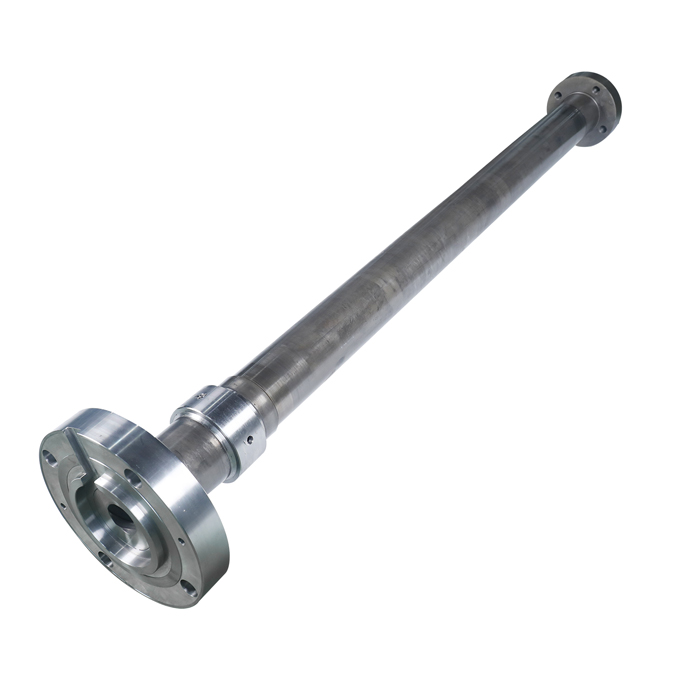
For any production manager running a blown film line, the Film Blow Moulding Screw Barrel is the heart of the extruder. It dictates melt quality, output rate, and energy consumption. Yet one question consistently ranks highest in maintenance forums and plant floor discussions: How often should you actually replace this critical component?
The short answer is every 3 to 5 years for most continuous operations. However, the precise replacement interval depends on multiple variables—throughput volume, resin type, screw design, and maintenance discipline. At EJS, we have analysed data from over 1,200 film extrusion lines worldwide, and our findings show that replacing a Film Blow Moulding Screw Barrel too early wastes capital, while replacing it too late destroys profitability through degraded film quality and soaring energy bills.
The Data-Driven Replacement Timeline
Rather than relying on calendar days, professionals evaluate wear through measurable metrics. The table below outlines the general replacement windows based on operating conditions:
| Operating Condition | Typical Service Life (Hours) | Estimated Calendar Years (24/7) | Primary Wear Indicator |
|---|---|---|---|
| Virgin LLDPE/LDPE (non-abrasive) | 45,000 – 55,000 hrs | 5 – 6 years | Gradual output drop (>12%) |
| Recycled / Regrind (moderate contaminants) | 25,000 – 35,000 hrs | 3 – 4 years | Screw flight edge rounding |
| Highly Filled Compounds (CaCO₃, talc, TiO₂) | 12,000 – 18,000 hrs | 1.5 – 2 years | Barrel I.D. ovality and scoring |
| High-Temperature Engineering Resins (PA, EVOH) | 20,000 – 30,000 hrs | 2.5 – 3.5 years | Corrosion pitting on screw root |
Five Critical Signs That Your Film Blow Moulding Screw Barrel Needs Replacement
Replacement is never a surprise if you monitor these five performance indicators weekly:
-
Output rate decline – When screw speed increases by >15% to maintain the same throughput, the Film Blow Moulding Screw Barrel has lost volumetric efficiency due to flight clearance growth.
-
Melt temperature spikes – A worn barrel reduces shear efficiency; you will see 10–15°C higher melt temperatures at the same RPM.
-
Film gauge variation – If your layflat thickness swings beyond ±8% without die adjustment, suspect uneven melting caused by barrel wear.
-
Higher specific energy consumption – Watch your kWh/kg ratio; a 20% increase over baseline is a red flag.
-
Black specks or gels – Severe barrel scoring traps degraded polymer, which periodically releases as contamination.
Professional Inspection Protocol (Recommended by EJS)
We recommend a quarterly dimensional inspection using an internal bore gauge and screw flight micrometer. Record the barrel I.D. and screw O.D. at three zones: feed, compression, and metering. The critical threshold is 0.15 mm radial clearance for diameters under 120 mm—beyond this point, replacement becomes more cost-effective than repair.
EJS offers a complimentary wear-assessment checklist for plant engineers, and our technical team can interpret your measurement data to forecast the remaining useful life of your Film Blow Moulding Screw Barrel with ±5% accuracy.
Cost-Benefit Analysis: Repair vs. Replace
| Option | Cost Range (USD) | Downtime | Performance Recovery |
|---|---|---|---|
| Re-tipping / Re-chroming | $3,000 – $8,000 | 5 – 7 days | 60 – 75% of new |
| Barrel re-sleeving | $8,000 – $15,000 | 10 – 14 days | 80 – 90% of new |
| Full new Film Blow Moulding Screw Barrel (EJS) | $12,000 – $25,000 | 2 – 3 days (exchange program) | 100% as per OEM specs |
With EJS, our exchange program ensures you receive a pre-inspected, ready-to-install Film Blow Moulding Screw Barrel within 48 hours, minimising unplanned downtime.
Frequently Asked Questions About Film Blow Moulding Screw Barrel Replacement
FAQ 1: Can I extend the life of my Film Blow Moulding Screw Barrel by using anti-wear additives?
Answer: Yes, but with limitations. Fluoropolymer-based processing aids (e.g., Dynamar or Viton) can reduce melt fracture and lower apparent viscosity, which indirectly reduces torque and abrasive wear at the flight tips. However, they do not protect against corrosive wear from halogenated resins or abrasive fillers like glass fibre. For filled compounds, the only effective life-extension strategy is applying a tungsten carbide overlay on the screw flights and a bimetallic barrel liner (e.g., Xaloy 306 or equivalent). EJS manufactures both options, and we have documented a 40% life increase in CaCO₃-heavy films with our specialised coating. That said, additives are a palliative—they typically add 6–12 months, not years. Once radial clearance exceeds 0.20 mm, no additive can restore melt homogeneity.
FAQ 2: What is the most accurate method to measure wear on a Film Blow Moulding Screw Barrel without removing it from the machine?
Answer: The industry gold standard is the "push-out test" combined with a cold-start torque measurement. First, run a natural-colour purge compound (e.g., LDPE) at a fixed screw speed (e.g., 50 RPM) and record the motor load (in amps or kW). Then, purge with the same compound after the barrel has cooled to 100°C and measure the peak torque required to restart the screw. A torque increase of >18% over the baseline (recorded when the Film Blow Moulding Screw Barrel was new) indicates that polymer is back-flowing over the flights due to excessive clearance. For non-invasive dimensional checks, use an ultrasonic thickness gauge on the barrel exterior—this detects I.D. enlargement without disassembly. However, the most reliable method remains a half-day shutdown with a dial-bore indicator and flight-depth calliper. EJS provides a mobile inspection service that completes this in under 4 hours, delivering a detailed wear profile and a replacement recommendation based on your specific resin and output targets.
FAQ 3: Does a worn Film Blow Moulding Screw Barrel affect bubble stability and neck-in more than it affects output?
Answer: Absolutely—and this is often the first subtle sign that operators miss. A worn Film Blow Moulding Screw Barrel creates an inconsistent melt film thickness at the die exit because the screw's compression ratio is effectively reduced (the melting section becomes longer and the metering section shorter). This leads to cyclical pressure fluctuations (±3–5 bar) that directly translate into bubble oscillation and variable frost-line height. Neck-in (the reduction in film width from die to nip roll) can increase by 8–12% with a moderately worn barrel, which wastes edge trim and reduces yield. In our field studies at EJS, we found that replacing a worn Film Blow Moulding Screw Barrel reduced neck-in by an average of 9.5% across 14 different blown film lines, yielding a payback period of less than 4 months from trim savings alone. So, if you are fighting bubble instability and have already ruled out air-ring and die-concentricity issues, inspect your barrel wear immediately—it is often the hidden root cause.
Recommended Replacement Strategy
Based on EJS's extensive field database, we advise a condition-based replacement rather than a fixed schedule:
-
Monthly: Log motor load at standard RPM and melt temperature.
-
Quarterly: Measure specific output (kg/hr per RPM).
-
Annually: Conduct a full dimensional inspection (or use EJS's remote diagnostic tool).
-
Replace when either: (a) radial clearance exceeds 0.15 mm, OR (b) specific output drops by 10% from baseline, OR (c) melt temperature rises by 8°C at the same setpoints.
The Financial Impact of Delayed Replacement
Delaying replacement by just 6 months beyond the optimal point typically costs a 150 kg/hr line approximately $18,000–$22,000 in excess energy, scrap film, and reduced throughput. Conversely, proactive replacement with a high-quality Film Blow Moulding Screw Barrel from EJS usually pays for itself within 8–10 months through energy savings and better film yield.
Ready to Evaluate Your Current Barrel?
Every day of operation with an over-worn Film Blow Moulding Screw Barrel is a day of hidden losses. Whether you need a wear audit, an emergency exchange unit, or a custom-designed screw profile for a new resin grade, EJS has the engineering expertise and global inventory to support your film extrusion line.
Contact us today for a free, no-obligation wear analysis. Our team of extrusion engineers will review your operating data, recommend the optimal replacement window, and provide a firm quote with guaranteed delivery. Visit our website or email our technical support desk—we are ready to help you restore your line to peak performance. EJS – Precision in Every Turn.