

How is Regenerated PS Plastic Pellet Produced and Used?
2026-05-18
Abstract
Regenerated PS Plastic Pellet (recycled Polystyrene pellet) has become a critical material in modern circular manufacturing systems. As industries shift toward sustainable sourcing, regenerated PS materials offer a cost-effective and environmentally responsible alternative to virgin plastics. This article explains the full lifecycle of regenerated PS plastic pellets—from raw waste collection to processing, performance characteristics, applications, and quality control—helping buyers, engineers, and manufacturers make informed decisions.
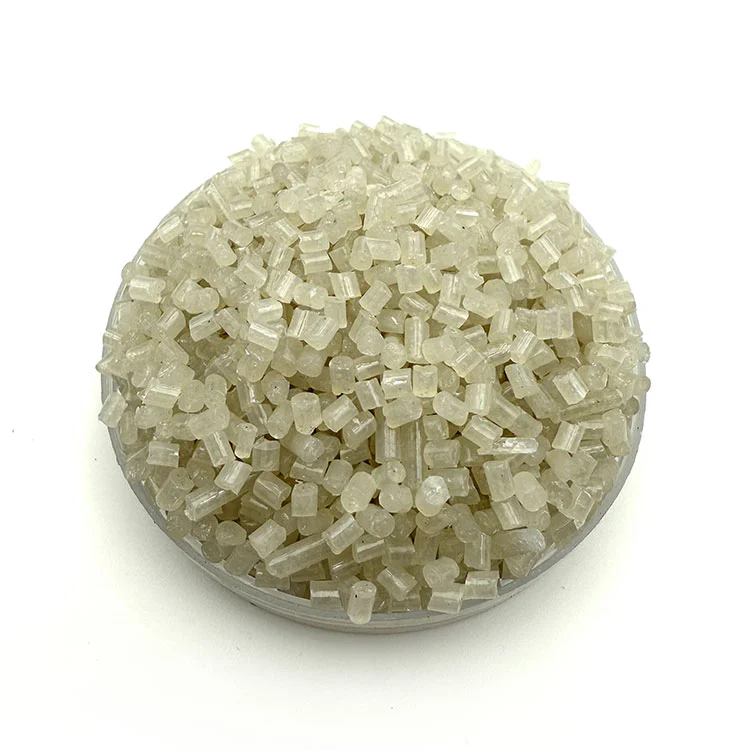
Table of Contents
- 1. Article Outline
- 2. What is Regenerated PS Plastic Pellet?
- 3. How Regenerated PS Pellets Are Produced
- 4. Key Properties and Material Advantages
- 5. Industrial Applications
- 6. Comparison with Virgin PS
- 7. Quality Control and Technical Standards
- 8. Challenges and Limitations
- 9. Environmental and Economic Impact
- 10. FAQ
- 11. Conclusion
Article Outline
- Introduction to regenerated PS plastic pellets and their market importance
- Detailed production workflow from waste PS to high-quality pellets
- Performance characteristics and mechanical behavior
- Industry applications across packaging, electronics, and construction
- Comparison between recycled and virgin polystyrene materials
- Quality inspection parameters and compliance requirements
- Challenges faced in recycling PS materials
- Environmental benefits and circular economy contributions
What is Regenerated PS Plastic Pellet?
Regenerated PS Plastic Pellet refers to recycled polystyrene material that has been processed, purified, and reformed into uniform pellet granules suitable for industrial manufacturing. Polystyrene (PS) is widely used in packaging, insulation, disposable products, and consumer goods due to its lightweight and rigid structure.
Instead of discarding PS waste, regeneration technology converts post-consumer or post-industrial polystyrene into reusable raw material. This significantly reduces environmental burden while maintaining acceptable performance for many applications.
How Regenerated PS Pellets Are Produced
The production process of regenerated PS Plastic Pellet involves multiple precision-controlled stages. Each step ensures material purity, consistency, and performance stability.
- Step 1: Collection & Sorting – Waste PS materials such as packaging foam, trays, and industrial scraps are collected and sorted by polymer type.
- Step 2: Cleaning & Washing – Materials are washed to remove adhesives, dust, oil, and contaminants.
- Step 3: Shredding – Cleaned PS waste is mechanically shredded into smaller flakes.
- Step 4: Melting & Extrusion – The flakes are melted under controlled temperature and extruded into continuous strands.
- Step 5: Pelletizing – The strands are cooled and cut into uniform pellets.
- Step 6: Quality Filtering – Final pellets are screened for size consistency and impurity removal.
This structured process ensures that regenerated PS pellets maintain stable flowability and mechanical integrity suitable for industrial reuse.
Key Properties and Material Advantages
Regenerated PS Plastic Pellet offers a balance between cost efficiency and functional performance. While it may not always match virgin PS in optical clarity, it performs well in structural applications.
- Stable melt flow index for injection molding
- Good rigidity and dimensional stability
- Lightweight characteristics
- Cost-effective raw material alternative
- Reduced environmental footprint
These properties make it suitable for manufacturers seeking sustainable material substitution without significant process modification.
Industrial Applications
Regenerated PS Plastic Pellet is widely used across multiple industries due to its adaptability and processing efficiency.
- Packaging Industry: trays, containers, disposable packaging
- Electronics: insulation housings and protective casings
- Construction: lightweight filler materials and insulation components
- Consumer Goods: plastic accessories and daily-use products
- Industrial Molding: injection molded parts and prototypes
The versatility of regenerated PS makes it a practical solution for manufacturers aiming to balance cost and sustainability.
Comparison with Virgin PS
| Feature | Regenerated PS Pellet | Virgin PS Pellet |
|---|---|---|
| Cost | Lower | Higher |
| Environmental Impact | Low footprint | High resource consumption |
| Mechanical Strength | Moderate | High |
| Consistency | Slight variation possible | Highly consistent |
| Applications | General industrial use | High-precision applications |
Quality Control and Technical Standards
To ensure reliable performance, regenerated PS Plastic Pellet undergoes strict quality inspection procedures. Manufacturers typically monitor:
- Melt Flow Index (MFI)
- Ash content and impurity levels
- Moisture content
- Particle uniformity
- Thermal stability
Advanced recycling facilities implement filtration systems and real-time monitoring to maintain consistent output quality.
Challenges and Limitations
Despite its advantages, regenerated PS Plastic Pellet also faces several technical challenges:
- Possible contamination from mixed plastic waste streams
- Color inconsistency due to source variability
- Reduced mechanical strength compared to virgin material
- Processing sensitivity during high-temperature molding
These limitations can be mitigated through advanced sorting technology and optimized recycling processes.
Environmental and Economic Impact
Regenerated PS Plastic Pellet plays a significant role in reducing plastic waste accumulation and lowering carbon emissions. By reintroducing waste PS into production cycles, manufacturers contribute to a circular economy model.
Key benefits include:
- Reduction in landfill waste volume
- Lower dependency on petroleum-based raw materials
- Energy savings during production compared to virgin PS
- Improved corporate sustainability performance
Companies like Ningbo JUWU International Trading Co., Ltd. actively support the development and supply of regenerated plastic materials to help industries transition toward greener manufacturing systems.
FAQ
Q1: Is regenerated PS Plastic Pellet safe for industrial use?
Yes. When properly processed and tested, it meets standard industrial requirements for many non-food applications.
Q2: Can regenerated PS replace virgin PS completely?
Not entirely. It is best suited for general-purpose applications rather than high-precision or optical-grade products.
Q3: What affects the quality of regenerated PS pellets?
Raw material purity, recycling technology, and filtration systems significantly influence final quality.
Q4: Is regenerated PS cost-effective?
Yes. It typically offers a lower material cost while maintaining acceptable performance for many industries.
Q5: How is consistency maintained in production?
Through strict sorting, advanced extrusion systems, and continuous quality monitoring.
Conclusion
Regenerated PS Plastic Pellet is a vital material in the modern plastics industry, offering a balance between performance, cost efficiency, and environmental responsibility. As recycling technologies continue to improve, its applications will expand further across multiple sectors, strengthening its role in sustainable manufacturing systems.
For high-quality regenerated PS Plastic Pellet solutions and tailored industrial supply support, Ningbo JUWU International Trading Co., Ltd. provides reliable material sourcing and technical expertise to meet diverse production needs.
Contact us today to explore customized solutions, request technical specifications, or discuss bulk procurement options tailored to your business requirements.