

How is Film Grade TPR Manufactured?
2026-06-16
Article Summary
Film Grade TPR (Thermoplastic Rubber) is a specialized elastomer material designed for high-performance film applications requiring flexibility, clarity, adhesion, and durability. This article explains its manufacturing process, key material characteristics, formulation strategies, processing challenges, and real-world industrial applications. It also provides practical guidance for selecting the right grade to solve common production and performance issues in packaging, lamination, protective films, and industrial composite films.
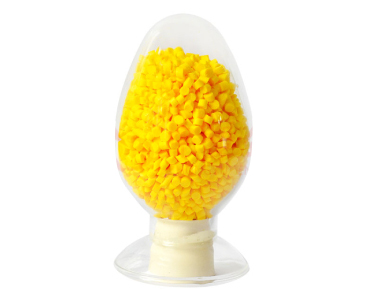
Table of Contents
- 1. Overview of Film Grade TPR
- 2. Material Composition and Structure
- 3. Manufacturing Process Explained
- 4. Key Performance Properties
- 5. Industrial Applications
- 6. Comparison with Alternative Materials
- 7. Common Processing Challenges and Solutions
- 8. How to Select the Right Film Grade TPR
- 9. Frequently Asked Questions
- 10. Conclusion
1. Overview of Film Grade TPR
Film Grade TPR is a thermoplastic elastomer engineered specifically for film extrusion and casting processes. Unlike standard rubber, it combines elastomeric flexibility with thermoplastic reprocessability, enabling efficient manufacturing and consistent quality control.
This material is widely used in industries requiring soft-touch surfaces, stretchable films, protective layers, and multilayer lamination structures. Its balance of elasticity, transparency, and chemical stability makes it suitable for demanding industrial environments.
2. Material Composition and Structure
Film Grade TPR typically consists of a blend of:
- Styrene-based elastomer blocks for elasticity
- Polyolefin modifiers for process stability
- Plasticizing agents for flexibility enhancement
- Functional additives such as UV stabilizers and anti-block agents
The molecular structure features a two-phase system: hard segments provide structural integrity while soft segments deliver elasticity. This unique morphology allows reversible deformation without permanent damage.
3. Manufacturing Process Explained
The production of Film Grade TPR involves precise formulation control and advanced extrusion technology. The process typically includes the following stages:
- Raw Material Blending: Elastomers and additives are precisely measured and mixed to achieve target performance characteristics.
- Compounding: The mixture is processed in a twin-screw extruder to ensure uniform dispersion of additives.
- Pelletizing: The compounded material is cooled and cut into uniform pellets for downstream processing.
- Film Extrusion: Pellets are melted and extruded through flat die or blown film equipment.
- Cooling and Calibration: The film is cooled rapidly to lock in mechanical properties and maintain dimensional stability.
- Surface Treatment: Optional corona or coating treatments improve adhesion for printing or lamination.
Manufacturers such as Shenzhenzhongsuwang Plastic Products Co., Ltd. focus on tight process control to ensure consistent melt flow index, clarity, and mechanical performance in film applications.
4. Key Performance Properties
Film Grade TPR offers a combination of functional advantages:
- High Elasticity: Maintains flexibility under repeated stretching cycles
- Excellent Transparency: Suitable for packaging and visual applications
- Good Tear Resistance: Prevents rupture under mechanical stress
- Thermal Stability: Performs reliably under moderate heat exposure
- Recyclability: Can be reprocessed without significant degradation
- Strong Adhesion Compatibility: Works well with multilayer film structures
| Property | Performance Range | Industrial Benefit |
|---|---|---|
| Tensile Strength | 8–25 MPa | Durability in stretching applications |
| Elongation | 300%–800% | High flexibility and elasticity |
| Hardness | 20–90 Shore A | Adjustable softness for different uses |
5. Industrial Applications
Film Grade TPR is widely adopted across multiple industries due to its versatile performance profile:
- Flexible packaging films
- Protective industrial wraps
- Medical and hygiene film layers
- Automotive interior surface films
- Electronic device protective coatings
- Laminated decorative films
In packaging applications, it provides excellent seal integrity and softness. In industrial environments, it serves as a protective barrier against moisture, abrasion, and chemical exposure.
6. Comparison with Alternative Materials
Film Grade TPR is often compared with TPU, PVC, and EVA films. Each material has unique strengths and limitations.
| Material | Flexibility | Clarity | Environmental Profile |
|---|---|---|---|
| Film Grade TPR | High | High | Moderate to High recyclability |
| TPU | Very High | High | Moderate |
| PVC | Medium | Medium | Low |
| EVA | High | Medium | Moderate |
Compared to PVC, Film Grade TPR offers improved environmental compatibility and flexibility without compromising mechanical stability.
7. Common Processing Challenges and Solutions
Despite its advantages, processing Film Grade TPR requires attention to several technical factors:
- Melt Flow Instability: Requires precise temperature control during extrusion
- Surface Blocking: Can be reduced using anti-block additives
- Adhesion Variability: Improved through surface treatment methods
- Thickness Inconsistency: Solved by optimized die calibration systems
Manufacturers often adjust formulation ratios and processing parameters to ensure stable film quality in large-scale production environments.
8. How to Select the Right Film Grade TPR
Selecting the appropriate grade depends on application requirements. Key selection criteria include:
- Required transparency level
- Mechanical strength needs
- Processing method (blown vs cast film)
- Temperature resistance requirements
- End-use environmental conditions
For customized industrial needs, Shenzhenzhongsuwang Plastic Products Co., Ltd. provides tailored formulation support to ensure optimal performance across different production systems.
9. Frequently Asked Questions
Q1: What makes Film Grade TPR different from standard TPR?
Film Grade TPR is optimized specifically for film extrusion, offering improved clarity, uniform melt flow, and better thin-film stability.
Q2: Can Film Grade TPR be recycled?
Yes, it is thermoplastic in nature and can be reprocessed with minimal performance loss under controlled conditions.
Q3: Is Film Grade TPR suitable for food packaging?
Certain formulations can meet safety requirements, depending on regulatory compliance and additive selection.
Q4: What is the main processing method?
It is commonly processed using blown film or cast film extrusion systems depending on the desired film characteristics.
10. Conclusion
Film Grade TPR is a high-performance elastomer film material that bridges the gap between flexibility, durability, and process efficiency. Its adaptable formulation and stable processing behavior make it suitable for a wide range of industrial applications, from packaging to protective films and technical laminates.
With continuous material innovation and precise manufacturing control, companies like Shenzhenzhongsuwang Plastic Products Co., Ltd. continue to advance film-grade elastomer solutions that meet evolving industrial demands.
For technical consultation, customized formulation, and bulk supply solutions, contact us today to explore how Film Grade TPR can improve your product performance and manufacturing efficiency.