

How Is a Mesh Ground Sheet Redefining Outdoor Ground Protection Across Modern Applications?
2025-12-17
A Mesh Ground Sheet is a specialized ground protection material engineered to provide surface stability, drainage efficiency, and long-term durability across a wide range of outdoor environments. Commonly applied in camping, landscaping, construction staging, event flooring, agriculture, and temporary access paths, this product is designed to balance strength and permeability without compromising ease of deployment.
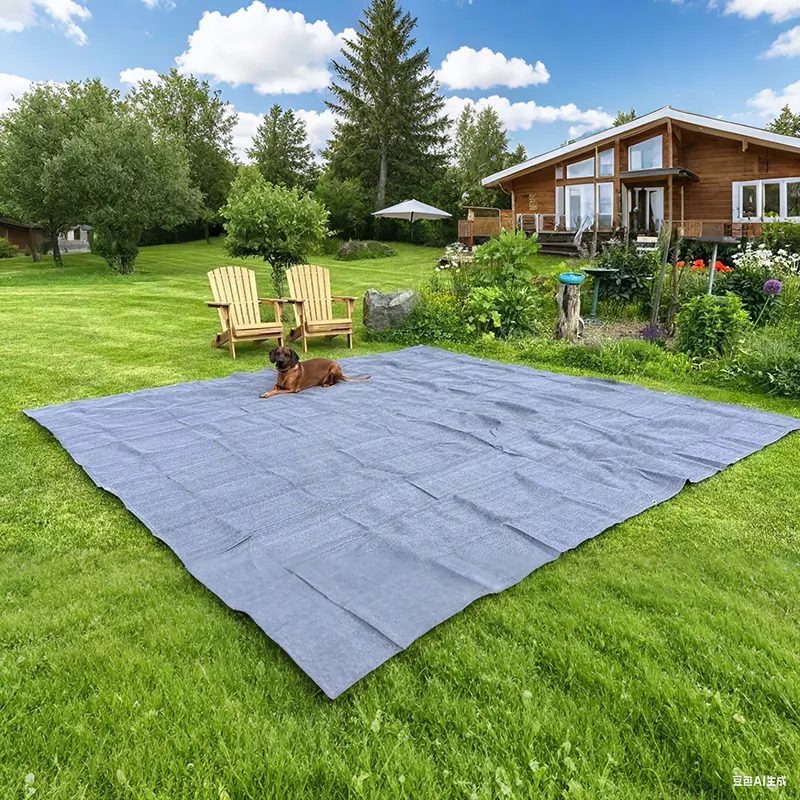
At its core, a Mesh Ground Sheet functions as a structural interface between the ground surface and human or equipment activity. By distributing loads evenly while allowing water, air, and light to pass through, it minimizes soil compaction, reduces mud formation, and protects underlying turf or soil ecosystems. This dual performance characteristic makes it increasingly relevant in regions where environmental compliance and surface preservation are operational priorities.
The central objective of this article is to examine how Mesh Ground Sheets operate, how they are engineered, and why they are becoming a standard solution for ground management in both recreational and industrial contexts. Emphasis is placed on material specifications, performance logic, and real-world usability rather than marketing language, ensuring alignment with the expectations of professional buyers and technically informed end users.
From an engineering perspective, Mesh Ground Sheets are manufactured using high-strength synthetic polymers, most commonly polyethylene (PE) or polypropylene (PP). These materials are selected for their resistance to UV exposure, moisture, chemical agents, and mechanical stress. The mesh structure itself is produced through extrusion or weaving processes that ensure uniform aperture size and tensile consistency.
Below is a consolidated overview of typical technical parameters used to evaluate a professional-grade Mesh Ground Sheet:
| Parameter | Specification Range |
|---|---|
| Base Material | High-Density Polyethylene (HDPE) / Polypropylene |
| Sheet Thickness | 2.0 mm – 5.0 mm |
| Tensile Strength | 20 – 45 kN/m |
| Load Distribution Capacity | Up to 200 tons/m² (application-dependent) |
| Aperture Size | 5 mm – 20 mm |
| UV Resistance | ≥ 1500 hours (ASTM standard) |
| Operating Temperature | -30°C to +70°C |
| Water Permeability | >90% surface drainage |
| Roll Width Options | 1 m – 4 m |
| Roll Length Options | Customizable |
These parameters illustrate the balance between mechanical reinforcement and environmental compatibility. The open-mesh geometry is not incidental; it is fundamental to maintaining ground integrity over time, particularly in areas exposed to foot traffic, wheeled loads, or fluctuating weather conditions.
How Does a Mesh Ground Sheet Function in Real-World Ground Protection Scenarios?
Understanding how a Mesh Ground Sheet works requires examining the interaction between structural design and ground behavior under load. Unlike solid ground covers, a mesh-based system relies on force dispersion rather than surface isolation.
When pressure is applied—whether from pedestrians, vehicles, or equipment—the mesh structure distributes the load laterally across a wider surface area. This reduces point pressure on the soil beneath, preventing rutting, sinking, and surface deformation. At the same time, the open apertures allow water to drain vertically, eliminating surface pooling and mud accumulation.
In wet or soft ground conditions, this mechanism is particularly critical. Traditional ground covers often trap moisture, accelerating soil degradation. In contrast, a Mesh Ground Sheet stabilizes the surface while preserving natural hydrological flow. This makes it suitable for grassed areas, sandy soils, and clay-based terrains alike.
Installation methodology also contributes to functional efficiency. Mesh Ground Sheets are typically rolled out directly over prepared ground without the need for heavy machinery. Anchoring systems—such as U-pins or ground stakes—secure the sheet in place, ensuring dimensional stability under dynamic loads. In modular applications, interlocking edges or overlap zones further enhance continuity.
From a lifecycle standpoint, reusability is a defining feature. After use, the sheet can be lifted, cleaned, and redeployed without loss of structural integrity. This is particularly relevant for temporary installations such as outdoor exhibitions, festivals, seasonal campsites, and construction access routes.
Environmental performance is another functional dimension. Because vegetation can grow through the mesh apertures, long-term installations do not suffocate plant systems. Over time, grass roots integrate with the mesh, creating a reinforced natural surface that remains visually unobtrusive while structurally enhanced.
How Is the Role of Mesh Ground Sheets Evolving With Industry and Environmental Demands?
The increasing adoption of Mesh Ground Sheets reflects broader shifts in how industries approach ground management. Regulatory pressure, sustainability goals, and cost-efficiency considerations are converging to favor solutions that are both high-performing and environmentally responsible.
In infrastructure and construction sectors, temporary ground reinforcement is no longer viewed as a disposable accessory. Instead, reusable mesh systems are integrated into logistics planning to reduce site remediation costs and minimize environmental impact. The ability to maintain access routes without permanent alteration of the terrain is a significant operational advantage.
In the outdoor recreation and tourism sector, campsite operators and event organizers are under growing scrutiny to protect natural landscapes. Mesh Ground Sheets enable high footfall activities while maintaining compliance with land-use regulations. Their discreet appearance and grass-compatible design align with aesthetic and ecological expectations.
Technological development is also influencing product evolution. Advances in polymer formulation have improved UV stability and tensile performance without increasing material weight. This results in sheets that are lighter to transport yet capable of handling higher loads. Additionally, precision manufacturing techniques have improved aperture consistency, which directly impacts load distribution and drainage efficiency.
Another emerging trend is customization. Buyers increasingly require tailored dimensions, color options for visibility or camouflage, and specific aperture sizes based on soil type and application. This shift indicates a move away from generic ground covers toward application-specific ground engineering solutions.
From a procurement perspective, total cost of ownership is becoming a key evaluation metric. While initial acquisition cost remains relevant, decision-makers now assess durability, reuse cycles, maintenance requirements, and disposal impact. Mesh Ground Sheets score favorably across these criteria due to their long service life and recyclability.
Common Questions About Mesh Ground Sheets and Professional Selection Guidance
How should a Mesh Ground Sheet be selected for different ground conditions?
Selection should be based on soil type, expected load, duration of use, and environmental exposure. Soft or waterlogged soils require sheets with higher tensile strength and smaller aperture sizes to maximize load dispersion. For temporary pedestrian use on grass, lighter-weight sheets with larger apertures may be sufficient. UV resistance and temperature tolerance should be considered for long-term outdoor installations.
How long can a Mesh Ground Sheet remain installed without degrading ground quality?
When properly specified and installed, a Mesh Ground Sheet can remain in place for multiple seasons without negatively affecting soil health or vegetation. The permeable structure allows natural water flow and plant growth, preventing anaerobic soil conditions. Periodic inspection is recommended to ensure anchoring integrity and surface alignment, particularly in high-traffic areas.
Conclusion and Brand Introduction
As outdoor activities, infrastructure projects, and environmental stewardship increasingly intersect, the demand for reliable ground protection solutions continues to rise. Mesh Ground Sheets represent a technically sound response to this demand, offering a combination of structural reinforcement, environmental compatibility, and operational flexibility. Their performance is rooted in material science and practical engineering rather than temporary surface coverage.
Within this evolving landscape, Golden Delta has established itself as a supplier focused on consistent quality, precise manufacturing standards, and application-driven product development. Mesh Ground Sheets offered under the Golden Delta portfolio are engineered to meet diverse operational requirements while maintaining durability and compliance with international performance benchmarks.
For project planners, procurement managers, or technical specialists seeking detailed specifications, customization options, or application guidance, direct consultation ensures optimal product alignment. To discuss requirements or request further technical information, please contact us through Golden Delta’s professional support channels.