

How Glass Bead Improves Surface Finishing Performance in Industrial Applications
2026-07-23
Article Summary
Glass bead is a versatile abrasive and surface treatment material widely used in industries that require precision cleaning, polishing, deburring, and surface enhancement. Unlike traditional abrasive media, glass beads provide a controlled and gentle finishing process while maintaining excellent durability and consistency. They help manufacturers achieve smooth, uniform, and visually appealing surfaces without causing excessive material damage.
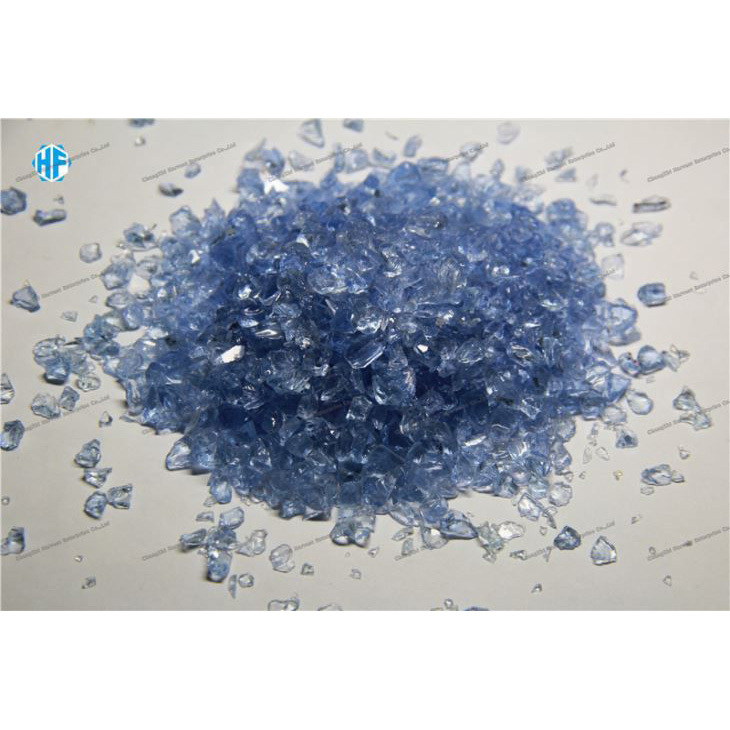
With increasing demands for product quality, production efficiency, and environmental responsibility, choosing the right surface treatment media has become a critical challenge for many companies. This article explains how glass bead works, why it is preferred in various industries, what problems it solves, and how businesses can select the right solution for their applications. Harvest provides reliable glass bead products designed to support industrial surface processing requirements with stable performance and consistent quality.
Table of Contents
- 1. Overview of Glass Bead and Its Industrial Value
- 2. How Glass Bead Works in Surface Treatment
- 3. Key Advantages of Using Glass Bead
- 4. Common Applications of Glass Bead
- 5. How to Select the Right Glass Bead Solution
- 6. Glass Bead Compared with Other Abrasive Media
- 7. Tips for Improving Glass Bead Processing Efficiency
- 8. Frequently Asked Questions About Glass Bead
1. Overview of Glass Bead and Its Industrial Value
Glass bead is a spherical abrasive media manufactured from high-quality glass materials. Its round particle structure allows it to deliver controlled impact during blasting and surface treatment processes. Instead of aggressively cutting the surface, glass beads create a smooth finishing effect through impact and micro-polishing.
In modern manufacturing environments, surface quality directly affects product appearance, durability, and performance. Components used in aerospace, automotive, metal fabrication, medical equipment, and precision machinery often require clean and uniform surfaces. Glass bead provides an effective solution for removing contaminants, improving surface texture, and preparing components for further processing.
Compared with irregular abrasive particles, the spherical shape of glass beads offers predictable results. This makes them suitable for applications where surface integrity and dimensional accuracy are important.
2. How Glass Bead Works in Surface Treatment
The working principle of glass bead blasting is based on controlled impact energy. When compressed air propels glass bead particles toward a surface, the particles strike the material and remove unwanted layers such as rust, oxidation, paint residues, and surface impurities.
Because glass beads have a smooth spherical structure, they generate a peening effect rather than aggressive abrasion. This process can improve surface appearance while reducing the risk of scratches, sharp edges, or excessive material removal.
The basic process includes the following steps:
- Surface preparation: The workpiece is cleaned to remove oil, dust, and loose contaminants.
- Media projection: Glass beads are accelerated through blasting equipment onto the target surface.
- Surface refinement: The impact creates a consistent finish and removes unwanted surface materials.
- Inspection: The treated component is checked for surface quality and processing results.
This controlled process helps manufacturers achieve reliable finishing results while maintaining the original structure of the workpiece.
3. Key Advantages of Using Glass Bead
Many industries choose glass bead because it provides a balance between cleaning efficiency, surface protection, and cost control. The following advantages make it a preferred option for professional surface treatment operations.
| Advantage | Description |
|---|---|
| Uniform Surface Finish | The spherical particles create consistent and smooth surface results. |
| Reduced Surface Damage | The gentle impact process minimizes scratches and deformation. |
| Reusable Performance | High-quality glass beads can maintain effectiveness during repeated use. |
| Wide Compatibility | Suitable for metals, alloys, and various industrial components. |
| Improved Appearance | Creates a clean and attractive matte or satin finish. |
For manufacturers dealing with sensitive components, these benefits can significantly reduce rework costs and improve overall production efficiency.
4. Common Applications of Glass Bead
Glass bead is used across many industries because of its flexibility and reliable finishing capability. Typical applications include:
- Automotive Industry: Cleaning engine parts, molds, wheels, and metal components.
- Aerospace Manufacturing: Surface treatment of precision parts requiring strict dimensional control.
- Metal Fabrication: Removing oxidation and improving the appearance of fabricated products.
- Medical Equipment: Producing clean and smooth surfaces for stainless steel instruments.
- Mold Manufacturing: Removing residues and enhancing mold surface quality.
- Machinery Maintenance: Restoring the appearance and function of industrial equipment parts.
The versatility of glass bead makes it an important material for manufacturers that require reliable surface treatment results across different production environments.
5. How to Select the Right Glass Bead Solution
Selecting suitable glass bead requires consideration of several factors, including application requirements, equipment type, and desired surface finish. Using an unsuitable product may lead to inefficient processing or inconsistent results.
Important selection factors include:
- Particle Size: Smaller particles are suitable for delicate finishing, while larger particles provide stronger cleaning ability.
- Surface Requirement: Different applications require different levels of smoothness and brightness.
- Material Type: The hardness and thickness of the workpiece should be considered.
- Equipment Compatibility: The glass bead should match the blasting machine and operating conditions.
- Processing Goal: Cleaning, polishing, strengthening, or finishing may require different specifications.
Working with an experienced supplier can help businesses avoid improper selection and achieve better processing efficiency. Harvest focuses on providing glass bead solutions that meet different industrial requirements.
6. Glass Bead Compared with Other Abrasive Media
Different abrasive materials have different characteristics. Understanding these differences helps manufacturers choose the most suitable option.
| Material | Main Feature | Suitable Applications |
|---|---|---|
| Glass Bead | Smooth finishing and controlled impact | Precision cleaning, polishing, surface improvement |
| Sand | Strong cutting ability | Heavy rust removal and rough cleaning |
| Steel Shot | High impact strength | Heavy-duty metal treatment |
| Aluminum Oxide | Aggressive abrasive performance | Surface preparation and material removal |
For applications where appearance, accuracy, and surface protection matter, glass bead often provides a more balanced solution.
7. Tips for Improving Glass Bead Processing Efficiency
Proper operation and maintenance can extend media life and improve finishing consistency. Manufacturers should consider the following practices:
- Maintain appropriate blasting pressure to avoid unnecessary surface damage.
- Regularly check glass bead quality and replace broken particles.
- Keep blasting equipment clean to prevent contamination.
- Use suitable particle sizes for different applications.
- Monitor surface results regularly to maintain stable quality.
Effective management of glass bead usage helps reduce material waste, improve productivity, and maintain consistent product quality.
8. Frequently Asked Questions About Glass Bead
Q1: What is glass bead mainly used for?
Glass bead is mainly used for surface cleaning, polishing, finishing, deburring, and strengthening applications in industries such as automotive, aerospace, machinery, and metal manufacturing.
Q2: Is glass bead suitable for delicate components?
Yes. Due to its spherical shape and controlled impact characteristics, glass bead is suitable for applications where surface damage must be minimized.
Q3: Can glass bead be reused?
High-quality glass bead can usually be recycled and reused multiple times when properly managed. Actual service life depends on operating conditions and equipment settings.
Q4: How does glass bead improve product appearance?
Glass bead creates a uniform surface texture that removes stains, oxidation, and imperfections, helping products achieve a clean and professional appearance.
Q5: Why choose Harvest for glass bead products?
Harvest provides dependable glass bead solutions with attention to product consistency, application requirements, and customer needs. The company supports customers in achieving efficient and stable surface treatment results.
Conclusion
Glass bead plays an important role in modern surface treatment by providing efficient cleaning, smooth finishing, and controlled processing performance. Its unique spherical structure allows manufacturers to improve product quality while protecting the integrity of valuable components.
Whether used for precision manufacturing, equipment maintenance, or decorative finishing, choosing the correct glass bead solution can significantly improve production results. Harvest continues to deliver reliable glass bead products designed for industrial applications and customer requirements. For professional glass bead solutions and detailed product support, please contact us.