

How Does the Thermal Expansion of Vespel SP-22 Compare to Stainless Steel in Assembly Designs
2026-05-11
When designing high-precision assemblies for extreme environments, understanding material compatibility is critical. Vespel SP-22 parts offer a unique combination of thermal stability and mechanical strength, often outperforming metals like stainless steel. At Guangzhou Ideal, we specialize in supplying machined Vespel SP-22 parts that solve thermal mismatch challenges in aerospace, semiconductor, and chemical processing equipment.
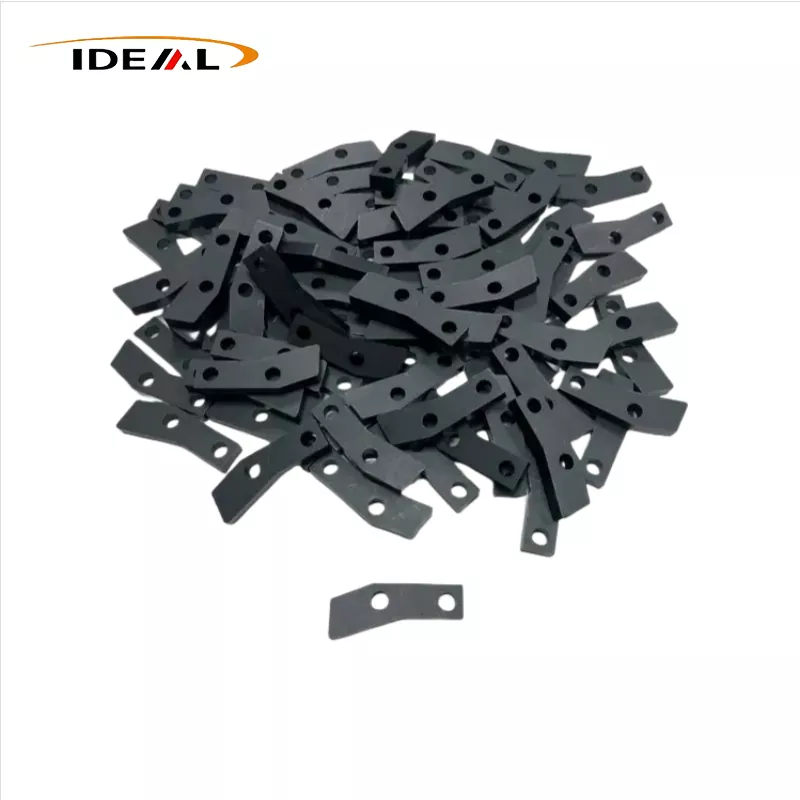
Thermal Expansion Comparison: Vespel SP-22 vs. Stainless Steel
The coefficient of thermal expansion (CTE) determines how a material expands or contracts with temperature changes. In assemblies where Vespel SP-22 parts interface with stainless steel components, CTE differences must be managed to avoid clearance loss, preload relaxation, or seizure.
| Property | Vespel SP-22 | Stainless Steel (304/316) |
|---|---|---|
| CTE (µm/m·°C) | ~18-22 (above 50°C) | ~16-17 (typical) |
| Thermal Conductivity (W/m·K) | 0.35 | 15 |
| Maximum Service Temperature (°C) | 300 continuous | 870 (oxidation limits) |
| Elastic Modulus (GPa) | 3.8 | 193 |
At room temperature, the CTE of Vespel SP-22 parts is slightly higher than stainless steel. However, above 100°C, the polymer’s expansion rate increases more steadily, while stainless steel remains linear. For interference-fit assemblies, this means a Vespel SP-22 insert will expand more than its steel housing, potentially increasing interference. Conversely, in loose-fit bearings, the gap may close faster than calculated with metallic assumptions.
Design Considerations for Mixed Assemblies
-
Clearance Adjustments – Increase initial clearance by 0.1-0.2% of part diameter per 100°C rise when pairing Vespel SP-22 parts with steel.
-
Stress Relaxation – Unlike metals, Vespel SP-22 exhibits viscoelastic creep under constant strain, so high-interference designs should be validated with long-term testing.
-
Cryogenic Performance – Below 0°C, Vespel SP-22 contracts less than stainless steel, which can cause loosening in bolted joints – use Belleville washers or preload retention features.
Guangzhou Ideal engineers custom Vespel SP-22 parts with CTE-matched geometry for hybrid metal-polymer assemblies, reducing failure risks in thermal cycling environments.
Vespel SP-22 Parts FAQ – Thermal Expansion & Assembly
Q1: Can I directly replace a stainless steel bushing with a Vespel SP-22 part without changing the housing bore size?
A1: No. Because the CTE of Vespel SP-22 parts is approximately 20% higher than stainless steel above 150°C, a direct replacement will likely result in excessive interference or seizure. For a housing bore originally designed for a steel bushing at 20°C, the same Vespel SP-22 bushing will expand roughly 0.04 mm more per 50 mm diameter at 200°C. Guangzhou Ideal recommends recalculating the fit based on your maximum operating temperature and using ISO fit class H9/g6 as a starting point, then verifying with thermal FEA.
Q2: How does the thermal expansion of Vespel SP-22 affect torque retention in bolted steel assemblies?
A2: When a Vespel SP-22 flange is clamped between steel plates, temperature rise causes the polymer to expand more than the bolts. This increases clamping force temporarily, but over time, Vespel SP-22 undergoes stress relaxation. At 200°C, up to 30% of initial bolt preload can be lost within 1000 hours. To maintain joint integrity, Guangzhou Ideal advises using torque wrenches at operating temperature or incorporating spring-loaded fasteners. Always retorque after first thermal cycle.
Q3: Does Vespel SP-22 return to its original dimensions after cooling from high temperature in a constrained steel assembly?
A3: Not completely. If Vespel SP-22 parts are compressed by a steel housing during heating, the material may develop up to 0.2–0.5% permanent compression set after cooling to room temperature. This effect is cumulative over multiple thermal cycles. For applications requiring exact dimensional recovery, Guangzhou Ideal recommends using Vespel SP-22 in unconstrained or lightly loaded directions. If cyclic precision is mandatory, consider adding a stainless steel sleeve insert or increasing wall thickness of the Vespel SP-22 part to reduce compressive strain below 1%.
Summary
Selecting Vespel SP-22 parts for steel assemblies requires deliberate thermal expansion planning. While the polymer offers unmatched wear resistance and chemical inertness, its higher CTE and viscoelastic behavior demand design allowances that metals do not. Guangzhou Ideal provides technical consultation, CNC-machined Vespel SP-22 parts, and assembly simulation support to bridge the gap between polymer and metal worlds.
Contact us today at Guangzhou Ideal for a custom CTE-matched design review. Send your assembly drawings and operating temperature profile to our engineering team, and receive a fit analysis within 48 hours. Secure your high-temperature assemblies with precision Vespel SP-22 parts – reach out now.