

How Does the Compression Ratio of a Screw Barrel Affect the Optical Clarity of Blown Film
2026-04-24
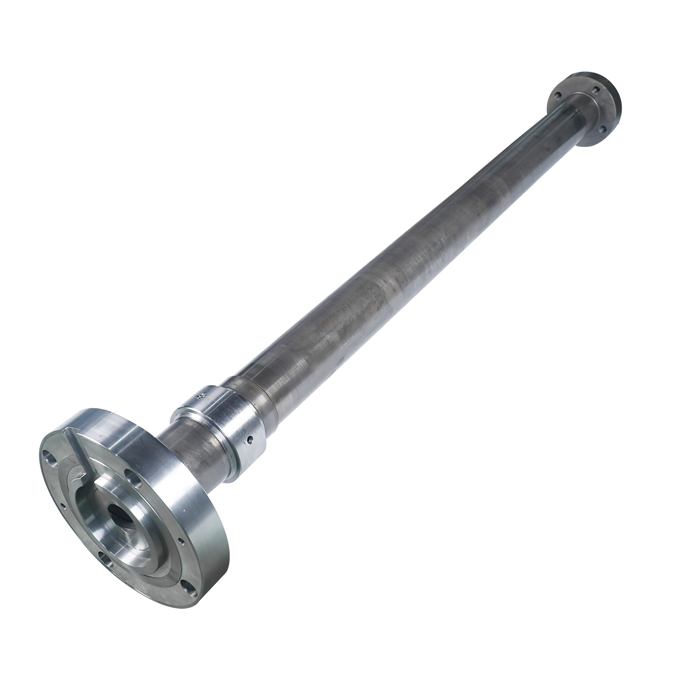
In the production of high-quality blown film, the compression ratio of a screw barrel plays a decisive role in determining optical properties such as haze, gloss, and transparency. At EJS, we have engineered Film Blow Moulding Screw Barrel systems that optimize compression ratios to eliminate melt defects and achieve superior clarity.
The Science Behind Compression Ratio and Clarity
The compression ratio is the volumetric change from the feed section to the metering section of the screw. A ratio that is too low fails to fully compact and homogenize the polymer melt, leaving unmelted particles that scatter light. A ratio that is too high generates excessive shear heat, causing thermal degradation and gel formation—both of which reduce clarity.
| Compression Ratio Range | Melt Homogeneity | Optical Clarity Outcome | Typical Film Application |
|---|---|---|---|
| 1.5:1 to 2.0:1 | Poor to fair | Hazy, with visible specks | Low-grade agricultural film |
| 2.2:1 to 2.8:1 | Good to excellent | High gloss, low haze, transparent | High-clarity packaging, shrink film |
| Above 3.0:1 | Over-sheared, degraded | Yellowish, burnt streaks | Not recommended for clarity |
How EJS Optimizes Compression for Clarity
The optimal compression ratio for clear blown film typically falls between 2.2:1 and 2.8:1, depending on the polymer. For LLDPE and LDPE blends, EJS recommends a gradual compression section combined with a barrier mixing design. This configuration ensures:
-
Complete melting before the metering zone.
-
Minimal thermal stress on the polymer.
-
Removal of microscopic gels that cause haze.
List of Optical Defects Caused by Incorrect Compression Ratios
-
Fish eyes: Unmelted resin particles from insufficient compression.
-
Carbon specks: Polymer degradation from excessive shear in high-compression designs.
-
Flow lines: Uneven melt temperature distribution due to poor compression geometry.
-
Low gloss: Incomplete molecular orientation resulting from inadequate pressure buildup.
Film Blow Moulding Screw Barrel FAQ
Question 1: What compression ratio should I choose for producing high-clarity LLDPE blown film?
Answer: For LLDPE blown film requiring optical clarity above 90% transparency, a compression ratio between 2.3:1 and 2.6:1 is ideal. EJS engineers recommend a dual-flight barrier screw with this compression range to ensure gentle but complete melting. Ratios below 2.0:1 will leave unmelted gels, while ratios above 2.8:1 increase the risk of degradation, especially in LLDPE which has relatively low thermal stability.
Question 2: Can a worn Film Blow Moulding Screw Barrel affect optical clarity even if the compression ratio was originally correct?
Answer: Yes, absolutely. As the screw flights and barrel inner wall wear down, the effective compression ratio decreases significantly. A barrel originally designed with a 2.5:1 compression ratio may operate at an effective ratio of 1.8:1 after excessive wear. This leads to incomplete melting, increased haze, and surface irregularities. EJS recommends measuring screw and barrel clearance annually and replacing worn components to maintain optical performance.
Question 3: How does the compression ratio interact with the die gap setting to influence film clarity?
Answer: The compression ratio determines melt pressure and homogeneity before the melt enters the die. A properly matched compression ratio (e.g., 2.4:1) generates sufficient backpressure to homogenize temperature and remove bubbles. If the die gap is too narrow while the compression ratio is too high, excessive shear causes degradation. Conversely, a wide die gap with a low compression ratio fails to create enough pressure for complete melt mixing. EJS provides tailored Film Blow Moulding Screw Barrel and die gap recommendations to ensure both components work synergistically for maximum clarity.
Why Clarity-Focused Processors Choose EJS
With over 20 years of precision engineering, EJS manufactures Film Blow Moulding Screw Barrel systems using bimetallic liners and hardened nitrided steel. Every compression ratio is custom-calculated based on your polymer, output rate, and target optical specification.
Contact us today to receive a free technical analysis of your current screw barrel compression ratio and a customized recommendation for improving blown film clarity. Email EJS directly or visit our website to speak with a film extrusion specialist.