

How Does Rubber Soft Connection Work in Industrial Piping Systems?
2026-01-06
Abstract
Rubber Soft Connection is a critical flexible component widely used in industrial piping systems to absorb vibration, compensate for displacement, and reduce mechanical stress. This article provides a structured and in-depth technical explanation of how Rubber Soft Connection functions within fluid transmission systems, including its design logic, material characteristics, working principles, standard parameters, and long-term application value. The content is organized to align with search behavior and professional reading habits, offering engineers, procurement specialists, and maintenance teams a clear reference framework.
Outline
- Overview and Core Purpose of Rubber Soft Connection
- Structural Design and Technical Parameters
- Operational Principles and System Integration
- Common Questions and Industry Development Direction
Table of Contents
- 1. What Defines Rubber Soft Connection in Modern Industry?
- 2. How Are Structure and Parameters Engineered?
- 3. How Does Rubber Soft Connection Perform in Operation?
- 4. How Is Rubber Soft Connection Evolving in Industrial Use?
1. What Defines Rubber Soft Connection in Modern Industry?
Rubber Soft Connection refers to a flexible rubber-based connector installed between rigid pipelines or equipment interfaces. Its primary role is to isolate vibration, accommodate axial and lateral movement, and mitigate noise transmission caused by mechanical operation or fluid turbulence. Unlike rigid joints, this component introduces elasticity into pipeline systems, allowing controlled deformation under pressure and movement.
The central focus of Rubber Soft Connection lies in system stability. In industrial environments such as HVAC systems, water treatment facilities, chemical plants, and power generation stations, pipelines are subject to temperature fluctuation, pressure variation, and equipment vibration. Rubber Soft Connection addresses these challenges by providing a buffering interface that protects pipelines, valves, and pumps from premature fatigue.
2. How Are Structure and Parameters Engineered?
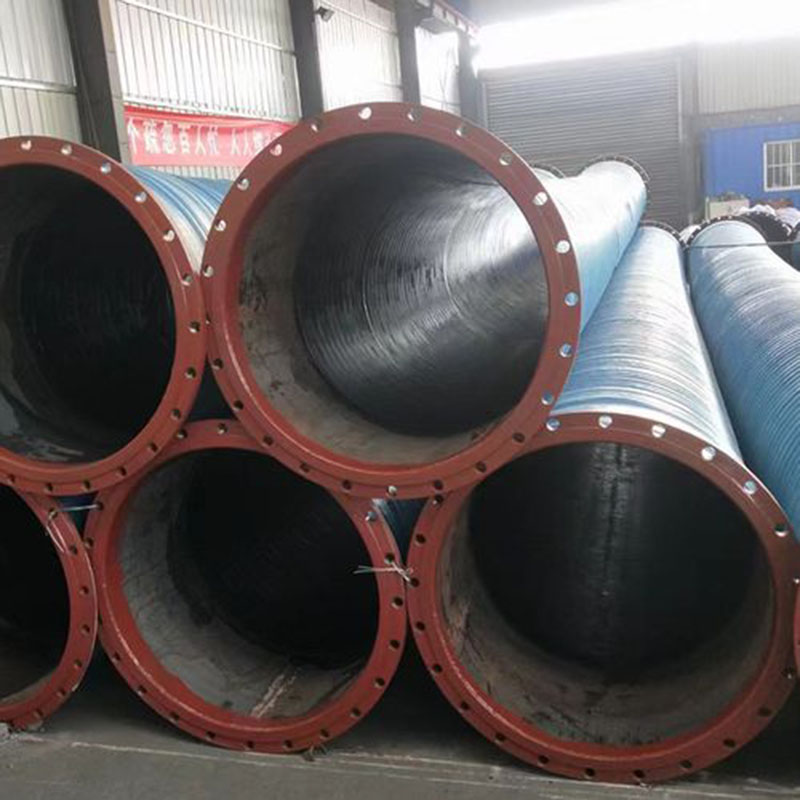
The structural design of Rubber Soft Connection is based on composite engineering. Each unit integrates elastomer layers with reinforcement materials to achieve a balance between flexibility and pressure resistance. The following table outlines standard technical parameters commonly referenced in industrial specifications.
| Parameter | Typical Specification Range |
|---|---|
| Nominal Diameter | DN15 – DN3000 |
| Working Pressure | 0.6 MPa – 2.5 MPa |
| Working Temperature | -20°C to +115°C (special compounds extend range) |
| Connection Type | Flanged / Threaded |
| Rubber Material | EPDM, NBR, NR, Neoprene |
| Reinforcement Layer | Nylon cord / Polyester fabric |
Material selection is closely tied to the medium conveyed through the pipeline. EPDM rubber is commonly used for water and air systems, while NBR is selected for oil-based media. Reinforcement layers ensure dimensional stability and resistance to internal pressure, preventing excessive expansion during operation.
3. How Does Rubber Soft Connection Perform in Operation?
During system operation, Rubber Soft Connection performs multiple mechanical functions simultaneously. Axial displacement compensation allows pipelines to expand or contract due to temperature changes without generating stress concentrations. Lateral and angular flexibility helps correct minor installation misalignments.
Vibration damping is another core operational characteristic. Rotating equipment such as pumps and compressors generate continuous vibration waves that propagate through rigid piping. Rubber Soft Connection interrupts this transmission path, converting kinetic energy into elastic deformation and reducing noise levels across the system.
Common Questions About Rubber Soft Connection
Q: How does Rubber Soft Connection reduce pipeline vibration?
A: The rubber body absorbs mechanical energy through elastic deformation, preventing vibration waves from transferring between connected components while protecting rigid equipment from resonance damage.
Q: What factors determine service life?
A: Service life is influenced by rubber compound compatibility, operating pressure, temperature range, installation accuracy, and frequency of displacement cycles.
Q: Can Rubber Soft Connection handle chemical media?
A: Yes, when appropriate rubber materials such as NBR or specially formulated compounds are selected based on chemical compatibility data.
4. How Is Rubber Soft Connection Evolving in Industrial Use?
The development direction of Rubber Soft Connection aligns with broader industrial trends toward system reliability and predictive maintenance. Manufacturers are refining compound formulations to improve aging resistance and environmental adaptability. Enhanced reinforcement techniques are also being applied to support higher pressure ratings while maintaining flexibility.
Standardization and compliance with international norms are increasingly emphasized, enabling consistent performance across global markets. As industrial systems become more automated and sensitive to downtime, Rubber Soft Connection continues to play a supporting role in ensuring uninterrupted operation.
In practical sourcing and application scenarios, Rubber Soft Connection solutions supplied by Fushuo are designed to meet diverse industrial requirements through controlled material selection and dimensional accuracy. For project consultation, specification confirmation, or technical support, contact us to obtain detailed product documentation and application guidance tailored to specific operating conditions.