
How Does Polymer Waterproofing Membrane Protect Buildings From Water Damage?
2026-07-02
Article Summary:
Polymer waterproofing membrane is an advanced building protection material designed to prevent water infiltration, enhance structural durability, and extend the lifespan of buildings. This article explains how it works, its key benefits, application methods, and common challenges it solves for construction professionals and property owners. It also provides a practical guide for selection and installation, along with FAQs to address common concerns.
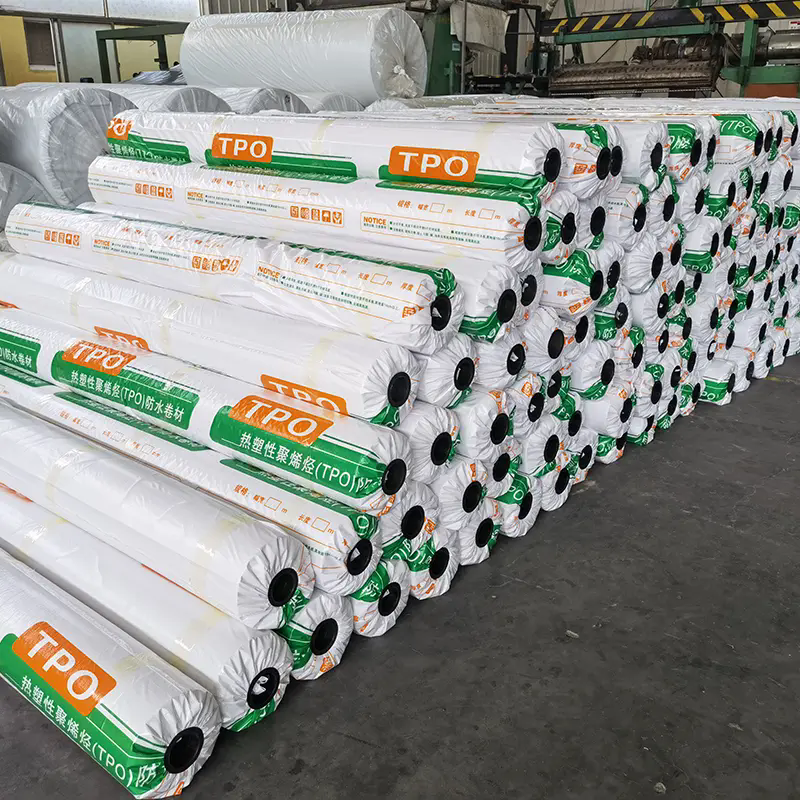
Table of Contents
- Article Outline
- 1. Introduction to Waterproofing Challenges
- 2. What is a Polymer Waterproofing Membrane?
- 3. How It Works in Building Protection
- 4. Key Benefits and Performance Advantages
- 5. Types of Polymer Waterproofing Membranes
- 6. Installation Process Overview
- 7. Comparison with Traditional Waterproofing Methods
- 8. Common Application Scenarios
- 9. Common Installation Mistakes to Avoid
- 10. Frequently Asked Questions
- 11. Conclusion and Professional Recommendation
Article Outline
This article is structured to guide readers from fundamental waterproofing challenges to advanced solutions using polymer-based membrane systems. It provides technical insights, practical comparisons, and actionable knowledge for engineers, contractors, and building owners.
1. Introduction to Waterproofing Challenges
Water infiltration is one of the most persistent threats to building integrity. It leads to structural weakening, mold growth, corrosion of reinforcement steel, and long-term maintenance costs. Traditional waterproofing materials often fail under extreme weather conditions or long-term exposure to moisture cycles.
In modern construction, especially for basements, roofs, tunnels, and underground structures, a more durable and flexible solution is required. This is where polymer waterproofing membranes become essential.
2. What is a Polymer Waterproofing Membrane?
A polymer waterproofing membrane is a high-performance sheet or liquid-applied barrier made from synthetic polymers such as PVC, TPO, EPDM, or modified bitumen composites. It is designed to form a continuous, flexible, and impermeable layer over structural surfaces.
Unlike rigid coatings, polymer membranes can adapt to structural movement, temperature changes, and surface irregularities without cracking or losing adhesion.
- High elasticity and flexibility
- Excellent water resistance
- Strong adhesion to concrete and metal surfaces
- Long service life under harsh conditions
3. How It Works in Building Protection
The working mechanism of polymer waterproofing membranes is based on forming a physical barrier that blocks water penetration at the molecular level.
When installed, the membrane creates a sealed envelope over the substrate. This prevents water molecules from entering capillary pores in concrete or masonry structures.
Key functional mechanisms include:
- Barrier Protection: Prevents direct water contact with structural surfaces.
- Elastic Recovery: Expands and contracts with structural movement.
- Seam Integrity: Welded or bonded joints eliminate leakage points.
- Chemical Resistance: Resists degradation from acids, alkalis, and salts.
4. Key Benefits and Performance Advantages
Polymer waterproofing membranes offer multiple advantages over conventional waterproofing systems. These benefits directly address common construction pain points such as leakage, maintenance cost, and material failure.
| Performance Aspect | Polymer Membrane Advantage |
|---|---|
| Water Resistance | Near-zero permeability under hydrostatic pressure |
| Durability | Service life often exceeds 20–30 years |
| Flexibility | High elongation prevents cracking |
| Maintenance | Low maintenance requirements after installation |
| Installation Speed | Fast deployment compared to multi-layer coatings |
5. Types of Polymer Waterproofing Membranes
Different construction scenarios require different membrane types. The most commonly used include:
- PVC Membranes: Highly flexible, widely used for roofing and underground structures.
- TPO Membranes: Environmentally friendly and UV-resistant, ideal for exposed roofing systems.
- EPDM Membranes: Excellent elasticity and weather resistance.
- Modified Bitumen Membranes: Strong adhesion and cost-effective solution for large-scale projects.
6. Installation Process Overview
Proper installation is critical for performance. Even the highest-quality membrane can fail if not applied correctly.
Typical installation steps include:
- Surface cleaning and preparation
- Primer application (if required)
- Membrane layout and alignment
- Heat welding or adhesive bonding of seams
- Detail reinforcement at corners and joints
- Final inspection and water testing
Attention to detail in seam sealing and substrate preparation is essential to ensure long-term waterproof performance.
7. Comparison with Traditional Waterproofing Methods
Traditional waterproofing methods such as cement coatings or asphalt layers often struggle with cracking and limited flexibility. Polymer membranes significantly outperform them in critical areas.
- Cementitious coatings: Rigid and prone to cracking under movement
- Bituminous coatings: Degrade under UV exposure over time
- Polymer membranes: Flexible, durable, and chemically stable
This makes polymer systems particularly suitable for modern infrastructure projects requiring long-term reliability.
8. Common Application Scenarios
Polymer waterproofing membranes are used across a wide range of construction environments:
- Basement foundations
- Roof waterproofing systems
- Tunnels and underground transportation systems
- Water reservoirs and treatment facilities
- Bridges and infrastructure decks
Their adaptability makes them suitable for both residential and large-scale industrial projects.
9. Common Installation Mistakes to Avoid
Even advanced materials can fail if installation is not handled correctly. Common mistakes include:
- Inadequate surface preparation
- Poor seam welding or bonding
- Ignoring thermal expansion considerations
- Using incompatible primers or adhesives
- Skipping post-installation testing
Proper training and adherence to installation standards significantly reduce these risks.
10. Frequently Asked Questions
Q1: How long does a polymer waterproofing membrane last?
Typically, high-quality membranes can last between 20 to 30 years depending on environmental exposure and installation quality.
Q2: Can it be used in extreme climates?
Yes. Polymer membranes are engineered to withstand both high and low temperature extremes without losing flexibility.
Q3: Is maintenance required after installation?
Minimal maintenance is required, usually limited to periodic inspections.
Q4: Can it be applied to existing structures?
Yes, with proper surface preparation, membranes can be applied for renovation and repair projects.
11. Conclusion and Professional Recommendation
Polymer waterproofing membranes represent a reliable, long-term solution for modern construction waterproofing challenges. Their superior flexibility, durability, and resistance to environmental stress make them a preferred choice for engineers and contractors worldwide.
For high-quality solutions, Shandong Haoyuan Waterproof Technology Group Co., Ltd. provides advanced polymer waterproofing membrane systems designed for a wide range of construction environments. Their products are engineered to deliver consistent performance in demanding conditions
Contact us today to discuss your project requirements, request technical specifications, or receive professional waterproofing recommendations tailored to your construction needs. Our team is ready to support you with reliable solutions and responsive service.