

How Does Polyisocyanate Adhesive Improve Industrial Bonding Performance?
2026-08-18
Article Summary: Polyisocyanate Adhesive is designed for demanding bonding, laminating, splicing, sealing, and composite-processing applications where ordinary adhesives may struggle with moisture, heat, aging, or substrate compatibility. By supporting strong interfacial bonding and stable curing, polyisocyanate-based systems can help manufacturers reduce delamination, cracking, rework, and premature bond failure. This article explains how Polyisocyanate Adhesive works, what problems it can solve, how to select and apply it, and why Jiangnan Adhesives is a practical partner for industrial adhesive requirements.
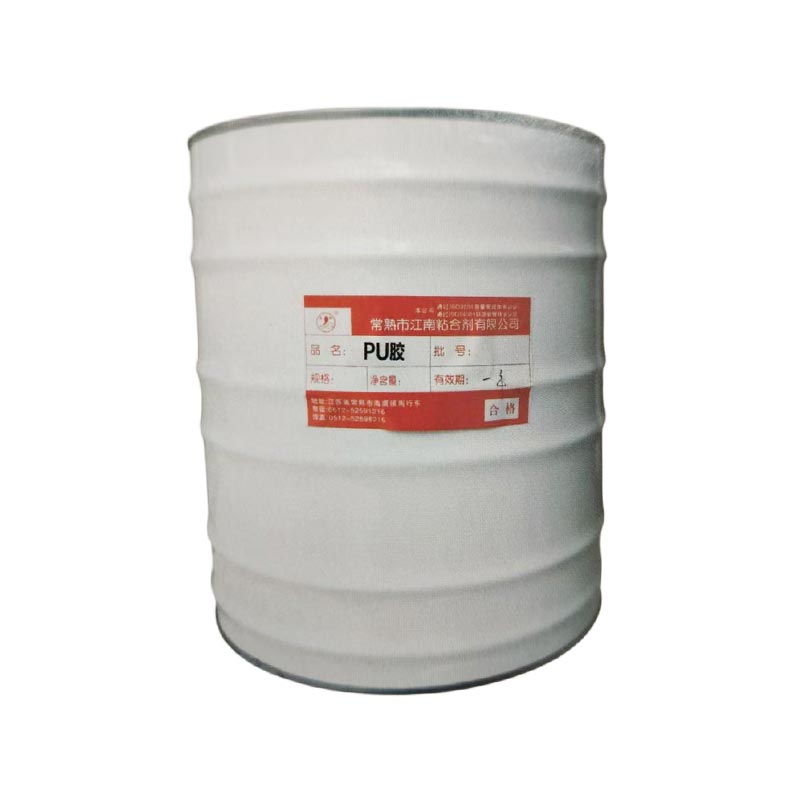
Table of Contents
- What Is Polyisocyanate Adhesive?
- How Does Polyisocyanate Adhesive Improve Bond Strength?
- What Production Problems Can It Help Solve?
- Where Is Polyisocyanate Adhesive Commonly Used?
- How Should Manufacturers Select a Suitable Product?
- How Can Application Quality Be Improved?
- Polyisocyanate Adhesive vs. Conventional Adhesive Options
- Why Consider Jiangnan Adhesives?
- Frequently Asked Questions
- Conclusion
What Is Polyisocyanate Adhesive?
Polyisocyanate Adhesive is a class of industrial bonding materials based on isocyanate chemistry. It is used in applications that require a dependable connection between different materials, particularly when the finished product must maintain structural stability over time. Depending on the formulation and process, polyisocyanate-based materials can function as primary bonding components, reactive additives, or curing agents within polyurethane and related adhesive systems.
Unlike a simple adhesive that only creates surface attachment, a reactive polyisocyanate system can participate in chemical reactions that improve the overall integrity of the bond. This makes the technology especially useful when manufacturers need more than initial tack. Long-term resistance to moisture, environmental exposure, mechanical stress, and temperature changes can be essential in industrial production.
For manufacturers, the real value is not simply stronger glue. It is the ability to create a more reliable bonding process with fewer failures throughout the service life of the final product.
Polyisocyanate Adhesive may be considered for applications involving wood, panels, composites, plastics, fabrics, engineered materials, and other industrial substrates, provided that the specific formulation is compatible with the materials and process conditions.
How Does Polyisocyanate Adhesive Improve Bond Strength?
Bond performance depends on much more than adhesive strength alone. Substrate condition, surface energy, curing behavior, application thickness, environmental exposure, and mechanical loading all influence whether a joint remains stable.
A properly formulated Polyisocyanate Adhesive can improve bonding performance in several important ways.
1. Stronger Interfacial Interaction
Reactive isocyanate groups can interact with suitable functional groups on substrates or within adhesive systems. This chemical contribution can improve adhesion beyond what purely physical attachment provides. The resulting bond can be better suited to applications where conventional glues may experience gradual weakening.
2. More Reliable Curing
Curing behavior directly affects final bond properties. A properly balanced polyisocyanate system can help the adhesive develop strength at a controlled and consistent rate. Stable curing reduces the risk of joints remaining underdeveloped or becoming mechanically weak after assembly.
3. Improved Resistance to Moisture
Humidity and water exposure are common causes of adhesive degradation. In furniture manufacturing, wood processing, construction materials, and composite applications, moisture can enter the joint and contribute to swelling, interface weakening, or delamination. A suitable polyisocyanate-based system can provide improved resistance against these conditions.
4. Better Long-Term Stability
Industrial products may experience repeated temperature changes, mechanical loads, vibration, and environmental exposure. A durable adhesive system should not only perform well during initial assembly but also retain its bonding integrity over time. Polyisocyanate chemistry can support long-term bond stability when the adhesive is correctly selected and processed.
5. Compatibility With Multiple Substrate Types
Many modern products combine materials with very different characteristics. A production line may need to bond wood to engineered panels, flexible materials to rigid substrates, or composite components to other manufactured parts. A versatile Polyisocyanate Adhesive can simplify material joining by accommodating a wider range of bonding scenarios.
What Production Problems Can It Help Solve?
Adhesive failure often appears as a small defect at first, but its consequences can become expensive. A weak bond may result in surface separation, product returns, additional inspection, production downtime, or complete component replacement.
Polyisocyanate Adhesive can be selected to address several common industrial pain points:
- Delamination: Improved bonding integrity can help prevent layers from separating during use.
- Cracking: A suitable formulation can support a stronger and more stable adhesive interface under operating stress.
- Moisture-related failure: Enhanced water and humidity resistance can improve reliability in challenging environments.
- Premature loosening: A chemically stronger bonding system can reduce gradual loss of adhesion.
- Inconsistent production quality: Stable curing and controlled application can improve batch-to-batch consistency.
- Excessive rework: More dependable bonding can reduce the need to repair or replace defective assemblies.
- Limited material compatibility: Multi-substrate formulations can expand the range of possible production designs.
- Short service life: Improved environmental resistance can contribute to longer-lasting finished products.
However, adhesive chemistry alone cannot compensate for poor surface preparation, incorrect mixing, unsuitable application conditions, or incorrect curing parameters. The adhesive must always be evaluated as part of the complete manufacturing process.
Where Is Polyisocyanate Adhesive Commonly Used?
Because polyisocyanate systems can be formulated for different bonding requirements, they can serve a broad range of industrial applications. The exact suitability depends on the formulation, substrates, process conditions, and required performance.
| Application Area | Typical Bonding Requirement | Potential Benefit |
|---|---|---|
| Furniture Manufacturing | Strong and durable joints | Improved structural stability and resistance to everyday environmental exposure |
| Wood Processing | Reliable material splicing and joining | Reduced separation and improved long-term bond integrity |
| Panel Processing | Consistent lamination and composite bonding | More stable finished panels and fewer delamination problems |
| Construction Materials | Durable bonding under changing conditions | Improved resistance to moisture and environmental stress |
| Industrial Assembly | Secure component bonding | Reliable connections and reduced maintenance-related failures |
| Composite Processing | Bonding different material layers | Greater design flexibility and bonding consistency |
| High-Speed Rail Components | Specialized reactive bonding support | Application-specific performance for demanding component production |
In high-performance transport and industrial applications, the adhesive is often only one part of a larger material system. Engineers should evaluate the complete assembly, including substrate characteristics, thermal exposure, vibration, mechanical loads, and expected service conditions.
How Should Manufacturers Select a Suitable Product?
Choosing an adhesive solely by brand name or advertised strength can lead to poor results. The correct product should match the actual manufacturing requirements.
Before purchasing a Polyisocyanate Adhesive, consider the following factors:
- Substrate compatibility: Identify every material that will come into contact with the adhesive. Different plastics, wood products, composites, metals, and coatings can have very different surface characteristics.
- Application method: Determine whether the material will be applied manually, through automated equipment, by coating, laminating, spraying, or another production method.
- Curing requirements: Check the available curing temperature, time, humidity, and production-line conditions.
- Environmental exposure: Consider water, humidity, heat, cold, chemicals, UV exposure, vibration, and mechanical cycling.
- Required bond strength: Define whether the joint primarily needs peel resistance, shear strength, impact resistance, flexibility, or a balanced combination.
- Production speed: Fast-moving factories need an adhesive that matches takt time and downstream assembly requirements.
- Storage and handling: Reactive adhesive components often require controlled storage and careful handling to preserve product quality.
- Compliance requirements: Verify that the selected formulation and documentation meet the regulatory, safety, and application requirements of the target market.
Testing the adhesive on actual production materials is one of the most practical ways to reduce risk. Laboratory performance data is useful, but real substrates and real process conditions can produce different results.
How Can Application Quality Be Improved?
Even a high-performance adhesive can fail when application conditions are poorly controlled. Manufacturers should establish a repeatable bonding process rather than depending on operator experience alone.
Surface Preparation
Surfaces should be clean, dry, and free from contaminants that could interfere with adhesion. Dust, oil, release agents, moisture, and loose particles may create a weak boundary layer between the adhesive and the substrate.
Application Control
Adhesive quantity matters. Too little adhesive may leave unbonded areas, while excessive material can increase cost, extend curing time, or cause undesirable squeeze-out. Consistent coating weight and application thickness are especially important in automated manufacturing.
Mixing and Processing
Where a multi-component system is used, the correct ratio and mixing procedure must be maintained. Inaccurate proportioning can affect curing, final strength, resistance properties, and production consistency.
Environmental Control
Temperature and humidity can influence adhesive behavior. Production areas should be monitored whenever the formulation is sensitive to environmental conditions. Consistent process conditions make it easier to obtain repeatable results.
Quality Inspection
Manufacturers should establish appropriate inspection methods for critical bonding operations. Depending on the application, this may involve visual checks, peel testing, shear testing, destructive sampling, dimensional inspection, or other validation methods.
A strong adhesive process is therefore a combination of the right chemistry, correct materials, proper equipment, controlled parameters, and documented quality procedures.
Polyisocyanate Adhesive vs. Conventional Adhesive Options
There is no single adhesive that is ideal for every application. The correct choice depends on the performance target, production environment, and substrate combination.
| Factor | Polyisocyanate Adhesive | Some Conventional Adhesive Systems |
|---|---|---|
| Reactive Bonding | Can provide chemical crosslinking and stronger interfacial bonding in suitable systems | May rely more heavily on physical adhesion |
| Moisture Resistance | Can offer strong resistance when properly formulated | Varies significantly by adhesive chemistry |
| Substrate Flexibility | Can be formulated for varied industrial substrate combinations | May be more substrate-specific |
| Long-Term Durability | Suitable formulations can provide strong aging performance | Depends on resin type and service conditions |
| Process Requirements | May require tighter handling and curing control | Some products may be simpler to apply |
| Industrial Applications | Well suited to demanding bonding and composite processes | Often selected for general-purpose or less demanding assembly |
The comparison should not be interpreted as one chemistry always being superior. An adhesive is successful when its performance matches the actual application. For this reason, manufacturers should evaluate compatibility and testing results rather than relying on general assumptions.
Why Consider Jiangnan Adhesives?
For industrial buyers, adhesive quality is only one part of supplier selection. Consistent supply, technical support, product range, manufacturing capability, and response speed can have a direct impact on production continuity.
Jiangnan Adhesives focuses on the research, development, manufacturing, and supply of adhesive materials, including polyisocyanate-based solutions. Its product approach is designed around different substrates, application methods, and production scenarios rather than a one-formula-fits-all model.
This is important for manufacturers because bonding requirements often vary significantly between industries. A panel-processing line may prioritize stable laminating performance, while an industrial component producer may need greater environmental resistance or more specialized curing behavior.
Jiangnan Adhesives also emphasizes quality control throughout production. Consistent raw materials, formulation management, process control, and finished-product testing are critical when an adhesive becomes part of a large-scale manufacturing process.
Another important consideration is customization. When customers work with specific materials or production equipment, an adhesive may need to be selected or optimized according to actual use conditions. Technical communication before bulk purchasing can help identify potential compatibility problems early.
For international buyers, supplier capability also matters beyond the adhesive itself. Documentation, packaging, export support, production capacity, and delivery reliability can influence whether a product is practical for long-term procurement.
Frequently Asked Questions
Is Polyisocyanate Adhesive suitable for industrial production?
Yes. Polyisocyanate-based adhesive systems are widely considered for industrial bonding, laminating, splicing, composite processing, and component assembly. The appropriate formulation should be selected according to substrates, process conditions, and required performance.
Can Polyisocyanate Adhesive resist moisture?
Suitable formulations can provide strong moisture and water resistance. However, performance depends on the adhesive grade, substrate, curing conditions, joint design, and actual exposure environment. Testing under realistic conditions is recommended before full-scale production.
Can it be used with wood and panel materials?
Polyisocyanate-based solutions can be suitable for wood processing, panel manufacturing, and related applications. Surface condition, moisture content, adhesive quantity, pressing conditions, and curing parameters should all be controlled carefully.
Does Polyisocyanate Adhesive replace every other adhesive?
No. Adhesive selection should be based on the specific application. Conventional polyurethane, epoxy, acrylic, silicone, rubber-based, and other adhesive systems may be more appropriate for certain materials or operating conditions.
What is the best way to evaluate a new adhesive?
Start with a representative sample test using the actual substrates and production process. Evaluate adhesion strength, curing behavior, environmental resistance, processing time, appearance, and long-term stability before moving to commercial-scale production.
Can Jiangnan Adhesives support different industrial applications?
Jiangnan Adhesives provides adhesive solutions for different bonding scenarios and can help customers evaluate products according to materials, application methods, and performance requirements. Technical discussion and sample testing can help identify the most appropriate solution.
What should manufacturers consider before purchasing in bulk?
They should confirm substrate compatibility, specifications, application method, curing conditions, packaging, storage requirements, expected consumption, quality documentation, production capacity, and delivery schedule. A sample evaluation is recommended before committing to a large order.
Conclusion
Polyisocyanate Adhesive can be a valuable solution for manufacturers that need stronger, more durable, and more environmentally resistant bonding than ordinary adhesive systems can provide. Its ability to support reactive bonding, reliable curing, moisture resistance, substrate compatibility, and long-term stability makes it suitable for a wide range of demanding industrial applications.
At the same time, successful bonding is not determined by adhesive chemistry alone. Surface preparation, application amount, mixing accuracy, environmental conditions, curing parameters, and quality inspection all influence final performance. The most reliable approach is to select the adhesive as part of a complete and controlled manufacturing process.
For companies evaluating polyisocyanate-based solutions for furniture, wood processing, panels, construction materials, composite production, industrial assembly, or specialized component applications, Jiangnan Adhesives can provide a practical starting point for product evaluation and technical cooperation.
Need a reliable Polyisocyanate Adhesive solution for your production process? Talk with Jiangnan Adhesives about your substrates, application conditions, performance targets, and purchasing requirements, request a suitable product recommendation and sample evaluation, and contact us today to discuss your adhesive needs.