

Article Summary: Injection molding in mold label technology combines plastic molding and product decoration in a single manufacturing process. By positioning a printed label inside a mold before injecting molten plastic, manufacturers can create plastic parts with integrated graphics, product information, branding, and decorative finishes. This guide explains the process, suitable label materials, major benefits, design considerations, quality control methods, common production problems, and application opportunities. It also provides practical advice for selecting an in mold labeling solution that meets product appearance, durability, production efficiency, and cost requirements.
Who should read this guide? Packaging engineers, plastic product manufacturers, brand owners, procurement professionals, product designers, and production managers evaluating integrated labeling solutions.
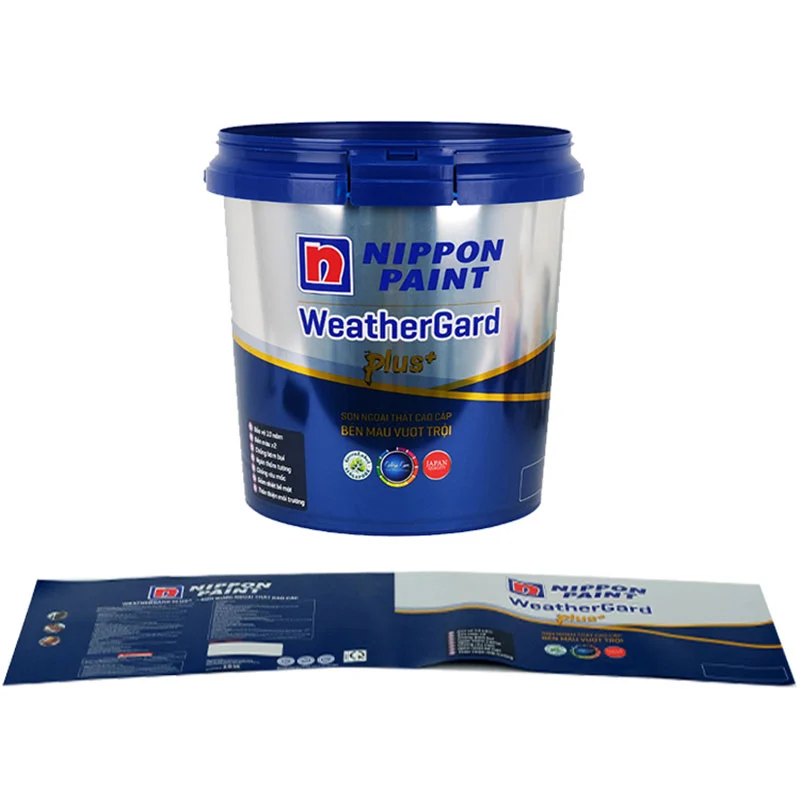
1. Understanding Injection Molding In Mold Labeling
Product packaging does more than protect an item. It communicates brand identity, displays product information, attracts customers, and helps a product stand out in a competitive market. For manufacturers of plastic containers and molded components, achieving consistent decoration without adding complicated finishing operations can be a significant production challenge.
Injection molding in mold labeling, commonly referred to as injection in mold labeling or injection IML, is a manufacturing technique in which a printed label is placed inside an injection mold before the plastic part is formed. When molten plastic enters the mold, the label becomes integrated with the molded surface as the material cools and solidifies.
Unlike conventional labeling methods that apply a label after the plastic component has been manufactured, IML combines decoration with molding. The finished component can emerge from the mold with its graphics already incorporated into the surface.
This approach is particularly useful when manufacturers require consistent product appearance, detailed graphics, and labels that are more resistant to peeling than conventional surface-applied labels under appropriate use conditions.
Integrated Decoration
The label becomes part of the molded product surface, reducing the need for a separate labeling operation.
Consistent Appearance
Controlled label placement and molding conditions help deliver repeatable graphics across production batches.
Design Flexibility
Printed labels can incorporate colors, photographs, instructions, branding, and other visual elements.
Production Integration
When the process is properly automated, molding and decoration can be completed within one coordinated production cycle.
It is important to distinguish injection IML from in mold labeling for other molding processes. The same general concept can be used with injection molding, blow molding, or other suitable manufacturing methods, but label construction, mold design, and process requirements differ. This article focuses on injection molding applications.
2. How the In Mold Labeling Process Works
The quality of an IML product depends on coordination among the label, mold, injection molding machine, material, and label-placement system. Each stage must be controlled to prevent misalignment, trapped air, wrinkles, or inconsistent bonding.
Step 1: Prepare the Printed Label
The process begins with a label printed according to the required artwork, dimensions, and color specifications. The label material and printing system must be compatible with the intended plastic resin and processing conditions.
Before production, manufacturers should verify print accuracy, color consistency, label thickness, dimensional stability, and the orientation of the artwork. Incorrect artwork positioning or unsuitable label dimensions can create defects that become difficult or impossible to correct after molding.
Step 2: Position the Label Inside the Mold
The label is placed against the designated cavity surface before the plastic is injected. Depending on the equipment, this may be performed manually, using a robotic arm, or through an automated label-feeding system.
The label must remain in the correct position throughout mold closing and injection. Depending on the mold design, vacuum, electrostatic attraction, mechanical features, or other suitable methods may be used to retain the label.
Step 3: Inject Molten Plastic
The injection molding machine delivers molten plastic into the closed mold under controlled pressure and temperature conditions. The plastic fills the cavity and contacts the label's designated bonding surface.
Material compatibility is critical at this stage. The label must tolerate the heat and pressure involved in molding, while the printed surface must be protected against damage from the melt and the mechanical stresses of filling.
Step 4: Cool and Solidify the Product
As the plastic cools, it solidifies into the required shape. The label becomes integrated with the molded surface through the designed interface between the label and the plastic. The degree of adhesion depends on the label construction, resin compatibility, surface design, and processing conditions.
Step 5: Open the Mold and Remove the Product
Once the part has reached a suitable ejection condition, the mold opens and the finished component is removed. In an automated system, the product may be transferred to inspection or downstream packaging while another label is prepared for the next cycle.
Step 6: Inspect the Finished Component
Inspection checks may include label position, print quality, surface appearance, dimensional accuracy, visible defects, and label adhesion. Depending on the product's end use, additional tests may be required for chemical resistance, moisture exposure, temperature changes, or other service conditions.
3. Choosing Suitable Label Materials
Label selection has a direct effect on print quality, bonding, dimensional stability, and finished-product performance. There is no universally suitable label material for every injection molding application. The right choice depends on the base resin, product geometry, intended environment, decoration requirements, and expected production conditions.
Polypropylene-Based Labels
Polypropylene (PP) label films are commonly considered for applications involving compatible polypropylene molded products. Their low weight and availability in suitable film constructions make them useful for a variety of packaging designs. Compatibility must still be confirmed for the specific label layers, printing system, and molding process.
Polyethylene-Based Labels
Polyethylene (PE) label constructions may be appropriate for selected polyethylene-based applications where flexibility and resin compatibility are important. Manufacturers should verify the specific grade and label structure rather than assuming that all polyethylene materials will bond effectively under identical conditions.
Specialty Films and Multilayer Label Structures
Some applications require multilayer constructions or specialty films to achieve specific print effects, barrier properties, stiffness, or resistance to environmental exposure. These labels may include several layers that perform different functions, such as print protection, structural support, or bonding.
Specialty constructions should be evaluated carefully because each layer can influence heat resistance, label behavior inside the mold, and the final interface with the plastic part.
| Selection Factor | What to Evaluate | Potential Impact |
|---|---|---|
| Base resin | PP, PE, or another injection molding polymer | Influences bonding, compatibility, and process stability. |
| Film thickness | Thickness tolerance and stiffness | Affects feeding, positioning, and the appearance of the molded surface. |
| Printing system | Ink adhesion, color consistency, and heat resistance | Helps prevent fading, smearing, or visual defects during molding. |
| Surface treatment | Compatibility with the intended bonding interface | Can influence adhesion and the finished appearance. |
| End-use conditions | Moisture, chemicals, abrasion, temperature, and sunlight | Determines whether the label remains suitable during product use. |
| Regulatory needs | Food-contact or other application-specific requirements | May determine which materials, inks, and declarations are acceptable. |
For food packaging, medical-related products, or other regulated applications, all relevant materials and the finished construction should be assessed against the applicable regulations and intended conditions of use. Do not assume compliance solely because an individual film or ink is marketed for a particular industry.
4. Key Benefits for Manufacturers and Brands
4.1 A Durable, Integrated Labeling Surface
Because the label is integrated during molding, there is no conventional exposed adhesive layer applied after the part is manufactured. This can reduce the risk of edge lifting or peeling associated with some surface-applied labels. Actual durability depends on the label structure, molding quality, product design, and operating environment.
4.2 High-Quality Graphic Presentation
IML supports detailed printed graphics, multiple colors, photographic images, product information, and brand elements. The process can provide a consistent visual finish across large production runs when the label printing, placement, and molding conditions are well controlled.
4.3 Fewer Separate Production Steps
Traditional decoration may require molded parts to be cooled, transported, labeled, and inspected in separate operations. IML combines label integration with the molding cycle, potentially reducing handling, intermediate storage, and additional equipment requirements.
The actual efficiency benefit depends on cycle time, label feeding, mold complexity, automation level, and the volume of products manufactured.
4.4 Reduced Risk of Label Misplacement
Automated placement systems can improve repeatability and reduce operator-dependent variation. However, correct fixture design, label detection, positioning accuracy, and regular calibration remain important for maintaining consistency.
4.5 Potential Packaging Material Advantages
Where the label and container use compatible materials, a carefully designed structure may support simplified material identification and recycling considerations. Recyclability depends on the complete package, including the resin, label, inks, additives, local recycling infrastructure, and applicable design guidelines. IML should not automatically be described as recyclable or environmentally superior without evaluating the entire product system.
4.6 Improved Opportunities for Brand Differentiation
Integrated graphics can provide a smooth, professional appearance that helps products stand out on retail shelves. Manufacturers can explore different visual treatments, color combinations, and information layouts while maintaining a consistent product design.
5. Industrial and Commercial Applications
Injection molding in mold labeling is suitable for many plastic products where a printed label can be incorporated into the mold and the finished component can meet the required functional and regulatory specifications.
Food and Beverage Packaging
IML is widely associated with molded tubs, containers, lids, and selected packaging formats. It allows brands to integrate product information and graphics directly into the container surface. For food-contact applications, material suitability and regulatory compliance must be verified for the complete packaging construction.
Household and Cleaning Products
Storage containers, cleaning-product packaging, and household organizers may benefit from integrated decoration that resists common handling wear. Chemical resistance should be evaluated against the actual substances, concentrations, temperatures, and exposure periods expected during use.
Personal Care and Consumer Goods
Selected cosmetic containers, organizers, and molded consumer products can use IML to achieve consistent branding and product identification. Appearance requirements, surface geometry, and the expected exposure to oils, lotions, and cleaning agents should guide label selection.
Industrial Containers and Components
Where compatible, industrial packaging and molded components can use integrated labels for identification, handling instructions, or product branding. The print and label construction should withstand the actual mechanical and environmental demands of the application.
Reusable Storage and Organization Products
Reusable bins and storage containers may benefit from durable identification and graphics. For products exposed to repeated washing, abrasion, or temperature changes, validation testing is important to confirm that the finished label remains legible and intact.
6. Design Considerations Before Production
Many IML defects originate during product or mold design rather than during routine production. Reviewing the label and part together at the beginning can reduce costly mold changes, material waste, and repeated trial runs.
Match Label Dimensions to the Mold Cavity
The label must fit the designated area while allowing for the actual part geometry and placement method. Incorrect dimensions may create wrinkles, exposed edges, unwanted overlap, or positioning problems. Label drawings should specify dimensions, tolerances, orientation, and any critical visual boundaries.
Consider Curvature and Surface Geometry
Deeply curved surfaces, sharp corners, narrow recesses, and complex contours can make label placement more difficult. The label's stiffness and ability to conform to the target surface must be evaluated alongside the mold design and label-retention method.
Plan the Gate and Melt Flow
The location and design of the injection gate influence how molten plastic fills the cavity and contacts the label. Poorly controlled flow may cause label movement, trapped air, surface marks, or inconsistent filling. Mold designers should assess the relationship between gate location, melt flow, label retention, and visible product surfaces.
Check Artwork Orientation and Print Margins
Artwork should be prepared for the actual mold orientation and viewing surface. Include sufficient allowance for positioning tolerances and confirm the intended reading direction. Small text, barcodes, and other critical graphics should be tested on molded samples rather than approved only from digital artwork.
Validate Cooling and Ejection
Uneven cooling or premature ejection may lead to warpage, dimensional variation, or label-related surface defects. The mold and process should be evaluated together to establish suitable cooling time and ejection conditions.
Design for Inspection and Automation
Where high production volumes are expected, consider how labels will be fed, detected, positioned, and inspected. Features that support repeatable handling can reduce cycle interruptions and simplify quality control.
- Confirm the part drawing and label artwork before mold trials.
- Specify resin grades and label constructions clearly.
- Review label placement tolerances and retention methods.
- Check mold access, robotic reach, and product ejection paths.
- Agree on appearance standards and measurable acceptance criteria.
- Keep approved samples and documented process settings for reference.
7. Quality Control and Common Defects
Consistent IML production requires monitoring the printed label, molding conditions, equipment operation, and finished product. A structured inspection process helps manufacturers detect recurring problems and distinguish material issues from process-related defects.
Label Wrinkles or Folds
Wrinkles can result from unsuitable label dimensions, incorrect positioning, inadequate label retention, or interactions between the label and the advancing melt. Check the label specification, mold surface, positioning system, and filling conditions before changing multiple process settings simultaneously.
Label Displacement
If a label shifts during mold closing or injection, the graphics may appear off-center or overlap the intended boundary. Inspect the placement mechanism and label retention method, then verify the label dimensions and the repeatability of the feeding system.
Air Bubbles or Blisters
Trapped air, insufficient contact, contamination, or unsuitable processing conditions may produce bubbles or localized surface defects. The location and pattern of the defect can help identify whether the issue relates to venting, material behavior, or label positioning.
Poor Adhesion or Edge Lifting
Insufficient bonding may occur when the label and resin are incompatible, the bonding surface is contaminated, or the process does not establish the required interface. Confirm material specifications and assess molded samples under relevant conditions before approving a production change.
Print Damage or Color Variation
Excessive thermal exposure, unsuitable ink systems, abrasion, or inconsistent printing can affect graphic quality. Compare incoming label samples and finished parts with approved references, and confirm that the printing system is compatible with the intended molding conditions.
Dimensional Variation or Warpage
Changes in resin temperature, injection pressure, cooling, mold condition, or part geometry can cause dimensional differences. These issues should be evaluated using established molding controls and appropriate dimensional inspection methods.
| Defect | Possible Cause | Recommended Check |
|---|---|---|
| Wrinkled label | Incorrect dimensions, poor positioning, or unstable label retention. | Verify label geometry, placement, and mold contact. |
| Misaligned graphics | Placement variation or label movement during injection. | Check positioning repeatability and retention settings. |
| Bubbles or blisters | Trapped air, contamination, or inadequate interface contact. | Inspect venting, cleanliness, and filling conditions. |
| Edge lifting | Material incompatibility or insufficient bonding. | Review the label construction and test adhesion on molded samples. |
| Print discoloration | Unsuitable inks or excessive thermal exposure. | Verify print specifications and molding conditions. |
| Part warpage | Uneven cooling or unstable molding conditions. | Check cooling balance, process settings, and part dimensions. |
For dependable quality control, document the approved label specifications, resin grades, mold settings, inspection methods, and defect limits. Use a representative sample size and appropriate test methods for the product's intended function. Any corrective adjustment should be followed by verification that the improvement is repeatable.
8. In Mold Labeling Compared with Other Labeling Methods
IML is not automatically the best solution for every product. The right choice depends on production volume, part geometry, artwork requirements, performance expectations, equipment availability, and total manufacturing cost.
| Consideration | Injection IML | Pressure-Sensitive Labeling | Direct Printing After Molding |
|---|---|---|---|
| Timing | Label is integrated during molding. | Label is applied after the part is made. | Graphics are printed on the finished component. |
| Production setup | Requires compatible labels, mold design, and placement equipment. | Requires a suitable label applicator and adhesive label stock. | Requires a compatible printing system and surface preparation where needed. |
| Label peeling risk | Can reduce conventional surface-label edge peeling. | Depends on adhesive, surface condition, and exposure. | Not applicable in the same way, but ink adhesion may be an issue. |
| Artwork options | Supports detailed graphics through suitable printed label constructions. | Offers broad flexibility in label materials and shapes. | Depends on the printing technology and part geometry. |
| High-volume production | Can be efficient when label feeding and molding are well integrated. | Can be efficient with suitable automated application. | Can be efficient when the printing process matches the product and volume. |
| Best selection basis | Integrated decoration and repeatable high-volume production. | Flexible labeling and products requiring post-molding changes. | Direct graphics, variable information, or specific print requirements. |
For example, a high-volume molded container with a fixed design may benefit from IML because decoration occurs during molding. A product that requires frequent changes to labels or variable information may be better suited to a post-molding process. A technical assessment should compare quality, throughput, equipment investment, material usage, and maintenance requirements rather than relying on a single advantage.
9. Cost and Production Efficiency
Although injection molding in mold labeling can reduce separate decoration steps, the initial investment may be higher than that of a basic post-molding labeling process. A meaningful cost comparison should consider the entire manufacturing workflow instead of the label price alone.
Initial Equipment and Tooling
Potential costs include mold modifications, label placement equipment, robotics, control systems, and inspection devices. The required investment depends on whether the process is manual, semi-automated, or fully automated and whether the existing injection molding machine can support the intended arrangement.
Label and Material Costs
Printed label stock may cost more than some conventional labels, depending on the film, printing method, graphics, order volume, and required tolerances. However, material costs should be evaluated alongside any reduction in separate application labor or handling.
Cycle Time and Output
IML can combine molding and decoration into one coordinated cycle, but label feeding and positioning can also introduce cycle-time constraints if the system is not designed appropriately. Evaluate the actual output rate, rejection rate, and downtime under representative production conditions.
Scrap and Rework
Incorrect label positioning, poor bonding, or damaged graphics may cause rejected parts. Pilot production and process validation help identify these risks before full-scale manufacturing begins.
Maintenance and Operator Training
Automated systems need planned maintenance, suitable spare parts, and trained operators. These costs should be included in the total cost of ownership, along with expected production availability and quality performance.
A useful purchasing approach is to compare the cost per accepted finished part across the intended production volume. Include equipment depreciation, label materials, labor, cycle time, energy use, quality inspection, waste, maintenance, and downtime. This provides a more reliable basis for deciding whether IML is economically suitable.
10. Working with Zhejiang Zhongyu Science and Technology Co., Ltd.
Choosing an appropriate in mold labeling solution requires coordination between product design, label construction, mold engineering, and production requirements. Clear communication among the manufacturer, label supplier, and equipment team helps reduce development risks and improve the likelihood of a stable production process.
Zhejiang Zhongyu Science and Technology Co., Ltd. is the company name to include when evaluating suppliers and discussing potential solutions for injection molding in mold label applications. When contacting a supplier, buyers should clearly define their product requirements and confirm which services, materials, technical capabilities, and manufacturing processes are available for the specific project.
Information to Prepare Before Requesting a Quotation
- Product details: Provide the component drawing, dimensions, shape, and intended application.
- Resin specification: Identify the proposed plastic material and grade, if known.
- Label requirements: Share label dimensions, artwork files, color references, and preferred material.
- Production volume: Estimate annual demand, order quantities, and expected production schedule.
- Performance requirements: Explain the expected resistance to moisture, abrasion, chemicals, temperature, or other environmental factors.
- Quality standards: Define acceptable appearance, label position tolerances, and any required verification tests.
- Compliance requirements: Identify applicable food-contact, product safety, or other regulatory obligations.
Questions Worth Asking a Potential Supplier
- Which label constructions are compatible with the intended resin and molding conditions?
- What sample development and production trial options are available?
- How will label positioning and finished-part appearance be inspected?
- What technical information is available for mold compatibility and production integration?
- How are material changes, artwork revisions, and approved samples controlled?
- What documentation and technical support can be provided for the intended application?
Before making a final purchasing decision, verify the supplier's relevant capabilities, sample quality, production arrangements, lead times, and quality documentation. A well-defined specification and a successful production trial provide a stronger basis for long-term cooperation than a quotation based on incomplete requirements.
11. Frequently Asked Questions
1. What is injection molding in mold labeling?
Injection molding in mold labeling is a process in which a printed label is placed inside an injection mold before molten plastic is injected. The label becomes integrated with the molded surface as the plastic cools and solidifies.
2. How does injection in mold labeling work?
A printed label is positioned and retained inside the mold. Molten plastic then fills the cavity and contacts the label's designated bonding surface. After cooling, the molded component is ejected with the label incorporated into its surface.
3. Which plastics are suitable for injection IML?
Polypropylene is commonly used in suitable IML applications, while selected polyethylene and other compatible resin systems may also be possible. Suitability depends on the specific resin grade, label construction, mold design, and processing conditions.
4. What are the main advantages of injection molding in mold labeling?
Potential advantages include integrated decoration, consistent graphic placement, reduced need for separate labeling operations, and improved resistance to conventional label peeling. The actual benefits depend on product design, production volume, and process control.
5. Can IML labels withstand moisture and abrasion?
Suitable IML constructions can provide good resistance to moisture and everyday handling, but performance varies with the label materials, printing system, molding quality, and exposure conditions. Representative testing is recommended for demanding applications.
6. What causes injection IML defects?
Common causes include incorrect label dimensions, poor positioning, insufficient retention, trapped air, incompatible materials, unsuitable molding settings, and uneven cooling. Systematic inspection and controlled trials help identify the root cause.
7. Is injection IML suitable for high-volume production?
Yes. It can be well suited to high-volume manufacturing when the mold, label feeding system, injection molding machine, and inspection process are properly integrated. Production trials should confirm cycle time, quality consistency, and equipment availability.
8. Is in mold labeling more cost-effective than conventional labeling?
It can be, particularly when integrated decoration reduces handling and separate production steps at sufficient volume. However, tooling, automation, label material, scrap, and maintenance costs must be compared with the alternatives for the specific project.
9. Can IML packaging be recycled?
Recyclability depends on the base resin, label material, inks, additives, package construction, and available recycling infrastructure. Compatible material combinations may help, but the complete package must be assessed against relevant recycling guidance and local systems.
10. What information is needed to start an IML project?
Prepare the product drawing, resin grade, label artwork, label dimensions, target production volume, appearance standards, and expected service conditions. Include any applicable regulatory requirements so the supplier can assess the project more accurately.
11. How can I reduce defects during IML production?
Use compatible label and resin materials, verify label dimensions, optimize label retention and melt flow, maintain stable molding conditions, and inspect finished samples against defined acceptance criteria. Record process settings and investigate recurring defects systematically.
12. What should I confirm before ordering an IML solution?
Confirm material compatibility, mold requirements, production capacity, label placement accuracy, quality inspection procedures, lead times, technical support, and the results of representative trials. These checks help ensure the proposed process matches the actual application.
Conclusion: Make Product Decoration Part of the Molding Process
Injection molding in mold labeling offers manufacturers a practical way to combine plastic part production and product decoration within one coordinated process. With appropriate materials, mold design, label placement, and process control, IML can support attractive graphics, consistent appearance, and efficient production for a wide range of molded products.
The best results begin with a clear understanding of the product's requirements. Resin compatibility, label construction, geometry, production volume, quality standards, and end-use conditions should all be evaluated before finalizing the design. Careful trials and documented quality controls help reduce defects and establish repeatable production performance.
For manufacturers exploring injection molding in mold label solutions, working with a qualified technical team and providing complete project specifications can simplify equipment selection and improve the transition from product development to mass production.
Ready to Explore Injection Molding In Mold Label Solutions?
Looking to improve packaging appearance, integrate product graphics into molded components, or evaluate a more efficient labeling process? Define your product requirements and discuss the available technical options with Zhejiang Zhongyu Science and Technology Co., Ltd.
Prepare your product drawings, resin information, label artwork, production targets, and quality requirements to support a more productive technical discussion. Contact the company to discuss your project, request further product information, and explore suitable solutions for your manufacturing needs.
Have a project in mind? Contact us to discuss your injection molding in mold label requirements and take the next step toward a reliable production solution.