

How Does Heavy-Duty High-Pressure Hydraulic Rubber Hose Deliver Reliable Performance?
2026-11-10
Article Summary
Heavy-duty high-pressure hydraulic rubber hose plays a critical role in transferring pressurized hydraulic fluid throughout construction machinery, mining equipment, industrial production systems, and other demanding applications. However, selecting an unsuitable hose can result in fluid leakage, pressure loss, premature wear, equipment downtime, and serious safety hazards.
This guide explains how hydraulic hoses work, what makes a hose suitable for heavy-duty applications, and how to evaluate pressure ratings, reinforcement structures, rubber materials, temperature resistance, and fitting compatibility. It also covers installation, maintenance, and common purchasing mistakes to help equipment manufacturers, distributors, and maintenance professionals make more informed decisions.
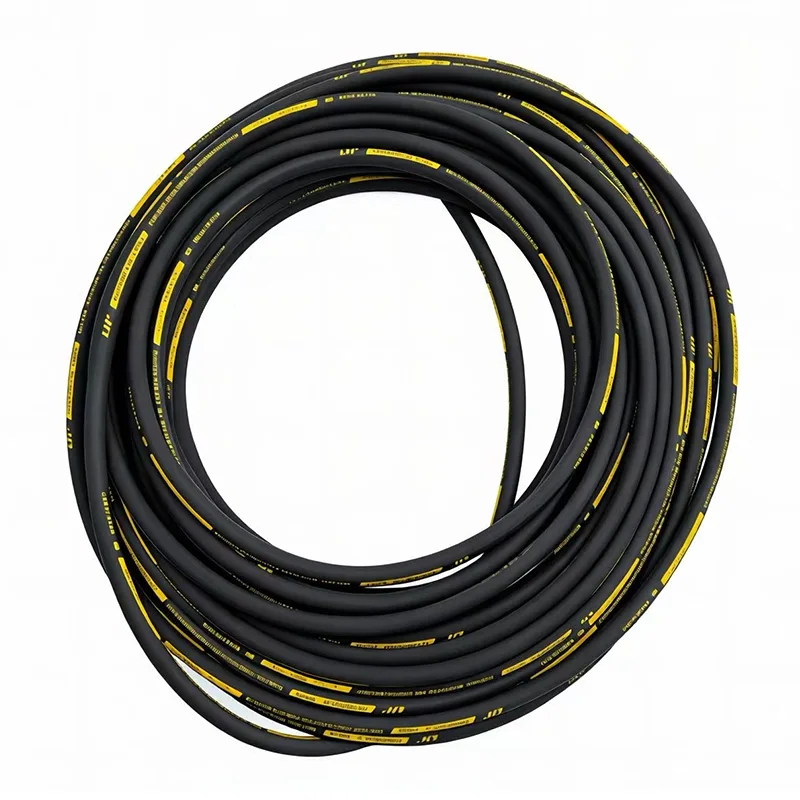
1. What Is a Heavy-Duty High-Pressure Hydraulic Rubber Hose?
A heavy-duty high-pressure hydraulic rubber hose is a flexible fluid transmission component designed to carry hydraulic oil and other compatible fluids under demanding pressure and operating conditions. It connects hydraulic pumps, cylinders, motors, valves, and other equipment components, allowing pressurized fluid to transfer power throughout a hydraulic system.
Unlike ordinary industrial rubber tubing, a high-pressure hydraulic hose must withstand substantial internal pressure, repeated pressure fluctuations, mechanical vibration, bending, and environmental exposure. Its construction combines specialized rubber compounds with high-strength reinforcement materials to maintain structural stability during operation.
A typical heavy-duty hydraulic hose consists of three main layers:
Each layer has a different function, but they work together as an integrated structure. A weakness in any layer can affect the performance and service life of the complete hose assembly.
2. How Does a High-Pressure Hydraulic Hose Work?
A hydraulic system transfers mechanical power through pressurized fluid. The pump generates hydraulic pressure, and the fluid travels through hoses and other passages to operate cylinders, motors, and hydraulic actuators.
During this process, the hydraulic hose performs several important functions:
2.1 Transferring Pressurized Hydraulic Fluid
The inner tube provides a continuous passage for hydraulic oil or another compatible working medium. Its material must resist swelling, softening, cracking, and deterioration caused by prolonged fluid contact.
2.2 Withstanding Internal Pressure
When hydraulic fluid moves through the hose, it creates outward forces on the hose wall. Reinforcement layers help contain these forces and maintain the hose's structural integrity.
Steel wire reinforcement is particularly important in demanding applications because it offers high tensile strength and supports reliable pressure containment.
2.3 Accommodating Movement and Vibration
Hydraulic components are not always stationary. Excavator arms, lifting mechanisms, industrial machinery, and mobile equipment constantly move during operation. Flexible hoses accommodate these movements while maintaining fluid connections.
2.4 Supporting Stable Equipment Operation
A correctly selected hose helps reduce leakage, pressure interruptions, and unnecessary maintenance. It also allows hydraulic components to operate within their intended working conditions.
3. What Makes a Hydraulic Hose Suitable for Heavy-Duty Applications?
Heavy-duty applications place greater demands on hydraulic hose materials and construction. A reliable product needs to maintain performance under combined pressure, temperature, mechanical, and environmental stresses.
3.1 High-Strength Steel Wire Reinforcement
Reinforcement is one of the most important factors affecting hydraulic hose pressure performance. Depending on the application and required pressure rating, manufacturers may use one or multiple layers of high-tensile steel wire.
- Steel wire braided hoses: Commonly used in medium- and high-pressure hydraulic systems. Their construction provides a balance of flexibility and pressure resistance.
- Steel wire spiral hoses: Designed for demanding high-pressure applications where substantial pressure loads and cyclic stresses must be considered.
- Textile-reinforced hoses: Used in suitable lower-pressure hydraulic or industrial applications where the operating conditions permit their use.
3.2 Oil-Resistant Rubber Inner Tube
The inner tube must remain compatible with the hydraulic fluid throughout its intended service life. Synthetic rubber compounds such as nitrile rubber (NBR) are commonly used in hydraulic hose construction because of their suitability for many petroleum-based hydraulic oils.
However, compatibility should never be assumed for every fluid. Water-based hydraulic fluids, biodegradable fluids, and specialized synthetic fluids may require different material specifications.
3.3 Abrasion-Resistant Outer Cover
Heavy machinery frequently operates in environments containing stones, dust, metal edges, mud, and other abrasive materials. These conditions can gradually damage the outer hose cover and expose the reinforcement layer.
An abrasion-resistant cover helps protect the hose from external wear. Additional protective sleeves, guards, or suitable routing may also be necessary in high-contact areas.
3.4 Temperature and Weather Resistance
Extreme temperatures can change rubber flexibility and accelerate material aging. High temperatures may cause hardening and deterioration, while low temperatures can increase stiffness and reduce flexibility.
Buyers should evaluate both the minimum and maximum operating temperatures, including temporary temperature peaks and the temperature of the hydraulic fluid itself.
3.5 Reliable Pressure and Fatigue Performance
A hydraulic hose must handle more than the pressure shown on a normal system gauge. Pump operation, rapid valve movements, and changing equipment loads can create pressure fluctuations and short-duration peaks.
For this reason, pressure ratings and impulse resistance should be evaluated together. A hose with a suitable maximum working pressure and verified impulse performance is more appropriate for demanding hydraulic circuits.
4. Which Industries Depend on Heavy-Duty Hydraulic Hoses?
Heavy-duty hydraulic rubber hoses are used wherever hydraulic power must be transmitted reliably under demanding operating conditions. Their construction and specifications vary according to the machinery and working environment.
4.1 Construction and Earthmoving Machinery
Excavators, bulldozers, wheel loaders, cranes, and road construction machinery rely on hydraulic systems to operate lifting, digging, steering, and movement mechanisms.
These machines require hoses that can withstand vibration, repeated bending, pressure fluctuations, and contact with abrasive materials.
4.2 Mining Equipment
Mining operations expose hydraulic components to dust, rock abrasion, heavy loads, and demanding duty cycles. Hydraulic hoses used in mining machinery must be selected according to pressure requirements, environmental conditions, and the equipment manufacturer's specifications.
4.3 Agricultural Machinery
Tractors, harvesters, sprayers, and other agricultural machines use hydraulic hoses to operate lifting systems, steering components, and attachments. Resistance to outdoor weather conditions, agricultural chemicals, and temperature variations may be important.
4.4 Industrial Manufacturing
Hydraulic presses, injection molding machines, metalworking equipment, and automated production systems depend on stable hydraulic fluid transmission. Unplanned hose failures can interrupt production and increase maintenance costs.
4.5 Marine and Oilfield Applications
Marine equipment and oilfield machinery may require hydraulic hoses with additional resistance to moisture, weather exposure, oil contamination, and demanding operating cycles. The selected hose must also be suitable for the specific fluid and installation environment.
5. How to Choose the Right Heavy-Duty High-Pressure Hydraulic Rubber Hose
Selecting a hydraulic hose requires a systematic assessment of the entire application. Choosing a product based only on a previous hose's appearance or nominal diameter can lead to incorrect specifications and premature failure.
5.1 Confirm the Maximum Working Pressure
Start by identifying the hydraulic system's maximum operating pressure, including foreseeable pressure surges. The hose's maximum working pressure must meet or exceed the requirements of the application.
Do not confuse working pressure with burst pressure. Burst pressure represents a failure threshold under a specified test condition, not a permissible operating pressure.
5.2 Identify the Working Fluid
Different hydraulic fluids can interact differently with rubber materials. Confirm the fluid type, additives, concentration where applicable, and operating temperature before selecting the inner tube material.
5.3 Determine the Correct Inner Diameter
Hose diameter influences fluid velocity and pressure loss. An undersized hose may increase flow resistance, heat generation, and energy loss. An oversized hose may create unnecessary installation difficulties and additional costs.
Consider the required flow rate, system design, and equipment manufacturer's recommendations when selecting the nominal inside diameter.
5.4 Evaluate Temperature Requirements
Check the hose manufacturer's specified temperature range for the intended fluid and operating conditions. Consider ambient temperature, hydraulic fluid temperature, and intermittent exposure to higher temperatures.
5.5 Check Bend Radius and Installation Space
Every hydraulic hose has a minimum recommended bend radius. Bending below this limit can damage the reinforcement, restrict fluid flow, and shorten service life.
Measure the available installation space and consider how the hose moves during equipment operation. Avoid sharp bends, twisting, and unnecessary tension.
5.6 Verify Fitting and Connection Compatibility
Hose assemblies must use compatible fittings, thread forms, sealing arrangements, and connection dimensions. Common connection types include metric, BSP, JIC, and SAE configurations.
Correct thread identification is essential. Connections that appear similar may have different thread pitches, sealing surfaces, or dimensional requirements.
| Selection Factor | What to Check | Why It Matters |
|---|---|---|
| Working Pressure | Maximum system pressure and pressure surges | Prevents pressure-related failures |
| Inner Diameter | Required flow rate and hose size | Helps control fluid velocity and pressure loss |
| Inner Tube Material | Hydraulic fluid compatibility | Reduces swelling and chemical deterioration |
| Reinforcement | Steel wire braid or spiral construction | Provides the required pressure capability |
| Temperature | Minimum and maximum operating temperatures | Protects material flexibility and durability |
| Outer Cover | Abrasion, weather, and ozone exposure | Helps prevent external damage |
| Fittings | Thread type, size, and pressure rating | Ensures assembly compatibility and sealing |
| Installation | Bend radius, routing, and movement | Reduces mechanical stress and premature wear |
5.7 Understand Relevant Industry Standards
International standards provide useful technical references for hydraulic hose selection and testing. Depending on the product design and application, buyers may encounter standards such as:
- SAE J517: Covers hydraulic hose requirements and classifications.
- EN 853: Specifies requirements for certain textile- and steel-wire-reinforced hydraulic hoses.
- ISO 18752: Specifies requirements for wire- or textile-reinforced hydraulic hoses and hose assemblies classified by pressure performance.
Always request the applicable product specification and test documentation. A manufacturer's statement that a product meets a standard should be supported by the relevant model, construction, and verification records.
6. Common Hydraulic Hose Problems and Their Causes
Hydraulic hose failures can result from incorrect selection, poor installation, unsuitable operating conditions, or normal material deterioration. Understanding common failure patterns helps maintenance teams identify potential risks before they cause equipment downtime.
| Common Problem | Possible Cause | Recommended Action |
|---|---|---|
| Outer Cover Abrasion | Contact with metal edges, equipment movement, or rough surfaces | Improve routing and add suitable protective guards |
| Oil Leakage | Damaged hose, incorrect fittings, or poor crimping | Depressurize the system and replace or repair the assembly |
| Hose Cracking | Heat aging, ozone exposure, or material incompatibility | Check operating conditions and material specifications |
| Hose Bulging | Internal reinforcement damage or excessive pressure | Stop operation and replace the damaged hose |
| Premature Fatigue | Pressure cycling, excessive vibration, or incorrect bending | Review impulse requirements and installation layout |
| Excessive Stiffness | Low-temperature exposure or material aging | Verify the temperature rating and hose condition |
One particularly dangerous problem is a pinhole leak in a high-pressure hydraulic line. Pressurized fluid can penetrate the skin and cause serious injection injuries. Never use your hands to search for leaks. Follow proper isolation procedures and use appropriate inspection methods.
7. How to Install and Maintain Hydraulic Rubber Hoses
Even a high-quality hydraulic hose can fail prematurely if it is installed incorrectly or neglected during operation. A structured installation and maintenance process helps protect both the equipment and operators.
7.1 Follow Correct Installation Procedures
- Verify specifications: Confirm hose size, pressure rating, fittings, fluid compatibility, and temperature requirements.
- Depressurize the system: Shut down equipment and release stored hydraulic pressure according to the manufacturer's procedures.
- Check the routing: Ensure the hose does not rub against sharp edges or moving mechanical components.
- Maintain the bend radius: Avoid excessive bending, twisting, stretching, and compression.
- Use compatible fittings: Follow the specified assembly and crimping procedures.
- Inspect before operation: Check connections, routing, and visible hose surfaces before returning equipment to service.
7.2 Establish a Regular Inspection Routine
Routine inspections help identify damage before it develops into a major failure. Inspection frequency should reflect operating hours, equipment criticality, environmental conditions, and manufacturer recommendations.
Maintenance personnel should pay attention to:
- Visible cuts, cracks, blisters, or bulges on the hose cover.
- Exposed or damaged reinforcement wires.
- Oil leakage around fittings and connection points.
- Signs of excessive abrasion or contact with hot surfaces.
- Changes in hose flexibility or unusual deformation.
- Evidence of twisting, excessive tension, or unsupported hose sections.
7.3 Replace Damaged Hoses Promptly
A damaged high-pressure hose should not be treated as a minor maintenance issue. Do not attempt to repair a pressure hose using tape, clamps, or temporary sealing materials.
Replace defective assemblies with products that match the original equipment specifications or an approved engineering replacement. Always follow safe isolation procedures before removing a hose.
8. What Should Buyers Check Before Ordering?
For equipment manufacturers, hydraulic hose distributors, wholesalers, and industrial procurement teams, purchasing the correct product is not simply about comparing unit prices. Technical suitability, manufacturing consistency, documentation, and delivery capability all influence long-term purchasing value.
8.1 Request Complete Technical Specifications
Before requesting a quotation, prepare the key application information. This allows manufacturers to evaluate the requirements more accurately and reduces unnecessary communication.
- Required hose inside diameter and overall length.
- Maximum working pressure and applicable pressure standard.
- Hydraulic fluid type and operating temperature.
- Reinforcement type and number of layers, where specified.
- Required fitting types, thread specifications, and connection dimensions.
- Application environment and expected movement conditions.
- Required quantity, packaging, and delivery destination.
8.2 Evaluate Manufacturing and Quality Control
A reliable supplier should be able to explain its manufacturing process and quality control procedures. Relevant considerations include rubber compound selection, reinforcement consistency, production controls, dimensional inspection, and pressure-related testing.
Ask for product-specific technical data sheets and applicable test reports. Confirm that the documents correspond to the actual hose model being purchased.
8.3 Consider OEM and Customization Capabilities
Different machines and hydraulic systems may require specific hose dimensions, lengths, fittings, and performance characteristics. OEM customization can help equipment manufacturers and distributors obtain products suited to their application requirements.
Before placing a large order, confirm sample availability, production lead time, minimum order quantity, packaging options, and the process for handling quality issues.
8.4 Evaluate Total Ownership Cost
A low initial purchase price does not necessarily mean a lower overall cost. Frequent replacements, leakage, equipment downtime, and maintenance labor can increase the total expense of an unsuitable hose.
Comparing products according to their verified technical performance, service conditions, and supply consistency provides a more useful basis for procurement decisions.
9. Frequently Asked Questions About Heavy-Duty High-Pressure Hydraulic Rubber Hose
Q1. What is the main function of a heavy-duty high-pressure hydraulic rubber hose?
Its main function is to transfer pressurized hydraulic fluid between system components while maintaining a flexible and pressure-resistant connection. It is widely used in construction machinery, mining equipment, agricultural machinery, and industrial hydraulic systems.
Q2. What materials are commonly used in high-pressure hydraulic hoses?
Common construction materials include oil-resistant synthetic rubber for the inner tube, high-tensile steel wire or textile reinforcement, and abrasion- and weather-resistant rubber for the outer cover. The exact material combination depends on the fluid and operating conditions.
Q3. What is the difference between steel wire braided and spiral hydraulic hoses?
Steel wire braided hoses use woven or braided reinforcement and are commonly selected for a wide range of medium- and high-pressure applications. Spiral hoses use multiple helically arranged steel wire reinforcement layers and are often designed for demanding high-pressure and high-impulse applications. Actual suitability depends on the specific hose specification.
Q4. How do I know what pressure rating my hydraulic hose needs?
Check the maximum system operating pressure, including foreseeable pressure surges, and compare it with the hose manufacturer's maximum working pressure rating. The pressure rating of the complete assembly must also account for fittings and other components.
Q5. Can hydraulic rubber hoses be used with all types of hydraulic oil?
No. Different fluids and additives can affect rubber materials differently. Always confirm compatibility with the hose manufacturer's specifications before using petroleum-based, synthetic, biodegradable, or water-based hydraulic fluids.
Q6. Why do high-pressure hydraulic hoses fail prematurely?
Common causes include excessive pressure, pressure fatigue, unsuitable fluid compatibility, high temperatures, incorrect bending, abrasion, vibration, and improper fitting installation. Regular inspections and correct hose selection help reduce these risks.
Q7. How often should hydraulic hoses be inspected?
Inspection frequency depends on the equipment, operating environment, usage intensity, and manufacturer's recommendations. Heavy-duty machinery operating under severe conditions may require more frequent inspections than equipment used intermittently.
Q8. Can hydraulic hoses be customized for different machines?
Yes. Many manufacturers provide customized hose diameters, lengths, reinforcement structures, pressure ratings, rubber compounds, and fitting configurations. Buyers should provide accurate application details to confirm feasibility.
Q9. What information should I provide when requesting a hydraulic hose quotation?
Provide the required hose size, working pressure, hydraulic fluid, temperature range, hose length, reinforcement requirements, fitting details, application environment, and order quantity. Drawings or photographs of the original assembly can also help clarify connection requirements.
Q10. What is the difference between working pressure and burst pressure?
Working pressure is the maximum pressure at which the hose is specified to operate under defined conditions. Burst pressure is the pressure at which the hose fails during a specified destructive test. Burst pressure must never be treated as the normal operating pressure.
10. Choose a Reliable Hydraulic Hose Manufacturing Partner
Choosing the right heavy-duty high-pressure hydraulic rubber hose requires a clear understanding of operating pressure, reinforcement structure, rubber material, fluid compatibility, temperature, and installation conditions. A properly specified hose helps hydraulic equipment maintain stable performance, reduces unexpected maintenance, and supports safer operation in demanding industrial environments.
For international buyers seeking a dependable rubber hose supplier, Hengshui Zhehan Rubber & Plastic Products Co., Ltd. provides hydraulic and industrial rubber hose solutions for construction machinery, mining, agricultural equipment, and other industrial applications.
With manufacturing experience, multiple production lines, and OEM/ODM support, the company offers product solutions for different pressure requirements, hose structures, dimensions, and application environments. Buyers can discuss their technical specifications with the supplier to identify suitable product configurations.
Whether you are sourcing hydraulic hoses for equipment manufacturing, wholesale distribution, replacement parts, or industrial projects, selecting a manufacturer that understands your actual working conditions is an important step toward establishing a stable supply relationship.
Looking for a Reliable Heavy-Duty Hydraulic Hose Supplier?
Need high-pressure hydraulic rubber hoses for construction machinery, mining equipment, or industrial applications? Contact Hengshui Zhehan Rubber & Plastic Products Co., Ltd. to discuss your specifications, request product details, and receive a customized quotation.
Share your required hose size, pressure rating, working medium, and fitting details with our team. We are ready to help you find a suitable hydraulic hose solution for your business.
Contact Us for a Quote