

How Does BOPET Twist Film Improve Packaging Performance?
2026-08-26
Article Summary: BOPET Twist Film is a specialized polyester film designed for packaging applications where controlled twisting, reliable shape retention, attractive appearance, and consistent converting performance are important. Compared with ordinary packaging films, a properly engineered twist film must balance tensile strength, flexibility, twist retention, surface characteristics, optical appearance, and machinability. This article explains how BOPET Twist Film works, what properties matter most, how to select the right specification, and how it can help manufacturers reduce packaging problems on manual and automated production lines.
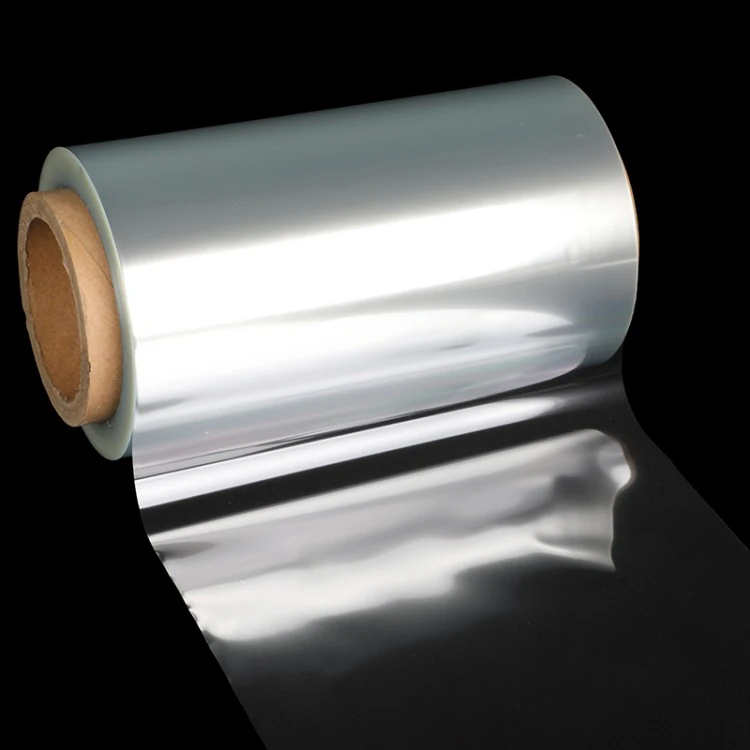
Table of Contents
- 1. What Is BOPET Twist Film?
- 2. How Does BOPET Twist Film Work?
- 3. Which Properties Matter Most in BOPET Twist Film?
- 4. Where Is BOPET Twist Film Used?
- 5. How Do Transparent and Metallized Twist Films Differ?
- 6. How Should BOPET Twist Film Thickness Be Selected?
- 7. How Can BOPET Twist Film Improve Automatic Packaging?
- 8. What Packaging Problems Can BOPET Twist Film Help Prevent?
- 9. How Should Buyers Select a BOPET Twist Film Supplier?
- 10. Why Consider Jincheng for BOPET Twist Film?
- 11. Frequently Asked Questions
- 12. Conclusion
1. What Is BOPET Twist Film?
BOPET Twist Film is a biaxially oriented polyethylene terephthalate film developed for packaging applications that use a twisting process to close or shape the package. BOPET stands for biaxially oriented polyethylene terephthalate, a polyester film known for its combination of mechanical strength, dimensional stability, clarity, and resistance to handling stress.
Twist packaging may look simple from the outside, but the film has to perform several functions simultaneously. During packaging, the material must bend around the product, form a tight twisted closure, maintain the twisted shape, and resist tearing or premature opening. If the film is too rigid, it may not form properly. If it is too weak, the twisted ends can break. If its twist retention is insufficient, the package may gradually loosen after processing.
For this reason, selecting a suitable BOPET Twist Film is not simply a matter of choosing a transparent plastic film. The film structure, thickness, surface treatment, mechanical properties, appearance, and converting requirements should all be considered together.
Jincheng supplies BOPET Twist Film solutions for applications including confectionery packaging, small sachets, snacks, tea, chewing gum, gift packaging, souvenirs, and specialty decorative packaging. Available options can include transparent and metallized structures, allowing packaging manufacturers to select a finish according to the visual and functional requirements of the final product.
2. How Does BOPET Twist Film Work?
The basic principle of twist packaging is mechanical deformation. A section of film is wrapped around a product and the ends are rotated in opposite directions or twisted around the package. The film must accommodate this deformation without developing excessive cracks, tearing, or uncontrolled recovery.
The performance of the finished package depends on several interacting characteristics:
- Flexibility: The film must bend and deform during wrapping and twisting.
- Tensile strength: The material needs sufficient strength to tolerate the forces generated during processing.
- Tear resistance: Strong resistance to tearing helps prevent damage when the film is twisted at high speed.
- Twist retention: After twisting, the film should maintain the intended configuration rather than rapidly relaxing.
- Dimensional stability: Consistent dimensions support stable operation on packaging equipment.
- Surface properties: Appropriate surface characteristics can support printing, coating, lamination, or other downstream processes.
The balance between these properties is particularly important for automatic packaging. A film that performs adequately during slow manual wrapping may behave differently when processed at high production speeds.
Therefore, packaging manufacturers should evaluate BOPET Twist Film under actual operating conditions rather than relying only on appearance or nominal thickness.
3. Which Properties Matter Most in BOPET Twist Film?
When purchasing twist film, buyers often focus first on price and thickness. These factors are important, but they do not fully determine packaging performance. A technically suitable film should be evaluated according to the complete set of requirements.
| Film Property | Why It Matters | Packaging Benefit |
|---|---|---|
| Twist Retention | Helps the twisted ends remain in position after processing. | Reduces package loosening and improves appearance. |
| Tear Strength | Allows the film to tolerate twisting and handling forces. | Reduces breakage during packaging. |
| Flexibility | Allows the film to conform to different product shapes. | Supports smoother wrapping and twisting. |
| Transparency | Allows the packaged product to remain visible. | Improves product presentation for clear packaging. |
| Metallized Appearance | Provides a reflective decorative surface. | Creates a premium visual effect. |
| Surface Treatment | Influences adhesion and converting performance. | Supports printing, coating, or other processing requirements. |
| Thickness Consistency | Helps maintain stable mechanical behavior across the roll. | Improves process consistency and material utilization. |
Jincheng's product range includes multiple thickness options, allowing purchasers to match the film to the intended application and processing conditions. The manufacturer's published range extends from thin-gauge options to substantially thicker films, while specific twist-packaging applications may use narrower specifications according to the final product and machine requirements.
4. Where Is BOPET Twist Film Used?
BOPET Twist Film is particularly useful where packaging needs to combine a decorative appearance with a twist-based closure. Its applications extend beyond traditional candy wrapping.
Food and Confectionery Packaging
Candy and other small food products are common applications for twist film. The film can wrap individual products while allowing the ends to be twisted into a compact closure. Transparent material can showcase the product, while metallized film can provide a more decorative appearance.
Small Sachet Packaging
Small granular or individual products may require independent packaging for handling, distribution, or presentation. Twist film can be used for items such as chewing gum, tea-related products, small snacks, and other compact goods when the packaging format is compatible with the material and production equipment.
Gift Packaging
Small souvenirs, decorative items, cultural products, and gift products can benefit from the visual qualities of twist packaging. A transparent film can provide a clean and understated appearance, while a metallized structure can create a more premium presentation.
Specialty Packaging
Twist film can also be considered for specialty packaging projects where conventional heat sealing or adhesive-based closure is unnecessary or where the twisted package itself forms part of the product presentation.
5. How Do Transparent and Metallized Twist Films Differ?
The choice between transparent and metallized BOPET Twist Film usually depends on the required appearance, product visibility, branding strategy, and packaging environment.
| Feature | Transparent Twist Film | Metallized Twist Film |
|---|---|---|
| Product Visibility | High | Lower where the metallized layer provides opacity |
| Visual Effect | Clean and clear | Reflective and decorative |
| Typical Positioning | Everyday food and specialty packaging | Premium, decorative, and gift-oriented packaging |
| Brand Presentation | Emphasizes the product itself | Emphasizes packaging appearance |
| Design Flexibility | Suitable where transparency is desirable | Suitable where metallic visual effects are preferred |
Neither structure is universally better. The appropriate choice depends on whether the packaging strategy prioritizes product visibility or decorative impact.
6. How Should BOPET Twist Film Thickness Be Selected?
Film thickness should be selected according to the product, packaging machine, twisting method, required appearance, and mechanical demands of the finished package.
A thinner film may provide material savings and greater flexibility, but it must still provide enough strength for the intended packaging operation. A thicker film may offer greater mechanical robustness, but unnecessary thickness can increase material consumption and may affect how easily the film forms around small products.
Jincheng lists a broad range of BOPET film thicknesses, including 12 μm, 15 μm, 23 μm, 25 μm, 30 μm, 36 μm, 38 μm, 40 μm, 50 μm, 70 μm, 75 μm, 90 μm, 100 μm, 120 μm, 150 μm, 175 μm, 188 μm, and 250 μm. However, the appropriate specification should be determined from the actual application rather than selecting the thickest available option.
For specialized twist-packaging applications, buyers should confirm the recommended gauge with the supplier based on product dimensions, machine speed, twist configuration, and required film performance.
Practical Tip: Before placing a large order, test the selected film on the actual packaging equipment. A short production trial can reveal issues involving feeding, tension, twisting, tearing, film tracking, and package retention that cannot always be predicted from specifications alone.
7. How Can BOPET Twist Film Improve Automatic Packaging?
Automatic packaging systems place greater demands on film consistency than manual packaging. At higher line speeds, small variations in material behavior can become repeated production problems.
A suitable BOPET Twist Film can contribute to smoother operation through several characteristics:
- Consistent film behavior: Stable mechanical properties help the machine handle the film predictably.
- Good tear resistance: Stronger resistance to tearing can reduce interruptions caused by film breakage.
- Reliable twist formation: Controlled twist behavior helps produce consistent package shapes.
- Good twist retention: The twisted closure is less likely to relax after packaging.
- Suitable surface characteristics: Appropriate surface treatment can support downstream printing or converting processes.
- Stable thickness: Uniform film gauge helps reduce unexpected changes in tension and forming behavior.
Jincheng describes its BOPET Twist Film as suitable for high-speed automatic packaging applications, with performance characteristics focused on tear resistance, shaping, twist retention, and anti-loosening behavior.
For packaging plants operating multiple shifts, these characteristics can have a direct impact on production efficiency. A material that reduces frequent film failures can help operators spend less time stopping equipment and correcting package defects.
8. What Packaging Problems Can BOPET Twist Film Help Prevent?
Packaging manufacturers typically care less about theoretical film properties than about whether those properties solve real production problems. Common problems include torn film, loose twisted ends, inconsistent package appearance, unstable feeding, and excessive waste.
| Common Problem | Potential Material Cause | What to Evaluate |
|---|---|---|
| Film breaks during twisting | Insufficient mechanical strength or unsuitable gauge | Tear strength, tensile properties, thickness |
| Twisted ends loosen | Insufficient twist retention | Twist behavior and recovery characteristics |
| Uneven package appearance | Inconsistent film behavior or machine tension | Thickness consistency and process compatibility |
| Frequent line stoppages | Film feeding or mechanical instability | Roll quality and converting performance |
| Product is difficult to see | Unsuitable film finish | Transparent versus metallized structure |
| Surface adhesion problems | Inappropriate surface energy | Corona treatment and converting requirements |
It is important to remember that not every packaging problem originates from the film. Machine tension, roller condition, environmental humidity, product geometry, twisting parameters, storage conditions, and operator settings can also affect the final result. A proper troubleshooting process should therefore consider both material and equipment.
9. How Should Buyers Select a BOPET Twist Film Supplier?
Choosing a film supplier involves more than comparing quotation prices. The supplier should be able to provide a material that is consistent from batch to batch and suitable for the customer's actual packaging process.
Before purchasing, buyers should consider the following checklist:
- Does the supplier understand twist packaging applications?
- Can the supplier provide the required thickness?
- Are transparent and metallized options available when needed?
- Can the film be customized for specific packaging requirements?
- Does the supplier provide clear technical specifications?
- Can sample rolls be supplied for machine testing?
- Is the packaging suitable for international transportation?
- Can the manufacturer support OEM or bulk-order requirements?
- Are roll dimensions and packaging methods clearly defined?
- Can technical questions be answered before mass production?
These questions help buyers avoid a common purchasing mistake: selecting a film solely because its price per kilogram is attractive. A lower-priced material can become more expensive if it creates high scrap rates, frequent machine stops, poor package appearance, or customer complaints.
10. Why Consider Jincheng for BOPET Twist Film?
Jincheng focuses on polyester film solutions for customers requiring functional and decorative packaging materials. Its BOPET Twist Film portfolio includes transparent and metallized options, supporting different packaging objectives and product presentation requirements.
The company's published product information identifies features such as good twist retention, tear resistance, flexibility, shaping performance, and suitability for automatic packaging. Jincheng also offers multiple film thicknesses and packaging configurations for different customer requirements.
For international buyers, practical supply considerations are equally important. Film products need to arrive in suitable condition, with appropriate roll protection and packaging for transportation. Jincheng provides several packing approaches, including plain packaging and different pallet configurations, allowing the logistics method to be matched to the shipment requirements.
For a new packaging project, buyers should provide as much technical information as possible when requesting a quotation. Useful information includes:
- Product type and approximate dimensions
- Packaging machine model or packaging method
- Required film thickness
- Transparent or metallized finish
- Film width and roll requirements
- Expected production speed
- Printing or coating requirements
- Estimated monthly or annual consumption
- Destination market and shipping requirements
With this information, the supplier can better assess whether a particular BOPET Twist Film specification is suitable instead of recommending a generic film based only on thickness.
11. Frequently Asked Questions
What is BOPET Twist Film used for?
BOPET Twist Film is used for twist-style packaging of products such as confectionery, small snacks, tea-related products, chewing gum, souvenirs, gift items, and other compact products where twisted film closures are appropriate.
What does BOPET mean?
BOPET means biaxially oriented polyethylene terephthalate. The film is produced from PET and oriented in two directions to develop useful mechanical and dimensional characteristics.
Is BOPET Twist Film available in transparent and metallized versions?
Yes. Jincheng provides both transparent and metallized twist film options. The choice depends primarily on the desired product visibility and decorative effect.
Can BOPET Twist Film be used on automatic packaging machines?
Yes. Twist film can be designed for automatic packaging applications. However, the specific film specification should be matched to the machine's feeding, tension, twisting, and production-speed requirements.
How important is twist retention?
Twist retention is one of the most important properties for this type of packaging. If the material does not retain its twisted shape adequately, the package can loosen and lose its intended appearance after processing.
What thickness should I choose?
There is no universal thickness for every application. The correct choice depends on product size, machine configuration, required flexibility, mechanical demands, and final package design. A supplier should evaluate these factors before recommending a specific gauge.
Can BOPET Twist Film be customized?
Customization may be possible depending on the supplier and project requirements. Buyers should discuss film thickness, width, roll dimensions, finish, surface treatment, packaging, and other technical requirements before placing a production order.
How can I test a new BOPET Twist Film?
The most reliable approach is to conduct a production trial using the intended packaging equipment. Check feeding stability, twisting performance, tear resistance, package appearance, twist retention, and waste rate before approving the material for large-scale production.
12. Conclusion
BOPET Twist Film is more than a flexible wrapping material. Its value comes from the interaction of mechanical strength, flexibility, twist retention, dimensional stability, surface characteristics, and visual appearance. When these properties are properly balanced, the film can support efficient twist packaging while helping manufacturers maintain consistent package quality.
For food, confectionery, small sachets, gifts, souvenirs, and specialty packaging, the right film can help address common production challenges such as tearing, loose twists, inconsistent appearance, and unnecessary material waste. The key is to select the film according to the actual application rather than relying only on price or nominal thickness.
Jincheng provides BOPET Twist Film options for customers seeking transparent or metallized polyester film solutions, with multiple thickness choices and packaging configurations. By discussing the product, machine, film dimensions, production conditions, and desired package appearance with the supplier in advance, buyers can make a more informed material selection.
Looking for the Right BOPET Twist Film?
If you are developing a new twist-packaging project or looking for a more reliable film supplier, Jincheng can help you evaluate the appropriate BOPET Twist Film specification according to your application, packaging equipment, and order requirements. Contact us today to discuss your project and request a suitable film solution.