

How Does an Organic High Salt Wastewater Evaporator Treat Complex Industrial Wastewater?
2026-11-03
Article Summary
Industrial wastewater containing high concentrations of dissolved salts, organic compounds, and high chemical oxygen demand (COD) presents serious challenges for conventional wastewater treatment systems. High salinity can inhibit biological treatment, while complex organic pollutants make purification more difficult and increase operating costs.
An Organic High Salt Wastewater Evaporator provides an effective approach to treating these challenging wastewater streams through evaporation concentration and crystallization separation. By separating water from concentrated salts and organic substances, the system helps reduce wastewater volume, facilitate subsequent treatment, and support resource recovery.
This article explains its working principles, treatment process, equipment selection considerations, energy efficiency, industrial applications, and maintenance requirements.
1. Why Is Organic High-Salt Wastewater Difficult to Treat?
Industrial production processes frequently generate wastewater containing a combination of inorganic salts, dissolved organic compounds, suspended solids, and other chemical contaminants. When these substances exist at high concentrations, conventional treatment technologies may struggle to achieve stable treatment performance.
Unlike ordinary domestic wastewater, organic high-salt wastewater has several characteristics that require specialized treatment strategies.
High Salt Concentrations Affect Biological Treatment
Excessive salinity creates osmotic stress for microorganisms. Conventional biological treatment systems may experience reduced microbial activity, unstable sludge performance, or even inhibition when wastewater contains salt concentrations beyond the tolerance of the biological community.
This makes biological treatment alone unsuitable for many highly saline industrial wastewater streams.
High COD Increases Treatment Complexity
Chemical oxygen demand (COD) represents the amount of oxygen required to chemically oxidize organic substances in water. High COD indicates a substantial organic pollution load.
Industrial wastewater from chemical production, pharmaceutical manufacturing, pesticide processing, and dyeing operations may contain complex organic compounds that are difficult to degrade biologically.
Corrosion, Scaling, and Blockage
High salt concentrations can cause deposits to form on heat transfer surfaces, reducing evaporation efficiency. Certain dissolved salts may crystallize as the solution becomes more concentrated.
Additionally, corrosive substances and organic contaminants can damage equipment materials, affect heat exchange performance, and increase maintenance requirements.
A successful solution must address water separation, salt concentration, organic pollutant management, corrosion resistance, and operating stability rather than focusing only on wastewater volume reduction.
2. What Is an Organic High Salt Wastewater Evaporator?
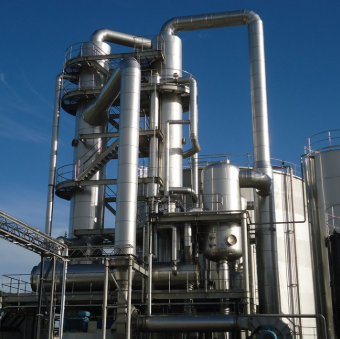
An Organic High Salt Wastewater Evaporator is specialized industrial treatment equipment designed for wastewater containing high salt concentrations, high COD levels, and difficult-to-degrade organic pollutants.
Its primary function is to separate water from dissolved and concentrated substances through controlled evaporation. Depending on wastewater characteristics and process requirements, the treatment system can be integrated with crystallization, solid-liquid separation, and other supporting technologies.
The equipment is intended to reduce the volume of wastewater requiring further disposal or treatment while creating opportunities for condensate reuse and concentrated material recovery.
Core Treatment Objectives
- Wastewater volume reduction: Remove a substantial portion of water through evaporation, reducing the volume of residual liquid.
- Salt concentration: Increase dissolved salt concentrations to support subsequent crystallization and separation.
- Organic pollutant management: Separate or concentrate non-volatile organic substances for appropriate downstream treatment.
- Water recovery: Collect and evaluate condensed vapor for potential reuse according to water quality requirements.
- Environmental compliance: Support an integrated treatment process designed to meet applicable discharge or zero-liquid-discharge objectives.
How Does It Differ from Conventional Wastewater Treatment?
Traditional biological treatment relies on microorganisms to break down biodegradable organic substances. Chemical treatment may use coagulation, oxidation, or precipitation to remove specific pollutants.
Evaporation technology works differently. It primarily separates water from non-volatile dissolved substances by utilizing differences in volatility. This makes it particularly valuable when conventional methods cannot efficiently handle high-salinity wastewater.
| Comparison Item | Conventional Treatment | Evaporation Treatment |
|---|---|---|
| Main mechanism | Biological or chemical pollutant removal | Water evaporation and separation |
| High salinity adaptability | Depends on process and microbial tolerance | Suitable for appropriately engineered high-salt streams |
| Salt concentration | Usually limited | Can concentrate dissolved salts |
| Water recovery | Depends on treatment configuration | Condensate can be collected and evaluated for reuse |
| Residual materials | Sludge and treated liquid | Concentrated liquid, crystals, and condensate |
3. How Does the Evaporation and Crystallization Process Work?
The basic principle of an Organic High Salt Wastewater Evaporator is to heat wastewater under controlled conditions, convert part of the liquid water into vapor, and separate the vapor from the concentrated solution.
When the vapor is condensed, recovered water can be collected. Meanwhile, dissolved salts and non-volatile substances remain in the concentrated liquid. If the concentration reaches the appropriate saturation conditions, crystallization can take place in a dedicated crystallization stage.
Step 1: Wastewater Collection and Preparation
Industrial wastewater is collected in a feed tank before entering the evaporation system. Preliminary analysis determines its salt concentration, COD, pH, temperature, suspended solids, and other relevant properties.
Depending on wastewater composition, pretreatment may include filtration, pH adjustment, oil removal, or chemical treatment to reduce suspended solids and prevent operational problems.
Step 2: Controlled Heating and Evaporation
The prepared wastewater enters the evaporator, where heat is transferred to the liquid through the heating system.
As the liquid temperature and operating pressure reach the required conditions, water begins to evaporate. The resulting vapor is separated from the concentrated liquid inside the equipment.
Vacuum operation may be considered when lower evaporation temperatures are beneficial for heat-sensitive organic components or process efficiency.
Step 3: Vapor Separation and Condensation
The generated vapor passes through a vapor-liquid separation section to reduce liquid droplet carryover. It is then directed to a condenser or an appropriate vapor recovery system.
After cooling, the vapor becomes liquid condensate. Its quality should be tested before deciding whether it can be reused in production, sent for further treatment, or discharged in accordance with applicable requirements.
Step 4: Concentration and Crystallization
As water is continuously removed, the remaining liquid becomes increasingly concentrated. When the operating conditions reach the required crystallization range, dissolved salts can begin to form solid crystals.
A crystallizer may be incorporated into the treatment line to control crystal formation and improve solid-liquid separation.
Step 5: Solid-Liquid Separation and Residue Management
Crystals can be separated from the mother liquor using suitable separation equipment, such as a centrifuge or filtration system.
The recovered solid materials should be evaluated for purity and potential reuse. Residual mother liquor containing concentrated organic pollutants may require additional treatment or compliant disposal.
Evaporation does not automatically destroy all organic pollutants. Volatile organic compounds may transfer into the vapor phase, while non-volatile compounds tend to remain in the concentrate. Vapor treatment, condensate quality control, and residual waste management must therefore be considered during process design.
4. Which Treatment Stages Are Important?
Stable wastewater evaporation depends on more than the evaporator itself. A complete treatment process must coordinate pretreatment, evaporation, vapor recovery, concentration, and final residue management.
Analyze salt composition, organic content, COD, pH, suspended solids, and wastewater flow rate. Accurate feed characterization provides the basis for equipment configuration.
Remove problematic suspended materials, adjust pH where necessary, and reduce components that could cause excessive foaming, scaling, or corrosion.
Control heating temperature, pressure, circulation rate, and liquid level to maintain stable heat transfer and evaporation performance.
Separate and collect condensed vapor. Monitor COD, conductivity, and other relevant water quality indicators to determine the appropriate reuse or further treatment route.
When salt recovery is required, optimize supersaturation, crystal growth, and solid-liquid separation conditions according to the salt composition.
Manage concentrated mother liquor, separated solids, and other residual materials according to their composition and applicable environmental regulations.
5. What Are the Main Benefits of the Equipment?
For industrial facilities handling complex wastewater, evaporation technology can provide several operational and environmental advantages when properly selected and integrated.
5.1 Effective Reduction of Wastewater Volume
Removing water from high-salt wastewater significantly reduces the volume of liquid requiring subsequent handling. This can lower transportation, storage, and downstream treatment demands.
5.2 Adaptability to Complex Wastewater Streams
Unlike biological processes that depend on microbial activity, evaporation relies primarily on thermal separation. It can therefore be considered for wastewater streams with high salinity and substantial concentrations of non-volatile organic substances.
However, feed composition must be evaluated carefully because volatile compounds, foaming materials, and heat-sensitive substances may require additional process measures.
5.3 Potential for Salt and Resource Recovery
When the salt composition and impurity levels are suitable, crystallization can help recover solid salts from concentrated wastewater.
Recovered materials must undergo quality testing before being considered suitable for reuse or commercial applications.
5.4 Condensate Recovery and Water Reuse
Condensed vapor provides an opportunity to recover water from industrial wastewater. Depending on its quality, the condensate may be suitable for certain process applications after additional polishing or treatment.
5.5 Support for Integrated Zero Liquid Discharge Systems
Evaporation and crystallization can serve as important stages in zero-liquid-discharge (ZLD) systems. By minimizing liquid wastewater discharge and converting concentrated streams into manageable residual products, these technologies support more comprehensive wastewater management strategies.
- Lower wastewater handling volume.
- Improved treatment options for difficult high-salinity streams.
- Potential water and salt resource recovery.
- Better integration with industrial wastewater management systems.
- Greater flexibility in designing customized treatment processes.
6. How Can Energy Consumption Be Controlled?
Energy consumption is one of the most important factors affecting the long-term operating cost of an industrial evaporator. Since evaporation requires thermal energy, buyers should evaluate energy efficiency before selecting equipment.
Use Mechanical Vapor Recompression Technology
Mechanical vapor recompression (MVR) technology recovers secondary vapor generated during evaporation. A compressor increases its pressure and temperature so that it can be reused as a heating medium.
This reduces the demand for fresh heating steam under suitable operating conditions. However, the actual energy performance depends on vapor properties, temperature rise, compressor efficiency, feed characteristics, and system configuration.
Consider Multi-Effect Evaporation
Multi-effect evaporation connects multiple evaporation stages. Secondary vapor from one effect can provide heat for another effect operating at a lower pressure and temperature.
This staged use of thermal energy improves heat utilization and can reduce fresh steam consumption compared with single-effect systems.
Improve Heat Recovery
Heat exchangers can recover energy from hot condensate and concentrated liquid streams to preheat incoming wastewater. Proper insulation also helps reduce heat loss throughout the system.
Maintain Stable Operating Conditions
Excessive fluctuations in feed flow, temperature, pressure, and concentration can reduce overall efficiency. Automated monitoring and appropriate operating control help maintain stable production conditions.
| Energy-Saving Measure | Operating Principle | Potential Benefit |
|---|---|---|
| MVR technology | Reuses compressed secondary vapor | Reduces fresh steam demand |
| Multi-effect evaporation | Uses vapor energy across multiple stages | Improves thermal utilization |
| Heat recovery | Recovers heat from hot process streams | Reduces feed heating requirements |
| Equipment insulation | Limits unnecessary heat loss | Improves thermal efficiency |
| Automated control | Maintains suitable operating parameters | Reduces avoidable operating fluctuations |
Not every wastewater stream requires the same energy-saving configuration. A technical comparison based on evaporation capacity, operating hours, utility prices, and wastewater characteristics is necessary to identify the most economical solution.
7. Which Industries Need This Treatment Solution?
Organic high-salt wastewater is generated across a wide range of industrial sectors. Its composition varies depending on raw materials, production processes, chemical reactions, and cleaning operations.
Chemical Manufacturing
Chemical production can generate wastewater containing dissolved inorganic salts, reaction by-products, solvents, and organic residues. Evaporation concentration provides a potential treatment option for suitable high-salinity streams.
Pharmaceutical Manufacturing
Pharmaceutical production wastewater may contain high COD, residual active ingredients, solvents, and inorganic salts. Evaporation can help concentrate non-volatile substances, while pretreatment and vapor management are essential for handling complex organic components.
Pesticide Production
Pesticide manufacturing may generate wastewater containing difficult-to-degrade organic substances and high salt concentrations. A properly designed evaporation system can support volume reduction and concentrate management.
Dyeing and Printing
Textile dyeing and printing processes consume substantial amounts of water and chemicals. Their wastewater may contain dyes, salts, auxiliaries, and organic pollutants. Evaporation and crystallization can be integrated into treatment systems for suitable wastewater streams.
Coal Chemical Industry
Coal chemical wastewater often contains complex organic compounds, dissolved salts, and other contaminants. Appropriate pretreatment and evaporation processes can help reduce liquid waste volume and support further treatment.
Electroplating and Surface Treatment
Electroplating operations generate wastewater containing dissolved salts, metal ions, and chemical additives. Before evaporation, heavy metals and other problematic components may need to be removed or controlled to prevent contamination of recovered materials and equipment damage.
| Industry | Typical Wastewater Characteristics | Treatment Considerations |
|---|---|---|
| Chemical manufacturing | High salinity, organic residues | Corrosion resistance and concentrate management |
| Pharmaceuticals | High COD, solvents, dissolved salts | Organic pollutant control and condensate testing |
| Pesticides | Complex organic compounds, high salt content | Pretreatment and vapor treatment |
| Dyeing and printing | Dyes, salts, chemical additives | Scaling prevention and salt separation |
| Coal chemicals | Complex organics and dissolved solids | Integrated treatment and stable operation |
| Electroplating | Salts and potentially toxic metal ions | Heavy metal pretreatment and material selection |
8. How Should Buyers Select the Right Evaporator?
Selecting an industrial wastewater evaporator requires a detailed understanding of the wastewater composition and the expected treatment objectives. Choosing equipment based only on daily wastewater volume may lead to insufficient capacity, excessive energy consumption, or frequent maintenance.
8.1 Evaluate Wastewater Composition
Before requesting a quotation, buyers should prepare representative wastewater analysis data.
- Total dissolved solids (TDS) and salt concentration.
- COD and, where relevant, BOD.
- Types and concentrations of dissolved salts.
- pH value and temperature.
- Suspended solids and potential scaling components.
- Organic solvents and volatile organic compounds.
- Corrosive substances and heavy metals.
8.2 Determine Treatment Capacity
Daily wastewater volume and required evaporation capacity are two different parameters. Buyers should clarify whether the specified capacity refers to feedwater throughput or actual water evaporation.
For example, a facility treating 50 tons of wastewater per day does not necessarily require an evaporator with an evaporation capacity of 50 tons per day. The required capacity depends on feed concentration, operating hours, and the desired final concentration.
8.3 Check Material Compatibility
High-salt wastewater may contain chlorides, acids, alkalis, or other corrosive substances. Materials used for heat exchange surfaces, pipelines, pumps, and tanks must be selected according to actual chemical conditions.
Stainless steel grades, special alloys, protective coatings, and non-metallic materials should be evaluated based on corrosion testing and engineering requirements rather than assumed to be universally suitable.
8.4 Compare Energy Consumption
Ask suppliers to provide estimated steam consumption, electricity consumption, cooling water demand, and other utility requirements under clearly defined feedwater and operating conditions.
For long-term industrial operation, total lifecycle cost is more meaningful than the initial purchase price alone.
8.5 Consider Automation and Maintenance
Automated control systems can monitor operating temperature, pressure, liquid level, flow rate, and other important parameters. These functions help operators identify abnormal conditions and maintain stable performance.
8.6 Evaluate the Supplier's Engineering Experience
A reliable equipment supplier should understand the relationship between wastewater characteristics, evaporation technology, material selection, and downstream treatment.
Buyers should request process proposals, equipment specifications, utility estimates, reference projects where available, and a clear explanation of the proposed treatment configuration.
Provide actual wastewater samples or laboratory analysis results whenever possible. A customized technical proposal based on real wastewater characteristics is more reliable than selecting a standard evaporator using capacity alone.
9. What Maintenance Practices Improve Equipment Reliability?
Regular maintenance helps protect heat transfer efficiency, prevent unexpected shutdowns, and extend equipment service life. High-salinity wastewater systems require particular attention because scaling and corrosion can gradually affect critical components.
Daily Inspection
- Check operating temperature and pressure.
- Monitor feed flow and evaporation performance.
- Inspect pumps, valves, and pipelines for leakage.
- Observe abnormal vibration, noise, or pressure fluctuations.
- Check liquid levels and condensate discharge conditions.
Regular Cleaning
Salt deposits and other contaminants can accumulate on heat transfer surfaces. Cleaning frequency should be determined according to wastewater composition and operating experience.
Appropriate chemical cleaning or mechanical cleaning methods may be used after evaluating deposit characteristics and material compatibility.
Inspect Corrosion-Sensitive Components
Regularly inspect pipelines, heat exchangers, seals, pumps, and other components exposed to corrosive wastewater. Early detection of corrosion helps prevent leakage and unexpected equipment damage.
Maintain Pumps and Electrical Systems
Check pump operating conditions, bearings, mechanical seals, motors, and electrical connections. Follow the manufacturer's lubrication and replacement schedules.
Review Operating Data
Recording evaporation capacity, energy consumption, cleaning frequency, and condensate quality helps identify changes in equipment performance. Historical operating data can also support more effective maintenance planning.
10. Common Operating Problems and Practical Solutions
Even a properly designed evaporation system may encounter operational challenges when wastewater composition changes or maintenance is insufficient. Understanding common problems helps operators respond before performance deteriorates.
| Common Problem | Possible Cause | Recommended Action |
|---|---|---|
| Reduced evaporation capacity | Scaling, poor heat transfer, insufficient heating energy | Inspect heat exchange surfaces and utility conditions |
| Frequent pipeline blockage | Premature salt crystallization or solid accumulation | Review concentration limits and discharge design |
| Excessive foaming | Surfactants or organic contaminants in feedwater | Evaluate pretreatment and suitable foam control |
| Poor condensate quality | Volatile organics or liquid droplet carryover | Check vapor separation and add appropriate condensate treatment |
| Corrosion and leakage | Unsuitable materials or aggressive wastewater chemistry | Review material compatibility and inspect affected components |
| High energy consumption | Heat loss, unstable operation, insufficient heat recovery | Optimize operating conditions and energy recovery |
Operators should avoid making major adjustments without understanding the underlying cause. Changes in feed concentration, heating temperature, pressure, and circulation rate should follow the equipment operating instructions and process design limits.
11. Frequently Asked Questions
Q1: What types of wastewater can an Organic High Salt Wastewater Evaporator treat?
It is designed for suitable industrial wastewater streams containing high concentrations of salts, high COD, and difficult-to-degrade organic pollutants. Typical applications include chemical, pharmaceutical, pesticide, dyeing and printing, coal chemical, and electroplating industries. Actual suitability depends on wastewater composition and engineering evaluation.
Q2: Can an evaporator remove organic pollutants completely?
Not necessarily. Evaporation separates water from dissolved substances according to their volatility. Non-volatile organic compounds generally remain in the concentrate, while volatile organic compounds may enter the vapor phase. Additional treatment may be necessary to achieve the required environmental standards.
Q3: Can the system recover clean water?
Yes, the vapor generated during evaporation can be condensed into recovered water. However, condensate quality depends on the wastewater composition, vapor separation efficiency, and the presence of volatile contaminants. Testing and additional treatment may be required before reuse.
Q4: Does the equipment support zero liquid discharge?
It can be an important component of a zero-liquid-discharge system. A complete ZLD solution may also require pretreatment, crystallization, solid-liquid separation, and appropriate management of residual solids and concentrated liquids.
Q5: How can salt scaling be prevented?
Scaling can be controlled through suitable pretreatment, concentration management, appropriate circulation conditions, regular cleaning, and proper crystallization design. The specific measures depend on salt solubility and wastewater composition.
Q6: Is MVR technology suitable for high-salt wastewater?
MVR can be suitable for many high-salt wastewater applications, provided that the feed composition, scaling tendency, operating temperature, and required temperature difference are compatible with the process. Technical evaluation is necessary before selecting the technology.
Q7: What information is needed to obtain an equipment quotation?
Buyers should provide daily wastewater volume, wastewater analysis, salt concentration, COD, pH, temperature, desired treatment capacity, operating hours, and expected treatment results. Additional information about available steam, electricity, cooling water, and installation conditions is also helpful.
Q8: How often does the evaporator require cleaning?
Cleaning frequency depends on wastewater composition, salt precipitation characteristics, operating conditions, and equipment design. Regular inspection of heat transfer performance and pressure changes helps determine an appropriate cleaning schedule.
Q9: Can recovered salt be reused or sold?
Potentially, yes. However, recovered salt quality depends on the original wastewater composition, separation efficiency, and the presence of organic or inorganic impurities. Laboratory analysis is necessary to determine whether the recovered material meets the requirements of its intended application.
Q10: Is a customized evaporation system better than standard equipment?
For wastewater with complex salt and organic compositions, customization can provide better alignment with actual operating requirements. The system should be designed according to wastewater properties, treatment objectives, available utilities, and the customer's site conditions.
12. Conclusion: Building a More Efficient Wastewater Treatment Process
Treating organic high-salt wastewater requires more than conventional purification methods. High salinity, high COD, complex organic pollutants, scaling, and corrosion can create significant challenges for industrial facilities.
An Organic High Salt Wastewater Evaporator provides a practical technological approach to reducing wastewater volume through evaporation concentration and crystallization separation. When integrated with suitable pretreatment, vapor recovery, condensate treatment, and residue management, it can support more efficient industrial wastewater management.
For buyers, the most important factors are accurate wastewater analysis, appropriate process selection, reliable material compatibility, energy efficiency, and long-term equipment maintenance.
Choosing an experienced equipment manufacturer and developing a treatment solution around actual wastewater characteristics can help improve operational stability and control overall treatment costs.
Looking for a Reliable Organic High Salt Wastewater Treatment Solution?
Jiangsu Grand Drying and Concentrating Equipment Co., Ltd. specializes in industrial drying, evaporation, and concentration equipment. We provide customized equipment solutions for various industrial wastewater treatment requirements.
Whether your project involves high-salinity wastewater, high-COD organic wastewater, evaporation concentration, or crystallization separation, our team can help evaluate your process requirements and discuss a suitable equipment configuration.
Contact us today to discuss your wastewater characteristics, processing capacity, and project requirements. Share your technical data with our team to explore a customized Organic High Salt Wastewater Evaporator solution for your facility.
Explore Organic High Salt Wastewater Evaporator
Email: [email protected]
Phone / WhatsApp: +86-13806152992
Website: www.yxglt.com