

How Does an Acid Making Falling Film Evaporator Improve Acid Concentration Efficiency?
2026-11-10
In modern chemical manufacturing, efficient acid concentration is essential for improving production capacity, controlling operating costs, and maintaining consistent product quality. However, conventional evaporation processes may encounter challenges such as severe corrosion, high steam consumption, uneven heat transfer, and equipment fouling. These problems can reduce production efficiency and increase maintenance requirements.
An Acid Making Falling Film Evaporator provides an engineered solution for suitable acid concentration applications. By distributing liquid into a thin film inside vertical heating tubes, this equipment promotes efficient heat transfer and controlled evaporation. When combined with appropriate materials, process configuration, and operating controls, it can support continuous and reliable industrial production.
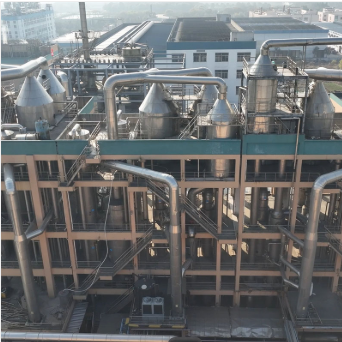
1. What Is an Acid Making Falling Film Evaporator?
An acid making falling film evaporator is an industrial evaporation system designed to remove water or other volatile components from suitable acid-containing solutions. Its main purpose is to increase the concentration of the target liquid while maintaining stable process conditions.
Unlike conventional equipment that relies on a large volume of liquid inside a heated vessel, a falling film evaporator uses vertical heating tubes. The feed liquid is distributed across the internal surfaces of these tubes and flows downward under gravity as a relatively thin film.
Heat passes through the tube walls from an external heating medium, typically steam. As the liquid film moves downward, part of its volatile content evaporates. The resulting vapor-liquid mixture is then separated, allowing concentrated liquid and secondary vapor to be collected through their respective outlets.
In acid-related industries, the actual application may involve sulfuric acid concentration or the treatment of specific acid-containing process streams. The design must be based on the exact chemical composition, concentration range, temperature, pressure, and vapor characteristics.
2. How Does an Acid Making Falling Film Evaporator Work?
The operating principle is based on gravity-driven liquid distribution and indirect heat exchange. A properly designed system maintains an even liquid film, provides sufficient heat transfer, and separates the generated vapor from the concentrated product.
Step 1: Feed Liquid Distribution
The dilute acid solution enters the feed system and passes through a distribution device located above the heating tubes. The distributor plays an important role in ensuring that the liquid reaches the internal tube surfaces evenly.
Uniform distribution is essential because insufficient liquid flow in certain tubes may cause local overheating, dry patches, or unstable evaporation. Feed flow and distribution pressure should therefore be monitored throughout operation.
Step 2: Formation of a Falling Liquid Film
After entering the heating tubes, the liquid flows downward along their internal walls under gravity. Instead of occupying the entire tube volume, it forms a thin flowing layer.
This arrangement provides a large effective heat-transfer surface while reducing the amount of liquid retained inside the heating section. The resulting short residence time can be beneficial for processes that require controlled thermal exposure.
Step 3: Heat Transfer and Evaporation
A heating medium transfers thermal energy through the tube walls. Depending on the process design, steam or another suitable heating source may be used.
As the liquid absorbs heat, its volatile components begin to evaporate. Operating temperature, pressure, feed concentration, and heating conditions determine the evaporation rate.
Step 4: Vapor-Liquid Separation
The vapor and remaining liquid leave the heating section and enter a separation vessel. The separator reduces liquid carryover and allows the vapor to be collected independently.
Where necessary, demisting and downstream vapor treatment equipment can be incorporated to manage entrained droplets and corrosive vapor.
Step 5: Concentrated Product Discharge
The concentrated acid solution is discharged from the system and transferred to the next production stage, storage equipment, or another processing unit.
Concentration is monitored through appropriate sampling and instrumentation to maintain the required product specifications.
3. What Are the Main Components of the System?
An industrial falling film evaporator consists of several interconnected components. Each one contributes to process stability, heat-transfer performance, product quality, and safe operation.
| Component | Main Function | Key Design Consideration |
|---|---|---|
| Feed system | Delivers acid solution into the evaporator | Chemical compatibility and stable flow |
| Liquid distributor | Distributes liquid across heating tubes | Uniform film formation |
| Heating tubes | Provide the heat-transfer surface | Corrosion resistance and thermal performance |
| Heating chamber | Transfers heat from the heating medium | Temperature and pressure control |
| Vapor separator | Separates vapor from concentrated liquid | Effective vapor-liquid separation |
| Circulation or discharge pump | Moves process liquid through the system | Acid compatibility and operating reliability |
| Control system | Monitors and adjusts operating parameters | Reliable sensors and protective interlocks |
The configuration can vary according to the acid type, processing capacity, evaporation duty, and downstream production requirements. For larger installations, the evaporator may also be integrated with condensers, vacuum equipment, vapor treatment systems, and automated cleaning arrangements.
4. Why Is Falling Film Technology Suitable for Acid Concentration?
Falling film evaporation offers several engineering advantages for suitable acid concentration processes. However, its suitability depends on the physical and chemical characteristics of the feed solution.
4.1 Efficient Heat Transfer
A thin liquid film provides a relatively short heat-transfer path. When the film is distributed evenly, heat can be transferred efficiently from the heating medium to the process liquid.
This arrangement helps improve evaporation performance and can reduce unnecessary thermal resistance compared with some conventional concentration methods.
4.2 Short Liquid Residence Time
Because the process liquid flows continuously through the heating tubes, the liquid inventory inside the heating section can be relatively low.
This feature helps limit prolonged thermal exposure and may reduce unwanted thermal changes in applications where product characteristics are sensitive to temperature.
4.3 Continuous Production Capability
A properly engineered falling film evaporator can operate as part of a continuous production line. Stable feed delivery, vapor separation, and concentrated liquid discharge support consistent processing.
4.4 Flexible Process Configuration
The equipment can be designed as a single-effect or multi-effect system. It may also be integrated with other evaporation technologies according to the required production capacity and energy strategy.
| Performance Aspect | Potential Benefit | Required Condition |
|---|---|---|
| Heat transfer | Efficient use of heating surfaces | Stable and uniform liquid distribution |
| Residence time | Reduced thermal exposure | Appropriate process flow and equipment sizing |
| Production | Continuous processing capability | Reliable pumps and process controls |
| Energy utilization | Potential for heat recovery | Suitable multi-effect or vapor-recompression design |
| Maintenance | Accessible heating sections and service components | Appropriate mechanical design and cleaning strategy |
5. How Can Corrosion and Scaling Be Controlled?
Corrosion resistance is one of the most important considerations when designing an acid making falling film evaporator. Acid solutions can attack metals at different rates depending on their concentration, temperature, impurities, and chemical environment.
5.1 Select Materials According to Actual Acid Conditions
There is no universal material suitable for every acid concentration process. Material selection must consider the complete operating environment rather than relying only on the acid name.
- Stainless steel: Certain grades may be suitable for specific chemical environments, but their compatibility must be verified for the actual acid concentration and temperature.
- Duplex alloys: May be considered for selected corrosive applications after detailed compatibility evaluation.
- Titanium: Can provide excellent resistance in certain chemical environments, although its suitability depends on the specific acid and process conditions.
- Specialty alloys and linings: May be required where conventional metals cannot provide adequate service life.
- Non-metallic materials: Certain fluoropolymers or other engineered materials may be considered for compatible low-temperature or auxiliary components.
The heating tubes, separators, pumps, valves, seals, and pipelines should all be evaluated. A corrosion-resistant heating tube alone cannot guarantee the reliability of the complete system.
5.2 Reduce Scaling and Deposits
Impurities, suspended solids, and changes in solution concentration may cause deposits to form on heat-transfer surfaces. These deposits reduce effective heat transfer and can increase pressure drop.
Practical control measures include:
- Analyzing feed composition before finalizing equipment design.
- Using suitable pretreatment or filtration where required.
- Maintaining stable feed distribution and liquid flow.
- Monitoring temperature differences and pressure drop.
- Developing a cleaning procedure compatible with the equipment materials and process chemistry.
5.3 Manage Corrosive Vapor
Acid evaporation may generate corrosive vapor or acid mist, depending on the process. The vapor handling system should therefore be designed with appropriate separators, condensers, mist removal equipment, ventilation, and treatment facilities.
Containment, pressure protection, leak detection, and suitable emergency procedures are also essential elements of a safe industrial installation.
6. Which Factors Affect Evaporation Efficiency?
The actual performance of an acid making falling film evaporator depends on the interaction of several operating and design parameters. A high-quality equipment configuration must consider these factors together.
Feed Concentration and Composition
The initial acid concentration determines the amount of volatile material that must be removed. Dissolved salts, suspended matter, and other impurities may also influence viscosity, boiling behavior, and scaling tendencies.
Operating Temperature and Pressure
Temperature affects vapor generation and heat-transfer driving force. Reduced operating pressure can lower the boiling temperature of suitable systems, but the resulting vapor pressure, material compatibility, and process requirements must be carefully evaluated.
Liquid Distribution and Flow Rate
A stable liquid film is essential for effective heat exchange. Excessively low flow may lead to incomplete wetting, while unsuitable flow conditions can affect film stability and separation performance.
Heat-Transfer Area
The heating surface must be sized according to the required evaporation capacity, available temperature difference, and expected overall heat-transfer coefficient.
Vapor Separation Performance
Inadequate separation may cause liquid droplets to enter the vapor outlet. This can lead to product loss, downstream corrosion, and additional treatment requirements.
7. How Can Energy Consumption Be Reduced?
Energy consumption has a direct impact on the operating cost of chemical production facilities. An appropriately configured falling film evaporator can improve energy utilization through efficient heat exchange and the recovery of usable process energy.
7.1 Apply Multi-Effect Evaporation
In a multi-effect system, vapor generated in one evaporation stage can serve as the heating source for a subsequent effect operating at a lower pressure and temperature.
This approach allows part of the thermal energy to be reused instead of relying entirely on fresh heating steam for every stage.
7.2 Consider Mechanical Vapor Recompression
Mechanical Vapor Recompression (MVR) uses a compressor to increase the pressure and temperature of suitable secondary vapor so that it can be reused as a heating medium.
This technology can significantly reduce fresh steam demand in appropriately designed applications. However, its economic feasibility depends on vapor characteristics, compressor requirements, electricity prices, operating conditions, and the corrosion characteristics of the process.
7.3 Optimize Heat Exchange and Insulation
Proper heating surface design, effective insulation, and minimized unnecessary heat loss help improve overall thermal efficiency. Regular inspection of heat-transfer surfaces also helps prevent performance deterioration.
7.4 Match Equipment Capacity to Production Requirements
Oversized equipment may increase initial investment and unnecessary energy use, while undersized equipment may restrict production output. Accurate process calculations are essential for achieving an appropriate balance.
8. What Are the Common Operating Challenges?
Even a well-designed evaporation system requires proper operation and maintenance. Recognizing early warning signs helps operators avoid prolonged downtime and expensive equipment damage.
| Common Problem | Possible Cause | Recommended Action |
|---|---|---|
| Low evaporation capacity | Insufficient heat transfer, low steam supply, or poor vacuum conditions | Inspect heating conditions, vacuum performance, and heat-transfer surfaces |
| Uneven evaporation | Blocked or poorly adjusted liquid distributor | Inspect distribution channels and stabilize feed conditions |
| Increasing energy consumption | Fouling, heat loss, or inefficient energy recovery | Check equipment cleanliness, insulation, and thermal integration |
| Rapid corrosion | Unsuitable material or unexpected chemical conditions | Review chemical analysis and material compatibility |
| Unstable product concentration | Fluctuating feed rate or operating pressure | Calibrate instruments and improve process control |
| Liquid carryover | Overloaded or inefficient vapor separator | Review separator capacity and mist removal arrangements |
Recommended Maintenance Practices
- Inspect heating tubes and liquid distribution devices regularly.
- Monitor corrosion indicators and inspect critical wetted components.
- Check pump seals, valves, connections, and pipeline integrity.
- Verify pressure, temperature, flow, and concentration instruments.
- Maintain condensers, vacuum equipment, and vapor treatment systems.
- Follow documented cleaning, shutdown, and restart procedures.
Cleaning and maintenance must follow equipment-specific procedures. Acid-compatible protective equipment, isolation, drainage, and verified neutralization or cleaning methods should be established by qualified personnel before maintenance begins.
9. How Should You Select the Right Equipment?
Choosing an acid making falling film evaporator requires more than comparing equipment dimensions or purchase prices. The system should be designed around the customer's actual production process and long-term operating objectives.
Before requesting a quotation, manufacturers and engineering teams should evaluate the following information.
Identify the acid involved, its concentration, impurities, suspended solids, and other relevant chemical characteristics. This information forms the basis of material selection and process design.
Provide the feed flow rate, initial concentration, target concentration, and required operating hours. These parameters help establish the evaporation duty and production capacity.
Specify available steam conditions, electricity supply, cooling water temperature, and other utility requirements. This information helps determine the most suitable energy configuration.
Request a detailed material evaluation for heating tubes, separators, pumps, pipelines, seals, and other wetted components.
Evaluate single-effect, multi-effect, and MVR-based arrangements where technically applicable. Compare initial investment, operating expenses, maintenance requirements, and expected production performance.
Check instrumentation, automatic control, alarms, pressure protection, emergency shutdown functions, and the proposed vapor treatment system.
A detailed technical proposal should include the process flow diagram, equipment configuration, material specifications, utility consumption estimates, operating conditions, and maintenance recommendations.
10. Why Work with an Experienced Evaporator Manufacturer?
Industrial acid concentration projects often involve complex process conditions. Equipment performance depends not only on the evaporator itself but also on engineering calculations, materials, fabrication quality, system integration, and commissioning support.
Jiangsu Grand Drying and Concentrating Equipment Co., Ltd. specializes in the research, development, design, and manufacturing of industrial drying and concentration equipment. With experience in evaporation and concentration technologies, the company provides engineered equipment solutions for different industrial processing requirements.
For acid concentration applications, working with an experienced manufacturer can help customers address several important project considerations:
- Process-oriented design: Equipment configuration based on actual feed properties, evaporation capacity, and final product requirements.
- Material selection: Evaluation of corrosion resistance according to the specific chemical environment.
- Customized engineering: System configuration tailored to production scale, available utilities, and site conditions.
- Energy optimization: Evaluation of suitable heat recovery, multi-effect evaporation, and vapor recompression options.
- System integration: Coordination of evaporation, separation, condensation, and associated auxiliary equipment.
Rather than selecting equipment based on general specifications alone, customers should discuss their process data with the engineering team to establish a technically suitable solution.
Learn more about the company's background and engineering capabilities: Jiangsu Grand Drying and Concentrating Equipment Co., Ltd..
Frequently Asked Questions (FAQ)
1. What is the main function of an acid making falling film evaporator?
Its main function is to concentrate suitable acid-containing solutions by evaporating water or other volatile components. It helps achieve the required concentration for subsequent production processes.
2. Can a falling film evaporator be used for sulfuric acid concentration?
Yes, falling film technology can be considered for suitable sulfuric acid concentration applications. However, the design requires careful evaluation of acid concentration, operating temperature, corrosion resistance, and vapor handling requirements.
3. What makes a falling film evaporator different from a conventional evaporator?
A falling film evaporator distributes liquid over the internal surfaces of vertical heating tubes. The liquid flows downward as a thin film, providing efficient heat transfer and relatively short residence time compared with some conventional evaporation arrangements.
4. Which materials are suitable for acid making falling film evaporators?
Material selection depends on acid type, concentration, temperature, impurities, and operating conditions. Stainless steel grades, duplex alloys, titanium, specialty alloys, or engineered linings may be considered after a chemical compatibility assessment.
5. How can the equipment reduce energy consumption?
Energy consumption can be optimized through efficient heat-transfer design, multi-effect evaporation, mechanical vapor recompression, heat recovery, and proper thermal insulation. The most suitable solution depends on the process and available utilities.
6. Can the equipment operate continuously?
Yes. A properly designed falling film evaporation system can support continuous production when feed distribution, heating, vapor separation, and product discharge remain stable.
7. What causes low evaporation efficiency?
Common causes include uneven liquid distribution, insufficient heating capacity, fouled heat-transfer surfaces, unstable vacuum conditions, and unsuitable process parameters. Systematic inspection can help identify the actual cause.
8. Can an acid making falling film evaporator be customized?
Yes. Industrial systems can be customized according to feed composition, required evaporation capacity, target concentration, material compatibility, energy resources, and site conditions.
9. What information is needed to obtain an equipment quotation?
Customers should prepare the acid type, feed concentration, feed flow rate, target concentration, operating temperature, available heating source, and required production capacity. Chemical composition and impurity information are also important for material selection.
10. How can manufacturers ensure safe operation?
Safe operation requires suitable corrosion-resistant materials, reliable pressure and temperature controls, appropriate vapor treatment, leak prevention, protective interlocks, and documented maintenance procedures. The complete installation should comply with applicable industrial safety regulations.
Looking for a Reliable Acid Making Falling Film Evaporator?
Choosing the right evaporation equipment can make a significant difference to production efficiency, energy utilization, equipment service life, and operating costs. Whether you are planning a new acid concentration project or upgrading an existing production line, a process-specific engineering solution is essential.
Jiangsu Grand Drying and Concentrating Equipment Co., Ltd. is ready to discuss your industrial evaporation requirements and provide customized equipment solutions based on your process conditions.
Have questions about evaporation capacity, corrosion-resistant materials, system configuration, or energy-saving options? Contact us today to discuss your project and explore a suitable acid making falling film evaporator for your production needs.