

How Does a Silicone Luggage Tag Improve Travel Baggage Identification?
2026-08-26
Article Summary: A reliable luggage identification solution can make travel more organized, reduce baggage confusion, and help travelers recognize their belongings quickly. Silicone Luggage Tag products combine flexibility, water resistance, visual appeal, and customization potential in a compact travel accessory. Unlike disposable paper labels or rigid identification tags, silicone designs can withstand repeated handling, changing weather conditions, and the everyday wear associated with airports, hotels, buses, cruises, and business trips. This article explains how Silicone Luggage Tags work, what design features matter, how businesses can customize them, and how to choose a practical solution for different travel applications.
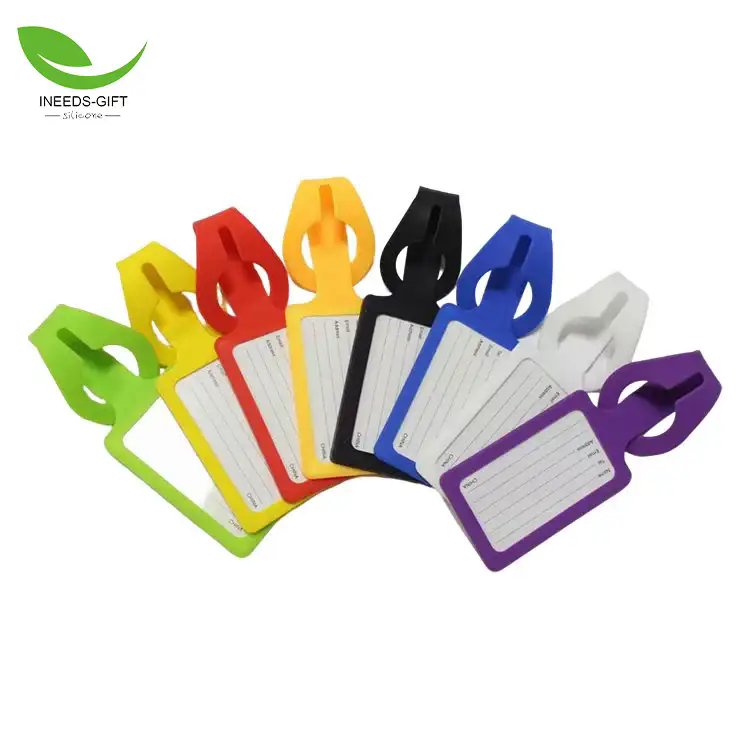
Table of Contents
- What Makes Silicone Luggage Tags Practical for Modern Travel?
- Why Does Silicone Work Well for Luggage Identification?
- Which Silicone Luggage Tag Designs Are Available?
- How Does a Silicone Luggage Tag Handle Daily Travel Conditions?
- How Can Silicone Luggage Tags Be Customized?
- What Should Buyers Consider Before Ordering?
- Where Can Customized Silicone Luggage Tags Be Used?
- How Does the Custom Production Process Work?
- How Does Silicone Compare With Other Luggage Tag Materials?
- What Common Buying Mistakes Should Be Avoided?
- Frequently Asked Questions
- Conclusion
What Makes Silicone Luggage Tags Practical for Modern Travel?
Airports, hotels, tour buses, cruise terminals, and corporate travel programs all create the same basic problem: travelers need to identify their luggage quickly. Similar-looking suitcases can make baggage collection frustrating, while paper labels can become damaged or unreadable after exposure to rain, friction, and repeated handling.
A Silicone Luggage Tag offers a practical alternative because the material combines flexibility with good resistance to moisture and everyday handling. Its soft construction can also reduce the risk of sharp edges catching on clothing, baggage belts, or other luggage.
For individual travelers, a bright silicone tag provides an immediate visual identifier. For businesses, it can become a useful branded accessory that carries a company name, logo, slogan, contact information, QR code, or other identification details.
INEEDS develops silicone gift products for applications where appearance, durability, customization, and production consistency all matter. Its Silicone Luggage Tags can be produced in different shapes, colors, identification formats, and branding configurations to meet different travel and promotional requirements.
Why Does Silicone Work Well for Luggage Identification?
The performance of a luggage tag depends heavily on its material. A tag may look attractive when new but become much less useful if it cracks, absorbs water, fades excessively, or separates from the luggage handle after repeated use.
Silicone is well suited to luggage accessories because it is flexible and non-porous. These characteristics help the tag remain functional when exposed to common travel conditions.
- Water resistance: Silicone does not readily absorb water, making it suitable for rainy journeys, wet baggage carts, and humid storage environments.
- Flexibility: The material can bend with the luggage handle instead of behaving like a rigid plastic plate.
- Impact tolerance: Flexible silicone can absorb everyday knocks and deformation during transportation.
- Easy cleaning: The smooth surface can generally be wiped or washed when dirt accumulates.
- Color versatility: Silicone can be produced in highly visible colors that make luggage easier to recognize.
- Branding flexibility: Logos, text, patterns, and other visual elements can be incorporated into the design.
These characteristics are particularly valuable when a luggage tag is expected to survive more than one trip. A reusable tag can also offer better long-term value than disposable identification labels.
Which Silicone Luggage Tag Designs Are Available?
There is no single luggage tag design suitable for every user. The right format depends on whether the priority is personal identification, brand visibility, group management, promotional distribution, or digital identification.
| Design Type | Main Feature | Typical Application |
|---|---|---|
| Classic ID Tag | Information panel with flexible strap | Personal travel and general luggage identification |
| Novelty Shape | Distinctive custom silhouette | Promotional campaigns, airlines, travel brands |
| Sleeve Style | Wraparound construction for luggage handles | Tours, cruises, events, group travel |
| QR-Based Tag | Printed QR code for digital information | Digital contact and lost-and-found solutions |
| NFC-Enabled Design | Embedded digital identification capability | Connected travel accessories and smart identification |
Design should not be selected based solely on appearance. Buyers should also consider attachment security, available information space, luggage handle size, branding requirements, and the expected frequency of use.
How Does a Silicone Luggage Tag Handle Daily Travel Conditions?
Luggage experiences considerably more handling than many people realize. Bags are moved through check-in counters, conveyor systems, security areas, storage rooms, vehicles, hotel luggage rooms, and aircraft cargo systems. During this process, tags may be exposed to pressure, friction, moisture, temperature changes, and accidental impacts.
A well-designed silicone tag should therefore address several practical requirements.
- Secure attachment: The strap or fastening mechanism should remain connected to the luggage handle during normal handling.
- Readable information: Contact information should remain visible rather than becoming blurred or easily erased.
- Flexible construction: The tag should tolerate bending without becoming excessively brittle.
- Visible appearance: A contrasting or distinctive color can help travelers recognize their bags faster.
- Cleanable surface: The material should be easy to maintain after exposure to dust or handling residue.
INEEDS describes internal production checks that include strap attachment testing, print rub testing, and heat-aging evaluation. These checks are useful because luggage accessories are often judged by their performance after repeated handling rather than by their appearance immediately after production.
How Can Silicone Luggage Tags Be Customized?
Customization is one of the main reasons companies choose silicone luggage tags instead of generic retail products. A custom tag can function as both an identification accessory and a small-scale brand communication tool.
Shape Customization
Manufacturers can create distinctive silhouettes based on a company's logo, product concept, travel theme, mascot, aircraft outline, destination symbol, or other visual idea. A recognizable shape can make the tag easier to identify on a crowded baggage carousel.
Color Customization
Color is important for both branding and visibility. Companies can select colors that align with their existing visual identity. Pantone-based color matching can help maintain greater consistency between the luggage tag and other promotional products.
Logo and Text
Brand elements may be incorporated through techniques such as embossing, debossing, screen printing, or color-filled details. Depending on the design, the front can feature a logo while the reverse side provides space for contact information.
Variable Information
Some applications require more than a standard logo. Tour operators, event organizers, and corporate travel programs may need individual names, numbers, codes, or other variable information. Digital printing can be considered when each unit requires different data.
QR Code and NFC Options
Modern luggage identification can also connect a physical accessory with digital information. A QR code may direct the finder to a contact or lost-and-found page. NFC technology can provide another route to digital identification when the application and infrastructure support it.
What Should Buyers Consider Before Ordering?
Ordering a customized product involves more than choosing a color and uploading a logo. A clear specification at the beginning can reduce revisions, production delays, and quality problems.
| Factor | Questions to Ask |
|---|---|
| Dimensions | Will the tag fit comfortably on different luggage handles? |
| Attachment | Can the strap withstand repeated pulling and bending? |
| Information | Is there enough space for the required contact details? |
| Branding | Which logo, colors, text, and finishing methods are required? |
| Quantity | Is a standard shape sufficient, or is a new mold necessary? |
| Delivery | When must samples and mass production be completed? |
These questions are especially important for promotional campaigns with fixed event dates. If a new mold is required, tooling time needs to be included in the project schedule rather than treating production lead time as the only deadline.
Where Can Customized Silicone Luggage Tags Be Used?
The potential applications extend beyond individual vacation travel. Because silicone can be customized in shape and appearance, the same basic product concept can support several commercial scenarios.
- Airlines: Branded tags can be included in loyalty programs, promotional packages, or passenger merchandise.
- Travel agencies: Tour operators can distribute matching tags to members of organized groups.
- Hotels and resorts: Custom tags can become welcome gifts or loyalty-program merchandise.
- Corporate travel programs: Companies can provide employees with branded travel accessories.
- Cruise operators: Group identification tags can help passengers recognize assigned luggage.
- Schools and student groups: Bright colors and personalized designs can simplify baggage identification during trips.
- Events and exhibitions: Luggage tags can serve as practical promotional giveaways instead of purely decorative merchandise.
- Retail brands: Travel-themed accessories can be added to merchandise collections or gift sets.
For promotional use, the best design usually balances brand visibility with actual usability. A tag that looks impressive but cannot be attached securely or does not provide useful identification space is less valuable to the end user.
How Does the Custom Production Process Work?
A structured production workflow helps turn a design concept into a consistent finished product.
- Requirement confirmation: The buyer provides the intended dimensions, quantity, artwork, colors, logo, information area, and application requirements.
- Design development: The manufacturer reviews the artwork and determines whether an existing mold or a new mold is appropriate.
- Tooling: A custom mold is produced when the desired shape cannot be achieved with an existing design.
- Sample approval: Pre-production samples allow the buyer to check dimensions, colors, branding, attachment structure, and overall appearance.
- Mass production: Approved specifications are transferred to the production line.
- Inspection: Finished products are checked for appearance, printing, attachment quality, and other agreed requirements.
- Packaging: The tags are prepared for shipment according to the buyer's packaging and labeling needs.
INEEDS states that its production system includes automated equipment and vacuum vulcanization presses, while custom tooling is supported by an in-house machining capability. According to the company's product information, standard mass production after sample approval commonly takes around 15–25 business days, while some standard-shape rush orders may be completed faster depending on production capacity.
How Does Silicone Compare With Other Luggage Tag Materials?
Different materials can work for luggage identification, but they provide different balances of durability, cost, appearance, and customization.
| Material | Strength | Limitation | Best Fit |
|---|---|---|---|
| Silicone | Flexible, water-resistant, highly customizable | Custom molds can increase initial tooling cost | Reusable travel and promotional tags |
| Plastic | Rigid and widely available | Some rigid plastics can crack under impact or cold conditions | Budget-oriented identification |
| Leather | Premium appearance | Higher cost and greater sensitivity to moisture | Premium travel accessories |
| Paper | Low cost and easy to print | Short service life and poor moisture resistance | Temporary baggage identification |
Silicone is particularly attractive when the buyer wants a reusable product that combines practical performance with strong visual customization.
What Common Buying Mistakes Should Be Avoided?
Many problems with customized luggage tags originate before manufacturing begins. Careful planning can prevent avoidable issues.
- Choosing appearance before function: A visually attractive shape is not useful if the strap cannot fit the intended luggage handle.
- Ignoring information space: Buyers should determine exactly what information must be displayed before finalizing the artwork.
- Using overly complicated artwork: Extremely fine details may not reproduce effectively at small tag dimensions.
- Skipping a pre-production sample: A sample provides an opportunity to identify problems before committing to the complete quantity.
- Underestimating tooling time: New molds require additional planning and should be considered when setting the delivery schedule.
- Focusing only on unit price: Material quality, mold cost, printing method, inspection, packaging, and delivery all affect the actual project cost.
- Failing to define quality requirements: Buyers should agree on acceptable standards for color, printing, dimensions, attachment strength, and surface finish.
Frequently Asked Questions
Can a Silicone Luggage Tag be used in rainy conditions?
Yes. Silicone is naturally resistant to water absorption, making it suitable for outdoor travel and wet environments. However, the overall water resistance of a finished tag also depends on its printing, inserts, embedded electronics, and construction.
Can I put my company logo on a Silicone Luggage Tag?
Yes. Logos can generally be incorporated using embossing, debossing, screen printing, color filling, or other suitable methods. The most appropriate technique depends on the artwork, surface design, quantity, and desired appearance.
Can Silicone Luggage Tags have custom shapes?
Yes. Custom molding can be used to create distinctive silhouettes. Custom shapes are particularly useful for brands that want the luggage tag itself to communicate a product theme or corporate identity.
Can both sides of a luggage tag be customized?
Yes. A two-sided design can place branding on one side and traveler information on the other. This approach makes better use of the available surface while keeping the visual design organized.
Are QR codes suitable for Silicone Luggage Tags?
QR codes can be incorporated when the printed size, contrast, and scanning distance are properly considered. A QR-based tag can connect physical luggage with a digital contact or identification page.
What is the minimum order quantity for customized tags?
The MOQ depends on the design and production method. INEEDS indicates that custom shapes requiring a new mold may have a higher MOQ, while products based on existing shapes with added branding can have a lower MOQ. Buyers should confirm the exact quantity with the manufacturer based on their design.
How long does customized Silicone Luggage Tag production take?
Production time depends on tooling, sample approval, order quantity, customization complexity, and factory capacity. INEEDS indicates that mass production commonly takes approximately 15–25 business days after pre-production sample approval for its standard workflow.
Can Silicone Luggage Tags be used as promotional gifts?
Yes. Their practical travel function gives them an advantage over promotional products that are purely decorative. Airlines, travel agencies, hotels, tour operators, corporations, and event organizers can use custom tags to combine everyday utility with brand exposure.
Conclusion
A luggage tag has a simple job, but its material and construction determine whether it remains useful after repeated travel. A well-designed Silicone Luggage Tag can provide flexible attachment, water resistance, strong visual identification, easy maintenance, and extensive customization possibilities.
For businesses, the product can serve an additional purpose. Custom colors, shapes, logos, text, QR codes, and other identification features can turn an ordinary travel accessory into a practical branded item. The key is to design around real user requirements rather than focusing exclusively on appearance.
INEEDS provides customized silicone luggage tag solutions covering design development, color matching, molding, printing, inspection, and production. Whether the requirement is a standard branded tag or a completely customized travel accessory, defining the application, quantity, artwork, attachment method, and delivery schedule at the beginning can make the entire procurement process more efficient.
Looking for Customized Silicone Luggage Tags?
If you need durable, distinctive, and professionally customized luggage tags for travel merchandise, corporate gifts, promotional campaigns, or group travel programs, INEEDS can help turn your concept into a practical finished product. Share your logo, design requirements, quantity, and target delivery date with the team to discuss the right solution. Contact us today to explore customized Silicone Luggage Tag options and start your project.