
How Does a Rubber Inflatable Core Mold Improve Custom Boat Manufacturing?
2026-09-01
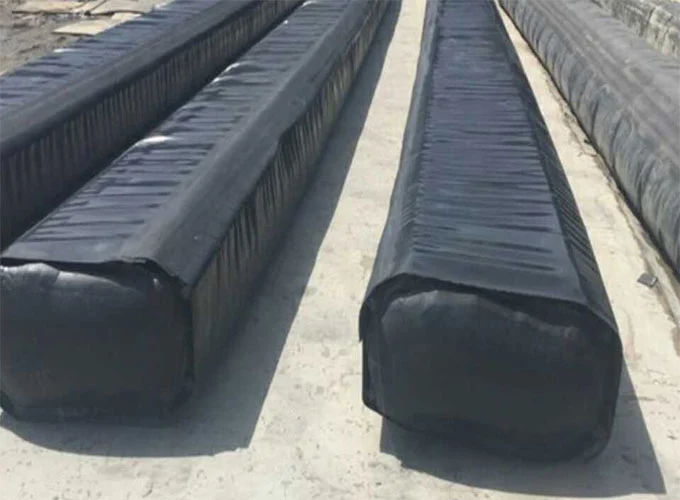
A Rubber Inflatable Core Mold is a flexible, reusable forming solution designed to create hollow structures with controlled dimensions and smooth internal surfaces. By combining reinforced rubber, controlled inflation pressure, and flexible geometry, this type of mold can simplify molding operations while reducing the limitations associated with rigid tooling. For manufacturers working with marine products, one of its most valuable advantages is support for customized boat shapes and hull configurations. Qingdao Aorunda Rubber Industry Co., Ltd. provides rubber inflatable core molds that can be customized according to dimensions, shapes, and application requirements, making them suitable for projects where conventional fixed molds are difficult to adapt.
What Is a Rubber Inflatable Core Mold?
A Rubber Inflatable Core Mold is generally manufactured from synthetic or natural rubber combined with high-strength reinforcement fabric. The reinforced structure provides pressure resistance, while the rubber body offers flexibility and elasticity.
Unlike a rigid steel mold, an inflatable core mold can be expanded to the required working dimensions and deflated after the forming process. This makes removal easier and allows the mold to be reused when appropriate.
The basic working principle is straightforward:
- Position the deflated mold in the required area.
- Inflate it to the specified working pressure.
- Secure it to prevent unwanted movement.
- Complete the molding or casting process.
- Deflate the mold after the material has sufficiently set.
- Remove, clean, inspect, and store the mold for subsequent use.
For construction applications, this process can replace certain conventional steel, wooden, or other rigid core-forming methods.
Why Is It Important for Customized Boat Shapes?
Boat manufacturing frequently involves different hull profiles, internal spaces, dimensions, and structural requirements. A single rigid mold may be unsuitable when a manufacturer needs multiple customized designs.
This is where inflatable tooling can provide an important advantage.
A custom Rubber Inflatable Core Mold can be designed around the required dimensions and geometry instead of forcing the project to conform to a standard mold. Flexible inflatable mandrels are also used in composite manufacturing because they can be deflated after curing, making removal from enclosed structures considerably easier.
Supporting Different Boat Designs
For customized marine projects, the mold can potentially be developed according to:
| Customization Item | Application Value |
|---|---|
| Length and diameter | Matches different project dimensions |
| Cross-sectional shape | Supports non-standard internal structures |
| Curved geometry | Helps accommodate complex profiles |
| Wall thickness | Can be designed according to requirements |
| Inflation configuration | Supports controlled forming pressure |
| Connection/valve position | Improves operational convenience |
| Special boat geometry | Helps support customized boat development |
Boat customization is particularly important for manufacturers producing different vessel models, prototypes, special-purpose marine structures, or limited-production designs.
Instead of investing in completely new rigid tooling for every variation, a flexible inflatable solution can provide greater adaptability during development and production.
What Are the Main Benefits?
1. Flexible Shape Adaptation
The biggest strength of a Rubber Inflatable Core Mold is flexibility. It can be manufactured in different sizes and shapes according to project requirements.
Qingdao Aorunda Rubber Industry Co., Ltd. states that customized production is available for different-shaped rubber inflatable core molds based on customer dimensions, shapes, and construction requirements.
For boat-related applications, this capability is valuable because customized hull and internal geometries may not correspond to standard tooling.
2. Easier Demolding
Rigid molds can sometimes be difficult to remove from enclosed or curved structures. An inflatable mold solves part of this problem through controlled deflation.
Once the forming process is completed, the mold can be deflated and extracted, reducing the need for complicated disassembly.
This principle is also established in inflatable mandrel applications for composite shells, where releasing internal pressure allows the flexible mandrel to collapse and facilitates removal.
3. Reusable Tooling
When properly operated, cleaned, inspected, and stored, inflatable core molds can be reused multiple times. Aorunda notes that its rubber inflatable core molds can be reused dozens of times under standardized operating and maintenance conditions, although actual service life depends on working conditions and handling.
This can make them attractive for manufacturers seeking to control tooling costs.
4. Reduced Storage Requirements
After deflation, the mold occupies substantially less space than a comparable rigid structure. This can simplify transportation and storage, especially when multiple mold sizes are required.
5. Custom Engineering Support
A professional manufacturer should not simply supply a rubber product. The mold needs to correspond to the customer's application.
Qingdao Aorunda Rubber Industry Co., Ltd. focuses on customized rubber inflatable core molds and other engineered rubber products, with production capabilities supported by professional rubber-processing and testing equipment.
Rubber Inflatable Core Mold vs. Traditional Rigid Mold
Choosing the right tooling method depends on production volume, geometry, application, and required precision.
| Feature | Rubber Inflatable Core Mold | Traditional Rigid Mold |
|---|---|---|
| Flexibility | High | Limited |
| Custom shapes | Highly adaptable | Requires dedicated tooling |
| Demolding | Deflate and remove | May require disassembly |
| Storage | Space-efficient after deflation | Requires larger storage area |
| Reuse | Multiple uses possible | Usually reusable |
| Complex enclosed shapes | Suitable for many applications | Can be challenging |
| Boat customization | Strong advantage | Higher tooling commitment |
The comparison does not mean inflatable tooling replaces every rigid mold. Instead, it offers a practical alternative when flexibility, customized geometry, easier extraction, and tooling adaptability are important.
How Does It Improve Production Efficiency?
A well-designed Rubber Inflatable Core Mold can streamline several stages of production.
First, workers can position the deflated mold more easily than a large rigid core. After positioning, controlled inflation establishes the required shape. Once the forming operation is complete, deflation simplifies extraction.
This reduces unnecessary handling and can make the production workflow more straightforward.
For custom boat projects, the benefit can be even more significant. Manufacturers may need to test different dimensions or produce special hull configurations before committing to large-scale production. Flexible tooling can help support this development process.
What Should Buyers Consider Before Ordering?
Not every inflatable mold should be treated as a standard product. Important parameters should be confirmed before production.
Key specifications include:
- Required length and diameter
- Overall shape and cross-section
- Working pressure
- Reinforcement structure
- Rubber material
- Operating temperature
- Valve configuration
- Expected frequency of reuse
- Installation and removal method
- Boat or structure geometry
- Required customization level
Working pressure is particularly important. Aorunda provides different recommended inflation pressures according to mold diameter and emphasizes that over-inflation should be avoided.
For custom marine applications, buyers should therefore provide drawings, dimensions, photographs, 3D models, or detailed technical requirements whenever possible.
Why Choose Qingdao Aorunda Rubber Industry Co., Ltd.?
Qingdao Aorunda Rubber Industry Co., Ltd. has focused on engineered rubber products for decades. Its product range includes rubber inflatable core molds, marine airbags, rubber fenders, pipeline plugging airbags, and other rubber products. The company reports ISO 9001 and CCS-related certifications and operates professional rubber production and testing facilities.
For customers requiring customized tooling, Aorunda's ability to develop different sizes and special-shaped rubber inflatable core molds is an important advantage.
Most importantly, customers working on customized boat projects can communicate their required boat shape, hull dimensions, internal geometry, and production requirements to determine an appropriate inflatable core mold design.
What Results Can Users Expect?
When correctly selected and operated, a Rubber Inflatable Core Mold can provide several practical results:
- More flexible tooling for customized products
- Easier installation and removal
- Better adaptability to special shapes
- Reduced dependence on rigid tooling
- Potentially lower tooling and storage requirements
- Reusable forming capability
- Better support for customized boat development
- More efficient handling during production
The final performance depends on material selection, mold design, working pressure, operating conditions, and maintenance.
FAQ
Can a Rubber Inflatable Core Mold support custom boat shapes?
Yes. Customization is one of its major advantages. The mold can be designed according to required dimensions, shapes, and application conditions. This makes it particularly useful for custom boat and marine structure projects where standard tooling cannot meet the required geometry.
Can the mold be reused?
Yes. With correct inflation, demolding, cleaning, inspection, and storage, inflatable core molds can be reused. Actual service life depends on operating conditions and handling practices.
What information should I provide for a customized mold?
Ideally, provide the required length, diameter, cross-sectional shape, working environment, pressure requirements, drawings or 3D files, and details about the boat or structure being manufactured.
Is an inflatable core mold suitable for complex shapes?
It can be suitable for many non-standard and curved structures because rubber provides greater flexibility than rigid tooling. The feasibility should be evaluated according to the specific geometry and manufacturing process.
Conclusion
A Rubber Inflatable Core Mold offers a combination of flexibility, reusable tooling, convenient demolding, and customization that can address many challenges faced by modern manufacturers. Its greatest value is not simply its ability to inflate and deflate, but its ability to adapt to different product geometries—including customized boat shapes.
For marine manufacturers, boat builders, engineering contractors, and companies developing special-purpose vessels, customized inflatable tooling can provide a more adaptable approach to production and product development.
If you are looking for a custom Rubber Inflatable Core Mold designed around your boat shape, dimensions, or specific production requirements, Qingdao Aorunda Rubber Industry Co., Ltd. can provide professional customization and technical support. Contact us to discuss your project requirements and find a suitable inflatable core mold solution for your application.