

How Does a Rubber Grommet Combine Sealing and Edge Protection?
2026-09-30
A cable passes through a punched hole in a metal enclosure. The hole edge is sharp. Over time, vibration causes the cable insulation to rub against the edge. The insulation wears through, the conductor contacts the metal, and a short circuit occurs. The equipment fails. The root cause is not the cable or the enclosure. It is the missing Rubber Grommet. A grommet is a molded rubber component that fits into the hole and provides two functions: it covers the sharp edge and it seals the gap between the cable and the hole. This dual function is what makes the grommet essential in electrical panels, automotive bodies, and industrial machinery. This guide explains how the grommet achieves both functions and how to select the right one.
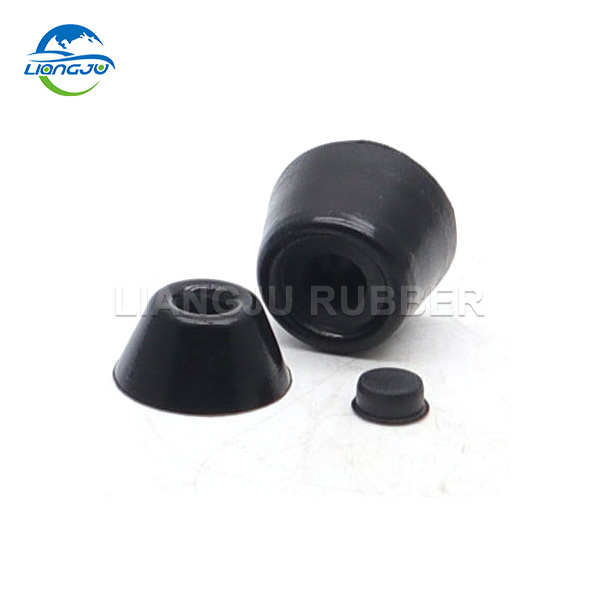
1. What Are the Two Functions of a Rubber Grommet?
The first function is edge protection. The grommet is molded from an elastomer that is softer than the cable insulation. When the cable rubs against the grommet, the grommet deforms slightly and absorbs the abrasion. The cable insulation remains intact. The second function is sealing. The grommet has an outer groove that snaps into the hole and an inner hole that grips the cable. The interference between the grommet and the cable, and between the grommet and the hole, creates a barrier against dust, water, and air. The sealing performance is measured by the ingress protection (IP) rating. The table below shows the relationship between grommet design and IP rating.
| Grommet design | Edge protection | Sealing mechanism | Typical IP rating |
| Open grommet (no inner hole) | Yes | None | IP00 |
| Standard grommet with inner hole | Yes | Interference fit on cable | IP54 – IP65 |
| Grommet with sealing lip | Yes | Lip contacts cable circumferentially | IP65 – IP67 |
| Grommet with adhesive seal | Yes | Adhesive bonds to panel | IP67 – IP68 |
| Split grommet (for retrofitting) | Yes | Interference fit, lower sealing | IP54 |
In our factory, we manufacture Rubber Grommet units in all of these designs. The most common design for electrical enclosures is the standard grommet with an inner hole and a sealing lip. This design provides IP65 protection, which is sufficient for most industrial environments. Xiamen Liangju Rubber Technology Co., Ltd. has been producing rubber grommets for over 12 years.
2. How Does Material Hardness Affect Edge Protection and Sealing?
The hardness of the rubber determines how the grommet performs. A softer rubber (lower durometer) provides better sealing because it conforms more easily to the cable and the hole. A harder rubber (higher durometer) provides better edge protection because it resists cutting and abrasion. The optimal hardness depends on the application. For a static application where the cable does not move, a softer rubber is preferred for sealing. For a dynamic application where the cable vibrates or moves, a harder rubber is preferred for edge protection. The table below shows the recommended hardness for different applications.
| Application | Recommended hardness (Shore A) | Material | Reason |
| Static cable pass-through (indoor) | 40 – 50 | EPDM | Soft, good sealing |
| Static cable pass-through (outdoor) | 50 – 60 | EPDM or silicone | UV and weather resistant |
| Vibrating cable (automotive) | 60 – 70 | Nitrile (NBR) | Hard, abrasion resistant |
| High temperature (engine compartment) | 60 – 70 | Silicone | Temperature resistant to 200°C |
| Chemical exposure | 60 – 70 | Viton (FKM) | Chemical resistant |
In our factory, we measure the hardness of every batch using a Shore A durometer. The hardness must be within ±5 points of the specification. We also test the tear strength and the compression set. A grommet with a high compression set will lose its sealing force over time. Our Rubber Grommet units are made from EPDM, nitrile, silicone, and Viton, depending on the application.
3. What Are the Design Features That Improve Sealing?
The sealing performance of a Rubber Grommet is determined by three design features. The first is the inner diameter. The inner diameter must be smaller than the cable diameter to create an interference fit. A typical interference is 10 to 20 percent of the cable diameter. If the interference is too small, the seal will leak. If it is too large, the grommet will be difficult to install and may split. The second feature is the sealing lip. A lip that contacts the cable over a narrow band creates a high contact pressure, which improves the seal. The third feature is the outer groove. The groove must match the panel thickness. If the groove is too wide, the grommet will be loose. If it is too narrow, the grommet will not snap into place. The table below shows the recommended dimensions for a standard grommet.
| Parameter | Recommended value | Measurement method |
| Cable diameter range | 3 – 50 mm | Caliper |
| Inner diameter interference | 10 – 20% of cable diameter | Calculation |
| Panel thickness range | 0.5 – 4.0 mm | Micrometer |
| Groove width | Panel thickness + 0.2 mm | Optical comparator |
| Sealing lip contact width | 0.5 – 1.0 mm | Microscope |
Installation tip: To install a Rubber Grommet without damaging it, lubricate the inner hole with a small amount of soapy water or silicone grease. Push the grommet into the hole by hand or with a blunt tool. Do not use a sharp tool, as this can cut the rubber. Once the grommet is seated in the hole, pass the cable through the inner hole. The interference fit will seal the cable. If the grommet is difficult to install, check the panel thickness and the inner diameter against the specification.
4. When Should a Split Grommet Be Used Instead of a Solid Grommet?
A split grommet has a slit that allows it to be installed around a cable that is already terminated. This is useful for retrofitting or for repairing a cable that cannot be disconnected. However, the split reduces the sealing performance because the slit creates a leak path. A split grommet is typically rated IP54, while a solid grommet of the same material and design is rated IP65. The table below compares the two types.
| Feature | Solid grommet | Split grommet |
| Installation | Requires cable to be disconnected | Can be installed around existing cable |
| Sealing performance | IP65 – IP67 | IP54 (slit creates leak path) |
| Edge protection | Excellent | Good (slit may open under vibration) |
| Typical application | New assembly | Retrofit or repair |
| Cost | Lower | Higher (more complex mold) |
In our factory, we recommend a solid grommet for all new assemblies. For retrofit applications where the cable cannot be disconnected, a split grommet is the only option. We also offer a split grommet with an adhesive seal that restores the IP65 rating by bonding the slit closed after installation. Xiamen Liangju Rubber Technology Co., Ltd. manufactures both solid and split grommets in a range of sizes and materials.
Frequently Asked Questions About Rubber Grommets
Summary for Assembly Engineers and Designers
A Rubber Grommet combines edge protection and sealing in a single component. The edge protection prevents cable abrasion, and the sealing prevents dust and water ingress. The performance depends on the material hardness, the inner diameter interference, the sealing lip design, and the outer groove dimensions. By selecting the right grommet for the cable and panel, engineers can eliminate a common cause of electrical failure. Xiamen Liangju Rubber Technology Co., Ltd. has been manufacturing rubber grommets for over 12 years and provides full technical support for our customers.
Xiamen Liangju Rubber Technology Co., Ltd. manufactures Rubber Grommet units in EPDM, nitrile, silicone, and Viton, in a range of standard sizes and custom configurations. We provide material certificates and dimensional inspection reports for all of our products.