

How Does a Large Diameter Flexible Flanged Rubber Hose Reduce Vibration and Noise in Pump Connections
2026-11-18
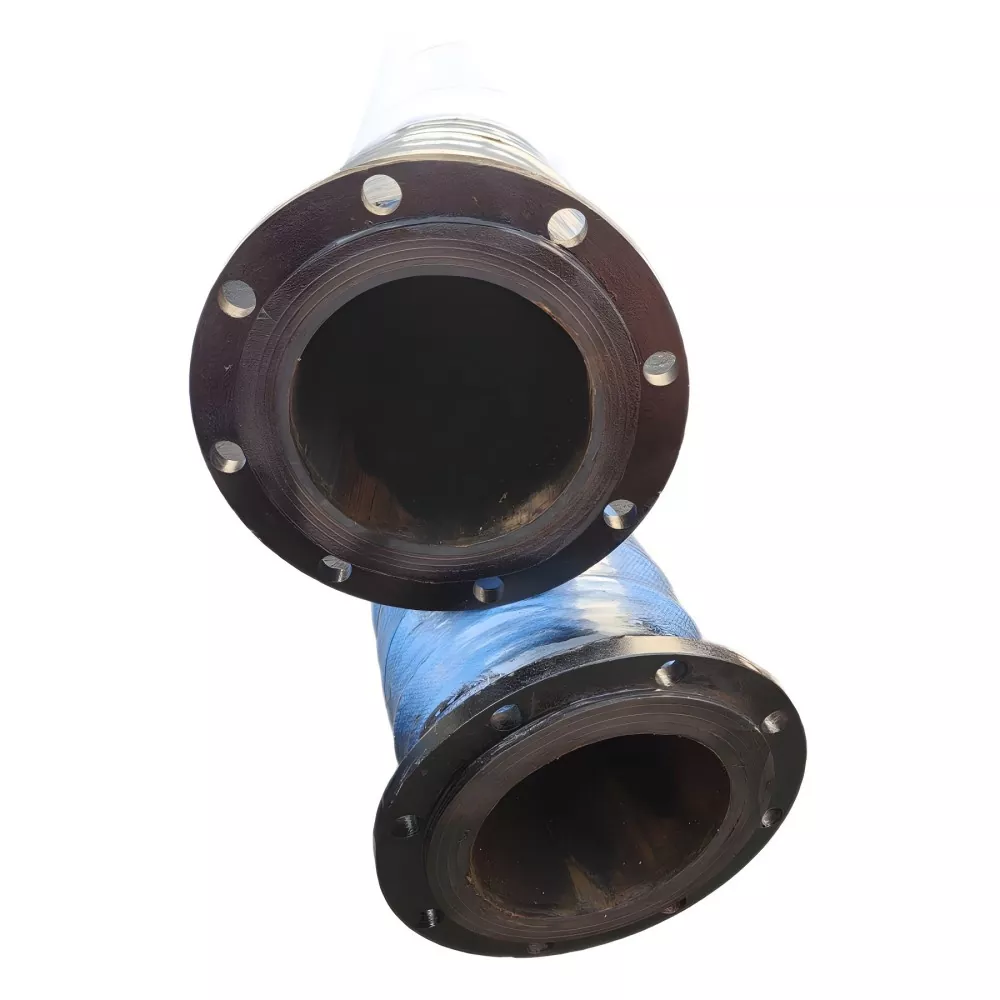
Pump systems generate continuous mechanical vibration and flow-induced noise that travel through rigid piping and into structures, causing fatigue, loosening of joints, and uncomfortable working environments. A Large Diameter Flexible Flanged Rubber Hose from JIDONGDA addresses these problems at the source by introducing a resilient, flanged connection between the pump and the pipeline. This blog explains the mechanisms behind vibration and noise reduction, the design features that matter most, and how to select the right product for demanding applications.
The Core Mechanisms of Vibration and Noise Reduction
A Large Diameter Flexible Flanged Rubber Hose works through several complementary physical principles:
-
Elastic decoupling: The rubber body breaks the rigid path between pump and pipe, preventing structure-borne vibration from propagating into the building or skid.
-
Damping: Rubber's high internal damping converts vibration energy into low-grade heat instead of transmitting it.
-
Expansion and misalignment compensation: The flexible element absorbs thermal movement, installation tolerances, and minor misalignment, reducing stress at flanges.
-
Flow noise attenuation: The smooth inner rubber layer and flexible wall damp pressure pulsations and turbulent noise from the pump discharge.
Key Design Features That Matter
| Feature | Function | Benefit |
|---|---|---|
| Reinforced rubber body (NBR/EPDM) | Absorbs vibration and pressure pulsation | Longer pump and pipe life |
| Integral flanges (carbon steel/stainless) | Rigid, leak-free connection | Easy bolting, no field fabrication |
| Multiple reinforcement layers | Withstands high pressure | Safe operation in large-diameter lines |
| Smooth bore liner | Reduces turbulence | Lower flow noise |
| Optional control rods | Limits axial movement | Protects hose under surge |
JIDONGDA manufactures Large Diameter Flexible Flanged Rubber Hose with these features engineered for water treatment, HVAC, marine, and mining pump connections.
Selection and Installation Guidance
| Parameter | Recommendation |
|---|---|
| Diameter match | Select bore equal to or slightly larger than pipe ID |
| Pressure rating | Exceed maximum system pressure with safety margin |
| Media compatibility | Match rubber compound to fluid and temperature |
| Installation length | Allow free flex; avoid stretch or compression |
| Support | Use control rods where axial thrust is high |
Correct installation amplifies the benefits: align flanges, tighten bolts evenly, and avoid twisting the hose during assembly.
FAQ
Q: What rubber compound is best for a Large Diameter Flexible Flanged Rubber Hose in pump connections?
A: EPDM suits hot water and steam-adjacent service, NBR handles oils and fuels, and neoprene works well in marine and outdoor environments; the choice depends on media, temperature, and exposure.
Q: Can a Large Diameter Flexible Flanged Rubber Hose absorb both vibration and thermal expansion?
A: Yes, the flexible rubber body simultaneously decouples vibration and accommodates axial, lateral, and angular movement, which reduces stress on pump flanges and connected piping.
Q: How often should a Large Diameter Flexible Flanged Rubber Hose be inspected after installation?
A: Inspect at commissioning, then every six to twelve months for cracks, bulging, flange looseness, or surface degradation, and replace immediately if any abnormality is found.
Contact Us
For pump connections that demand reliable vibration and noise control, JIDONGDA provides Large Diameter Flexible Flanged Rubber Hose engineered to your pressure, media, and dimensional requirements. Contact us today with your specifications and let our team recommend the right solution for your system.