

How Does a Fully Enclosed Cable Duct Compare to Open Cable Trays
2026-03-11
When managing cable infrastructure in industrial or commercial settings, the choice between a Fully Enclosed Cable Duct and open cable trays is critical. At CNDES, we specialize in helping engineers select the right pathway systems. While open trays offer accessibility, a Fully Enclosed Cable Duct provides superior protection and compliance advantages. Understanding the technical differences ensures you invest in a system that delivers long-term reliability.
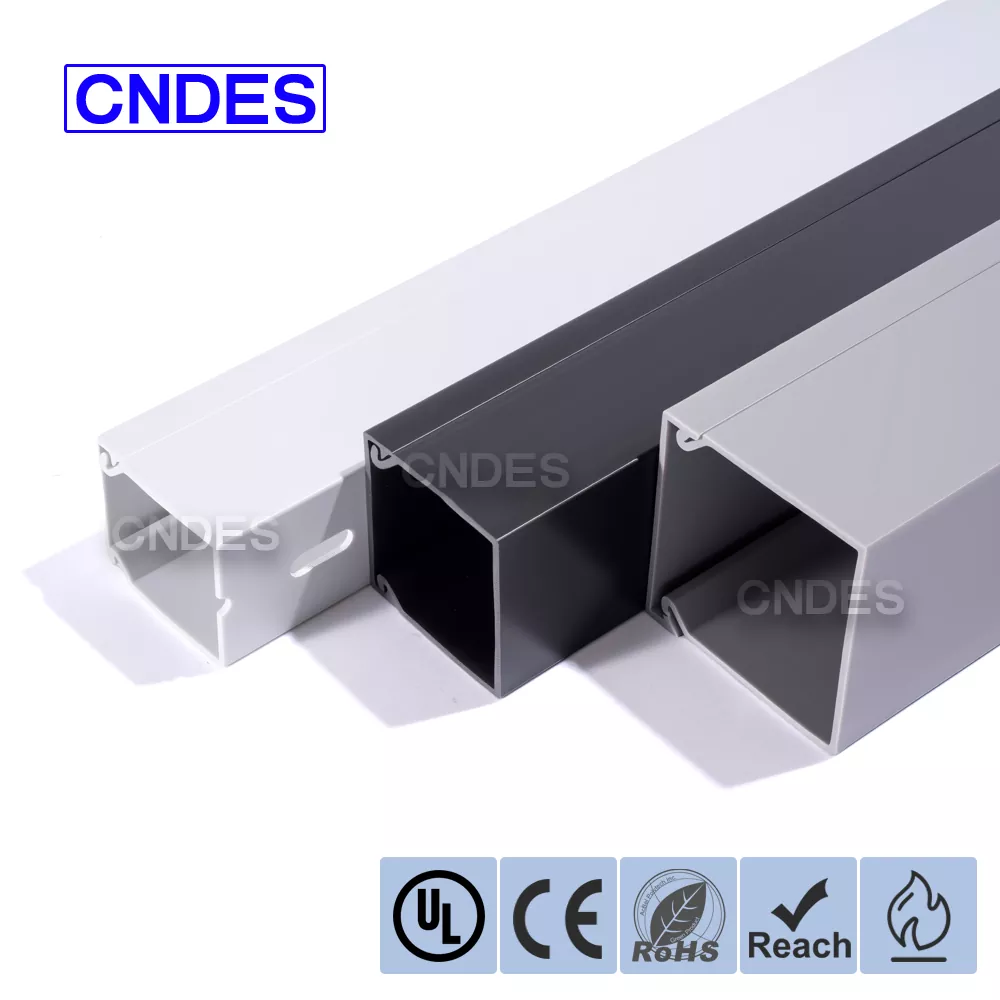
Key Differences at a Glance
To make an informed decision, compare how these two systems perform under real-world conditions:
| Feature | Fully Enclosed Cable Duct | Open Cable Tray |
|---|---|---|
| Physical Protection | Complete 360-degree shield against impact and crushing | Exposed cables are vulnerable to accidental damage |
| Environmental Defense | Blocks dust, moisture, and chemical splashes | Offers no resistance to airborne contaminants |
| EMI Shielding | Metal enclosures can contain electromagnetic interference | No inherent shielding for signal-sensitive cables |
| Installation Flexibility | Requires precise planning for cable pulling | Easy to add or reroute cables at any point |
| Maintenance Needs | Minimal; internal cables stay clean and untouched | Regular cleaning required to remove dust and debris |
Why Protection Often Outweighs Accessibility
In facilities where uptime is non-negotiable, the sealed nature of a CNDES Fully Enclosed Cable Duct prevents the three main causes of cable failure: physical abrasion, chemical corrosion, and electrical interference. Open trays save on material costs initially, but they expose cables to dust accumulation, which can act as an insulator and cause overheating. For data centers or manufacturing floors with high cleanliness standards, the enclosed system is the only viable option.
Critical Scenarios for Enclosed Systems
-
Outdoor Installations: Only an enclosed duct guarantees waterproofing and UV resistance.
-
High-Traffic Areas: Prevents cables from being snagged by personnel or equipment.
-
Compliance Needs: Meets strict fire codes and smoke emission standards required in tunnels and public buildings.
Fully Enclosed Cable Duct FAQ
Q: Can a Fully Enclosed Cable Duct handle the same cable load as an open tray?
A: Yes, but the installation method differs. Open trays allow cables to be loosely laid, whereas a Fully Enclosed Cable Duct requires careful pulling to prevent tension damage. However, CNDES ducts are engineered with smooth internal radii to maximize fill capacity without exceeding bend radius limits, ensuring signal integrity even at full capacity.
Q: Is it more expensive to maintain a Fully Enclosed Cable Duct compared to an open tray?
A: No, it is often less expensive over the lifecycle. While the initial installation of a Fully Enclosed Cable Duct may require more labor, the maintenance costs drop significantly. Open trays accumulate dust and debris that require annual cleaning, while enclosed systems protect cables from contaminants, reducing the need for inspection and re-termination of dirty connections.
Q: Does a Fully Enclosed Cable Duct require special tools for future cable additions?
A: Yes, it requires planning. Unlike open trays where you can simply drop in a new cable, a Fully Enclosed Cable Duct system from CNDES is designed with modular access covers. These covers allow technicians to open specific sections for cable placement without dismantling the entire run, balancing security with future expandability.
Make the Right Choice for Your Infrastructure
Selecting between a Fully Enclosed Cable Duct and an open tray depends on your specific environment. If your priority is protecting cable integrity from harsh conditions, dust, or physical impact, the enclosed solution from CNDES delivers unmatched performance.
Contact CNDES today to discuss your project requirements and request a detailed specification sheet for our Fully Enclosed Cable Duct systems.