

How Does a Distal Access Catheter Support Precision and Stability in Neurovascular Procedures?
2026-11-20
Article Summary
Distal Access Catheters (DACs) are important components in modern neurovascular and other minimally invasive interventional procedures. They are designed to provide a pathway for delivering diagnostic or therapeutic devices through complex vascular anatomy while offering the support, flexibility, and trackability required for controlled catheter navigation.
However, developing or sourcing a reliable distal access catheter involves more than selecting an appropriate diameter and length. Material properties, shaft construction, distal flexibility, kink resistance, pushability, torque response, dimensional accuracy, and manufacturing consistency all influence product performance. This guide explores how distal access catheters work, their major components, key design considerations, manufacturing requirements, and practical factors medical device companies should evaluate when choosing a catheter development or manufacturing partner.
1. Understanding Distal Access Catheters
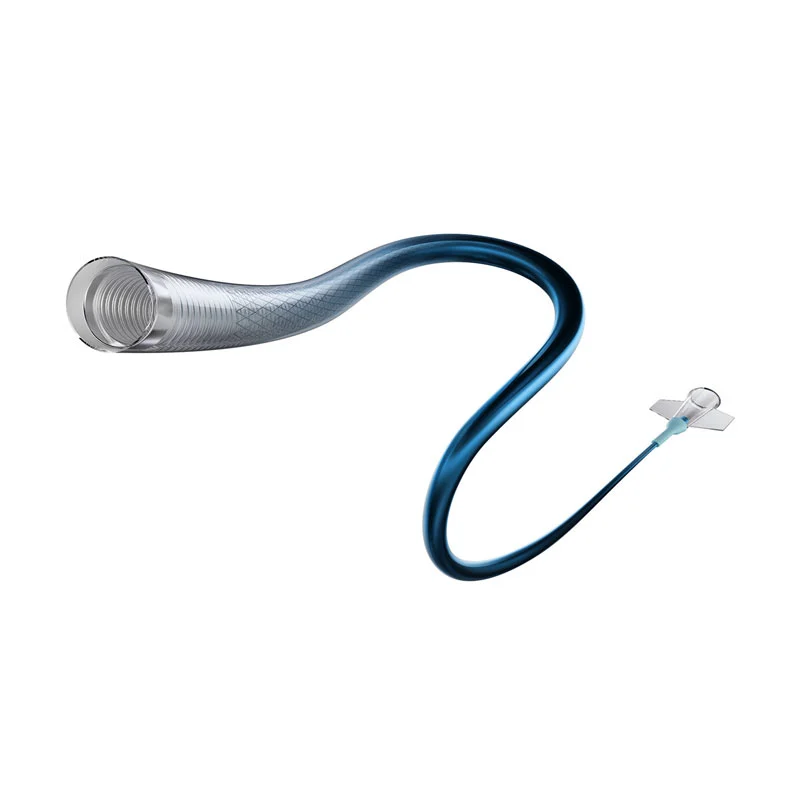
A Distal Access Catheter (DAC), also commonly referred to as an intermediate catheter in neurovascular applications, is a specialized medical catheter designed to provide distal vascular access and a supportive pathway for delivering interventional devices.
In neurovascular procedures, a DAC is generally advanced through an established access route into the relevant arterial circulation. Its purpose is to help physicians navigate toward the target treatment region while providing a stable conduit for compatible devices such as microcatheters, aspiration systems, or other interventional instruments.
Unlike a simple diagnostic catheter, a distal access catheter must balance several mechanical characteristics. It needs sufficient proximal shaft support for controlled advancement, while its distal section must remain flexible enough to navigate tortuous vascular anatomy.
This balance is particularly important in neurovascular applications, where the catheter may need to pass through multiple changes in vessel direction and reach relatively distal locations without causing unnecessary mechanical stress.
Distal Access Catheter vs. Other Catheter Types
Different interventional catheters perform different functions within a vascular delivery system. Understanding their roles helps medical device developers determine the appropriate product architecture.
| Catheter Type | Primary Function | Typical Design Focus |
|---|---|---|
| Distal Access Catheter | Provides a pathway and support closer to the target vascular region. | Trackability, support, lumen size, and distal flexibility. |
| Guide Catheter | Establishes the main access route for interventional devices. | Access stability, lumen compatibility, and proximal support. |
| Microcatheter | Enables delivery of devices or materials into smaller vessels. | Small profile, flexibility, and precise navigation. |
| Balloon Guide Catheter | Provides access and temporary balloon-assisted flow control in applicable procedures. | Balloon performance, shaft support, and lumen design. |
2. How Does a Distal Access Catheter Work?
A distal access catheter functions as part of a larger interventional delivery system. Its role is to provide a navigable pathway and mechanical support for compatible devices while allowing controlled access to the intended vascular region.
The Basic Working Process
- Establishing vascular access: The interventional team establishes an appropriate vascular access route according to the clinical procedure.
- Initial catheter navigation: A guide catheter or access system is positioned to establish the primary delivery pathway.
- Distal catheter advancement: The DAC is advanced through the compatible access system toward the intended vascular region under appropriate imaging guidance.
- Positioning and support: The distal catheter is positioned to provide a suitable pathway and support for the next interventional device.
- Device delivery: Compatible microcatheters or other instruments may be introduced through the DAC, depending on the intended procedure and system configuration.
- Completion and removal: The interventional system is managed and removed according to the applicable device instructions and clinical protocol.
Why Catheter Support Matters
During device delivery, the catheter system must maintain a suitable position while accommodating the forces associated with advancing compatible instruments. Insufficient support may make device delivery difficult, while excessive stiffness can compromise navigation through curved vascular anatomy.
For this reason, distal access catheter engineering often involves a graded stiffness profile. The proximal section provides support, while the distal section is designed to offer greater flexibility and conformability.
The final performance depends on the complete catheter system, including its shaft structure, guide catheter compatibility, device dimensions, and intended procedural application.
3. Key Structural Components and Design Features
A distal access catheter is typically a composite structure made from multiple materials and functional layers. Each component contributes to the overall mechanical performance, dimensional stability, and usability of the finished device.
3.1 Inner Liner
The inner liner forms the catheter's internal fluid and device passage. It should provide a consistent lumen and an appropriate surface for the movement of compatible interventional devices.
Polytetrafluoroethylene (PTFE) is commonly considered for low-friction inner liners. Its selection depends on bonding requirements, processing compatibility, and the intended catheter construction.
3.2 Reinforcement Layer
Many distal access catheter designs incorporate braided wire, metallic reinforcement, or other structural elements to improve shaft support and resistance to deformation.
Braiding patterns, wire dimensions, coverage, and reinforcement placement can influence pushability, torque transmission, flexibility, and kink resistance.
3.3 Spring Reinforcement
Some catheter architectures incorporate a spring or coil reinforcement section. This structure can help maintain lumen integrity while allowing controlled bending in selected areas.
The design must balance flexibility with resistance to compression and kinking. The actual contribution depends on the spring material, pitch, diameter, and integration method.
3.4 Outer Jacket
The outer jacket protects the reinforcement structure and defines the external surface of the catheter. It may use different polymer materials along the shaft to create a gradual stiffness transition.
Multi-segment construction allows manufacturers to adjust the mechanical properties of different shaft regions according to the intended design.
3.5 Distal Tip
The distal tip is a critical interface between the catheter and the surrounding vascular environment. Tip geometry, flexibility, surface finish, and bonding integrity should be carefully controlled.
A well-designed tip should minimize undesirable mechanical interaction while maintaining the structural integrity of the catheter during intended use.
Provides the structural support required for controlled advancement and device delivery.
Creates a gradual change in stiffness between different catheter segments.
Helps the catheter accommodate curved vascular pathways.
Provides the passage for compatible devices and maintains dimensional consistency.
4. Important Performance Characteristics
Distal access catheter performance is determined by the interaction of several mechanical and physical properties. For medical device manufacturers, these characteristics should be translated into measurable engineering requirements.
4.1 Pushability
Pushability refers to the ability of a catheter shaft to transmit an applied advancing force along its length. A catheter with insufficient pushability may deform or buckle before the distal end reaches the intended position.
However, increasing shaft stiffness without considering distal flexibility may negatively affect navigation. The appropriate design requires a balance between proximal support and distal conformability.
4.2 Trackability
Trackability describes the ability of the catheter to follow a guidewire or compatible delivery pathway through curved and tortuous anatomy.
It is influenced by shaft flexibility, distal geometry, outer diameter, reinforcement design, and surface characteristics.
4.3 Torque Response
Torque response describes how effectively rotational movement applied at the proximal end is transmitted toward the distal section.
Consistent torque behavior can help support controlled catheter positioning. Reinforcement structure and material distribution are important factors affecting this characteristic.
4.4 Kink Resistance
Kinking occurs when a catheter bends excessively and its lumen becomes restricted or distorted. This can affect the passage of compatible devices and compromise intended system performance.
Reinforcement design, wall thickness, polymer selection, and transition geometry all influence kink resistance.
4.5 Flexibility and Column Strength
Flexibility allows the catheter to adapt to curved anatomy, while column strength helps the shaft resist unwanted compression during advancement.
These properties must be evaluated together because improving one characteristic may affect another.
4.6 Dimensional Accuracy
Inner diameter, outer diameter, wall thickness, effective length, and distal geometry determine whether the catheter is compatible with the intended delivery system.
Small dimensional variations can affect device clearance, structural strength, and assembly compatibility. Precision extrusion and process monitoring are therefore essential in catheter manufacturing.
| Performance Characteristic | Engineering Importance | Typical Evaluation Focus |
|---|---|---|
| Pushability | Supports controlled advancement. | Axial force and shaft deformation. |
| Trackability | Supports navigation through curved pathways. | Bending behavior and advancement force. |
| Torque Response | Influences rotational control. | Rotational transmission and response consistency. |
| Kink Resistance | Helps maintain lumen integrity during bending. | Minimum bend radius and lumen deformation. |
| Dimensional Accuracy | Supports device compatibility and production consistency. | ID, OD, wall thickness, and length. |
| Bonding Strength | Maintains structural integrity between layers. | Joint strength and interface integrity. |
5. Common Applications in Interventional Procedures
Distal access catheters are used in different minimally invasive vascular procedures where a stable delivery pathway is required. Their specific design and permitted applications depend on the final medical device configuration and regulatory authorization.
5.1 Ischemic Stroke Intervention
In selected neurovascular procedures for ischemic stroke, a distal access catheter may be incorporated into a mechanical thrombectomy delivery system.
It can provide a pathway for compatible devices used in clot retrieval or aspiration-based approaches. The catheter's lumen dimensions, flexibility, and support characteristics are important considerations when designing the overall system.
5.2 Intracranial Stenosis Intervention
In certain procedures involving intracranial arterial stenosis, compatible delivery systems may be used to introduce interventional devices into the target region.
A distal access catheter can serve as part of the supporting delivery pathway, depending on the device configuration and procedure requirements.
5.3 Aneurysm Embolization
Distal access catheters may be incorporated into delivery systems used in selected aneurysm embolization procedures. They can provide a pathway for compatible microcatheters and other interventional instruments.
5.4 Other Neurovascular Applications
Depending on its intended design and regulatory clearance, a DAC may be considered for other neurovascular device-delivery applications that require distal access and support.
Some catheter manufacturing platforms can also be adapted for related peripheral vascular applications, although each application requires its own design verification and validation.
6. Materials Used in Distal Access Catheter Manufacturing
Material selection is one of the most important decisions in catheter development. Different polymers provide different combinations of flexibility, strength, lubricity, thermal processing behavior, and chemical resistance.
PTFE
PTFE is often used as an inner liner material because of its low-friction surface characteristics. It can help facilitate the movement of compatible devices through the catheter lumen.
Pebax
Pebax is a family of polyether block amide materials available in different grades. Its mechanical properties can be adjusted through material selection, making it useful for catheter shafts requiring different flexibility and stiffness characteristics.
TPU
Thermoplastic polyurethane offers flexibility, elasticity, and abrasion resistance in suitable grades. It is commonly considered for medical tubing and catheter applications.
PA12
Polyamide 12 can provide useful mechanical strength, flexibility, and dimensional stability. Its suitability depends on the required catheter performance and processing conditions.
FEP
Fluorinated ethylene propylene is a fluoropolymer considered for applications requiring chemical resistance and favorable surface characteristics. It can be used in specialized medical tubing and catheter structures.
PTFE and Polymer Composite Structures
Advanced catheter designs may combine different polymer layers with metallic reinforcement to achieve a desired combination of flexibility, pushability, and lumen stability.
| Material | General Characteristics | Potential Catheter Application |
|---|---|---|
| PTFE | Low-friction surface and chemical resistance. | Inner liners and specialized tubing. |
| Pebax | Adjustable flexibility and mechanical properties. | Multi-segment catheter shafts. |
| TPU | Flexibility, elasticity, and abrasion resistance. | Flexible tubing and catheter components. |
| PA12 | Mechanical strength and dimensional stability. | Structural tubing and catheter shaft layers. |
| FEP | Chemical resistance and fluoropolymer characteristics. | Specialized medical tubing and liners. |
| Stainless Steel | High structural strength and reinforcement capability. | Braided or spring reinforcement. |
Material selection should consider the complete device construction rather than individual material properties alone. Bonding compatibility, sterilization method, extractables and leachables, biocompatibility, and processing conditions must also be assessed.
7. How to Evaluate Distal Access Catheter Specifications
Medical device buyers and engineers should review technical specifications carefully before selecting a distal access catheter for development or OEM manufacturing.
7.1 Inner Diameter
Inner diameter determines the available passage for compatible devices. The required dimension should account for the maximum outer diameter of the intended instrument, manufacturing tolerances, and any additional clearance requirements.
7.2 Outer Diameter
Outer diameter influences the catheter's overall profile and compatibility with the access pathway. It is important to evaluate both proximal and distal dimensions where the design uses a tapered or graded shaft.
7.3 Wall Thickness
Wall thickness affects lumen size, mechanical strength, flexibility, and manufacturing feasibility. A thin-wall construction may provide more internal space within a given external profile, but must still meet the structural requirements of the intended device.
7.4 Effective Length
Effective length must be compatible with the intended delivery system and procedure configuration. It should be clearly defined in the engineering drawing and verified during production.
7.5 Stiffness Transition
Many DAC designs use multiple stiffness segments. The number, position, and mechanical properties of these segments should be defined to create the required balance between proximal support and distal flexibility.
Example of a Customizable DAC Specification
| Parameter | Published Product Reference |
|---|---|
| Product Type | Distal Access Catheter / DAC |
| Inside Diameter | 0.059 inch / 0.073 inch |
| Minimum Wall Thickness | 0.12 mm |
| Dimensional Accuracy | ±0.05 mm |
| Gradient Segments | 14 segments |
| Structure | PTFE + Braided Layer + Spring + Multi-Section Outer Tube |
| Color | Customizable |
| Length | Customizable according to design requirements |
| Packaging | Double PE sealed packaging or sterilization bag with coil packaging |
These values represent a published product configuration and reference specifications, not universal requirements for every distal access catheter. Final dimensions, tolerances, materials, and performance criteria should be confirmed through the approved product drawing and technical agreement.
8. Manufacturing Processes and Quality Control
Manufacturing a high-precision distal access catheter involves multiple coordinated processes. Consistency is especially important because variations in dimensions, material properties, or bonding quality can affect the performance of the finished device.
Precision Polymer Extrusion
Extrusion is used to produce catheter tubing with controlled inner diameter, outer diameter, and wall thickness. Process parameters such as temperature, material feeding, extrusion speed, and cooling conditions must be controlled.
Braiding and Reinforcement
Reinforcement structures may be incorporated to improve shaft support and mechanical performance. Braid angle, wire size, coverage, and positioning should be controlled according to the design specification.
Multi-Segment Assembly
Different polymer sections can be combined to create a graded stiffness profile. The transition between segments requires careful process control to maintain consistent dimensions and structural integrity.
Tip Forming and Secondary Processing
Secondary operations may include tip forming, bonding, trimming, punching, surface treatment, printing, and assembly. Each operation should be performed according to documented manufacturing procedures.
Dimensional Inspection
Important inspection items include:
- Inner diameter and outer diameter.
- Wall thickness and dimensional uniformity.
- Overall length and segment positioning.
- Distal tip geometry and surface condition.
- Reinforcement placement and structural integrity.
- Bonding strength and interface quality.
Functional and Reliability Testing
Depending on the approved design and risk assessment, testing may include tensile strength, bending behavior, kink resistance, torque response, leak integrity, and simulated-use evaluation.
Traceability and Quality Management
Medical catheter manufacturing requires controlled documentation and traceability of materials, production processes, inspections, and finished products.
A structured quality management system helps manufacturers maintain consistent production practices, investigate nonconformities, and support customer audits and regulatory documentation.
9. Common Design and Manufacturing Challenges
Distal access catheter development involves a series of engineering trade-offs. Identifying potential problems early can reduce prototype iterations and improve manufacturing consistency.
Challenge 1: Balancing Pushability and Flexibility
Problem: Excessive shaft stiffness may make navigation through curved pathways difficult, while insufficient stiffness may reduce the ability to transmit advancing force.
Engineering approach: Optimize polymer grades, reinforcement patterns, wall thickness, and segment transitions according to the intended performance requirements.
Challenge 2: Maintaining Lumen Consistency
Problem: Variations in extrusion or assembly can affect the internal passage and device compatibility.
Engineering approach: Use controlled extrusion parameters, appropriate tooling, online dimensional monitoring, and documented inspection criteria.
Challenge 3: Preventing Kinking
Problem: The catheter may experience lumen deformation when subjected to bending or compression.
Engineering approach: Evaluate reinforcement design, polymer hardness, wall structure, and transition geometry through suitable bench testing.
Challenge 4: Achieving Reliable Layer Bonding
Problem: Inadequate bonding between polymer layers or reinforcement components may compromise structural integrity.
Engineering approach: Select compatible materials and establish controlled bonding, reflow, and assembly parameters supported by verification testing.
Challenge 5: Maintaining Production Consistency
Problem: Small process variations may create differences between production batches.
Engineering approach: Implement process monitoring, calibrated measurement equipment, statistical process control, and traceable production records.
| Manufacturing Challenge | Potential Impact | Recommended Control |
|---|---|---|
| Extrusion Variation | Inconsistent ID, OD, or wall thickness. | Precision tooling and online measurement. |
| Incorrect Braid Placement | Uneven shaft support. | Controlled braiding parameters and inspection. |
| Poor Layer Bonding | Structural separation or reduced integrity. | Material compatibility and bond-strength testing. |
| Improper Tip Forming | Dimensional or surface defects. | Controlled forming processes and visual inspection. |
| Inadequate Traceability | Difficulty investigating production issues. | Batch records and documented quality systems. |
10. How to Choose a Distal Access Catheter Manufacturer
For medical device companies, choosing an OEM or CDMO partner is a strategic decision. A capable manufacturer should understand polymer processing, catheter architecture, precision assembly, and the documentation requirements associated with medical devices.
Evaluate Material and Processing Capabilities
Review whether the manufacturer has experience with relevant medical polymers, precision extrusion, braided reinforcement, multi-layer structures, and catheter secondary processing.
Check Engineering and Customization Support
Every catheter development project has different mechanical and dimensional requirements. A suitable partner should be able to review technical drawings, evaluate manufacturing feasibility, and support design adjustments.
Review Quality Management
Ask about the manufacturer's quality management certification, process validation approach, material traceability, inspection procedures, and nonconformance management.
Assess Prototype and Production Capabilities
Early prototypes help identify potential issues before mass production. Buyers should understand the manufacturer's ability to support sampling, design verification, pilot production, and manufacturing scale-up.
Consider Ningbo Micro-tube Polymer Materials Co., Ltd.
Ningbo Micro-tube Polymer Materials Co., Ltd. focuses on precision medical catheter extrusion, secondary processing, and CDMO/ODM manufacturing services for medical device companies.
The company provides catheter-related solutions using medical polymer materials such as PTFE, FEP, TPU, Pebax, PA12, PP, PEEK, and PFA. Its capabilities cover precision tubing, braided and composite catheter structures, catheter processing, and interventional device OEM manufacturing.
For distal access catheter projects, the company's published product configuration includes a PTFE inner structure, braided reinforcement, spring reinforcement, and a multi-section outer tube. Inside diameters of 0.059 inch and 0.073 inch are listed, with customization available according to customer design requirements.
The company also describes manufacturing capabilities that include precision extrusion, online laser diameter measurement, closed-loop process control, dimensional inspection, and production traceability.
Its official company information identifies ISO 13485:2016 quality management system certification and a cleanroom manufacturing environment. Customers should request current certification documents and confirm the applicable scope before supplier qualification.
Buyer Checklist Before Starting a DAC Project
- Define the intended device application and regulatory market.
- Provide the required inner diameter and outer diameter.
- Confirm effective length and dimensional tolerances.
- Specify the required stiffness profile and segment design.
- Define the inner liner and outer jacket materials.
- Confirm reinforcement type and construction.
- Identify required mechanical and functional tests.
- Discuss sterilization method and packaging requirements.
- Request material documentation and quality certificates.
- Establish prototype, validation, and mass-production plans.
11. Frequently Asked Questions
Q1. What is a distal access catheter used for?
A distal access catheter is used to provide a delivery pathway and support for compatible diagnostic or interventional devices in vascular procedures. It is commonly associated with neurovascular applications, including selected thrombectomy and embolization systems.
Q2. What is the difference between a distal access catheter and a microcatheter?
A distal access catheter generally provides a larger supporting pathway for compatible devices, while a microcatheter is designed for navigation into smaller and more distal vessels. Their dimensions, flexibility, and intended functions are different.
Q3. What materials are commonly used in distal access catheters?
Commonly considered materials include PTFE, Pebax, TPU, PA12, and FEP for different catheter layers. Stainless steel or other reinforcement materials may also be used depending on the shaft architecture.
Q4. Why is braided reinforcement used in DAC manufacturing?
Braided reinforcement can improve shaft support, torque response, and resistance to deformation. The final mechanical performance depends on braid angle, wire dimensions, coverage, and integration with the polymer layers.
Q5. What does a multi-segment stiffness design mean?
It means that different sections of the catheter have different mechanical properties. The proximal section may provide greater support, while the distal section is designed to be more flexible for navigation through curved anatomy.
Q6. What are the key specifications when purchasing a distal access catheter?
Important specifications include inner diameter, outer diameter, wall thickness, effective length, material composition, reinforcement structure, distal flexibility, and dimensional tolerances. Functional testing and compatibility requirements should also be defined.
Q7. Can distal access catheters be customized?
Yes. OEM and CDMO manufacturers may support customization of dimensions, materials, shaft structure, stiffness segments, color, and packaging according to technical requirements and manufacturing feasibility.
Q8. Why is kink resistance important?
Kink resistance helps maintain the catheter lumen when the shaft is bent. Excessive deformation may restrict the passage of compatible devices and affect intended system performance.
Q9. What quality tests should be considered for a distal access catheter?
Depending on the device design and risk analysis, testing may include dimensional inspection, tensile strength, bond strength, bending performance, kink resistance, torque response, leak integrity, and simulated-use testing. Biological evaluation and sterilization validation should also be addressed where applicable.
Q10. What is the difference between OEM and CDMO services for medical catheters?
OEM manufacturing generally focuses on producing products according to customer-provided specifications. CDMO services can involve broader development support, including engineering, process design, prototyping, process validation, and manufacturing. The actual scope should be defined in the project agreement.
Q11. How can buyers evaluate a medical catheter manufacturer's reliability?
Review its quality management certification, engineering experience, material controls, production equipment, inspection capabilities, traceability procedures, and experience with similar catheter structures. Sample evaluation and supplier audits can provide additional evidence.
Q12. What information is required to request a DAC manufacturing quotation?
Provide the product drawing, inner and outer diameters, wall thickness, length, material requirements, reinforcement structure, stiffness profile, packaging specifications, expected quantity, and intended regulatory market. This information helps the manufacturer assess feasibility and prepare a more accurate quotation.
12. Conclusion: Building Reliable Distal Access Catheters Through Precision Manufacturing
A distal access catheter is a specialized component in modern interventional delivery systems. Its performance depends on the coordinated design of the inner liner, reinforcement structure, polymer jacket, distal tip, and graded stiffness sections.
For medical device developers, the most important considerations include trackability, pushability, torque response, kink resistance, dimensional accuracy, and material compatibility. These properties must be translated into measurable engineering specifications and verified through appropriate testing.
Equally important is the selection of a manufacturing partner with experience in medical polymer extrusion, composite catheter construction, secondary processing, and quality management. A capable supplier can help reduce development complexity and support the transition from prototype design to controlled production.
Whether you are developing a new neurovascular delivery system or sourcing customized distal access catheters for an existing medical device project, careful engineering and manufacturing collaboration are essential to achieving consistent product quality.
Looking for a Reliable Distal Access Catheter Manufacturer?
Ningbo Micro-tube Polymer Materials Co., Ltd. provides precision medical catheter extrusion, catheter secondary processing, and OEM/CDMO manufacturing solutions for medical device companies.
From PTFE liners and braided catheter structures to multi-segment distal access catheter assemblies, our team supports customized development according to customer drawings and technical requirements.
Have a new catheter development project or sourcing requirement? Contact us to discuss your specifications, request technical information, and explore a suitable manufacturing solution for your business.
Contact Us for DAC Solutions