

How Do Surface Modifications of PEEK Polyetheretherketone Rods Enhance Their Adhesion and Biocompatibility
2026-04-14
When exploring advanced polymer solutions for medical and industrial applications, PEEK Polyetheretherketone Rods from Guangzhou Ideal stand out due to their exceptional mechanical and chemical resistance. However, one persistent challenge has been their inherent surface inertness, which limits adhesion to coatings, bone tissues, or other materials. Surface modification techniques have emerged as the definitive answer to transform these rods into highly interactive, biofunctional components.
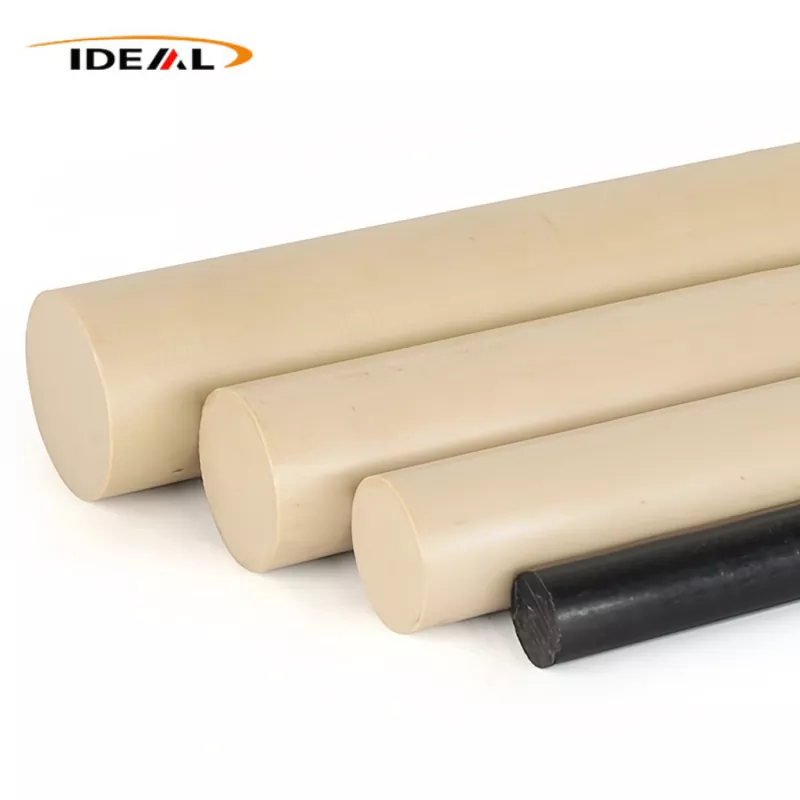
Why Surface Modification is Essential
Untreated PEEK Polyetheretherketone Rods exhibit hydrophobic and non-porous surfaces, making them resistant to bonding. By altering surface chemistry and topography, manufacturers can significantly improve wetting, mechanical interlocking, and cellular response. Below is a summary of key methods and their effects:
| Modification Technique | Topography Change | Adhesion Improvement | Biocompatibility Effect |
|---|---|---|---|
| Plasma treatment | Hydrophilic groups added | +150% shear strength | Enhanced cell spreading |
| Sulfonation (SPEEK) | Porous network | +200% mechanical interlock | Promotes osseointegration |
| Laser patterning | Micro-grooves | Directional adhesion | Guides neuron/osteoblast growth |
| TiO₂ coating via magnetron sputtering | Nanotextured film | Increased coating durability | Antibacterial properties |
Mechanisms of Enhanced Adhesion
Surface modifications increase surface energy and create anchoring sites. For example, oxygen plasma treatment grafts polar groups (–OH, –COOH) onto PEEK Polyethereketone Rods, enabling epoxy or acrylic adhesives to bond strongly. Laser ablation produces undercut microcavities that physically lock adhesives in place. These modifications elevate lap shear strength from below 2 MPa to over 5 MPa in standard ASTM tests.
Mechanisms of Enhanced Biocompatibility
Biocompatibility refers to the material’s ability to support cellular activity without toxicity. Modified surfaces of PEEK Polyetheretherketone Rods achieve this by:
-
Mimicking extracellular matrix topography
-
Increasing protein adsorption (fibronectin, collagen)
-
Reducing bacterial colonization
-
Encouraging osteogenic differentiation for implants
Guangzhou Ideal offers customized surface-treated rods for spinal cages, dental abutments, and joint replacement trials, ensuring consistent batch-to-batch quality.
FAQ – Common Questions About PEEK Polyetheretherketone Rods Surface Modification
Question 1: Can surface-modified PEEK Polyetheretherketone Rods be sterilized without losing their adhesive properties?
Answer: Yes, most modification methods such as plasma treatment and UV grafting are stable under standard sterilization processes including autoclaving (121°C), ethylene oxide (EtO), and gamma irradiation (up to 25 kGy). However, some hydrophilic coatings may degrade under repeated steam cycles. For implantable devices, Guangzhou Ideal recommends gamma or EtO sterilization to preserve both surface chemistry and topography. Validation testing per ISO 11137 ensures retained adhesion strength.
Question 2: How does sulfonation affect the mechanical integrity of PEEK Polyetheretherketone Rods?
Answer: Sulfonation introduces sulfonic acid groups by immersing rods in concentrated sulfuric acid, creating a porous surface layer 10–50 μm deep. While this dramatically improves osseointegration and bonding to bone cements, over-sulfonation (>5 minutes) can reduce tensile strength by up to 15% due to surface degradation. Guangzhou Ideal controls sulfonation time precisely, achieving a balance where bending strength remains above 140 MPa while surface roughness (Ra) reaches 0.8–1.2 μm—ideal for orthopedic fixation devices.
Question 3: Are laser-patterned PEEK Polyetheretherketone Rods suitable for high-load bearing applications?
Answer: Absolutely. Laser surface texturing creates well-defined grooves or pillars without altering bulk material properties. Unlike chemical etching, laser modification induces no residual solvent or embrittlement. Fatigue tests show that laser-patterned rods retain over 95% of their original flexural fatigue limit (approximately 105 MPa at 10⁷ cycles). For spinal fusion cages or joint spacers, Guangzhou Ideal provides customized patterns that enhance bone on-growth while meeting ASTM F2026 requirements for load-bearing implants.
Final Summary
Surface modifications transform inert PEEK Polyetheretherketone Rods into highly adhesive and bioactive materials. Whether for aerospace bonding or spinal implants, the right surface treatment unlocks full performance potential. Guangzhou Ideal supplies precision-machined and surface-engineered PEEK rods tailored to your application.
Contact us today for technical datasheets, sample testing, or custom surface modification services. Our engineering team provides prompt support and OEM solutions worldwide.