

How Do PU Timing Belts Improve Industrial Transmission Performance?
2026-05-26
PU Timing Belts are widely used in automation systems, packaging machinery, textile equipment, food processing lines, and precision transmission applications because of their durability, wear resistance, and accurate synchronization capabilities. Compared with traditional rubber belts, polyurethane timing belts provide better dimensional stability, lower maintenance requirements, and higher transmission efficiency. This article explains how PU Timing Belts work, their advantages, industrial applications, selection methods, maintenance tips, and how businesses can reduce downtime and improve production efficiency by choosing the right timing belt solution.
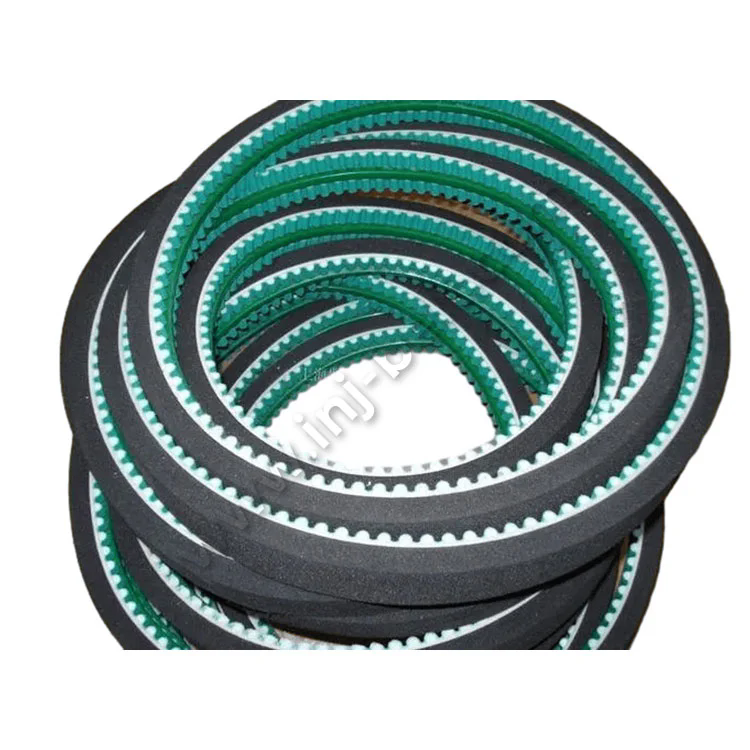
Table of Contents
- What Are PU Timing Belts?
- How Do PU Timing Belts Work?
- Main Advantages of PU Timing Belts
- Common Industrial Applications
- PU Timing Belts vs Rubber Timing Belts
- How to Choose the Right PU Timing Belt
- Installation and Maintenance Tips
- Common Problems and Solutions
- Why Industrial Buyers Prefer High-Quality PU Timing Belts
- FAQ
What Are PU Timing Belts?
PU Timing Belts are synchronous transmission belts manufactured from polyurethane materials reinforced with steel cords or Kevlar tension members. The teeth on the inner surface of the belt mesh precisely with pulley grooves, ensuring accurate motion transfer without slippage.
Unlike conventional friction belts, timing belts deliver synchronized rotational movement between shafts. This makes them ideal for machinery that requires precise positioning, constant speed ratios, and reliable power transmission.
Polyurethane materials provide excellent abrasion resistance, chemical resistance, and dimensional stability. Because of these properties, PU timing belts are commonly used in high-speed automation systems and precision industrial equipment.
- High wear resistance
- Excellent tensile strength
- Low elongation rate
- Stable synchronous transmission
- Resistance to oil and chemicals
- Long service life
- Suitable for high-speed applications
How Do PU Timing Belts Work?
PU Timing Belts operate through positive engagement between the belt teeth and pulley grooves. When the pulley rotates, the teeth interlock with the belt, creating synchronized movement without slipping.
This mechanism is particularly important in industries where positioning accuracy matters. Even small transmission errors can lead to product defects, reduced productivity, or equipment failure.
The polyurethane body protects the belt from abrasion and environmental damage, while internal reinforcement cords maintain tensile strength during continuous operation.
| Component | Function |
|---|---|
| Polyurethane Body | Provides wear resistance and flexibility |
| Steel/Kevlar Cord | Ensures tensile strength and dimensional stability |
| Timing Teeth | Guarantees synchronized transmission |
| Pulley System | Transfers rotational motion efficiently |
Main Advantages of PU Timing Belts
Many industrial buyers choose PU Timing Belts because they offer a balance between precision, durability, and operational efficiency. Modern automated systems require components that minimize downtime while maintaining consistent performance.
High Precision
The synchronous transmission mechanism eliminates slippage and improves positioning accuracy.
Excellent Wear Resistance
Polyurethane materials resist abrasion better than many traditional rubber compounds.
Low Maintenance
PU timing belts generally require less maintenance and fewer replacements.
Energy Efficiency
Efficient power transmission reduces energy loss during operation.
Another important benefit is noise reduction. PU timing belts typically operate more quietly than chain drives, improving workplace comfort and reducing vibration-related wear on machinery.
Common Industrial Applications
PU Timing Belts are used in a wide range of industries because of their versatility and reliability.
- Automated production lines
- Packaging machinery
- Printing equipment
- Food processing systems
- Textile machinery
- Glass manufacturing equipment
- Medical automation devices
- Robotics and CNC systems
- Logistics conveyor systems
In food processing environments, polyurethane timing belts are especially popular because some models support hygienic production requirements and are easier to clean compared with conventional belt materials.
In robotics and precision automation, accurate synchronization is essential. A small positioning deviation may affect product quality, which is why high-quality timing belts are critical for reliable system performance.
PU Timing Belts vs Rubber Timing Belts
| Feature | PU Timing Belts | Rubber Timing Belts |
|---|---|---|
| Wear Resistance | Excellent | Moderate |
| Chemical Resistance | High | Lower |
| Dimensional Stability | Excellent | Good |
| Service Life | Longer | Shorter |
| Precision Transmission | Very High | Good |
Although rubber timing belts are still widely used in certain industries, polyurethane timing belts provide better long-term performance in demanding industrial applications.
How to Choose the Right PU Timing Belt
Selecting the correct timing belt is essential for operational efficiency and equipment reliability. Buyers should evaluate several technical factors before purchasing.
- Load Capacity: Determine the torque and load requirements.
- Operating Speed: Match belt specifications with machine speed.
- Environmental Conditions: Consider temperature, oil exposure, and humidity.
- Pulley Compatibility: Ensure tooth profiles match correctly.
- Precision Requirements: High-accuracy systems require premium-grade belts.
- Maintenance Expectations: Choose belts with longer service intervals when downtime is costly.
Working with experienced manufacturers can significantly reduce the risk of incorrect belt selection. Zhejiang INJ Transmission Systems Co.,Ltd provides customized transmission solutions for various industrial applications, helping customers improve production efficiency and reduce maintenance costs.
Installation and Maintenance Tips
Even high-quality PU Timing Belts require proper installation and maintenance to achieve maximum service life.
- Check belt tension regularly
- Inspect pulley alignment
- Prevent contamination from debris and chemicals
- Replace damaged pulleys immediately
- Avoid excessive overloading
- Monitor belt wear patterns during inspections
Improper tension is one of the most common causes of premature timing belt failure. Excessive tension may damage bearings and internal cords, while insufficient tension can reduce synchronization accuracy.
Common Problems and Solutions
| Problem | Possible Cause | Solution |
|---|---|---|
| Tooth Wear | Misalignment | Adjust pulley alignment |
| Belt Cracking | Overloading or aging | Replace with suitable specification |
| Noise During Operation | Incorrect tension | Adjust tension properly |
| Edge Fraying | Pulley damage | Inspect and replace pulley |
Why Industrial Buyers Prefer High-Quality PU Timing Belts
Industrial operations depend heavily on reliable transmission systems. Equipment downtime can lead to production delays, increased labor costs, and reduced profitability.
High-quality PU Timing Belts help businesses achieve stable operation, consistent product quality, and improved mechanical efficiency. Buyers increasingly prefer durable transmission solutions that support automation and long-term operational stability.
Zhejiang INJ Transmission Systems Co.,Ltd focuses on providing reliable transmission products for global industrial customers. With advanced manufacturing capabilities and strict quality control standards, the company supplies timing belt solutions for demanding industrial environments.
FAQ
Are PU Timing Belts better than rubber timing belts?
PU timing belts generally offer better wear resistance, dimensional stability, and service life, especially in demanding industrial environments.
Can PU Timing Belts handle high-speed applications?
Yes. Polyurethane timing belts are widely used in high-speed automation systems because of their excellent stability and precise synchronization performance.
How long do PU Timing Belts last?
Service life depends on operating conditions, load, maintenance, and environmental factors. Proper installation and maintenance can significantly extend belt lifespan.
What industries use PU Timing Belts most frequently?
Industries such as packaging, automation, food processing, textiles, logistics, printing, and robotics commonly use PU timing belts.
Looking for Reliable PU Timing Belt Solutions?
Zhejiang INJ Transmission Systems Co.,Ltd provides high-performance PU Timing Belts designed for industrial automation, precision transmission, and long-term operational reliability. Whether you need standard models or customized solutions, our professional team can help you select the right timing belt for your equipment.
Contact us today to improve your transmission efficiency, reduce downtime, and get professional support for your industrial applications.