
How Do Film Abrasive Discs Improve Precision Surface Finishing?
2026-06-22
Abstract
Film Abrasive Discs are advanced surface finishing tools engineered to deliver superior consistency, durability, and precision compared to conventional abrasive solutions. They are widely used in industries requiring ultra-smooth finishes such as automotive refinishing, electronics manufacturing, mold polishing, and metal fabrication. This article explains how Film Abrasive Discs work, their advantages, application areas, and how to select the right type for specific surface treatment needs. It also addresses common user challenges such as uneven finishing, premature wear, and process inefficiency, while providing practical solutions and expert insights.
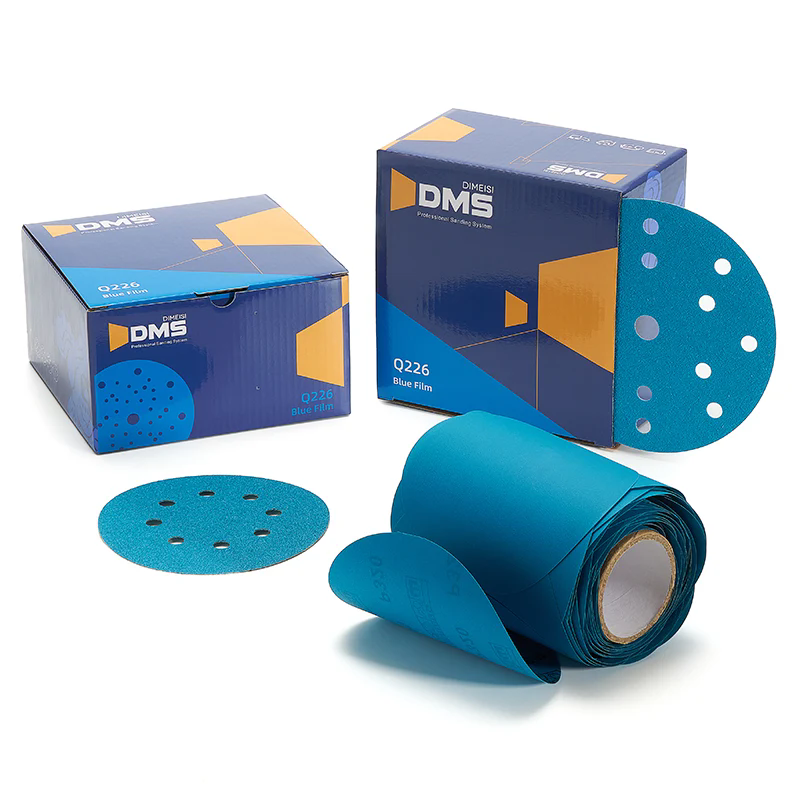
Table of Contents
- Introduction to Film Abrasive Discs
- How Film Abrasive Discs Work
- Key Advantages
- Applications Across Industries
- How to Select the Right Film Abrasive Discs
- Film vs Traditional Abrasive Discs
- Common Problems & Practical Solutions
- Maintenance and Usage Tips
- FAQ
- Conclusion
Introduction to Film Abrasive Discs
Film Abrasive Discs are precision-engineered abrasive tools that use a polyester film backing instead of traditional paper or fiber backing. This structural improvement significantly enhances dimensional stability and reduces inconsistencies during sanding or polishing operations. Unlike conventional abrasives that may degrade or deform under pressure, film-based discs maintain a uniform cutting surface, ensuring consistent performance throughout their lifespan.
Industries that demand high-quality finishing increasingly rely on these discs due to their ability to produce fine, scratch-free surfaces. They are particularly effective in processes requiring strict tolerances and mirror-like finishing results.
How Film Abrasive Discs Work
The performance of Film Abrasive Discs is driven by their layered structure. Typically, they consist of three key components: a polyester film backing, a resin bonding system, and precision-graded abrasive grains.
The film backing ensures flatness and stability, preventing deformation under heat or pressure. The abrasive grains—often aluminum oxide, silicon carbide, or ceramic—are electrostatically coated to ensure uniform distribution. This results in consistent cutting action across the entire disc surface.
- Step 1: Abrasive grains engage the surface uniformly.
- Step 2: Resin bond secures grains and resists premature shedding.
- Step 3: Film backing maintains flat contact pressure.
- Step 4: Debris is efficiently cleared to reduce clogging.
This structured system ensures stable material removal rates and minimizes surface defects such as swirl marks or deep scratches.
Key Advantages
Film Abrasive Discs provide multiple performance advantages that directly address common finishing challenges in industrial environments.
- Uniform Surface Finish: Reduces variability in polishing results.
- Longer Service Life: Resistant to tearing, curling, and edge wear.
- Consistent Cutting Performance: Maintains efficiency throughout usage.
- Reduced Loading: Minimizes clogging during fine sanding operations.
- High Precision Output: Suitable for ultra-fine finishing tasks.
Compared to traditional abrasives, these discs deliver more predictable outcomes, which is crucial in industries where surface quality directly affects product performance.
Applications Across Industries
Film Abrasive Discs are versatile tools used across a wide range of industrial applications. Their precision and durability make them essential in both heavy-duty and fine finishing tasks.
- Automotive Industry: Paint preparation, clear coat finishing, scratch removal.
- Metal Fabrication: Deburring, surface leveling, and edge finishing.
- Electronics Manufacturing: Polishing delicate components and housings.
- Mold & Die Industry: High-gloss polishing of injection molds.
- Woodworking: Fine sanding of lacquered or coated surfaces.
In each of these industries, consistency and precision are critical. Film Abrasive Discs help reduce rework rates and improve production efficiency.
How to Select the Right Film Abrasive Discs
Choosing the correct abrasive disc depends on material type, desired finish, and operational conditions. Below is a practical selection guide:
| Application Type | Recommended Grit | Best Abrasive Type |
| Heavy Stock Removal | 40 - 80 | Ceramic |
| General Sanding | 100 - 180 | Aluminum Oxide |
| Fine Finishing | 220 - 400 | Silicon Carbide |
| Ultra-Precision Polishing | 600+ | Micro-graded abrasives |
Selecting the right disc ensures optimal performance and reduces unnecessary material waste or tool wear.
Film vs Traditional Abrasive Discs
| Feature | Film Abrasive Discs | Traditional Discs |
| Backing Material | Polyester Film | Paper / Fiber |
| Durability | High | Moderate |
| Finish Consistency | Very High | Variable |
| Clogging Resistance | Excellent | Low to Moderate |
| Precision Level | Industrial Grade | General Purpose |
Common Problems & Practical Solutions
Even high-quality abrasive systems can face operational challenges. Understanding these issues helps improve efficiency and reduce costs.
- Uneven Surface Finish: Often caused by inconsistent pressure. Solution: maintain uniform machine pressure.
- Premature Wear: Typically due to excessive heat. Solution: use proper speed settings and cooling intervals.
- Clogging: Caused by material buildup. Solution: use open-coat designs or anti-loading discs.
- Swirl Marks: Result of incorrect grit progression. Solution: follow sequential grit refinement.
Maintenance and Usage Tips
To maximize performance and lifespan of Film Abrasive Discs, proper handling and usage practices are essential.
- Store discs in a dry, temperature-controlled environment.
- Avoid excessive pressure during operation.
- Use correct grit sequence for step-by-step finishing.
- Clean machine pads regularly to prevent contamination.
- Replace worn discs promptly to maintain quality output.
FAQ
Q1: What makes Film Abrasive Discs different from paper-based discs?
Film backing provides superior stability, durability, and consistent finishing performance compared to paper-based alternatives.
Q2: Can Film Abrasive Discs be used on all materials?
Yes, they are suitable for metals, composites, plastics, and coated surfaces, depending on grit selection.
Q3: Do they reduce polishing time?
Yes, due to their uniform cutting efficiency and reduced clogging, overall processing time is often reduced.
Q4: Are they suitable for high-precision industries?
Absolutely. They are widely used in automotive, aerospace, and electronics manufacturing where precision is critical.
Conclusion
Film Abrasive Discs represent a significant advancement in surface finishing technology. Their engineered structure, consistent performance, and versatility make them essential tools across modern manufacturing environments. By improving surface quality, reducing operational inefficiencies, and extending tool life, they offer measurable advantages for both small workshops and large-scale industrial operations.
For high-performance abrasive solutions and expert support, DMS provides a comprehensive range of Film Abrasive Discs designed to meet demanding industrial requirements. Whether your focus is precision polishing or heavy-duty finishing, the right solution can significantly improve your workflow and output quality.
Ready to upgrade your surface finishing performance? Contact DMS today and explore tailored abrasive solutions designed for your needs. contact us