

Article Summary: This article explores how CPLA soup bowl lids are reshaping the food packaging industry by addressing critical pain points such as heat resistance, leakage prevention, sustainability demands, and consumer convenience. It explains material properties, key benefits, real-world applications, and selection guidance for businesses seeking eco-friendly alternatives. The article also highlights how LYNKARBO® delivers reliable packaging solutions for modern foodservice operations.
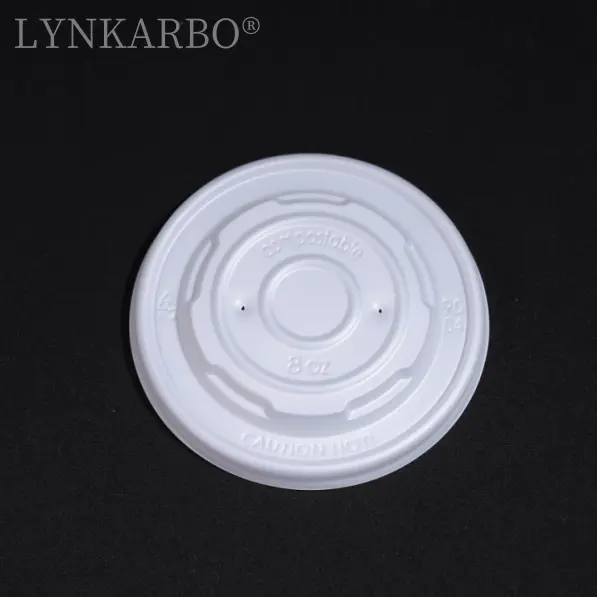
Table of Contents
- 1. Introduction
- 2. What is a CPLA Soup Bowl Lid?
- 3. Key Features of CPLA Soup Bowl Lids
- 4. Benefits for Foodservice Businesses
- 5. Customer Pain Points Solved
- 6. Applications in the Food Industry
- 7. Material Comparison Table
- 8. How to Choose the Right Lid
- 9. Sustainability Impact
- 10. Frequently Asked Questions
- 11. Conclusion
1. Introduction
The global food packaging industry is undergoing a rapid transformation driven by sustainability regulations, consumer awareness, and operational efficiency demands. Among the most impactful innovations is the CPLA soup bowl lid, designed specifically for hot food applications such as soups, noodles, porridge, and stews.
Traditional plastic lids often fail to meet modern expectations for heat resistance and environmental responsibility. This is where CPLA (Crystallized Polylactic Acid) emerges as a practical alternative. In combination with soup bowls, these lids provide a secure, heat-stable, and compostable solution that supports both business efficiency and environmental goals.
2. What is a CPLA Soup Bowl Lid?
CPLA is a modified form of PLA (Polylactic Acid), derived from renewable resources such as corn starch or sugarcane. Through a crystallization process, PLA becomes more heat-resistant and structurally stable.
A CPLA soup bowl lid is engineered to:
- Withstand high temperatures (typically up to 90–100°C)
- Fit securely on compostable or paper soup bowls
- Maintain shape without warping under hot steam conditions
- Provide spill-resistant sealing for liquid foods
Compared with conventional petroleum-based plastic lids, CPLA lids represent a shift toward renewable, compostable packaging materials.
3. Key Features of CPLA Soup Bowl Lids
CPLA soup bowl lids offer a combination of performance and sustainability. Their primary features include:
- Heat Resistance: Suitable for hot soups and freshly cooked meals
- Compostable Material: Breaks down in industrial composting environments
- Secure Fit Design: Reduces leakage and accidental spills
- Lightweight Structure: Improves logistics and reduces transportation costs
- Smooth Surface Finish: Enhances branding and labeling compatibility
These characteristics make them ideal for restaurants, takeaway services, and catering businesses.
4. Benefits for Foodservice Businesses
Adopting CPLA soup bowl lids can significantly improve operational efficiency and customer satisfaction.
- Improved food safety during transport
- Enhanced brand reputation through sustainable packaging
- Reduced risk of leakage complaints
- Compliance with environmental regulations in multiple markets
- Better customer experience for takeaway and delivery services
For businesses aiming to scale sustainably, suppliers like LYNKARBO® provide consistent quality and customization options to support brand identity.
5. Customer Pain Points Solved
CPLA soup bowl lids are not just a material upgrade—they solve real operational challenges faced by food businesses:
- Leakage during delivery: Tight sealing reduces spills in transit
- Heat deformation: CPLA maintains structural integrity under hot conditions
- Plastic waste concerns: Compostable design reduces environmental burden
- Inconsistent lid fitting: Precision molding ensures compatibility with standard bowl sizes
- Negative customer perception: Sustainable packaging enhances brand image
6. Applications in the Food Industry
CPLA soup bowl lids are widely used across multiple foodservice sectors:
- Fast-food chains offering hot soup or noodle meals
- Cloud kitchens and delivery-only restaurants
- Catering services for events and corporate lunches
- Convenience stores selling ready-to-eat meals
- Eco-friendly cafes and sustainable food brands
The versatility of these lids makes them suitable for both high-volume operations and niche sustainable brands.
7. Material Comparison Table
| Material | Heat Resistance | Sustainability | Durability | Typical Use |
|---|---|---|---|---|
| CPLA | High (up to 100°C) | Compostable | Good | Hot soups, takeaway meals |
| PP Plastic | Very High | Non-compostable | Very Good | General food packaging |
| PET Plastic | Low (not for hot food) | Recyclable | Good (cold use only) | Cold drinks, salads |
This comparison shows why CPLA is increasingly preferred for hot food applications despite PP’s durability advantage.
8. How to Choose the Right Lid
Selecting the right soup bowl lid depends on multiple operational factors:
- Temperature requirements: Ensure compatibility with hot food delivery conditions
- Bowl compatibility: Match lid diameter and locking structure
- Brand positioning: Sustainable packaging supports eco-friendly branding
- Volume needs: Bulk supply consistency is critical for large operations
- Regulatory compliance: Meet local compostability standards
Working with experienced manufacturers like LYNKARBO® helps ensure product consistency and supply reliability.
9. Sustainability Impact
The shift to CPLA-based packaging significantly reduces dependency on fossil-fuel plastics. When properly composted in industrial facilities, CPLA materials break down into natural components, minimizing landfill accumulation.
Key environmental advantages include:
- Reduced carbon footprint compared to conventional plastics
- Renewable raw material sourcing
- Lower microplastic pollution risk
- Support for circular economy initiatives
Foodservice businesses adopting such materials contribute directly to global sustainability goals while meeting rising consumer expectations.
10. Frequently Asked Questions
Q1: Are CPLA soup bowl lids microwave safe?
Yes, they are generally suitable for reheating applications, but not for prolonged high-temperature exposure beyond recommended limits.
Q2: Can CPLA lids be reused?
They are designed for single-use applications, especially in takeaway and delivery scenarios.
Q3: Do they leak with hot soup?
When properly matched with compatible bowls, they provide strong sealing performance and reduce leakage risk.
Q4: Are they biodegradable at home?
Most CPLA products require industrial composting conditions for effective breakdown.
Q5: Why choose CPLA over plastic lids?
Because it balances heat resistance, functionality, and environmental responsibility in a way traditional plastics cannot.
11. Conclusion
The adoption of CPLA soup bowl lids represents a strategic shift in modern food packaging. Businesses are no longer choosing materials based solely on cost or durability, but also on environmental impact and customer experience.
By integrating compostable solutions, foodservice operators can improve operational reliability while contributing to sustainability goals. Suppliers like LYNKARBO® play a crucial role in delivering high-quality, scalable packaging solutions tailored to evolving market needs.
For customized solutions, bulk orders, or product consultation, contact LYNKARBO® today and explore how sustainable packaging can elevate your food business.