

How Can High Temperature PET Tape Be Used in Demanding Thermal Applications?
2026-06-16
Abstract
High Temperature PET Tape is a specialized polyester film adhesive solution engineered to maintain dimensional stability, adhesion strength, and electrical insulation performance under elevated thermal conditions. It is widely used in electronics manufacturing, powder coating masking, transformer insulation systems, battery assembly protection, and precision industrial processing. This article explains its core properties, application scope, selection criteria, and performance advantages, helping engineers and procurement specialists make informed decisions in high-temperature environments.
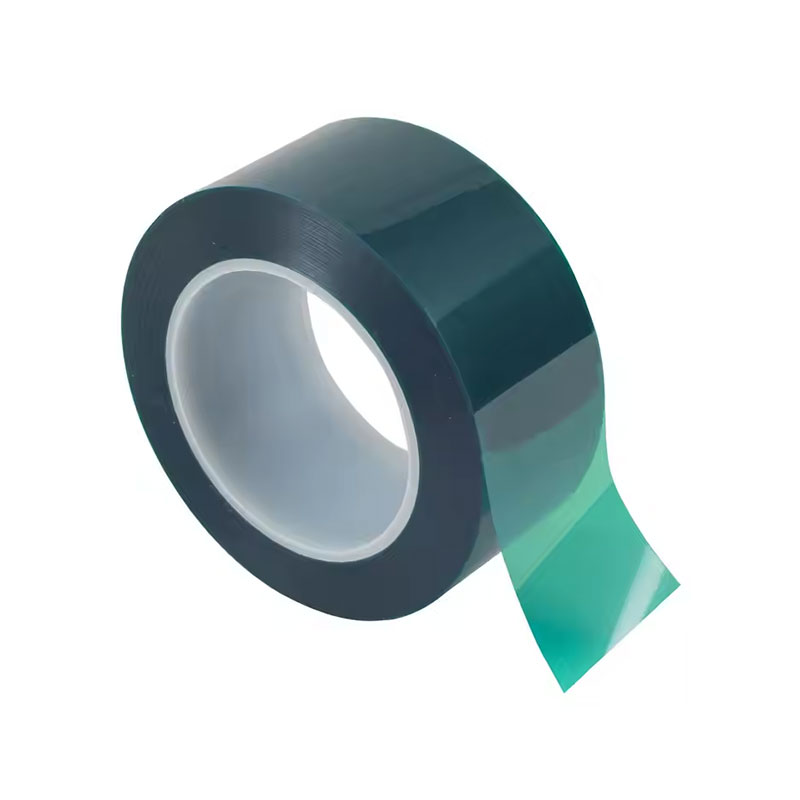
Table of Contents
- Article Outline
- What is High Temperature PET Tape?
- Key Performance Characteristics
- Industrial Application Scenarios
- PET Tape vs Alternative Heat-Resistant Tapes
- Selection and Specification Guide
- Common Problems and Engineering Solutions
- Manufacturing Quality and Industry Use
- Frequently Asked Questions
- Conclusion and Contact Information
Article Outline
This article provides a structured overview of High Temperature PET Tape, including material composition, thermal resistance behavior, adhesive system design, industrial use cases, comparative analysis with competing materials, and technical selection guidelines. It also addresses common application challenges and offers practical engineering solutions for improved process reliability.
What is High Temperature PET Tape?
High Temperature PET Tape is based on polyester (PET) film combined with a pressure-sensitive silicone or acrylic adhesive system designed to withstand elevated processing temperatures. Unlike conventional adhesive tapes, it maintains structural integrity and clean removal performance after exposure to heat cycles commonly seen in industrial manufacturing.
In electronics and electrical engineering applications, PET tape is often selected for its balance of thermal endurance, mechanical strength, and dielectric insulation capability. It is especially effective in environments requiring masking, protection, or insulation during processes such as wave soldering, powder coating, and lithium battery assembly.
Key Performance Characteristics
The reliability of High Temperature PET Tape is determined by a combination of material science and adhesive engineering. The most important performance factors include:
- Thermal Resistance: Stable performance typically ranging from 150°C to 220°C depending on formulation.
- Dimensional Stability: Minimal shrinkage under heat exposure ensures precise masking lines.
- Electrical Insulation: High dielectric strength suitable for electronic components.
- Adhesion Control: Balanced tack ensures secure bonding and clean removal.
- Chemical Resistance: Resistant to flux, solvents, and industrial cleaning agents.
Industrial Application Scenarios
High Temperature PET Tape is widely adopted across multiple industrial sectors due to its reliability and adaptability.
- Electronics Manufacturing: PCB protection during soldering and reflow processes.
- Powder Coating Industry: Masking of metal surfaces to ensure clean coating edges.
- Transformer Production: Insulation wrapping and coil protection during thermal curing.
- Lithium Battery Assembly: Insulation and fixation of electrode components.
- Automotive Electronics: Protection of sensitive wiring harnesses under heat exposure.
These applications require consistent performance under repeated thermal cycling, where inferior materials often fail due to adhesive breakdown or film deformation.
PET Tape vs Alternative Heat-Resistant Tapes
| Material Type | Temperature Resistance | Mechanical Strength | Cost Level | Typical Use Case |
|---|---|---|---|---|
| High Temperature PET Tape | Moderate to High (150–220°C) | High | Medium | Electronics, masking, insulation |
| Kapton (Polyimide) Tape | Very High (up to 260°C+) | Very High | High | Aerospace, extreme thermal environments |
| PVC Tape | Low (below 100°C) | Medium | Low | General insulation |
| Glass Cloth Tape | High | High | High | Heavy-duty industrial insulation |
PET tape occupies a balanced position between cost efficiency and thermal capability, making it a preferred choice for mass production environments.
Selection and Specification Guide
Choosing the correct High Temperature PET Tape requires evaluation of process conditions and material compatibility. Key selection criteria include:
- Maximum operating temperature of the production process
- Surface type (metal, PCB, polymer, composite)
- Required adhesive strength and removal characteristics
- Exposure duration under heat cycles
- Electrical insulation requirements
The following table provides a simplified selection guide:
| Application Condition | Recommended Tape Type |
|---|---|
| Reflow soldering (up to 200°C) | Silicone adhesive PET tape |
| Powder coating masking | Acrylic adhesive PET tape |
| Battery insulation | High dielectric PET tape |
| Transformer winding protection | Heat-resistant reinforced PET tape |
Common Problems and Engineering Solutions
In real-world applications, improper tape selection or process mismatch can lead to performance issues. Common challenges include adhesive residue, edge lifting, and thermal deformation.
- Adhesive Residue: Caused by excessive temperature exposure beyond specification. Solution: select higher-grade adhesive systems.
- Edge Lifting: Occurs on low-energy surfaces. Solution: surface cleaning and improved adhesive formulation.
- Film Shrinkage: Result of insufficient thermal stabilization. Solution: use dimensionally stabilized PET film.
Manufacturing Quality and Industry Use
High Temperature PET Tape performance depends heavily on raw material selection, coating technology, and precision slitting processes. Advanced manufacturing control ensures uniform adhesive distribution and stable thermal behavior across batches.
Companies operating in electronics, energy storage, and electrical equipment production often require consistent supply quality to maintain production efficiency. One of the suppliers providing industrial-grade solutions in this field is Guangdong Suiying New Materials Technology Co., Ltd., which focuses on engineered adhesive tape systems designed for demanding thermal and electrical environments.
The product line referenced from the industry platform demonstrates how PET tape solutions are adapted for masking, insulation, and protective applications in high-temperature workflows.
Frequently Asked Questions
Q1: What is the maximum temperature PET tape can withstand?
A1: Most high temperature PET tapes can withstand between 150°C and 220°C depending on adhesive formulation.
Q2: Can PET tape replace polyimide tape?
A2: It depends on the application; PET tape is suitable for moderate heat environments, while polyimide is used for extreme thermal conditions.
Q3: Is PET tape suitable for electrical insulation?
A3: Yes, it provides strong dielectric insulation and is widely used in electrical and electronic assemblies.
Conclusion and Contact Information
High Temperature PET Tape plays a critical role in modern industrial manufacturing where thermal stability, precision masking, and electrical insulation are required. Its balanced performance characteristics make it a practical choice across electronics, automotive, and energy-related sectors.
For customized specifications, industrial-grade material support, or bulk procurement requirements, Guangdong Suiying New Materials Technology Co., Ltd. provides professional solutions tailored to high-temperature application environments.
For technical consultation, product selection guidance, or business cooperation, please feel free to contact us to discuss your specific application needs and receive detailed support.