

How Can an Acetate Frame with Super Flex Temple Improve Comfort and Durability?
2026-10-27
Article Summary
An acetate frame with super flex temple combines the classic appearance of acetate eyewear with a flexible temple mechanism designed to accommodate movement and reduce stress during everyday handling. For consumers, the potential advantages include a more forgiving fit and greater convenience when putting on or removing glasses. For eyewear brands, wholesalers, and optical retailers, this construction offers an opportunity to differentiate a collection through functional design without abandoning the premium look of acetate. However, flexibility alone does not guarantee comfort or long-term durability. Material quality, hinge engineering, frame dimensions, assembly precision, and testing all matter. This guide explains how super-flex temples work, how to evaluate their performance, and how to choose a suitable supplier for a successful eyewear collection.
Understanding Acetate Frames with Super Flex Temples
Eyeglasses are worn through a wide range of daily activities, from working at a computer and commuting to reading, shopping, and socializing. During these activities, users repeatedly put their glasses on, remove them, and adjust their position. Conventional frames can experience stress when their temples are pulled outward, twisted, or handled carelessly.
An acetate frame with super flex temple addresses this challenge by combining an acetate front with a specially engineered flexible temple structure. Depending on the design, the temple may incorporate an elastic metal core or a flexible hinge mechanism that allows greater movement than a conventional rigid temple assembly.
Acetate remains popular in optical eyewear because it supports rich colors, layered patterns, polished surfaces, and distinctive frame silhouettes. Flexible temple technology adds a functional element that can make a traditional acetate design more adaptable during ordinary use.
For eyewear manufacturers and B2B buyers, this combination is especially relevant when developing collections that need to balance fashion appeal, practical functionality, and customer comfort. It can also give retailers a clear product feature to explain when comparing similar-looking frames.
How Does Super Flex Temple Technology Work?
Super-flex temple designs typically rely on a flexible internal structure, a specialized hinge arrangement, or a combination of both. The precise construction varies by manufacturer and model, so buyers should request technical details for the actual product rather than assuming every flexible temple uses the same mechanism.
Flexible Internal Structure
Some designs incorporate an elastic metal core inside the temple. This internal component allows the temple to flex while helping it recover its intended shape after movement within its designed operating range. The outer temple can retain a conventional eyewear appearance while the internal structure provides additional flexibility.
Movement Beyond the Standard Opening Position
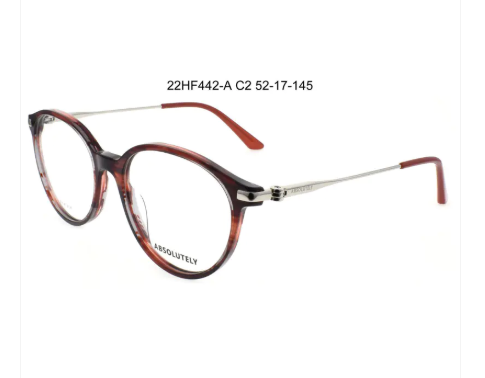
A specially engineered temple mechanism may allow outward movement beyond the normal wearing position. HIVISION's model 22HF442-A is described as featuring temples capable of 180-degree rotation. This product-specific design gives the temples a wider range of movement than a conventional fixed-range arrangement.
However, a stated rotation angle should not be interpreted as permission to force every frame repeatedly through its full range. Users should follow the manufacturer's instructions and avoid unnecessary twisting or excessive pressure.
Shape Recovery and Mechanical Stress
When a flexible component bends, it experiences mechanical stress. The component's material, geometry, and manufacturing quality influence how it responds and whether it returns toward its original position. Repeated bending, excessive force, temperature exposure, and wear can eventually affect performance.
For this reason, a well-engineered flexible temple needs more than a flexible component. It also needs appropriate attachment points, reliable assembly, consistent material quality, and testing under relevant conditions.
Key Benefits of Acetate Frames with Super Flex Temples
1. A More Forgiving Wearing Experience
Temple flexibility can accommodate some movement as glasses are put on and removed. This may reduce the feeling of rigidity associated with conventional temple structures. Actual comfort still depends on the frame width, bridge fit, temple length, nose support, and the shape of the wearer's head.
2. Greater Tolerance of Accidental Movement
Everyday handling can expose glasses to unexpected outward pressure. A suitably designed flexible temple may accommodate certain movements rather than transferring all the stress to a rigid point. This can help reduce the risk of damage in some circumstances, although the overall result depends on the entire frame construction.
3. Convenient On-and-Off Use
People who wear glasses throughout the day may open and close their temples many times. A well-made flexible mechanism can make the frame feel more accommodating during these routine actions. Smooth operation and consistent resistance are important; flexibility should not feel loose or uncontrolled.
4. Classic Style with a Functional Difference
Acetate frames can feature round, rectangular, geometric, and fashion-oriented designs. A flexible temple construction allows brands to add a functional selling point while preserving the visual appeal of acetate. This can help retailers distinguish a product by both appearance and practical design.
5. Potential for Longer Useful Service
Reducing stress during certain types of handling may help a well-designed frame remain usable for longer. Nevertheless, actual service life depends on repeated-use performance, hinge quality, material fatigue, maintenance, and the way the glasses are handled. Buyers should rely on sample inspection and relevant test results rather than flexibility claims alone.
6. A Clearer Product Story for Retailers
Flexible temples provide an easy-to-explain feature for product descriptions, staff training, and wholesale presentations. Retailers can demonstrate the intended movement of an approved sample and explain the benefits without relying on vague durability claims.
Super Flex Temples vs. Conventional Eyewear Temples
Both conventional and flexible temples can be appropriate for well-made eyewear. The main difference is how the temple structure is designed to respond to movement and handling.
| Evaluation Factor | Conventional Temple | Super Flex Temple |
|---|---|---|
| Movement | Generally follows its standard hinge movement range | Designed to accommodate additional movement, depending on construction |
| Fit adaptation | Depends on frame dimensions and adjustment | May provide additional flexibility during everyday handling |
| Mechanical design | May use a standard hinge and conventional temple core | May use a flexible core, specialized hinge, or combined mechanism |
| Durability | Depends on materials, assembly, and quality control | Also depends on fatigue resistance, mechanism quality, and testing |
| Maintenance | May require hinge adjustment or screw tightening | Requires inspection of both hinge movement and flexible components |
| Best buying approach | Check fit, construction, and intended use | Check fit, movement limits, recovery behavior, and repeated-use performance |
Neither design is automatically superior for every wearer. A conventional temple may provide excellent performance when correctly designed and manufactured. A flexible temple is worth considering when additional movement tolerance is an important product requirement.
Why Combine Acetate with Flexible Temple Technology?
The appeal of this frame design comes from the interaction between its visible material and its functional construction. Each component has a different role in the finished product.
The Appeal of Acetate
Acetate is widely used for optical frames because it supports varied color combinations, patterned sheets, translucent effects, and polished finishes. It can create a distinctive front that feels substantial and visually refined. The quality of the final appearance depends on the material grade, cutting accuracy, edge finishing, and polishing process.
The Role of the Temple Structure
The temple contributes to fit, stability, and wearing comfort. A flexible internal structure or specialized hinge can provide movement that a more rigid construction may not offer. The selected mechanism should be compatible with the frame's dimensions and intended use.
Balancing Appearance and Function
Combining these elements can help brands serve consumers who appreciate traditional acetate styling but also value practical features. For example, a classic round frame may appeal to customers who prefer vintage-inspired design, while a flexible temple adds a functional detail that supports everyday convenience.
When evaluating the product, buyers should inspect the front and temples as one integrated system. Attractive acetate alone cannot guarantee a comfortable fit, and a sophisticated flexible mechanism cannot correct poorly finished edges or unsuitable dimensions.
How to Evaluate Quality and Durability Before Buying
For wholesalers, optical chains, and eyewear brands, sample evaluation is an important step before committing to a large production order. A structured inspection helps reveal potential issues that may not be obvious in product photographs.
Inspect the Front Frame
Look for smooth edges, consistent polishing, clean lens rims, and a balanced finish. Check for visible cracks, chips, rough areas, or unwanted marks. For patterned acetate, ask whether normal pattern variation is expected between samples and production units.
Test Temple Movement Carefully
Open and close the temples several times using the intended operating motion. Movement should feel controlled and consistent. Check for unusual noise, excessive looseness, catching, or uneven resistance. Only test wider movement within the manufacturer's specified range.
Check Shape Recovery
For a flexible design, observe whether the temple returns toward its intended position after an appropriate movement. Compare the left and right sides. Persistent deformation, inconsistent movement, or a loose-feeling mechanism should be discussed with the supplier.
Examine Hinges and Attachment Points
Inspect the hinge area for alignment, visible gaps, cracks, loose screws, or movement between joined components. The attachment point is especially important because repeated opening and closing places stress on this area.
Confirm Fit and Dimensions
Check lens width, bridge width, temple length, and overall frame width. A flexible temple cannot compensate for a frame that is too narrow, too wide, or poorly balanced. Fit should be evaluated on the intended wearer or with a suitable fitting method.
Ask for Relevant Test Records
Depending on the product and destination market, quality checks may include repeated temple movement, frame endurance, hinge stability, dimensional inspection, and other applicable performance tests. Request the test method, acceptance criteria, and results relevant to the actual model.
Design, Fit, and Customization Options for Modern Eyewear
Flexible temple technology can be incorporated into different frame styles, but the best configuration depends on the intended customer and product positioning. Design decisions should consider both appearance and practical fit.
Frame Shapes for Different Markets
- Round frames: Offer a classic, intellectual appearance and suit retro-inspired collections.
- Rectangular frames: Provide a clean, versatile style for professional and everyday use.
- Geometric frames: Help brands create distinctive, fashion-oriented collections.
- Soft-edged frames: Balance modern styling with a less angular visual profile.
Colors and Finishing Details
Acetate frames can feature black, tortoiseshell, burgundy, gradient-inspired effects, and other color combinations. Depending on the model and manufacturing capabilities, brands may explore customized colors, decorative temple details, logo placement, and coordinated packaging.
Fit Should Remain a Priority
Temple flexibility is only one aspect of comfort. Frame width, bridge dimensions, temple length, nose support, and the position of the temple bend all influence how glasses sit on the face. Sample testing is especially valuable when a design targets a particular demographic or face shape.
Private Label and OEM/ODM Development
For a customized project, prepare a brief that identifies the frame style, material, desired flexibility, color options, logo requirements, target order quantity, packaging, and destination market. Ask the manufacturer which features are available on existing models and which require new development.
Before approving a custom design, clarify tooling or development costs, sample lead times, minimum order quantities, production tolerances, and ownership of any original design files. Confirm all important requirements in writing.
How to Select a Reliable Acetate Frame with Super Flex Temple Supplier
A reliable supplier should be able to explain product construction, support sample evaluation, communicate specifications clearly, and provide a realistic production plan. Price is important, but it should be considered alongside consistency, technical capability, and service.
Review Product Experience
Ask about the supplier's experience with acetate processing, flexible temple construction, hinge assembly, polishing, and final inspection. Review similar models and determine whether the supplier can meet your product requirements without relying on assumptions.
Confirm Model Specifications
HIVISION's acetate frame with super flex temple, model 22HF442-A, is listed with a round frame shape, acetate material, and a stated size of 52-17-145. The listed color options are black, tortoise wine red, and gradient tea. The product description identifies a flexible temple design with 180-degree rotation.
The listed minimum order quantity is 150–200 pieces per color and 450–600 pieces per model. These quantities are subject to confirmation with the supplier and may depend on the current order arrangement.
Assess Quality Management
Ask how incoming materials, frame dimensions, hinge installation, and finished products are inspected. Clarify how defects are recorded, what acceptance criteria apply, and how quality concerns are handled before shipment.
Clarify Commercial Terms
Request a written quotation that specifies unit pricing, quantity breaks, sample charges, customization costs, packaging, production lead time, payment terms, and shipping arrangements. Confirm whether different colors share the same minimum quantity or have separate requirements.
Check Communication and After-Sales Support
Clear communication helps reduce misunderstandings between sampling and mass production. A professional supplier should be able to answer questions about specifications, explain limitations, and communicate changes that may affect the order.
Learn more about the HIVISION Acetate Frame with Super Flex Temple and contact the company to confirm current availability, specifications, sampling options, and wholesale terms.
How to Care for Flexible Acetate Eyewear
Even a frame designed to accommodate additional movement benefits from careful handling. Simple maintenance habits can help preserve appearance and reduce unnecessary stress on its components.
Use the Intended Movement
Open and close the temples in the direction recommended by the manufacturer. Avoid twisting the frame front, forcing the temples beyond their designed range, or repeatedly demonstrating extreme movement unnecessarily.
Keep the Frame Clean
Use a clean microfiber cloth and a suitable eyewear cleaning solution. If the manufacturer permits, lukewarm water and a mild cleaner can help remove everyday residue. Avoid abrasive materials and harsh chemicals that may affect polished surfaces or other components.
Avoid Excessive Heat
Do not leave glasses on a hot dashboard, near a heater, or in other high-temperature environments. Excessive heat can affect acetate shape and may alter the behavior of some frame components.
Store Glasses Safely
Place the frame in a protective case when it is not being worn. Avoid putting heavy objects on the glasses or carrying them loose with keys and other items that can scratch the surface or apply unwanted pressure.
Arrange Professional Adjustments
If the frame becomes uneven, loose, or uncomfortable, consult an optician or qualified eyewear professional. Do not attempt to reshape the flexible mechanism or apply excessive force to the temple. Professional assessment can help distinguish an adjustment issue from a damaged component.
A Practical Purchasing Checklist for B2B Buyers
Before placing a wholesale order, review the following points with your supplier. This process can help control costs, improve product consistency, and reduce avoidable delays.
- Define your target market, customer profile, and retail price positioning.
- Confirm the acetate grade, temple construction, and intended movement range.
- Verify model numbers, frame dimensions, available colors, and design details.
- Request a sample to assess fit, finish, temple movement, and overall workmanship.
- Clarify the expected behavior of the flexible mechanism and applicable testing.
- Confirm MOQ by model and color, sample charges, and customization costs.
- Agree on packaging, labeling, inspection standards, and acceptable defect levels.
- Obtain written confirmation of production lead times and delivery arrangements.
- Review payment terms, shipping responsibilities, and procedures for quality claims.
- Keep the approved sample and final specification as references for repeat orders.
A structured purchasing process allows buyers to evaluate the product beyond its appearance or flexibility claim. It also provides a practical foundation for repeat orders, private-label development, and long-term supplier relationships.
Frequently Asked Questions About Acetate Frames with Super Flex Temples
1. What is an acetate frame with super flex temple?
It is an eyewear frame that combines an acetate front with a specially designed flexible temple structure. Depending on the model, the mechanism may use an elastic internal core, a specialized hinge, or another engineered arrangement to accommodate additional movement.
2. Can super flex temples rotate 180 degrees?
Some models are designed for a wider range of movement. HIVISION's model 22HF442-A is described as featuring 180-degree temple rotation. Buyers should follow the model-specific instructions and avoid forcing the temples beyond their intended operating range.
3. Are flexible temple frames more durable than conventional frames?
Not automatically. Flexible temples may accommodate certain movements and reduce some types of mechanical stress, but durability depends on the complete construction, materials, hinge quality, assembly, and repeated-use performance. Sample evaluation and relevant testing are recommended.
4. Are acetate frames with super flex temples comfortable?
They can provide a more forgiving wearing experience for some users. Comfort still depends on frame width, bridge fit, temple length, weight distribution, and the position of the temple bend. A suitable frame size remains essential.
5. What colors are available for HIVISION model 22HF442-A?
The product listing identifies black, tortoise wine red, and gradient tea. Availability and color naming should be confirmed with HIVISION before ordering.
6. What is the size of the HIVISION super flex temple frame?
The listed size is 52-17-145, generally representing a 52 mm lens width, 17 mm bridge width, and 145 mm temple length. Buyers should verify the model measurements and tolerances with the supplier.
7. Can eyewear brands customize this type of frame?
Customization may include colors, logos, temple details, packaging, and other design elements, depending on the model and production requirements. Confirm available options, development costs, sampling arrangements, and MOQ with the manufacturer.
8. What is the listed MOQ for HIVISION model 22HF442-A?
The product page lists 150–200 pieces per color and 450–600 pieces per model. Confirm the current MOQ and any color allocation requirements directly with HIVISION before preparing a purchase order.
9. How should flexible acetate frames be maintained?
Clean them gently, store them in a protective case, avoid excessive heat, and operate the temples within their intended range. If the frame becomes loose, uneven, or damaged, seek professional inspection instead of forcing the mechanism back into shape.
10. What should wholesale buyers ask a manufacturer before ordering?
Ask about materials, temple construction, movement limits, sample availability, quality tests, dimensions, MOQ, color options, customization, production lead time, packaging, and after-sales procedures. Written confirmation helps ensure that the delivered product matches the approved specifications.
Discover Functional Acetate Eyewear with HIVISION
Looking for an acetate frame with super flex temple for your next eyewear collection? HIVISION offers frame designs that combine acetate styling with functional temple technology for optical brands, wholesalers, and distributors.
Contact our team to discuss model 22HF442-A, available colors, sample requests, customization possibilities, and wholesale purchasing requirements. Share your target market, estimated order quantity, and design preferences to receive product information tailored to your project.
Contact Us for a Wholesale InquiryConfirm the latest specifications, sample arrangements, MOQ, and delivery schedule with HIVISION before placing your order.