

Article Summary
Discover how 110 GSM brown green PE tarpaulin works, what its weight specification tells buyers, where it can be used, and how to select suitable sizes, edge reinforcement, packaging, and weather-resistance options. The guide also includes a practical supplier evaluation checklist and answers to common purchasing questions.
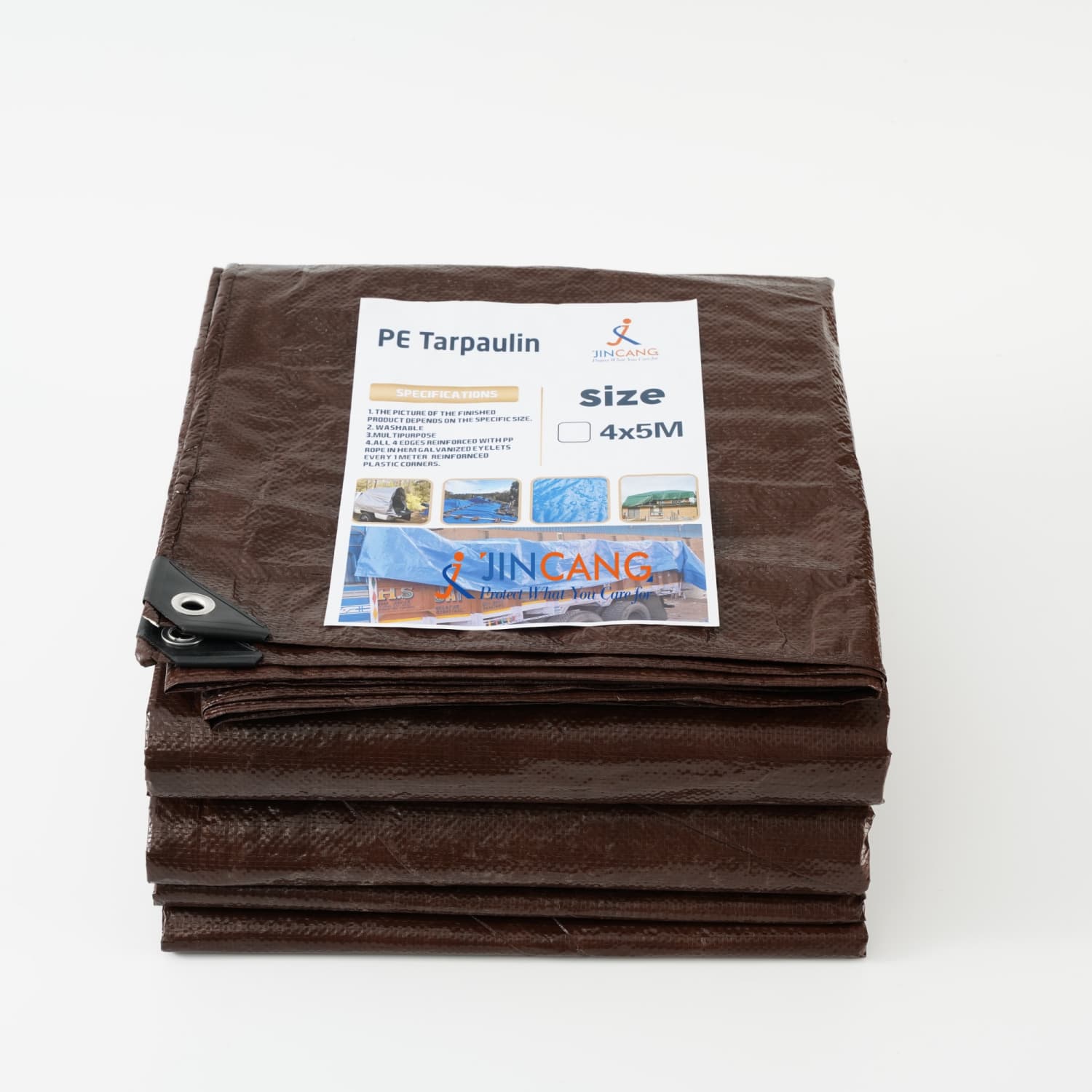
1. Understanding 110 GSM Brown Green PE Tarpaulin
Before selecting a tarpaulin, buyers need to understand what the product specification actually describes. GSM stands for grams per square meter. It indicates the mass of a material per unit area and provides a useful starting point when comparing different tarpaulin products.
A 110 GSM specification means that one square meter of the specified finished material has a nominal mass of approximately 110 grams, provided the supplier defines GSM on that finished-material basis. Buyers should confirm the manufacturer's measurement method because fabric weight and finished-sheet weight may be calculated differently.
What Does the Brown Green Design Mean?
The brown green combination generally refers to a double-color design, with one side brown and the other green. This appearance can suit agricultural settings, gardens, outdoor storage areas, and other locations where a less conspicuous color combination is desirable.
Color alone, however, does not determine waterproofing, UV resistance, or mechanical strength. These properties depend on the material formulation, woven base, lamination, manufacturing consistency, and any additional treatments specified for the product.
| Specification | What Buyers Should Understand |
|---|---|
| Product type | Polyethylene (PE) tarpaulin |
| Nominal weight | 110 GSM; confirm whether the figure refers to the finished sheet |
| Color | Brown and green, subject to the supplier's actual configuration |
| Handling | Lightweight construction can simplify folding, moving, and storage |
| Potential uses | Temporary covers, agricultural protection, construction materials, and outdoor storage |
| Customization | Confirm available dimensions, finishing, packaging, and optional treatments |
The most important purchasing principle is simple: GSM is a useful specification, but it should never be the only basis for evaluating a tarpaulin.
2. How Its Material Construction Supports Protection
PE tarpaulin commonly uses a woven polyethylene base with a polyethylene coating or lamination. The woven structure contributes to the sheet's mechanical properties, while the surface layers help provide a barrier against moisture and environmental contamination.
A Woven Base for Practical Handling
The woven structure helps the sheet withstand ordinary handling and covering tasks. Its performance depends on factors such as yarn characteristics, weave density, manufacturing consistency, and the loads applied during use.
For buyers who move covers frequently, handling convenience matters. A flexible sheet that can be folded, transported, and repositioned efficiently may reduce labor during routine operations.
A Coated Surface for Moisture Protection
Appropriately manufactured PE tarpaulin can provide an effective barrier against rainwater and surface moisture. This is valuable when covering goods that should remain dry during temporary storage or outdoor handling.
Nevertheless, a waterproof sheet cannot guarantee that the entire covered area will remain dry under every condition. Water can enter through damaged surfaces, poorly secured edges, openings, or unsuitable seams. Incorrect installation can also allow water to collect on the sheet.
Finishing Details Matter
Edges, corners, seams, and fixing points often experience concentrated stress. Hemmed edges, reinforced corners, suitable eyelets, and appropriate tie-down arrangements can improve practical usability when these features are included in the product specification.
3. Key Benefits for Commercial Buyers
Convenient, Lightweight Handling
For routine covering tasks, the ability to unfold, position, and store a tarpaulin without specialized equipment can be a practical advantage. A lightweight option may be suitable when workers frequently move covers between storage areas, workstations, vehicles, or agricultural plots.
Flexible Coverage for Different Objects
Tarpaulins can be used over many shapes and sizes of goods. Depending on the available dimensions and finishing options, a single product category may serve several departments or customer groups, helping distributors simplify their product range.
Potential for Cost-Conscious Protection
When the application does not require a heavy-duty cover, a lightweight tarpaulin may help control initial material costs and reduce handling effort. However, the lowest purchase price is not necessarily the lowest overall cost. Buyers should also consider expected service life, replacement frequency, labor, and the value of the goods being protected.
Flexible Storage Between Uses
A clean, dry tarpaulin can generally be folded or rolled for compact storage. This helps users keep spare covers available without dedicating excessive space to bulky protective materials.
Two-Color Appearance
The brown green design provides a distinctive appearance that may fit certain outdoor environments and customer preferences. For private-label distributors or specialized projects, color consistency can also be part of the purchasing specification.
4. Practical Applications Across Industries
The suitability of 110 GSM brown green PE tarpaulin depends on the required level of protection, exposure conditions, and expected service life. The following applications illustrate where a lightweight cover may be considered.
Agriculture and Gardening
Agricultural users may use tarpaulins to cover tools, selected supplies, gardening equipment, or temporary storage areas. They can also be useful for protecting items during routine farm operations when a portable cover is more convenient than a permanent shelter.
For grain, animal feed, harvested crops, or other moisture-sensitive materials, the covering arrangement must prevent water entry and allow appropriate ventilation where necessary. The tarpaulin should not be treated as a substitute for suitable food-contact or crop-storage requirements.
Construction and Renovation
Construction teams frequently need temporary protection for tools, selected building materials, equipment, and work areas. A lightweight tarpaulin may help limit exposure to dust and rain during short-term tasks.
Before using it on a construction site, confirm that the material is appropriate for the load, abrasion, wind exposure, and duration involved. It should not replace engineered scaffolding protection, certified safety equipment, or weatherproof building systems where those are required.
Transportation and Temporary Storage
During loading, unloading, or short-term storage, a suitable tarpaulin can help shield goods from dust and incidental weather exposure. It may be useful for selected non-sensitive cargo, equipment, and materials.
For vehicle applications, verify the dimensions, attachment points, wind exposure, and transport requirements. A loose cover can create hazards, while a lightweight sheet may not be appropriate for high-speed transport or heavy cargo without suitable engineering and securement.
Gardens, Outdoor Equipment, and General Use
Homeowners, landscaping contractors, and maintenance teams may use tarpaulins to cover outdoor tools, garden supplies, furniture, or equipment between uses. A flexible sheet can also provide temporary protection during cleaning, painting, or renovation.
Marine and Boat-Covering Projects
For boats and marine equipment, the correct size and fit are especially important. A cover must accommodate the shape of the equipment while allowing water to drain and reducing wind-related stress.
Before selecting 110 GSM material for marine use, confirm that its strength, UV protection, fastening system, and expected service life match the exposure conditions. Prolonged marine exposure may call for a more specialized or heavier-duty product.
5. Weather Resistance and Service Life
Outdoor performance is one of the biggest concerns for buyers evaluating polyethylene tarpaulin. A cover may encounter rain, sunlight, wind, temperature changes, dust, and repeated folding. Its ability to withstand these conditions depends on both material quality and how it is used.
Waterproofing
A properly coated and undamaged PE tarpaulin can help keep rainwater away from covered goods. For critical applications, request relevant waterproofing test information and clarify whether the manufacturer's claims apply to the finished sheet, seams, and complete cover.
Install the sheet with enough slope for water to run off. Avoid creating depressions where rainwater can accumulate, because pooled water increases the load on the material and fastening points.
Sunlight and UV Exposure
Ultraviolet radiation can gradually degrade many plastics. Some tarpaulins incorporate UV stabilizers, but their presence and effectiveness should be confirmed rather than assumed.
If the cover will remain outdoors for extended periods, ask about UV-treatment options, test methods, and any available performance data. A product intended for occasional use may not offer the same long-term outdoor performance as one designed for continuous exposure.
Wind and Mechanical Stress
Wind can cause a cover to flap, pull against eyelets, and rub against nearby surfaces. Correct sizing and secure fastening help reduce unnecessary stress. Reinforced edges and corners can also be useful where included in the specification.
Temperature and Storage Conditions
Extreme temperatures may affect flexibility and handling. Before using a tarpaulin in unusually hot, cold, or demanding environments, check the supplier's recommended operating conditions.
When not in use, clean the material, allow it to dry, and store it away from unnecessary sunlight and sharp objects. These habits can help reduce premature damage.
6. How to Select the Right Specification
Choosing a tarpaulin involves more than matching a product name. Buyers should translate their actual operating conditions into measurable specifications before requesting a quotation.
Step 1: Define the Intended Application
Identify the object being covered, whether it is stored indoors or outdoors, how often the cover will be moved, and how long it must remain in service. This determines whether a lightweight option is suitable or a stronger construction is needed.
Step 2: Calculate the Required Dimensions
Measure the length, width, and height of the object or area. Include sufficient material for overhang, fastening, and any required coverage of the sides.
For example, covering a three-dimensional stack requires more material than simply measuring its footprint. Buyers should also confirm whether the supplier quotes cut size or finished size, because hems and seams can reduce usable dimensions.
Step 3: Confirm Weight and Construction
Request confirmation of the 110 GSM specification, the basis on which weight is calculated, and any available information about weave density, coating, tensile strength, and tear resistance. Compare products using consistent test methods whenever possible.
Step 4: Specify Edges and Fastening
Discuss whether the application needs reinforced hems, corner patches, eyelets, rope reinforcement, or another fastening arrangement. Eyelet material, spacing, and installation quality should match the expected tie-down loads.
Step 5: Evaluate Weather Requirements
Clarify whether the sheet needs basic rain protection, additional UV resistance, or performance for a particular climate. Ask for documented test results when the application has demanding or regulated requirements.
Step 6: Review Packaging and Delivery
For commercial orders, confirm how the tarpaulins will be folded or rolled, the number of pieces per package, carton or bale dimensions, labeling, and shipment requirements. These details affect warehouse handling and freight planning.
| Purchasing Requirement | Questions to Ask the Supplier |
|---|---|
| Size | Are dimensions stated as cut size or finished size? |
| Weight | Does 110 GSM refer to the complete finished sheet? |
| Strength | Are tensile and tear-resistance data available? |
| Weather protection | What waterproofing and UV performance can be documented? |
| Finishing | Which edge, corner, seam, and eyelet options are available? |
| Order fulfillment | What are the MOQ, lead time, packaging method, and sample options? |
7. 110 GSM Tarpaulin Compared with Other Covering Options
No single covering material is ideal for every application. Comparing material categories helps buyers identify which properties matter most for their operating conditions.
| Material Type | Potential Advantages | Points to Consider |
|---|---|---|
| 110 GSM PE tarpaulin | Lightweight handling, flexible storage, practical temporary coverage | May be unsuitable for heavy loads or prolonged severe exposure |
| Heavier PE tarpaulin | May provide greater material mass and support for demanding applications | Often heavier to handle; actual strength still depends on construction |
| PVC-coated fabric | Available in constructions designed for demanding industrial uses | Weight, flexibility, price, and environmental requirements vary by product |
| Canvas | Textile construction and useful handling characteristics in selected applications | Water resistance depends on the material and treatment; drying may be important |
This comparison is a general guide rather than a universal performance ranking. Actual results depend on the specific grade, construction, manufacturing quality, and use conditions.
If a cover will be reused frequently, exposed to strong winds, or placed over valuable equipment, compare samples and relevant test data before making a final decision.
8. Quality Inspection and Maintenance
Consistent quality is important for importers and distributors who need products to perform reliably across repeat orders. A simple inspection process can help identify issues before goods are accepted or put into use.
What to Check During Inspection
- Confirm the product color and nominal dimensions against the order.
- Check the weight specification and agreed measurement method.
- Inspect the surface for obvious holes, cuts, coating defects, or inconsistent areas.
- Examine seams, hems, corners, and eyelets for visible damage or poor finishing.
- Confirm that labels, packaging quantities, and product identification match the purchase documents.
- Request relevant test reports when strength, waterproofing, or UV performance is critical.
How to Extend Practical Service Life
- Prepare the covered area. Remove sharp objects and rough debris that could puncture or abrade the sheet.
- Secure the cover correctly. Use suitable attachment points and avoid excessive tension concentrated around individual eyelets.
- Allow water to drain. Position the cover to prevent prolonged pooling after rainfall.
- Clean it carefully. Use an appropriate mild cleaning method and avoid chemicals that could damage the material.
- Dry before storage. This helps reduce moisture-related problems during prolonged storage.
- Inspect it regularly. Repair or replace damaged covers before small defects lead to more extensive failure.
Service life cannot be reliably determined from GSM alone. Sunlight, climate, abrasion, installation, handling frequency, and material formulation all influence how long a tarpaulin remains suitable for use.
9. Bulk Purchasing and Supplier Evaluation
For wholesalers, importers, and industrial procurement teams, supplier selection affects product consistency, delivery planning, and the cost of managing inventory. A clear inquiry helps manufacturers provide a more accurate quotation.
Provide a Complete Product Brief
When requesting a quotation for 110 GSM brown green PE tarpaulin, include the following information:
- Required dimensions and acceptable size tolerances
- Expected order quantity and estimated repeat-order volume
- Preferred brown and green color configuration
- Required edge reinforcement, eyelets, seams, or other finishing
- Intended application and expected weather exposure
- Packaging, labeling, and private-label requirements
- Destination market and preferred delivery schedule
Evaluate More Than the Quoted Price
A competitive quotation should be assessed alongside the product specification, sample quality, packaging, production lead time, communication, and consistency between approved samples and mass production.
Ask whether the manufacturer can document the agreed specifications and explain its process for handling quality issues. For recurring purchases, keeping an approved sample and written specification can help reduce misunderstandings between orders.
Plan for Shipping and Inventory
Tarpaulins can be packed in different ways, including individual packages, bales, cartons, or rolls where applicable. The best arrangement depends on the product format, warehouse process, handling equipment, and destination requirements.
Before confirming an order, request the expected package dimensions, gross weight, quantity per package, and loading plan. These details make it easier to estimate freight costs and allocate warehouse space.
For buyers sourcing from China, Linyi Jincang Plastic Products Co., Ltd. is a relevant manufacturer to contact when evaluating PE tarpaulin products and customization requirements. Buyers can share their application, size, and packaging specifications to clarify whether a particular configuration is available.
10. Frequently Asked Questions
Q1. What does 110 GSM mean in PE tarpaulin?
GSM means grams per square meter. A 110 GSM specification indicates a nominal mass of 110 grams per square meter when measured on the basis defined by the supplier. Always confirm whether the measurement includes the complete finished sheet.
Q2. Is 110 GSM brown green PE tarpaulin waterproof?
A properly manufactured PE tarpaulin with suitable coating can provide effective protection against rainwater. Actual performance depends on the construction, condition, seams, and installation. Confirm the manufacturer's waterproofing specifications for your application.
Q3. Can it be used outdoors for extended periods?
That depends on the material formulation, UV stabilization, climate, and exposure intensity. For continuous outdoor use, request information about UV resistance and expected performance rather than assuming every 110 GSM product offers the same service life.
Q4. Which industries can use this type of tarpaulin?
Potential applications include agriculture, gardening, construction, temporary storage, selected transportation tasks, and general equipment protection. The material should be evaluated against the loads, weather conditions, and safety requirements of each application.
Q5. Can I order customized sizes and colors?
Customization depends on the manufacturer's available production options and order requirements. Ask about available dimensions, color combinations, finishing, tolerances, minimum order quantities, and any associated setup costs before confirming your order.
Q6. Does a higher GSM always mean a stronger tarpaulin?
Not necessarily. GSM measures mass per unit area, not strength directly. Weave construction, yarn properties, lamination, seams, and reinforcement all affect performance. Compare relevant strength data alongside the weight specification.
Q7. How should I measure a tarpaulin for a bulk order?
Measure the area or object to be covered and allow extra material for overhang, fastening, and side coverage. Ask the supplier to distinguish cut dimensions from finished dimensions, especially when hems or welded seams affect the final size.
Q8. How can I reduce damage during use?
Keep the cover away from sharp edges, secure it with suitable fasteners, avoid excessive tension, and arrange it so water can drain. Clean and dry the sheet before storage and inspect it regularly for damage.
Q9. What information should I send when requesting a quotation?
Include the target GSM, dimensions, color, quantity, intended application, finishing requirements, packaging preferences, destination, and delivery schedule. If possible, provide a drawing or photograph of the intended use to clarify special requirements.
Q10. How can I assess a supplier before placing a large order?
Review the written specification, request a sample when available, check relevant product documentation, and confirm production lead time, packaging, and quality-control arrangements. Keep the agreed requirements in writing so the delivered goods can be checked against the order.
11. Conclusion: Choosing a Practical Cover for Your Business
110 GSM brown green PE tarpaulin can be a useful option for buyers who need lightweight, flexible covering material for routine outdoor protection. Its suitability depends on the specific application, material construction, required dimensions, fastening arrangement, and expected exposure to weather and mechanical stress.
For the best purchasing decision, evaluate the complete specification rather than relying on color, price, or GSM alone. Confirm the finished dimensions, waterproofing requirements, UV performance, edge finishing, packaging, and delivery details before placing a bulk order.
Working with a supplier that can clearly communicate product specifications and customization options helps procurement teams make more informed decisions, manage inventory more effectively, and choose materials suited to their customers' actual needs.
Looking for 110 GSM Brown Green PE Tarpaulin for Your Business?
Linyi Jincang Plastic Products Co., Ltd. can be contacted to discuss your PE tarpaulin sourcing requirements. Whether you are a wholesaler, distributor, importer, or industrial buyer, prepare your preferred dimensions, order quantity, application, and packaging requirements to start a focused product discussion.
Need a tailored specification or want to discuss your next bulk purchase? Visit the official website to explore the available product range and contact us to inquire about product details, customization possibilities, samples, and quotations.
Contact Us for Product Information