

How Are Plastic LED Candles Used Across Homes and Commercial Spaces?
2025-12-18
Article Abstract
Plastic LED Candles have become a widely adopted lighting solution for decorative and ambient illumination in residential, hospitality, and commercial environments. This article provides a structured and technical overview of how Plastic LED Candles are designed, specified, and applied in real-world scenarios.
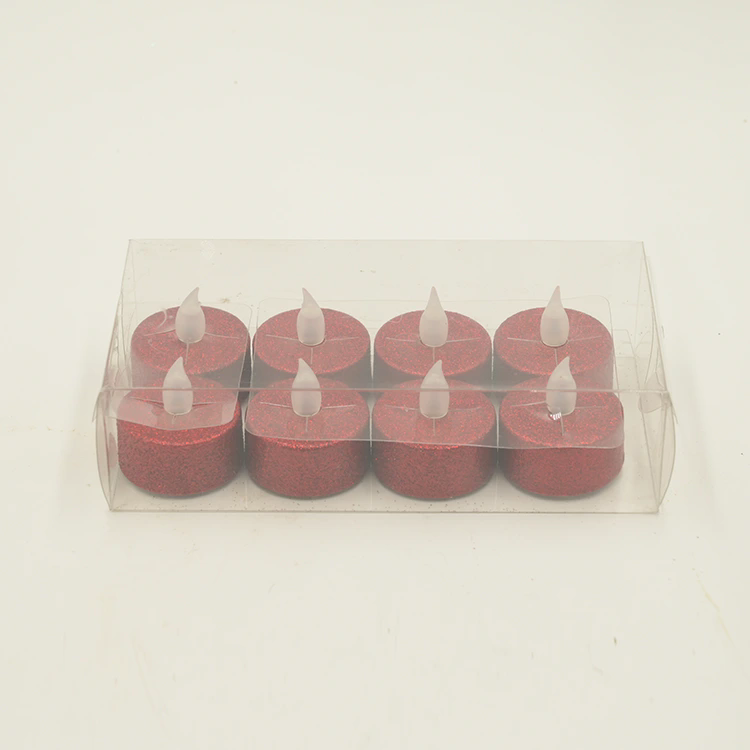
Table of Contents
- How Do Plastic LED Candles Work and What Defines Their Core Structure?
- How Should Plastic LED Candle Parameters Be Evaluated for Different Use Cases?
- How Are Plastic LED Candles Applied in Residential, Hospitality, and Event Settings?
- How Will Plastic LED Candles Evolve With Lighting and Material Technologies?
Outline
- Introduction to Plastic LED Candle design principles
- Material, electrical, and optical specifications
- Application-driven selection logic
- Industry development and future alignment
How Do Plastic LED Candles Work and What Defines Their Core Structure?
Plastic LED Candles are flameless lighting devices engineered to replicate the visual characteristics of traditional candles while relying on solid-state lighting technology. At their core, these products integrate a low-voltage LED light source, a molded plastic housing, and a light-diffusing structure that simulates the glow and movement associated with candlelight.
The outer shell is typically manufactured from heat-resistant polymer materials such as ABS or polypropylene. These plastics are selected for dimensional stability, impact resistance, and uniform light diffusion. Unlike wax-based candles, plastic housings maintain consistent shape across temperature variations and extended operational periods.
Internally, a surface-mounted LED chip emits light at a controlled color temperature, commonly within the warm white spectrum. A flame-shaped diffuser or oscillating reflector may be used to generate a flickering effect, which is electronically controlled through microcircuit timing rather than combustion.
From a functional standpoint, Plastic LED Candles operate on battery power or low-voltage DC input. This electrical configuration supports extended runtime and eliminates risks associated with open flames, liquid wax, or soot accumulation.
How Should Plastic LED Candle Parameters Be Evaluated for Different Use Cases?
Evaluating Plastic LED Candles requires a parameter-driven approach that aligns technical specifications with the intended application environment. Selection criteria commonly focus on material performance, electrical efficiency, optical output, and operational control features.
The following table summarizes standard technical parameters used by manufacturers and buyers when assessing Plastic LED Candles for residential or commercial deployment.
| Parameter | Typical Specification Range | Technical Relevance |
|---|---|---|
| Housing Material | ABS / PP Plastic | Ensures durability, light diffusion, and structural consistency |
| Light Source | SMD LED | Provides stable illumination and low energy consumption |
| Color Temperature | 2200K – 3000K | Simulates warm candlelight appearance |
| Power Supply | AAA / AA Batteries or DC 3V–6V | Supports portable and fixed installations |
| Operating Time | 100 – 500 Hours | Determines maintenance and replacement cycles |
| Control Options | Manual Switch / Remote / Timer | Enhances usability across different environments |
These parameters collectively influence how Plastic LED Candles perform in various lighting scenarios. For example, hospitality environments often prioritize consistent color temperature and remote-control compatibility, while residential users may focus on battery life and compact form factors.
How Are Plastic LED Candles Applied in Residential, Hospitality, and Event Settings?
Plastic LED Candles are applied across a wide range of environments due to their adaptability and predictable performance. In residential spaces, they are commonly used for ambient lighting in living rooms, bedrooms, dining areas, and seasonal decorations. Their plastic construction allows placement near fabrics, shelves, or enclosed spaces without heat-related concerns.
Within hospitality settings such as hotels, restaurants, and lounges, Plastic LED Candles support consistent visual presentation across tables, corridors, and reception areas. Their standardized dimensions and stable illumination output make them suitable for large-scale deployment where uniformity is operationally important.
Event and commercial display applications further extend their usage. Plastic LED Candles are frequently integrated into weddings, exhibitions, retail windows, and themed installations. Their lightweight structure simplifies logistics, while electronic control options allow synchronized lighting effects across multiple units.
From a planning perspective, facility managers and event designers often evaluate Plastic LED Candles based on reusability, storage efficiency, and compatibility with existing decorative frameworks. Plastic housings withstand repeated handling better than wax alternatives, which supports long-term operational cycles.
Plastic LED Candles – Common Questions and Answers
Q: How long can Plastic LED Candles operate continuously on battery power?
A: Continuous operation time depends on battery capacity, LED efficiency, and control circuitry. Standard models powered by alkaline batteries typically operate between 100 and 300 hours, while optimized low-current designs may exceed this range under intermittent use.
Q: Are Plastic LED Candles suitable for outdoor or semi-outdoor environments?
A: Plastic LED Candles can be used in semi-outdoor environments when designed with sealed housings and moisture-resistant components. However, exposure to direct rain or prolonged UV radiation should be evaluated against the product’s ingress protection rating and material formulation.
How Will Plastic LED Candles Evolve With Lighting and Material Technologies?
The future development of Plastic LED Candles is closely linked to advancements in LED efficiency, polymer science, and intelligent control systems. As LED chips continue to improve in luminous efficacy, future designs are expected to deliver longer operational life with reduced power consumption.
Material innovation will also influence product evolution. New plastic blends with enhanced translucency and UV resistance are being adopted to improve light diffusion and long-term appearance stability. These materials support more refined flame simulations and consistent color rendering.
On the control side, integration with wireless protocols and smart home ecosystems is becoming increasingly relevant. Plastic LED Candles equipped with programmable timers, grouped control functions, and adaptive lighting modes align with broader trends in ambient and decorative lighting systems.
From an industry perspective, these developments position Plastic LED Candles as a standardized lighting component rather than a seasonal novelty, supporting scalable production and global distribution.
Conclusion and Brand Reference
Plastic LED Candles represent a mature and technically adaptable lighting category, defined by controlled illumination, durable materials, and flexible application scenarios. Their parameter-driven design approach supports consistent performance across residential, hospitality, and commercial environments.
Manufacturers such as Guoying continue to refine Plastic LED Candle specifications in response to market demand, focusing on material stability, electrical optimization, and application compatibility. These developments contribute to long-term usability and predictable deployment outcomes.
For detailed specifications, customization options, or application guidance related to Plastic LED Candles, interested parties are encouraged to contact us directly to discuss project requirements and sourcing considerations.