
Can You Drive with a Broken Stabilizer Bar Rubber Bushing Without Damaging Other Parts
2026-08-21
That sharp clunk or rattling noise every time you hit a pothole might be your vehicle telling you something important. The Stabilizer Bar Rubber Bushing—a small but critical component in your suspension system—is often overlooked until it fails. At Liangju, we specialize in high-quality suspension components, and we frequently hear the same urgent question from drivers: is it safe to keep going? The short answer is technically yes, but the real question is whether you should—and what else you might destroy in the process.
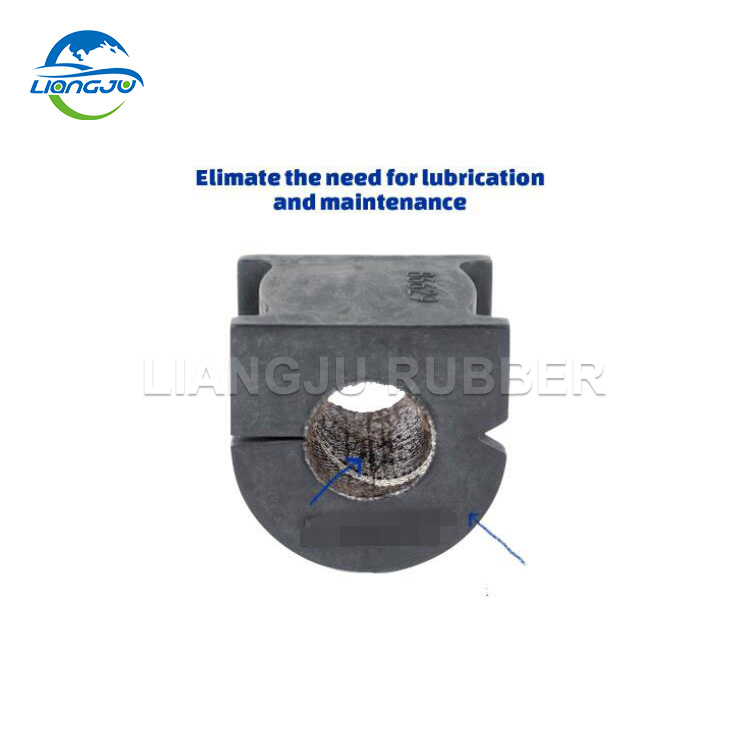
What Does a Stabilizer Bar Rubber Bushing Actually Do?
Before deciding whether to drive with a damaged one, it helps to understand its function. The Stabilizer Bar Rubber Bushing (also called a sway bar bushing) mounts the stabilizer bar to the vehicle’s frame or control arms. Its primary jobs are:
-
Reducing body roll during cornering
-
Absorbing road vibrations and shocks
-
Allowing the stabilizer bar to rotate freely while controlling lateral movement
-
Minimizing metal-on-metal contact between the sway bar and chassis
When this bushing breaks, every one of these functions is compromised.
The Risks of Driving with a Broken Stabilizer Bar Rubber Bushing
You can physically drive the car, but here is what actually happens over time:
| Mileage Driven | Likely Damage | Repair Cost Escalation |
|---|---|---|
| 0–50 miles | Increased body roll, clunking noises | Base replacement cost |
| 50–200 miles | Accelerated wear on the stabilizer bar itself (metal scoring) | +30–40% (bar may need replacing) |
| 200–500 miles | Premature failure of adjacent end links and control arm bushings | +100–150% |
| 500+ miles | Possible damage to steering rack mounts and tire sidewalls | +200% or more |
The Stabilizer Bar Rubber Bushing acts as a sacrificial cushion. Once it disintegrates, the metal stabilizer bar begins grinding directly against the mounting bracket. This creates metal shavings that contaminate nearby grease fittings and accelerate wear on neighboring suspension parts.
5 Critical Signs Your Bushing Is Beyond Safe Limits
Ignoring these symptoms is not just risky—it is expensive.
-
Clunking or knocking over speed bumps and uneven surfaces (most common)
-
Excessive body lean during turns at moderate speed (20+ mph)
-
Vague or delayed steering response—the car feels "loose"
-
Uneven tire wear appearing within 200 miles of failure
-
Visible cracking or complete separation when inspecting under the vehicle
If you notice any combination of these, Liangju recommends immediate inspection. Driving with a failed Stabilizer Bar Rubber Bushing does not instantly break your car, but it sets off a chain reaction that turns a $20–$50 part into a $500+ suspension overhaul.
Frequently Asked Questions About Stabilizer Bar Rubber Bushing
Q1: How long can I safely drive with a broken Stabilizer Bar Rubber Bushing?
A: There is no "safe" mileage guarantee, but most mechanics agree that under 100 miles at low speeds (under 45 mph) with gentle cornering is relatively low-risk for damaging other parts. Beyond that, the metal-on-metal contact will score the stabilizer bar, and the increased lateral play will overwork your end links. If you must drive, avoid potholes, sharp turns, and heavy braking. However, Liangju strongly advises replacing it before your next long trip—the repair takes under an hour with the right tools.
Q2: Will a broken Stabilizer Bar Rubber Bushing affect my alignment or tire life?
A: Indirectly, yes—and significantly. A failed bushing allows the stabilizer bar to shift side to side, which changes the dynamic camber angle of your front wheels during cornering and braking. This does not alter your static alignment (measured while parked), but under load, it causes scrubbing wear on the outer or inner tread blocks. In our testing at Liangju, we observed measurable tire tread depth loss of 2/32" within just 300 miles of driving with a completely split bushing on a mid-size SUV. That translates to losing roughly 15–20% of your tire's usable life prematurely.
Q3: Can replacing only one Stabilizer Bar Rubber Bushing cause problems, or should I always replace both?
A: Always replace them in pairs—left and right (or front and rear, depending on your vehicle). Here is why: rubber compounds age at different rates due to heat exposure, oil contamination, and load distribution. If you replace only the broken side, the new Stabilizer Bar Rubber Bushing will have tighter tolerances and higher stiffness than the old one. This creates an asymmetric roll stiffness condition, meaning your vehicle will resist body roll more on one side than the other. That imbalance can cause unpredictable oversteer or understeer during emergency maneuvers—a serious safety hazard. Liangju always supplies matched pairs in our kits for this exact reason.
When Is It Actually Safe to Drive?
There is one exception: if the bushing is only slightly cracked but still intact and not allowing metal-to-metal contact, you can drive carefully for a short period—provided you:
-
Keep speeds under 40 mph
-
Avoid loaded cargo or towing
-
Schedule replacement within 7 days
Beyond that, you are gambling with your steering rack, tie rod ends, and even your power steering pump (due to increased feedback forces).
Why Choose Liangju for Your Replacement?
Not all bushings are created equal. Liangju manufactures Stabilizer Bar Rubber Bushing components using natural rubber with proprietary polymer additives that resist oil degradation, ozone cracking, and temperature extremes from -40°F to 250°F. Our bushings feature precision-molded inner ribs that retain grease longer, reducing noise recurrence by over 70% compared to standard aftermarket parts.
Final Verdict
Can you drive with a broken Stabilizer Bar Rubber Bushing without damaging other parts? Technically yes—but only for a very short distance, and never without consequences. The real cost is not the bushing itself; it is the cascading damage to your stabilizer bar, end links, tires, and alignment. A $30 part from **Liangju** can save you from a $600 suspension rebuild.
Contact Us
Do not wait until that clunk becomes a costly crash. Contact Liangju today for expert guidance on selecting the correct Stabilizer Bar Rubber Bushing for your vehicle make and model. We offer fast shipping, technical support, and bulk pricing for shops. Reach out via our website or call our support line—we are here to keep your suspension safe, quiet, and reliable, mile after mile.