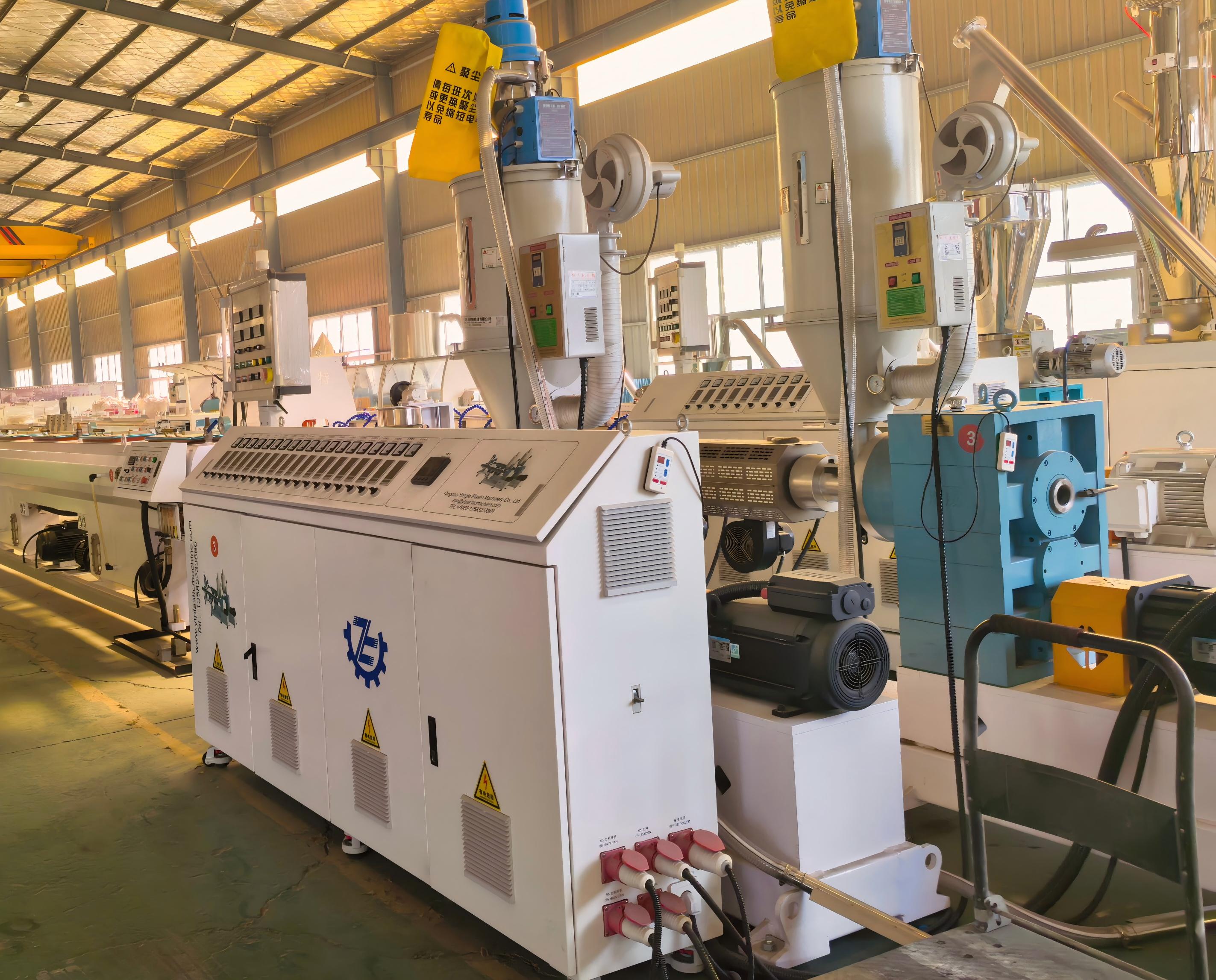

Plastic Pipe Machine Solutions: Streamlining Your Production with Advanced Technology
2026-05-06
In the competitive world of plastic pipe manufacturing, efficiency and precision aren't just aspirations—they're necessities. Yet many producers still grapple with outdated machinery that slows output and compromises quality. What if there was a way to transform your production line with cutting-edge technology that truly delivers? Enter Yongte, a name synonymous with innovative plastic pipe machine solutions. Discover how our advanced systems can streamline your operations, reduce downtime, and elevate your product consistency to new heights. Let’s explore the future of pipe extrusion together.
High-Speed Extrusion Without Compromise
Achieving rapid output without cutting corners on quality defines the core of modern extrusion. The process hinges on precision temperature control and screw geometry that balances throughput with melt uniformity. By maintaining tight tolerances across the barrel zones, manufacturers avoid the common pitfalls of surging or degradation, ensuring every pellet emerges consistent. This harmony between speed and integrity is not a trade-off but a technical benchmark that separates capable systems from exceptional ones.
Material handling plays an equally critical role. Advanced feeding mechanisms maintain a steady flow of resin, eliminating starvation that leads to dimensional instability. Coupled with real-time monitoring of melt pressure and viscosity, the line adapts to fluctuations before they manifest as defects. The result is a continuous extrusion rhythm where line speeds climb without sacrificing surface finish or mechanical properties—turning high-volume demands into routine performance rather than a stress test.
Downstream calibration then locks in the gains. Cooling and sizing stations are engineered to match the extruder’s pace, quenching the profile uniformly to preserve shape and strength. This integrated approach means the word 'compromise' disappears from the vocabulary; high-speed production becomes synonymous with high-grade output, meeting rigorous specifications for industries where failure is not an option.
Automated Process Control for Consistent Wall Thickness
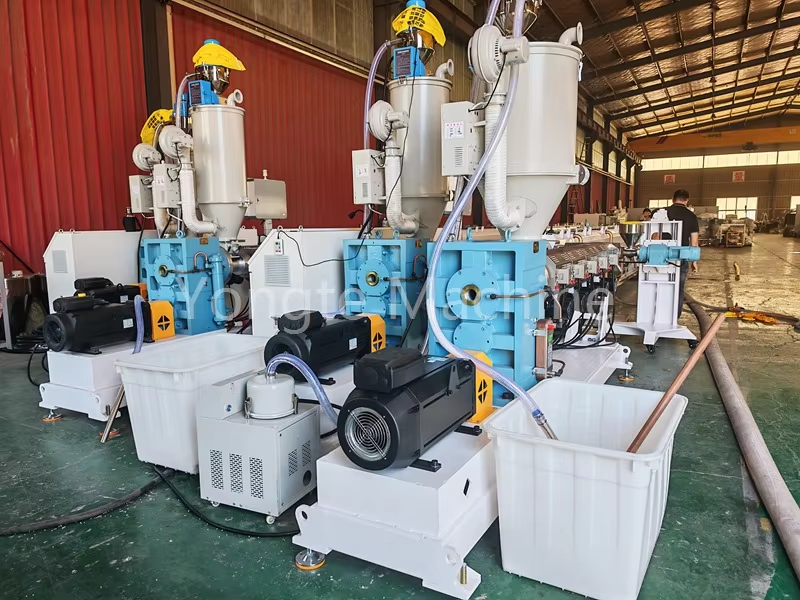
Real-time monitoring forms the backbone of automated process control for wall thickness. Sensors placed at critical stages continuously capture dimensional data, feeding it into a central controller. The system then makes instantaneous adjustments—tweaking die gaps, altering screw speeds, or modulating cooling rates—to hold thickness within a narrow window. This dynamic response sidesteps the delays inherent in manual checks, catching drift before it translates into scrap.
Beyond simple feedback, modern setups layer in predictive algorithms that analyze historical trends and subtle process shifts. For example, a drop in melt temperature might signal a pending thin-out, prompting a preemptive correction rather than a reactive one. Such foresight not only preserves material but also protects downstream processing stages from receiving flawed product, weaving robustness into the entire manufacturing chain.
Operators interact with these systems through dashboards that translate raw sensor data into actionable insights. Color-coded thickness maps, deviation alerts, and historical overlays make it straightforward to spot anomalies. This transparency reduces reliance on tribal knowledge, allowing even junior staff to manage complex lines effectively while freeing engineers to focus on strategic improvements rather than constant firefighting.
Energy-Efficient Designs That Lower Operational Costs
High-performance insulation and advanced window glazing dramatically cut heating and cooling demands, slashing monthly utility bills without sacrificing comfort. Simple upgrades like air sealing and reflective roofing materials can pay for themselves within a few years through reduced energy consumption.
Integrating smart controls for lighting and HVAC systems tailors energy use to actual occupancy patterns, so unneeded lights and equipment automatically power down. This avoids wasteful runtime that quietly drives up operational expenses, often delivering a 20–30% reduction in total facility energy costs.
On-site renewable energy, such as solar panels paired with battery storage, shields businesses from volatile utility rates and peak demand charges. While the upfront investment is notable, the long-term savings stabilize operating budgets and increase property value.
Modular Machinery for Easy Scalability
Scaling production used to mean overhauling entire lines, but modular machinery flips that script. By snapping together standardized units—think mixers, fillers, or labelers—you can boost capacity piece by piece. When demand spikes, just plug in an extra module rather than starting from scratch.
This approach isn't just about adding volume; it's about precision growth. A chocolate maker, for instance, might start with a tempering unit and later bolt on a wrapping station. Each piece communicates through a shared control backbone, so the whole setup hums along without bottlenecks. No need to tear down walls or halt production for months.
The real payoff comes during market shifts. If a new product variant takes off, reconfigure a few modules instead of commissioning custom machines. It's the difference between scrambling and smoothly adapting—keeping your operation lean while rivals wrestle with rigid hardware.
Real-Time Monitoring and Predictive Maintenance
Keeping industrial equipment running smoothly means catching problems before they escalate. Real-time monitoring pulls data straight from vibration sensors, temperature probes, and pressure gauges. It’s not just a dashboard full of numbers—operators see live patterns that reveal subtle shifts in performance, so a minor irregularity doesn’t have to become a production-stopping event.
Predictive maintenance takes that stream of data and applies statistical models to learn what normal behavior looks like. Patterns that once went unnoticed—like a slight uptick in motor current or a gradual increase in bearing heat—are now flagged by algorithms. This moves the conversation from “it failed last night” to “we’ll schedule a part swap next Tuesday”, turning maintenance into a planned activity instead of a costly surprise.
The real advantage shows up in the numbers: less idle machinery, fewer emergency callouts, and longer asset lifespans. But beyond the metrics, it changes how teams trust the equipment. When alerts are grounded in actual degradation curves rather than fixed calendar intervals, maintenance becomes a strategic function, and downtime is something you can genuinely manage rather than just react to.
Integrated Solutions from Mixing to Coiling
Our approach ties together each phase of production, ensuring a smooth transition from the initial blending of materials through to precise coiling operations. By aligning mixing, handling, and winding processes, we eliminate bottlenecks and maintain consistent output quality, whether you're working with fine-gauge wire or heavy-duty cables.
Rather than piecing together separate equipment from different suppliers, this unified system reduces compatibility issues and simplifies maintenance. The result is a streamlined workflow where raw compounds are transformed into perfectly coiled products with minimal downtime and fewer material losses.
From recipe-controlled mixing stations to tension-managed coilers, every stage is calibrated to work in harmony. This integration not only increases throughput but also gives operators clearer control over the entire line, helping them respond quickly to shifting production demands without compromising on precision.
FAQ
They combine precise control systems with robust hardware, minimizing material waste while maintaining consistent output quality across different pipe dimensions.
Through flexible configuration options like adjustable screw designs and mold setups, operators can quickly switch between product types without lengthy downtime.
Real-time feedback on temperature and pressure lets machines self-correct minor deviations instantly, reducing the need for manual oversight during longer runs.
Yes, many are built with corrosion-resistant components that process abrasive or heat-sensitive compounds, expanding the range of possible pipe applications.
Regenerative drives capture braking energy and feed it back into the system, cutting overall consumption by a noticeable margin compared to conventional setups.
Modular barrel and screw assemblies allow individual sections to be serviced or replaced without dismantling the entire machine, keeping service intervals short.
Conclusion
Modern plastic pipe manufacturing demands a seamless fusion of speed, precision, and adaptability—qualities that define today's advanced production lines. High-speed extrusion now operates without sacrificing material integrity, thanks to refined screw geometries and optimized melt channels that maintain output rates while preserving product strength. Automated process control takes consistency further, using laser-based diameter gauges and ultrasonic wall-thickness sensors that adjust parameters in real time, eliminating drift and scrap. These intelligent systems learn from each run, ensuring every meter of pipe meets exact specifications without constant operator intervention.
Beyond the extruder, energy-efficient drive systems and heat-recovery units significantly cut operational costs, often reducing power consumption by double digits compared to older equipment. Modular machinery allows facilities to scale production capacity by adding downstream units—such as vacuum tanks, haul-offs, and coilers—without reengineering the entire layout. Meanwhile, integrated solutions that connect mixing, extrusion, cooling, and coiling into a single harmonious workflow are complemented by real-time monitoring platforms. Predictive maintenance algorithms analyze vibration patterns, torque fluctuations, and temperature trends to forecast wear, enabling scheduled downtime that prevents catastrophic failures. This holistic approach transforms pipe production from a collection of standalone machines into a synchronized, self-optimizing system that drives profitability and product excellence.
Contact Us
Contact Person: Ms Qin
Email: [email protected]
Tel/WhatsApp: 8613583233866
Website: https://www.yongteplast.com