

China Factory Vacuum Casting: Precision Services for Rapid Prototyping
2026-07-19
When speed and precision collide, innovation happens. Vacuum casting in China has redefined rapid prototyping, delivering flawless replicas that mirror production-grade quality in days, not weeks. Enter ProtoMat, a factory pushing the boundaries of surface finish and dimensional accuracy for low-volume runs. From concept models to functional parts, the process cuts through traditional bottlenecks without sacrificing detail. Ready to see how seamless prototyping can accelerate your next breakthrough? The answer lies in mastering pressure, temperature, and a touch of alchemy.
Precision Reimagined: The Art of Vacuum Casting
Vacuum casting is a masterclass in delicate reproduction, where liquid material flows into a silicone mold under the silent command of a vacuum. The absence of air bubbles is not just a technical win—it transforms each cast into a flawless echo of the master pattern. This process captures micro-details so faithfully that even the faintest texture or undercut emerges with startling clarity, making it indispensable for prototypes that demand an almost forensic level of precision.
Beyond mere copying, vacuum casting becomes an art when you consider the alchemy of material choice. Polyurethane resins can mimic the flexibility of rubber, the translucence of glass, or the rigidity of ABS, all while retaining the nuanced finish of the original. Craftsmen tweak shore hardness and hues with painterly intuition, turning functional components into tactile experiences. It’s this blend of chemistry and craft that reimagines precision—not as cold mathematics, but as an intimate dialogue between mold and matter.
What sets vacuum casting apart is its quiet versatility. In low volumes, it sidesteps the hefty tooling of injection molding, yet delivers production-grade aesthetics. The silicone mold itself is a temporary masterpiece, capable of yielding dozens of near-identical parts before gracefully expiring. This ephemeral quality forces a kind of attentive repetition, where each pour feels both routine and singular—a practice that feels less like manufacturing and more like a ritual of rematerialization.
Lightning-fast Molds for Real-world Testing
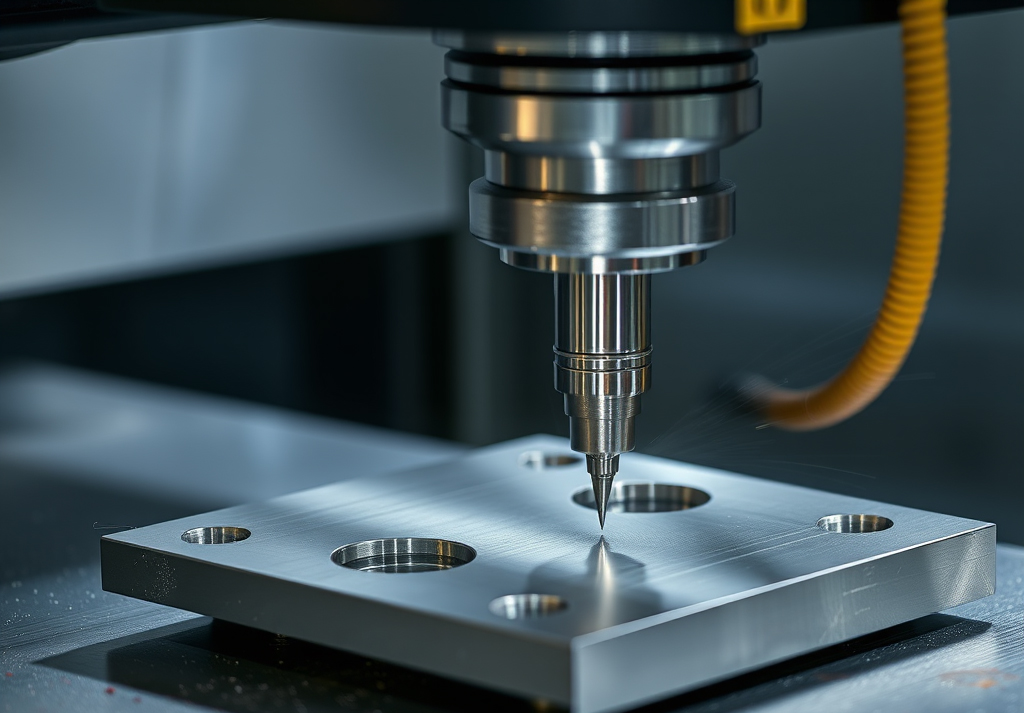
The weeks-long wait for traditional molds is fading fast. We now deliver tooling in just a few days, letting engineers get their hands on prototypes and keep the project moving without those frustrating delays.
With these molds, you can shoot parts in real production materials and see exactly how they'll perform under actual conditions. It surfaces problems that simulations miss, saving you from costly fixes down the line.
Taking mold making out of the critical path transforms your entire development cadence. Design, test, tweak, repeat—faster cycles mean you arrive at an optimized product ready for pilot runs sooner.
Material Magic: From Concept to Functional Parts
At the heart of every remarkable product lies a quiet alchemy where raw matter is shaped into purpose. The journey begins with a spark of intent—a lightweight drone frame that must survive high-speed crashes, or a medical implant designed to dissolve safely within the body. These aren’t merely assignments of stainless steel or nylon; they are acts of translation, converting needs into the precise language of hardness, flexibility, thermal endurance, and biocompatibility.
This transformation hinges on understanding that materials are never passive. A polymer can be coaxed to conduct electricity, a ceramic to flex without fracture, a metal to remember its original form. The process is iterative, often messy. Prototypes are printed, snapped, heated, and scrutinized under microscopes. Adjustments to wall thickness or grain structure turn a fragile idea into a rugged reality, revealing that function is not added to a shape—it emerges from the very substance of the thing.
Ultimately, the real magic isn’t in choosing from a catalog, but in developing the empathy to listen to what a material wants to become. It’s a dialogue of constraints and possibilities, where a car bracket ends up lighter than its predecessor by mimicking bone growth patterns, or a prosthetic socket breathes because its lattice structure was algorithmically grown. In that space between concept and part, matter stops being a resource and starts being a collaborator.
Complex Geometries, Simplified
Traditionally, designing intricate shapes meant wrestling with dense meshes and tedious manual adjustments. But new computational approaches let you directly sculpt complex surfaces by defining a few key control points—the system handles the heavy lifting behind the scenes. It’s like sketching a rough outline and watching it resolve into a precise, watertight model automatically.
Whether you're tweaking a sculpted hull for aerodynamics or optimizing a lattice structure for 3D printing, the process stays intuitive. Instead of micromanaging every vertex, you focus on the overall intention. Adjust a parameter, and the geometry flows seamlessly into a new configuration, keeping all surfaces perfectly joined. This fluid way of working collapses the gap between concept and finalized form, making intricate designs feel as approachable as simple ones.
Quality Prototypes Minus the Costly Tooling
Building a prototype shouldn’t mean having to invest in expensive tooling before the design is even proven. Traditional manufacturing methods often demand upfront molds or dies, locking you into a costly commitment from day one. By using fabrication techniques that bypass hard tooling entirely—like CNC machining from solid blocks, precision sheet metal bending, or advanced 3D printing—you can get high-fidelity parts in days, not months, and keep your budget firmly under control. This approach lets you refine your concept iteratively without the financial strain of tooling amortization hanging over every design tweak.
The real advantage lies in how closely these prototypes mimic final production parts, so you can evaluate form, fit, and even function with confidence. Materials and finishes can be matched to your end-use specifications, giving stakeholders a tangible product that feels like the real thing. Whether you’re testing ergonomics, verifying assembly clearances, or gathering user feedback, the ability to pivot quickly and affordably keeps momentum high and risk low. It’s about working smarter, where every iteration teaches you something new without draining resources.
This methodology also opens the door to small-batch pilot runs that would otherwise be unfeasible. Without the need to amortize tooling over thousands of units, you can produce limited quantities for market testing or initial launch—responding to real demand instead of guesswork. It’s a practical bridge between one-off prototyping and full-scale production, offering a pragmatic path forward for startups and established teams alike who need quality without compromise.
When Prototyping Must Mimic Production
Early-stage prototypes often prioritize speed over fidelity, but there are moments when a superficial mockup simply won’t suffice. If your product interacts with real hardware, handles sensitive data, or relies on precise timing and resource constraints, a low-fidelity simulation can mask critical flaws. In these cases, prototyping must closely emulate the production environment to surface issues that only emerge under realistic loads, latencies, or edge conditions. Skipping this step might save time initially, but it often leads to costly rework when assumptions collide with reality.
Achieving this level of fidelity doesn’t mean building the entire system at once. Instead, it’s about identifying the components where deviations from production would invalidate your tests—such as stateful services, caching layers, or third-party API integrations—and ensuring those pieces operate with their actual behavior. Containerization, staged deployments, and mirrored datasets can help replicate the production landscape without full-scale investment. The goal is to create a sandbox that’s just genuine enough to reveal integration pain points, performance bottlenecks, or security gaps before they reach users.
Teams often discover that the most valuable insights come from prototypes that are intentionally constrained yet production-like in the right places. This approach fosters earlier conversations between developers, operations, and even compliance stakeholders, because everyone is reacting to a system that behaves authentically rather than a idealized diagram. When the prototype faithfully mirrors production’s quirks, the final launch becomes less of a leap of faith and more of a measured progression.
FAQ
Vacuum casting is a manufacturing process that uses silicone molds and polyurethane resins to produce high-quality prototypes and low-volume production parts. It works by placing a master model in a mold box, pouring liquid silicone around it, and then curing the silicone to create a flexible mold. After removing the master, the mold is placed in a vacuum chamber where resin is poured and drawn into the cavity under vacuum, eliminating air bubbles and ensuring fine detail reproduction.
China factories often offer competitive pricing without sacrificing quality, thanks to well-established supply chains and skilled labor. Many facilities have years of experience with rapid prototyping and can deliver fast turnaround times. They also typically provide a range of finishing options and material choices, making them a practical partner for global clients seeking cost-effective precision.
A wide variety of polyurethane resins can mimic thermoplastics like ABS, polypropylene, polycarbonate, and rubber-like materials. These resins can be tailored for different properties including flexibility, transparency, high temperature resistance, and flame retardancy. This flexibility allows designers to create parts that closely match the characteristics of final production materials.
Vacuum casting offers high dimensional accuracy, typically within ±0.15% of the original pattern. While not as precise as CNC machining for certain metal parts, it excels in reproducing intricate details, textures, and undercuts that are difficult to achieve with other methods. It's an excellent choice for visual models, functional testing, and small batches where injection molding would be too costly.
Silicone molds for vacuum casting generally last for about 20 to 30 parts, making it ideal for small production runs of 10 to 50 units. Lead times are usually short; once the master model is approved, the first parts can often be shipped within 1 to 2 weeks, depending on complexity and finishing requirements. For repeat orders, additional molds can be made quickly.
Yes, this is one of the process's main advantages. Because silicone molds are flexible, parts with complex undercuts, deep ribs, and intricate features can be easily demolded without damaging the part. This flexibility enables the production of designs that would be challenging or impossible with rigid tooling, making it perfect for prototypes that need to test assembly and function.
Vacuum casting can achieve a wide range of surface finishes, from high-gloss and textured surfaces to painted and soft-touch coatings. Parts can also be post-processed with painting, dyeing, pad printing, or laser engraving. The ability to match specific color requirements and surface textures helps designers create prototypes that look and feel like final products.
It bridges the gap between one-off prototypes and full-scale production. By quickly producing multiple functional parts with production-like quality, it allows teams to conduct thorough testing, gather user feedback, and refine designs before committing to expensive injection molds. This accelerates product development cycles and reduces the risk of costly design errors.
Conclusion
In China’s advanced manufacturing hubs, vacuum casting has emerged as a transformative method for rapid prototyping, redefining precision with an artful touch. By leveraging silicone molds and high-quality polyurethane resins, factories deliver components that faithfully replicate the intricate details of production-grade parts. This process masters complex geometries with ease, simplifying what would otherwise require costly and time-consuming tooling. From thin-walled enclosures to textured surfaces, every nuance is captured, enabling designers to iterate quickly without sacrificing accuracy. The marriage of craftsmanship and technology ensures that even the most demanding projects benefit from prototypes that not only look real but also perform under real-world conditions.
Speed is equally critical, and vacuum casting excels by producing usable molds in days rather than weeks, allowing teams to test form, fit, and function almost immediately. The material versatility is remarkable, offering grades that simulate everything from rigid ABS to flexible elastomers, so prototypes can mimic the mechanical, thermal, and optical properties of intended production materials. This means functional testing goes beyond appearance—parts can be dropped, heated, or stressed to validate designs thoroughly. Crucially, all this is achieved without the burden of expensive steel tools, making high-quality prototypes accessible for startups and multinationals alike. When your prototyping needs to mirror production exactly, China’s vacuum casting services provide a reliable, cost-effective bridge from concept to market-ready reality.
Contact Us
Contact Person: Joe
Email: [email protected]
Tel/WhatsApp: +8613799507208
Website: https://www.3dprotomat.com/